




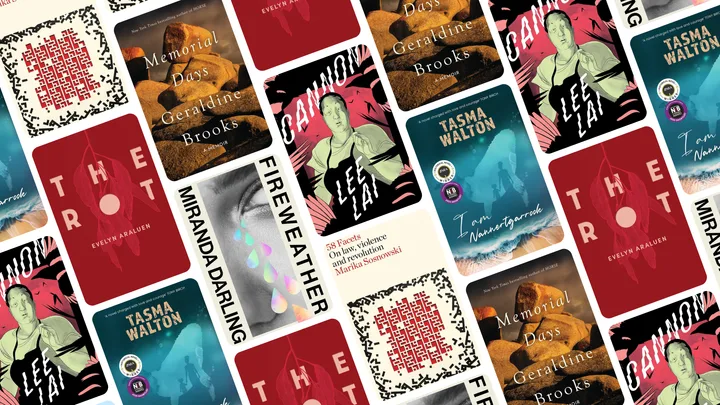
The 2026 Stella Prize once again shines a spotlight on Australian writers. The chosen “remarkable books” in the longlist span from poetry and contemporary fiction to non-fiction, memoir and a graphic novel. Sophie Gee, Chair of Judges, says the books “showed extraordinary diversity of genres, voices, technical experiments and literary flair.”
Each year, the Stella Prize champions women and non-binary authors in Australia across all genres. Works are chosen that inspire, challenge and expand readers’ understanding of the world. This year, Sophie hopes the list will “be an inspiration to writers and readers”.
The longlist reveal was in March, with the winning entry announced in May.
CEO Fiona Sweet says, “There are stories here for everyone, stories that will resonate, surprise, delight, and challenge. We hope you will dive in and discover for yourself.”
Are you ready to dive in?
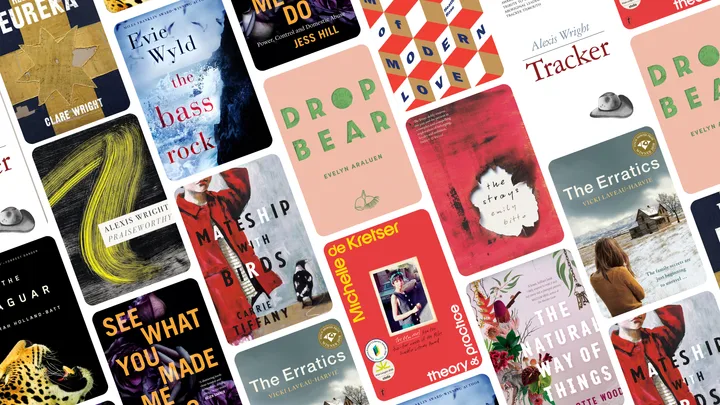
Stella Prize 2026 winner
The winner of the 2026 Stella Prize is the graphic novel Cannon, by Lee Lai. This is the first time that a graphic novel has won the Stella Prize. The judges’ report characterises the novel as “a compelling depiction of a fracturing friendship” and “a bruising examination of the lifelong weight that people – often women – carry”.

Cannon by Lee Lai
Graphic novel
Cannon is supposed to close the restaurant where she works for the night, but trashes it instead. Her friend, Trish, shows up to pull her from the wreckage, literally and metaphorically. She’s been doing the same since high school, when the two queer second-generation Chinese nerds became each other’s lifelines.
A story exploring the intimacy of queer friendship and the weight of family responsibility.
Stella Prize 2026 shortlist

58 Facets: On violence and the law by Marika Sosnowski
Non-fiction
“To be content and make a meaningful life from the ruins of that wrenching and uprooting is a small, everyday miracle that others easily overlook.“
Marika Sosnowski’s grandfather arrived in Melbourne in 1947, having passed through a checkpoint minutes ahead of Nazi occupiers, via a Japanese internment camp in Java and a migrant accommodation camp just outside of Brisbane.
Part memoir, part exposé, 58 Facets weaves together the narratives of Holocaust survivors and Israeli war criminals with Syrian activists, revolutionaries and dissenters.

Fireweather by Miranda Darling
Fiction
Winona Dalloway’s husband is no longer her husband, her children are not at home with her, and her home city is besieged by fires. Doctors call her mad, and Winona is forced to prove she is a sane, rational human. She seeks solace in the company of plants and animals, and begins to imagine another way of being, one that might make her broken heart whole.

I Am Nannertgarrook by Tasma Walton
Fiction
Nannertgarrook is abducted from her idyllic life and taken to a slave market, leaving behind a husband, daughter and son. Pregnant when taken, she gives birth to another son, consequently raising him with the children of her fellow captives. Separated from her Boonwurrung family and from her birthright, Nannertgarrook must keep that family and her old life alive in her mind.
A powerful, heart-wrenching novel about enduring maternal love, based on the true story of Tasma Walton’s ancestor.

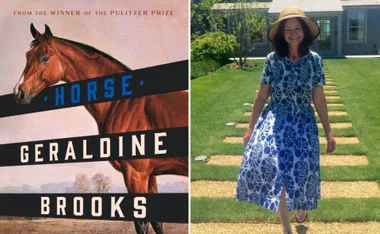
Memorial Days by Geraldine Brooks
Non-fiction/Memoir
Geraldine’s life with her husband, Tony, ended abruptly when, in 2019, Geraldine received the phone call we all dread. Without space to grieve, the sudden loss became a yawning gulf. Three years later, she booked a flight to Tasmania to give herself time to mourn. There, she pondered the various ways in which cultures grieve, and what rituals of her own might help to rebuild a life around the void of Tony’s death.
A moving memoir of sudden loss and a journey toward peace that exquisitely captures the joy, agony and mystery of life.

The Rot by Evelyn Araluen
Poetry
These poems expose a speaker refusing to avert their gaze from the death of Country, death on Country, and the violence of settler colonies here and afar. It’s a study of the decaying romances, expired hopes and abject injustices of the world.
A book that demands you ready yourself for a better world, and a liturgy for girlhood in the dying days of late-stage capitalism.
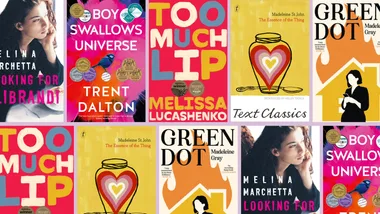
Stella Prize 2026 longlist

Ankami by Debra Dank
Non-fiction/Memoir
Debra Dank had longed to visit the National Archives to paint a fuller picture of her family. What she discovered shattered everything she thought she knew about her past. She was aware of her father’s five siblings; the information uncovered revealed that her paternal grandmother had given birth to ten children. Four had been taken.
A book about the discovery of having family members taken, and the secrets that come with that absence.

Apron-Sorrow / Sovereign-Tea by Natalie Harkin
Non-fiction
Apron-Sorrow / Sovereign-Tea explores the complexity of Aboriginal women’s experiences and survival strategies. The intergenerational stories span loss, love, sorrow, solidarity, resistance, and refusal.
An embodied reckoning with Aboriginal women’s domestic labour and servitude, drawing from oral history and the State’s official record.

Find Me at the Jaffa Gate: An Encyclopaedia of a Palestinian family by Micaela Sahhar
Non-fiction/Memoir
“If we were different people, to write down these words might be to leave them behind us. But words are our artifacts, and I am seeding a trail for the journey, home.”
What does the daughter of a Nakba survivor inherit? Fixing her gaze on moments, places and objects, Micaela Sahhar assembles a story of Palestinian diaspora, from Bethlehem to the Palestinian neighbourhoods of the New Jerusalem.
A book about gaps that cannot be easily recounted, and the vibrant reality of chance, fragments and memory to reclaim a place called home.

KONTRA by Eunice Andrada
Poetry
KONTRA casts a female gaze on the kontrabida, a Filipina soap opera villain. Kontrabida is reimagined as a figure driven not by revenge, but by wild desire. Oscillating in and out of character, Andrada navigates the tension between poet and persona, testing the tightrope between ‘feminine’ goodness and deviance, desire and refusal, reverence and repulsion.

Wait Here by Lucy Nelson
Fiction
A collection of hilarious and heart-wrenching stories from women who will never be mothers, either by choice or by circumstance. A dancer discovers she can never have children. Two sisters who’ve been inseparable for decades make a momentous decision. A young woman worries about the lack of male role models in her niece’s life…
Across the stories, childlessness is a hard-won prize, a freedom, a stain, a joy, a battle, a trifle, a conundrum, a wound, an uneasy comfort on a burning planet.

Wild Dark Shore by Charlotte McConaghy
Fiction
Dominic Salt and his children are caretakers of Shearwater, an island not far from Antarctica. The island is home to the world’s largest seed bank. As sea levels rise, they are packing up the seeds to be transported to safer ground. Then a woman washes up on shore. Rowan becomes like family, though she isn’t telling the whole truth about why she came to Shearwater, and Dominic is also keeping secrets.
A novel about the impossible choices we make to protect the people we love, even as the world around us is ending.
Wild Dark Shore was a Reese Witherspoon Book Club pick.
What is the Stella Prize?
The Stella Prize is an annual writing prize awarded to an Australian woman or non-binary writer. The winner receives a $60,000 prize. Additionally, all the longlisted authors each receive $2,000.
When is the winner announced?
The Stella Prize shortlist, comprising of six titles, released on April 8, with the winning book announced on May 13, 2026.
Who are the judges?
For 2026, the Stella Prize judges are Sophie Gee (Chair), Jaclyn Crupi, Benjamin Law, Gillian O’Shaughnessy and Ellen van Neerven. The judging is guided by three principles: originality, excellence and engagement with readers.

