At a glance…
- In January 1970, three-year-old girl Cheryl Grimmer went missing from Fairy Meadow Beach, north of Wollongong.
- Not long after, a suspect confessed but was never brought to trial.
- Today, generations of her family strive to keep Cheryl’s memory alive and bring her case to justice.
- Content warning: This article touches on the topic of child endangerment and child sexual abuse, which may be triggering for some readers. Help is available.
Sometimes a single minute can come to define multiple lives. When three-year-old Cheryl Grimmer playfully scampered away from her big brothers and hid in the ladies’ changerooms at Fairy Meadow Beach on the afternoon of January 12 in 1970, no one could have imagined she would vanish forever and join that eerie assembly of lost little children that continue to haunt Australians decades after they disappeared.
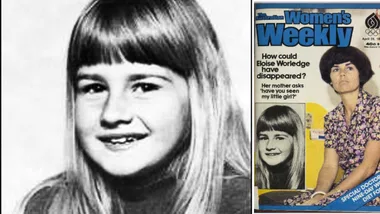
Today, like Graeme Thorne, the Beaumont children, William Tyrell and Gus Lamont, Cheryl remains frozen in time. Her cheeky grin, pixie haircut and navy swimsuit still haunt the dreams of her family – the three brothers who never forgave themselves for leaving her that day, but also the grandchildren, cousins, nieces and nephews who inherited both the mystery and the crusade to find out what happened.
“Every year after, on January 12, we made sure to spend the day with Mum,” recalls Paul Grimmer, who was four years old when his sister went missing.
“We left Dad alone because he dealt with it differently, but Mum was the parent with us in 1970, so it hit her hardest, I think. One year I had to pick my mother up off the floor of a shop because she broke down seeing Cheryl’s face on the front page of a newspaper.”
Trauma has tentacles that creep down the generations too.
“Cheryl disappeared long before I was born, but it still affects me very deeply,” says Melanie Grimmer, the daughter of Cheryl’s oldest brother, Ricki. “What happened to my Aunt Cheryl that day took the chance of a normal life from me, just as it took it from my father. It changed everything for everyone in our family and totally altered the way I see the world.”
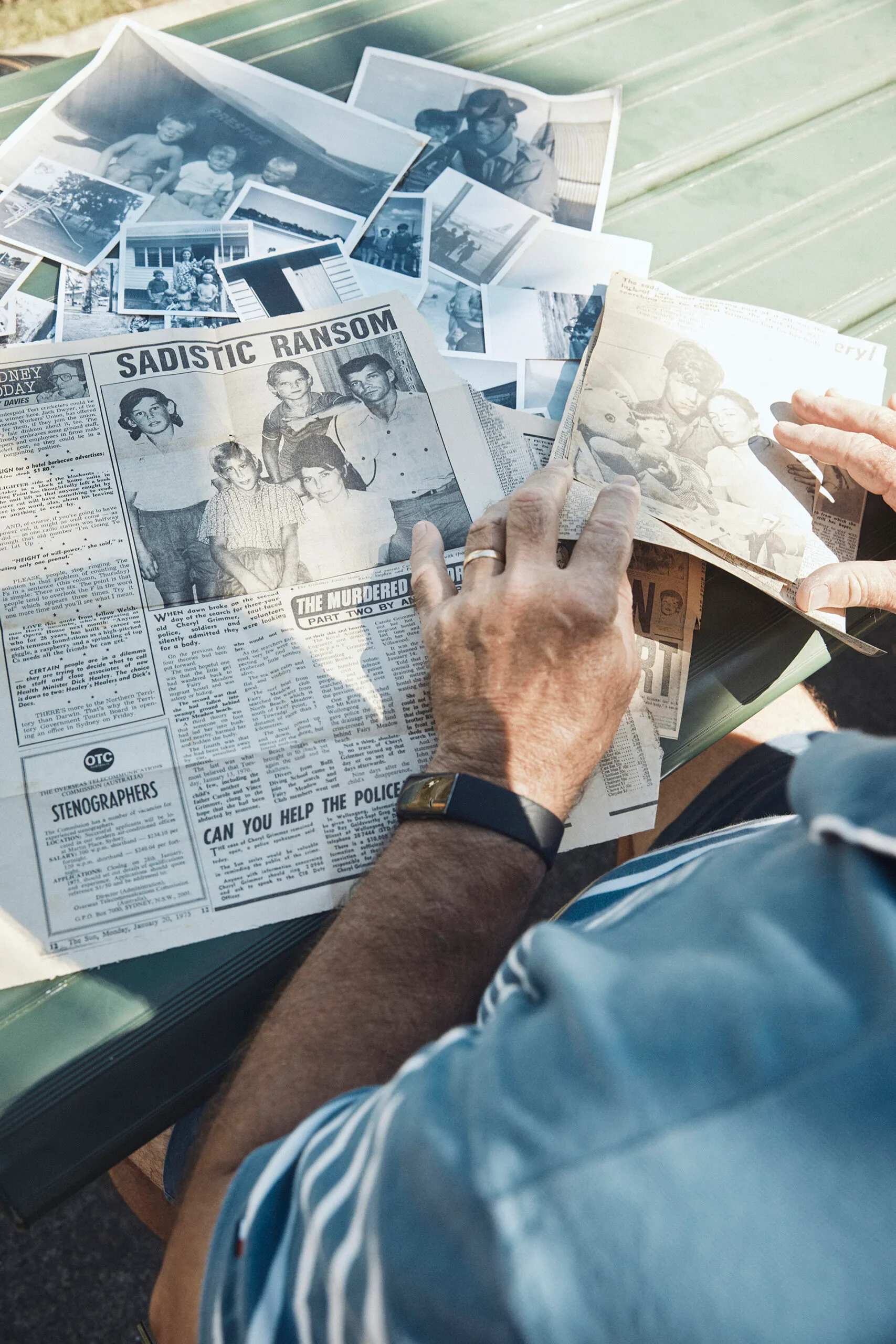
Those who marry into a house of grief must find a way to live with Cheryl’s ghost too. “Paul and I had been together a month, and I was meeting his mum and dad for the first time,” Linda Grimmer tells The Weekly from their home in Brisbane. “He went quiet and said: ‘First I’ve got something to tell you … something we don’t talk about.’ I was shocked, but the impact of that event explains Paul as a partner, a parent and a grandparent.”
Even the detectives who investigated Cheryl’s case four decades later were affected. “The nature of police work is: when you’re looking for answers, the job comes home,” says Damian Loone, who took on Cheryl’s cold case in 2016.
“Sometimes emotion can get the better of us. We’ve had enough pain – and hope – and have to move on. But this family needs closure, and I’ll stand with the Grimmer family until they get it.”
And right now, 56 years down a dark, twisted road, closure is so close for so many. Because late one Thursday afternoon, Damian found something in a dusty old box that blew one of Australia’s oldest cold cases wide open.
“I was stunned,” he says of the moment. In his hands was a signed 1971 confession to the abduction and murder of Cheryl Grimmer. “The answer is always in the file,” Damian believes. “And so was the killer.”
Panic at the beach
The ’70s were just 12 days old when the Grimmer family set out for Fairy Meadow. The little Britons had arrived in Wollongong from Bristol only a few months prior, and Vince Grimmer had a new job with the Australian Army, leaving Carole with the kids at their hostel. It was a hot day on NSW’s south coast, and the beach was fizzing with surfers and swimmers. It was a siren song the four kids could not resist.
Blonde-haired and blue-eyed, Cheryl squealed as she ran up and down the shoreline in her blue swimming costume. Her nose was already peeling from the antipodean sun, yet her eyes twinkled with excitement at a fresh adventure in a bright new land. But then the weather turned, and an ill wind blew up, so Carole said it was time to go. She asked the boys to take Cheryl to the nearby changerooms to wash off the sand.
Seven-year-old Ricki led the way. He loved his little brothers and especially Cheryl. Gently, he washed her off, dried her down and lifted her for a drink at the bubbler. Laughing, hoping the boys would give chase, she scarpered into the ladies’ room. Ricki was a sweet boy who had been raised as a gentleman. He didn’t dare go in. Cheryl knew it too, teasing her brother from just inside the door.
Life hangs by threads – invisible strings that bind us tight or suddenly unspool. Whole worlds are won or lost in a heartbeat. A few seconds can detonate decades. After pleading with Cheryl to emerge, Ricki made the decision to call in his mother. He and his brothers ran the short distance to the sand and quickly retrieved her, but when Carole checked inside the changerooms, there was no trace of her little girl.
Parents know the panic. That maelstrom of emotions triggered when a child goes MIA is woven into us via fairy tales such as Hansel and Gretel and Little Red Riding Hood. With its deep seas and vast bushland, Australia has become an epicentre for such tales and, according to Peter Pierce’s 1999 book The Country of Lost Children: An Australian Anxiety, it became an “obsession” for our authors, artists and filmmakers.
Now Carole’s own frightening fairytale was frantically unfolding. To her, Australia was the land of sunshine and oranges, fresh air and opportunity. She hadn’t read of eight-year-old Graeme Thorne, kidnapped from Bondi and killed in 1960. Or the shocking disappearance of the three Beaumont children in Adelaide in 1966.
All she knew that day, in 1970, was that her baby daughter was nowhere to be found.

For the three brothers, what happened next is a blur. “Suddenly Mum was shaking me, saying ‘Where did you leave her?’” Ricki remembers. Carole alerted beach lifeguards, who called in police who quickly mobilised search parties. According to news reports of the day, by 2 pm, 1000 volunteers were combing the sand and sea and scouring the thick scrub and shallow creeks of Fairy Meadow.
Cheryl didn’t come home that night or the next. Four days into the search, a ransom note demanding $10,000 was sent to police. A sting was set up in public view, but it was a cruel hoax. The trail went cold as every lead ran dry. The sun kept coming up, but the shadow over the Grimmers grew longer and darker. Confused and feeling responsible, Ricki, Stephen and Paul became prisoners of their parents’ grief.
“We weren’t allowed to do things other children were,” says Paul. “No sleepovers or camping if there was no parental supervision. So we missed out on a lot, but that’s understandable. Mum and Dad had lost one child; they don’t want to lose any more.
“What was worse was that, while Mum refused to discuss it, Dad got cranky. He’d lost his daughter. He said he didn’t blame us, but he kinda did, which was very hard to take.”
Ricki, the eldest, who had made the split-second decision to leave Cheryl that day, suffered most.
“If [Dad] had a drink too many, the blame would come out,” Ricki later recalled. “‘Why did he leave her?’ You hear that enough, and you start to question, ‘Why did I?’”
Ricki gave his blessing to this story but couldn’t speak. Instead, he sent a photo from the Camino de Santiago as he carried a rock on which he had painted, ‘Cheryl ♥ Ricki’.
“Dad still has nightmares and often self-sabotages,” admits his daughter, Melanie. “His grief for Cheryl is constant.”
Melanie was Vince and Carole’s first granddaughter, “but I came at a time when Dad found out Vince wasn’t his biological father,” she sighs. “It opened a fresh wound for everyone.”
When Paul and Linda’s new baby daughters met Vince, “I saw the pain in Dad’s eyes,” Paul says. “It was like he was looking at Cheryl.”
Vince Grimmer died without ever discovering what happened to his darling daughter. Carole hung on longer and was a doting grandmother, but she never truly recovered.
“As Mum was slipping away, I kissed her forehead and said: ‘Mum, I promise you that us three boys will keep looking and we’ll find out what happened to Cheryl.’ This little smile passed over her at the end. I said to Steve, ‘That’s what she was waiting for’.”
In 2016, two years after Carole passed away, Paul got a call that sent him sideways. “We hadn’t given up. A clairvoyant had told us once that Cheryl had been taken by a childless couple and crazy as it sounds, there was a tiny part of Mum and Dad and all us boys that thought Cheryl might one day walk in the door. I remember the call was on Dad’s birthday. It was Damian. ‘We’ve found a confession. We’ve got a suspect.’”
A suspect found
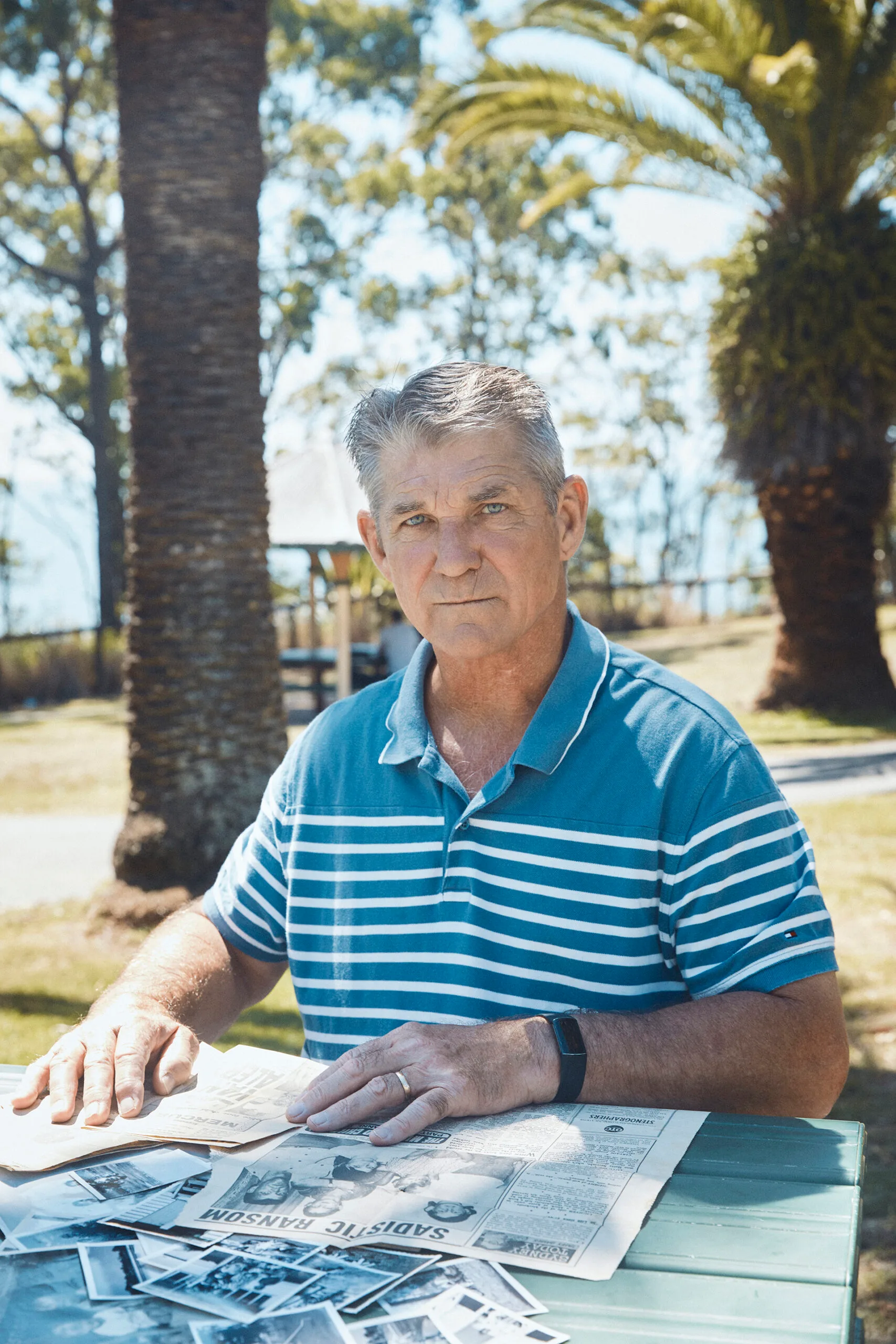
The NSW police had tried to pension Damian Loone off after the Lindt Cafe siege in Sydney in 2014.
“I had some guilt over that,” the now-retired detective admits to The Weekly. “Another fella and I could’ve snuck in and shot the gunmen earlier. Unfortunately, ‘Contain and Negotiate’ was the philosophy. When I began experiencing flashbacks, my bosses told me: ‘You’re hurt on duty. PTSD. We’ll pension you out’. I said: ‘I don’t want to go.’”
The compromise was a ‘return to work program’ in the dead letter lair of cold cases. A local detective, Frank Sanvitale, had already started digging into the Grimmer files. “We had nine or 10 boxes full of files that were as thick as old telephone books, all indexed by cards and none of it entered into Eagle Eye, NSW’s investigative cross-referencing system,” says Damian. “We split the boxes and started reading, scanning, and typing.”
“A couple of months in, late on a Thursday, I found the confession,” he recalls. “I yelled out: ‘Wow, Frank, look at this’. The details in it were uncanny. Everything fit. This guy even admitted to a psychologist that there was a voice in his head telling him to hurt and kill kids. Unfortunately, the lead investigator on Cheryl’s case didn’t believe the confession and thought the guy was crazy and making it up for attention.”
Although the lead detective had died, the officer who had typed the confession was alive.
“We sought him out, and he told us the story,” says Damian. “Fifteen months after Cheryl went missing, police were called to a boys’ home to speak to a 17-year-old in custody for stealing. He confessed to killing Cheryl. They took him back to the scene to ‘walk through’ what he did. Today we would’ve filmed it, but they didn’t back then.”
The officer typing the confession remembers how calmly the youth – codenamed ‘Mercury’ – related the tale. This sort of chilling honesty while unburdening the grisly details of awful crimes rang true with Damian’s experience interrogating murderers. “Liars go off on tangents, blame everyone else, tell crazy stories,” he says. “Killers are concise and clear. They’ll often skip the nasty bits, but the other details match up.”
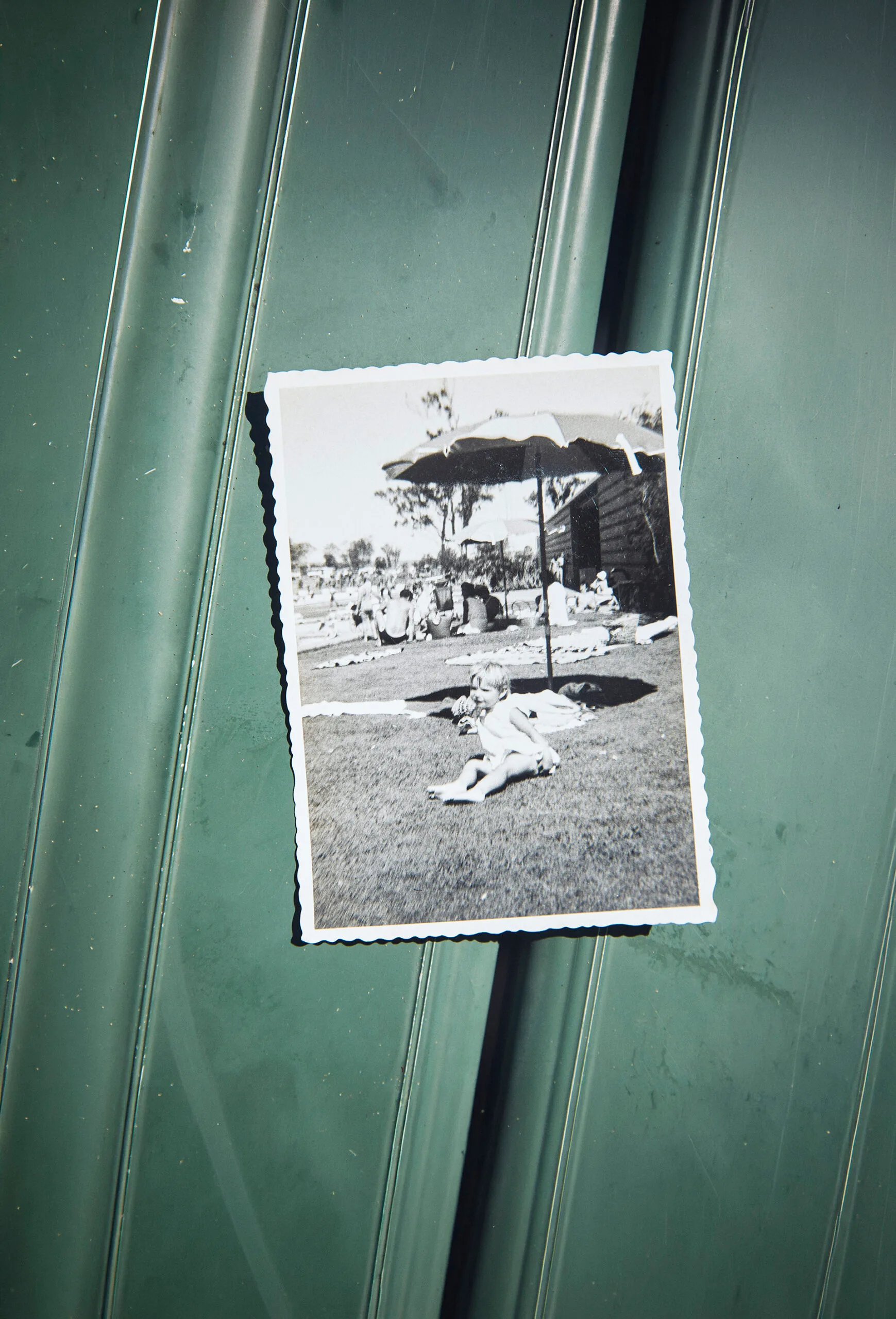
In his signed confession, the youth told police what happened on January 12, 1970.
“Some of the children started to walk away, and this little girl hung back. I came around the front of the pavilion behind her and grabbed her. There was some bloke sitting on the wall in front of the pavilion, so I had to put my hand over her mouth to stop her screaming because if she had screamed, he would have heard it.
“I went over the big drain and stayed in the scrub area and got near a creek near the main road. I tied a handkerchief and shoelace around her mouth to stop her screaming, and with the other shoelace I tied up her hands. I was going to have sexual intercourse with her… she started to scream as soon as I took the gag off her.
“I put my hands around her throat and told her to shut up. I guess I must have strangled her. She stopped breathing and stopped crying, and I thought she was dead, so I panicked and covered her up with bushes and run for it.”
Search for the confessor
A 2011 reinvestigation had failed to find the confessor.
“Frank and I found him in five minutes,” says Damian. “He’d applied to be a security guard and been fingerprinted, so he was on the national database.”
The man was 65 when Frank Sanvitale called. “He says: ‘What do you need to speak to me about?’ I said, ‘You tell me’. There was a very long pause. ‘Something I did when I was very young which I regret every day of my life’.”
Damian and Frank set up a sting. Phone taps. Undercover cops. Fresh interviews.
“The day we arrested him, his body language was: I know you know,” recalls Damian. “He didn’t fight or struggle as an unfairly accused man would reasonably do. There was no crawling the walls, only quiet resignation. I showed Mercury the confession, and he adopted every page and signed his name, just as he had back in 1971.
“But when I got to the big question – ‘Did you have anything to do with the abduction of Cheryl Grimmer?’ – he told me he’d never been to Fairy Meadow. We knew it was a lie because we had records of him staying in the same hostel as the Grimmers and also the transcript of the walk-through after making the 1971 confession.”
Damian and Frank charged Mercury with Cheryl’s murder and flew him to NSW to appear in court. Fifty years on, the Grimmers would now face the man accused of kidnapping Cheryl.
“I felt hurt, angry… sad. Cheryl was never coming home,” says Paul. “But another part of me was relieved that we’d finally got somewhere in our promise to our mother.”
Linda felt another emotion. “We were scared. After so long protecting the kids from it, we had to be transparent about what had happened and what was coming next.”
Melanie felt it too. She still lived in Wollongong and had married a Fairy Meadow beach lifesaver.
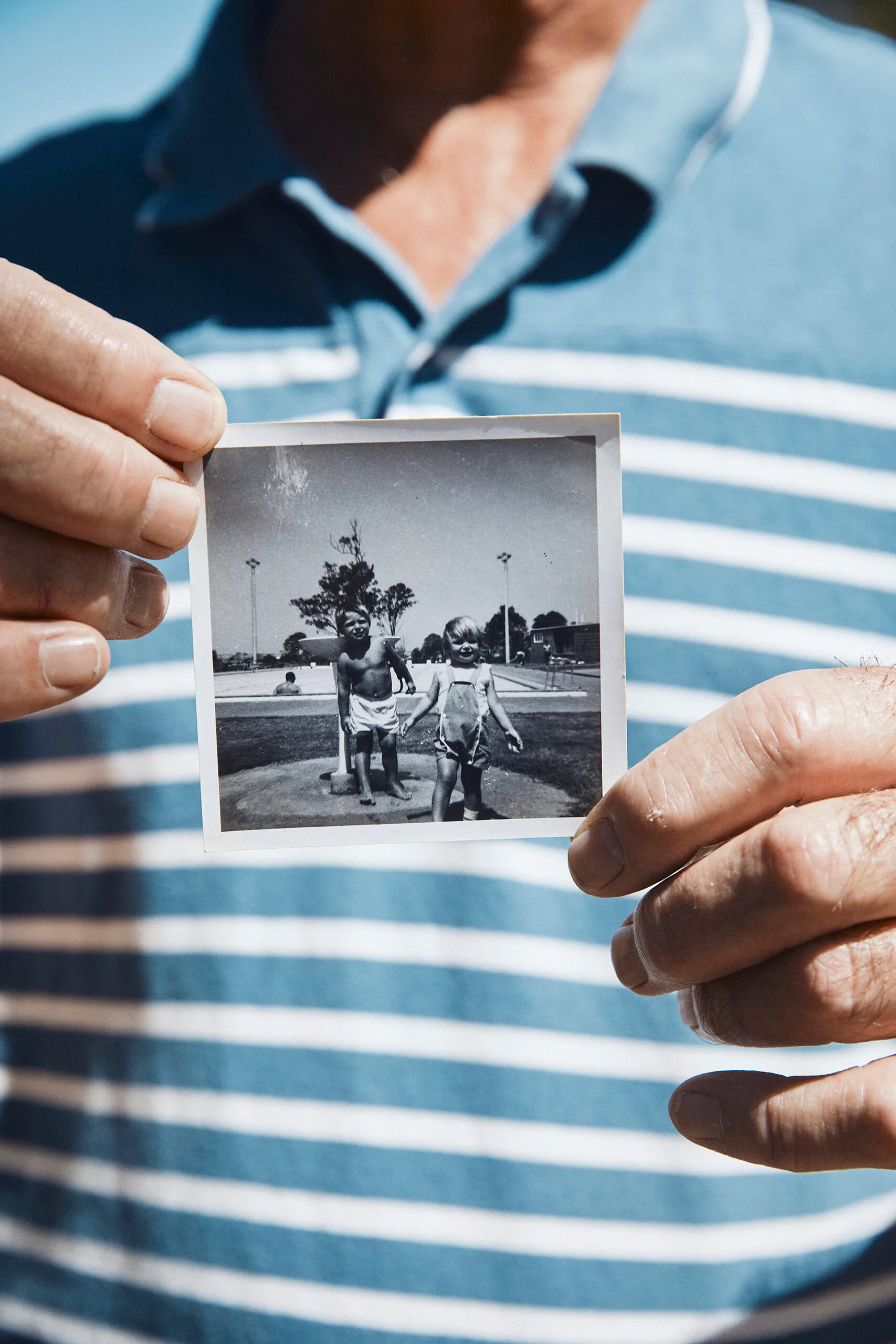
“Coming to terms with the devastation of what happened to Cheryl had made me very cautious,” she admits. “I’m still careful to make sure my kids are always in sight, always observing who is around. The whole family is like that. But children are perceptive. They put pieces together. Words, feelings … conversations.”
Slippery justice
As the family braced for an emotional trial and a fresh wave of media, Damian and Frank worked to make the case water-tight.
“Ricki was interviewed,” says Damian. “I couldn’t tell him what Mercury had told us but one detail excited us. He told us he picked Cheryl up to drink from a bubbler. Mercury had seen that and had said so in his confession.” Ricki was crystal clear: “It’s not memory,” he told them. “It’s tattooed inside my head.”
“Another telling factor was Mercury describing the three kids between the sand and the grass but also a man sitting, smoking on a wall nearby,” says Damian. “Frank and I went back to Fairy Meadow. The wall was gone but we found the footings. The man had died but we found his wife in the UK. ‘I knew my husband was there that day,’ she told us. ‘The smoke from his Camel cigarettes wafted into the changerooms.’”
When the case came around in 2019, Damian was confident justice was finally nigh. But that invisible string snapped when Mercury’s lawyers argued at a pre-trial hearing that the original 1971 confession be ruled inadmissible because no adult guardian was present when the 17-year-old confessed. That hadn’t been a legal requirement until 1987, but to everyone’s shock, the judge elected to apply the law retrospectively.
Without the confession, the NSW Director of Public Prosecution dropped the charges. After two years in jail on remand, Mercury was free again. Even he couldn’t believe it.
“As soon as it was announced that he was getting off, he looked at me and smirked,” Paul recalls. “I was so angry.” Linda had to hold him back from lunging at Mercury in the courtroom. Damian sensed it boiling over and called in police reinforcements. Frank Sanvitale was so sickened by the decision, he called time on his 24-year career.
“It’s a bizarre decision to exonerate a confessed killer via a loophole introduced 16 years after the crime,” growls Damian. “I felt total shock, sick to my stomach. My first reaction was: how am I going to tell the family? I was due at a police farewell dinner, but I couldn’t face my mates. I drove home, seven hours straight. I had to be alone.”
No one felt lonelier than Ricki. “He was so furious he made a threat against Mercury, saying he’d ‘take matters into his own hands,’” says Damian. “I’d seen revenge killings before, so even though I didn’t want to, I had a responsibility to act.”
Ricki was served with a restraining order banning him from approaching Mercury at home. He looked at the address and his head spun. He and Mercury were living in the same suburb.
Ricki left Australia shortly afterward, not for Mercury’s safety, but for his own sanity. “Life in Manila is good,” he told The Weekly via text in March. “I’ve met a very special person and, amazingly, let her into my heart, something I’ve never been able to do.”
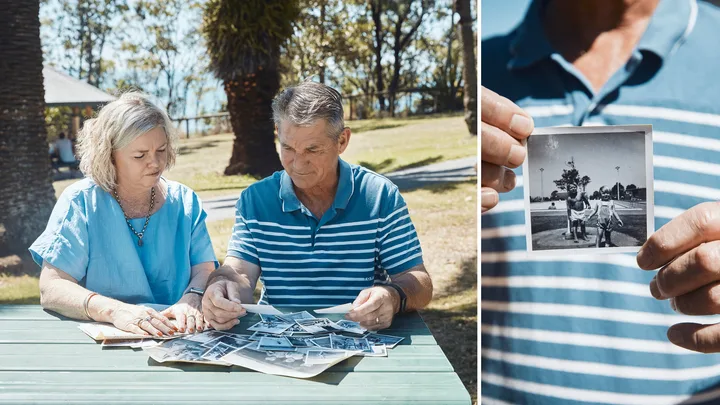
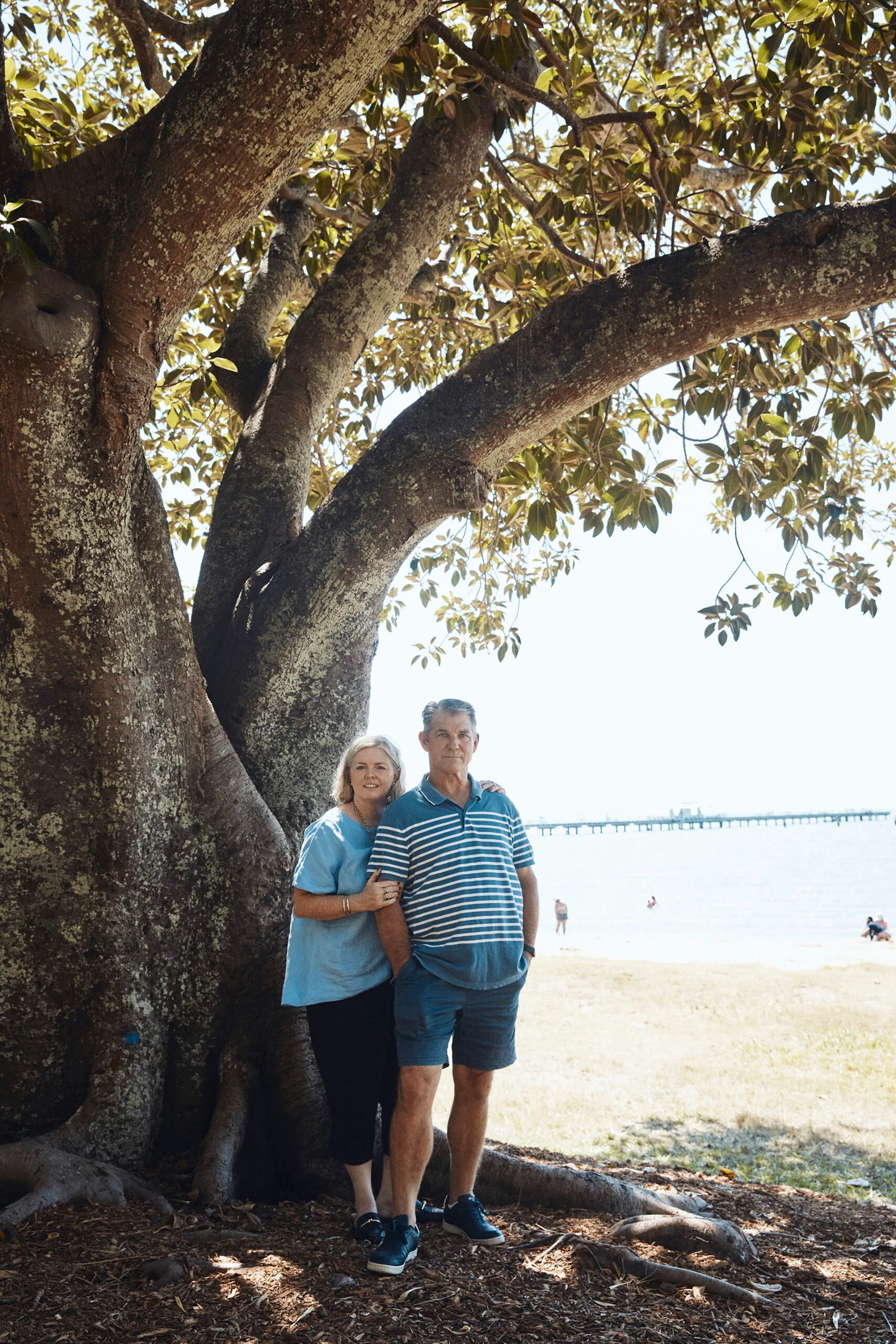
Paul and Linda are off overseas themselves, for a well-deserved break, on the day The Weekly shoots the photographs for this story.
After 35 years as a cop, Damian Loone is now Deputy Mayor at Ballina Shire Council.
It’s strange that ‘Grimmer’ bears so close a resemblance to ‘glimmer’, the word for “a light that shines faint and flickering”. But it’s an apt symbol for the hope Cheryl’s family still hangs onto.
For now, that torch has passed to Mike Grimmer, the son of Vince’s brother, who connected with his Australian family via a DNA search in 2016. He’s gathering fresh witness testimony and evidence to force a new inquest or trial.
“What’s happened in Cheryl’s case isn’t right,” he tells The Weekly via Zoom from the UK. “Mercury should have been charged from the start, or at least put in a line-up so any witnesses could identify him. And Carole and Vince should have been told about that confession. It denied them a chance to push the police and get justice. And the 2019 decision is the wrong decision based on the wrong principles. It’s a horrible mess.”
The NSW DPP has agreed to review the decision to drop the case against Mercury if the new evidence from Mike compels it. And NSW MLC Jeremy Buckingham is trying to trigger a change to the laws to allow Mercury’s confession to be submitted.
“You are a coward, a slug and a murderer, and you should do the right thing now and hand yourself in,” he raged this year, naming Mercury under parliamentary privilege.
The family go back to Fairy Meadow as often as they can to place flowers on Cheryl’s plaque. It brings the brothers peace and connection to remember the last place they were with their sister, all of them together. For Melanie, who has kept the Grimmer name “because it makes me feel closer to Cheryl”, it’s much tougher. “It takes a lot for me to be there,” she admits. “The beach is beautiful but it will always be a place where something bad happened.”
This feature originally appeared in the August 2026 issue of The Australian Women’s Weekly. Subscribe so you never miss an issue.