




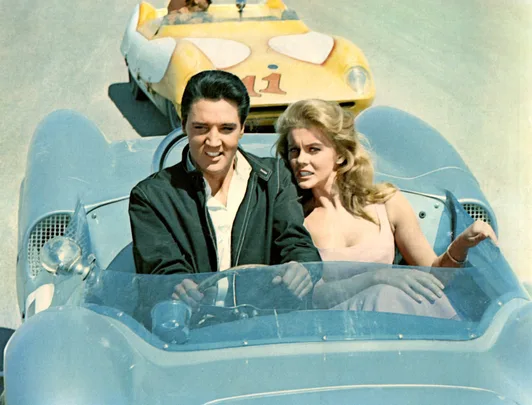
It was an affair that set the world on fire – and almost ended his marriage to Priscilla in the process. Sarah Rodrigues revisits the story of the woman who many felt should have become Queen to Elvis’ King in issue 28 of The Australian Women’s Weekly Icons.
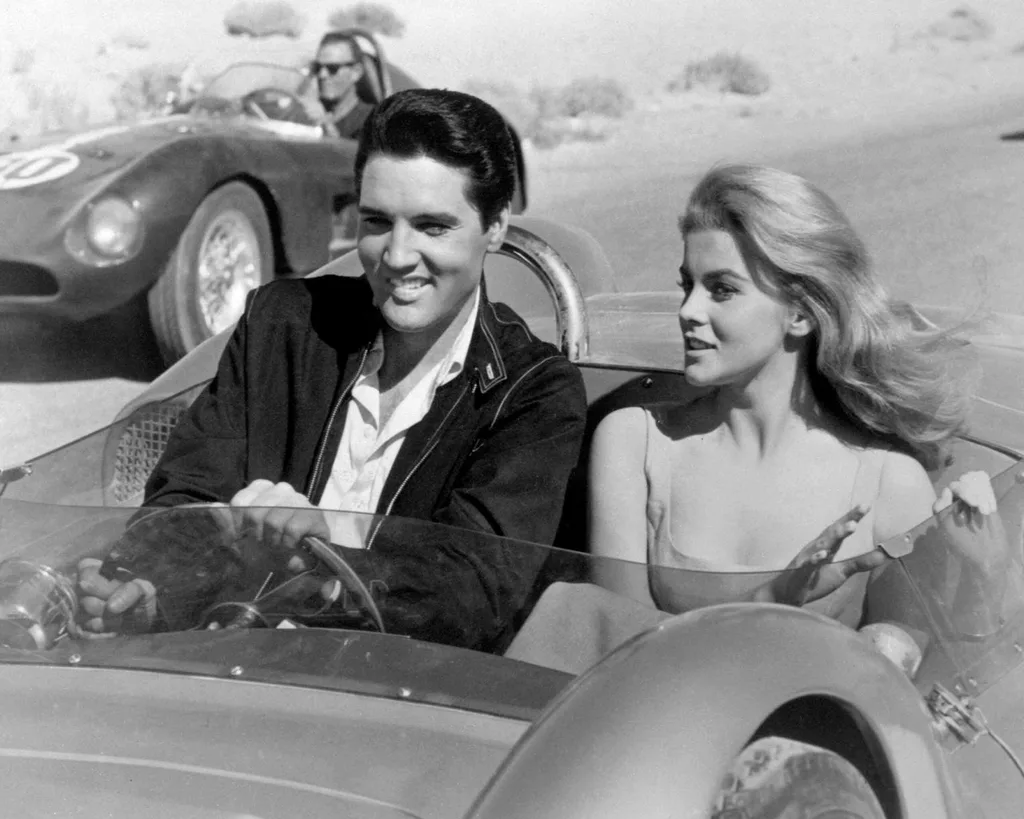
At the age of 28, Elvis Presley was already an old hand at movie-making – he’d notched up 13 films, as well as countless hit singles. But his 14th film – 1964’s Viva Las Vegas – was the one that was going to have a significant and lasting impact on his personal life.
In a meeting engineered by MGM studio executives to ensure that there would be enough “chemistry” between the King of Rock’n’Roll and his leading lady, the Swedish-American actress Ann-Margret Olsson, the pair came face to face for the first time on an otherwise empty soundstage. A studio photographer lurked, taking snaps. Director George Sidney made the introductions.
“Elvis Presley, I’d like you to meet a wonderful young lady, Ann-Margret,” he said. “Ann-Margret, this is Elvis.”
“I reached out my hand, and he shook it gently,” Ann-Margret recalled in her 1994 memoir, My Story. “‘I’ve heard a lot about you,’ we said at the same time, which made us laugh and broke the ice.”
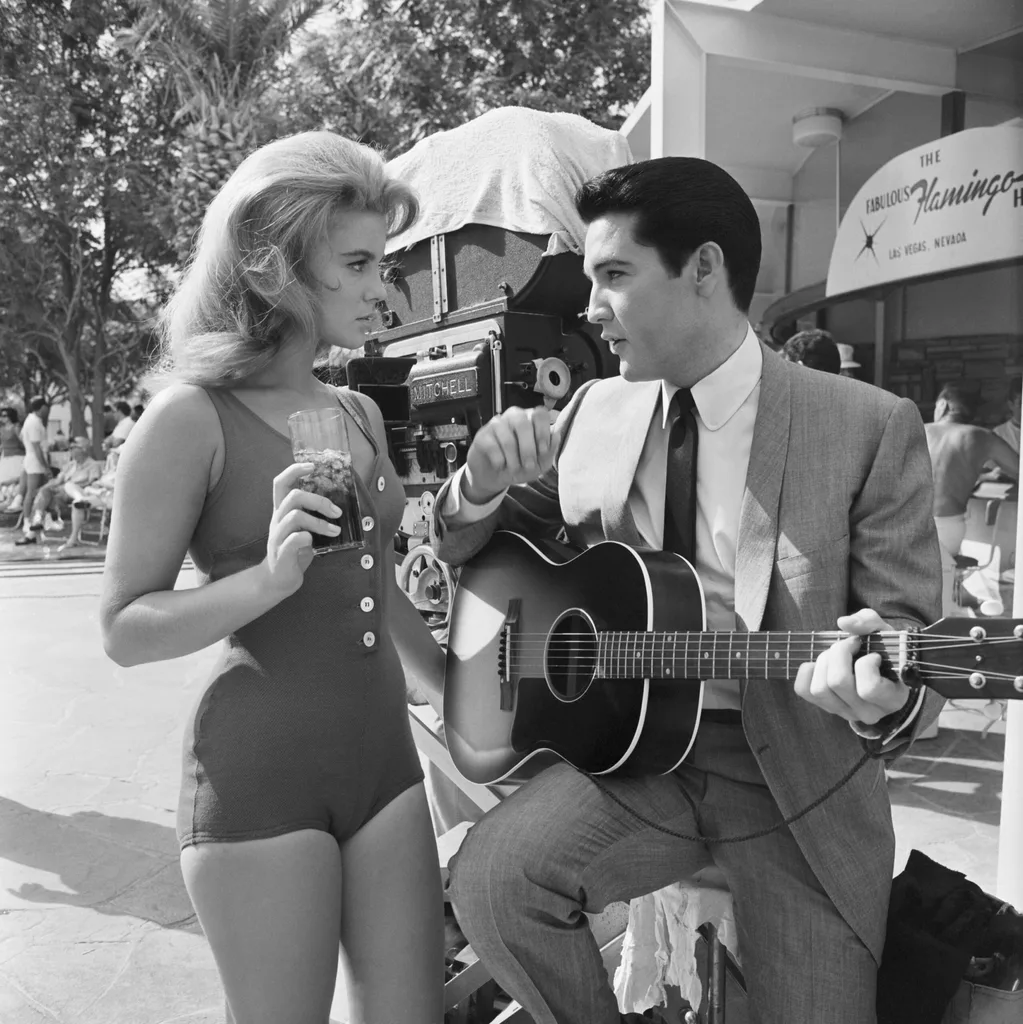
Whatever ice there may have been was soon replaced by sparks which flew between the pair, who met up again a few days later to record their duets for the film. The year was 1963 and, at the age of 22, Ann-Margret was already hitting a career high – something that was reflected in the fact that she was the only female co-star ever to share top billing with the King.
Having started dance lessons as a child, her natural ability was soon noticed, and she went on to perform in Las Vegas, where she caught the attention of American entertainer George Burns. After appearing on his annual Christmas special, Variety magazine’s review of the young performer was glowing.
“George Burns has a goldmine in Ann-Margret,” the journalist gushed. “She has a definite style of her own, which can easily guide her to star status.”
As demonstrated by the fact that she duetted on three songs with Elvis for Viva Las Vegas (‘The Lady Loves Me’, ‘You’re the Boss’, and ‘Today, Tomorrow, and Forever’), Ann-Margret was not only a gifted dancer but also a talented singer. Her 1961 album, And Here She Is …, saw her nominated for 1962’s Grammy Award for Best New Artist, and awarded ‘Most Promising Female Vocalist’ in Billboard’s end-of-year rankings.
In an almost prophetic twist, the outfit that Ann-Margret wore on the cover of her debut album was strikingly similar to that worn by her Viva Las Vegas character, Rusty Martin, in her unforgettable dance scene with Elvis to ‘C’mon Everybody’.
The eerie coincidences went further than this. At the beginning of her singing career, her vocal qualities were compared to Elvis’, even earning her the nickname “the female Elvis”. In 1962 – a full year before that first fateful meeting with Elvis – she’d recorded a version of ‘Heartbreak Hotel’. And in 1963, she’d starred in Bye Bye Birdie. A musical comedy directed by George Sidney and based on a teen heartthrob being conscripted for military duty, this was a storyline that obviously reflected Elvis’ 1957 drafting.
Is it any wonder that there was already a connection between the pair when they first met?
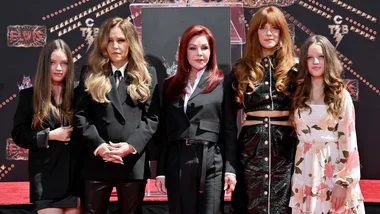
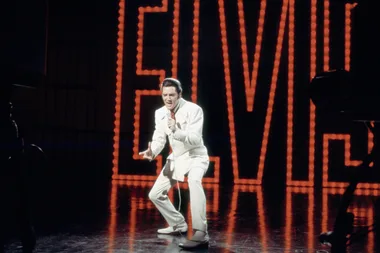
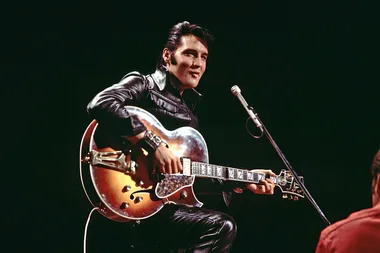
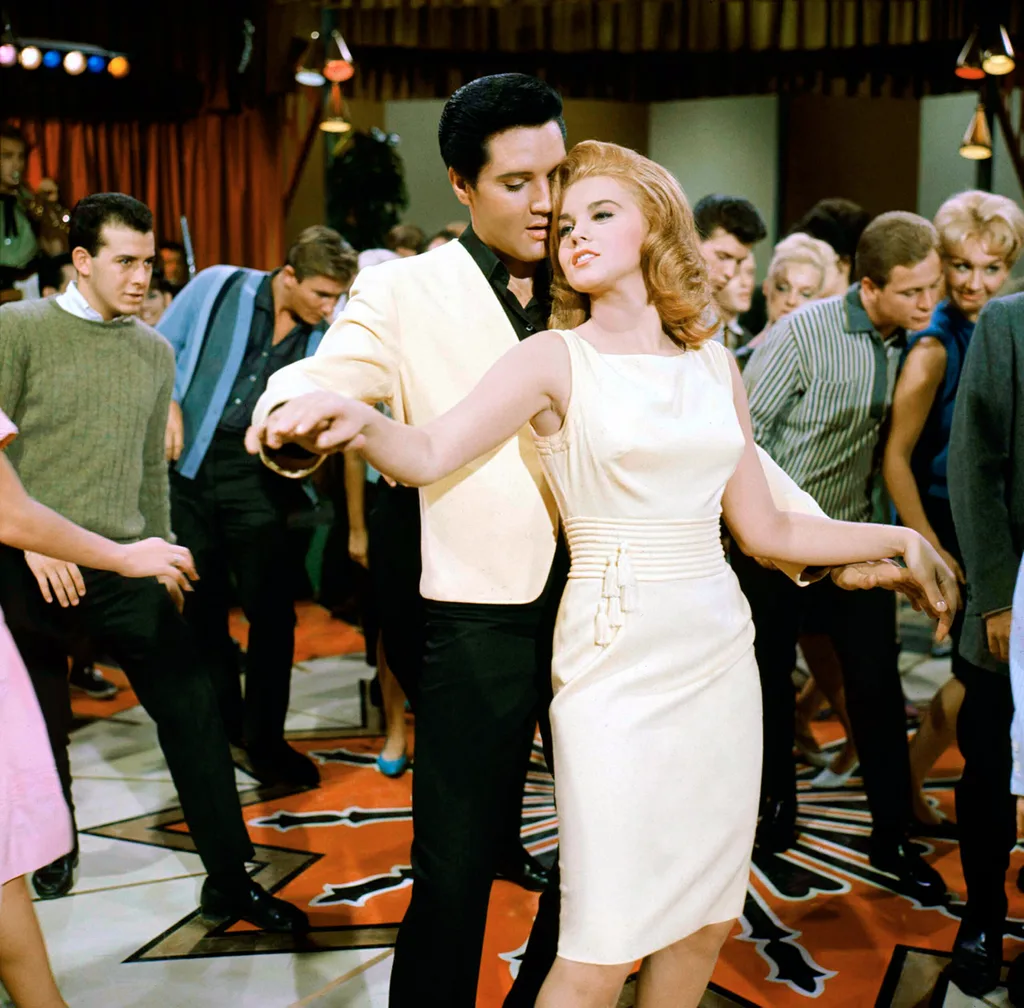
There was one snag to their immediate attraction, however. Elvis was already in a relationship with Priscilla Beaulieu, the sweetheart he’d met while stationed in Germany in 1959, when she was just 14 years old, and he was 10 years her senior.
By 1963 – the year that Elvis and Ann-Margret first met – Priscilla had been permitted by her parents to leave Germany and live with Elvis in Memphis, on the condition that she finish her education at an all-girls Catholic school.
Tabloid gossip reached the young Priscilla, of course. How could it not? Anyone working on Viva Las Vegas had a front-row view of the chemistry that fizzed between Elvis and Ann-Margret – not only on set, but as the two began to spend more and more time together away from the rest of the cast and crew.
It wasn’t the first time that Priscilla had been confronted with rumours about her love and the ladies he inevitably encountered. After being discharged from the army, Elvis was brought face to face with Nancy Sinatra at a press conference organised by her father, Frank. Rumours soon ensued.
While Frank would say that the pair’s relationship had always been flirtatious, Nancy claimed that they were never anything more than good friends (and, in fact, later threw a baby shower for Priscilla when she was pregnant with Lisa Marie).
At the time, Elvis soothed a jealous Priscilla, pointing to the insidious nature of the press and telling her they’d fabricate anything for an attention-grabbing headline. Reassuring her that he thought about her all the time, he followed up by saying that he wanted to arrange to have her flown out to Los Angeles for a visit.
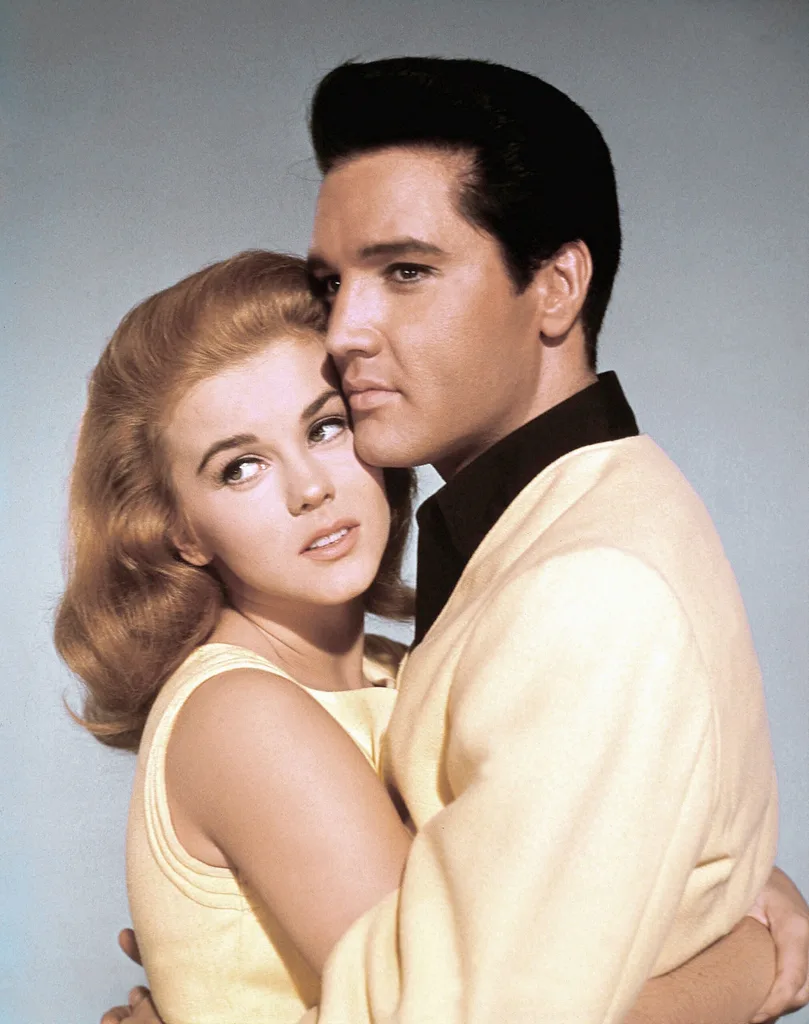
It was after spending Christmas with Elvis at Graceland in 1962 that Priscilla went back to Germany and told her parents that she was moving to Memphis to be with Elvis and would finish her schooling there.
Although other leading ladies stirred rumours of a similar nature – Elvis was, at various times, linked to Laurel Goodwin, his co-star in 1962’s Girls! Girls! Girls!, as well as to Juliet Prowse, who played a cabaret dancer in 1960’s G.I. Blues – there had never been anything quite like the tangible passion between Elvis and Ann-Margret.
In Ann-Margret’s own words: “We both felt a current, an electricity that went straight through us. It would become a force we couldn’t control.”
And inevitably, Priscilla couldn’t control her jealousy when word reached her of the amount of time that her beloved was spending – both on and off set – with the sultry Swede.
“The newspapers were reporting their ‘blossoming’ affair daily,” she recalled in a 1985 People magazine article. In her memoir, Elvis and Me, published the same year, she admits to shouting “I hate her! Why doesn’t she keep her ass in Sweden where she belongs?”
Priscilla’s fears were by no means unfounded. One of Elvis’ most trusted friends, Marty Lacker (who was part of the inner circle known as the “Memphis Mafia”) wrote in his 1979 memoir that he “knew Elvis had to make a decision between them. And I thought if push came to shove, he would choose Ann.”
Aside from the obvious physical attributes that drew Ann-Margret and Elvis to one another, they connected on several other levels, too.
“The more time Elvis and I spent together, the more we learned how eerily similar we were,” she recalled. “Some things were obvious, such as a love of motorcycles, music and performing. We’d both also experienced meteoric rises in show business; we liked our privacy; we loved our families; we had a strong belief in God.”
They were, she said, “soulmates.”
“Elvis’ affair with Ann-Margret was not just an affair,” Lamar Fike, one of Elvis’ best friends, would say. “He was really in love with her.”
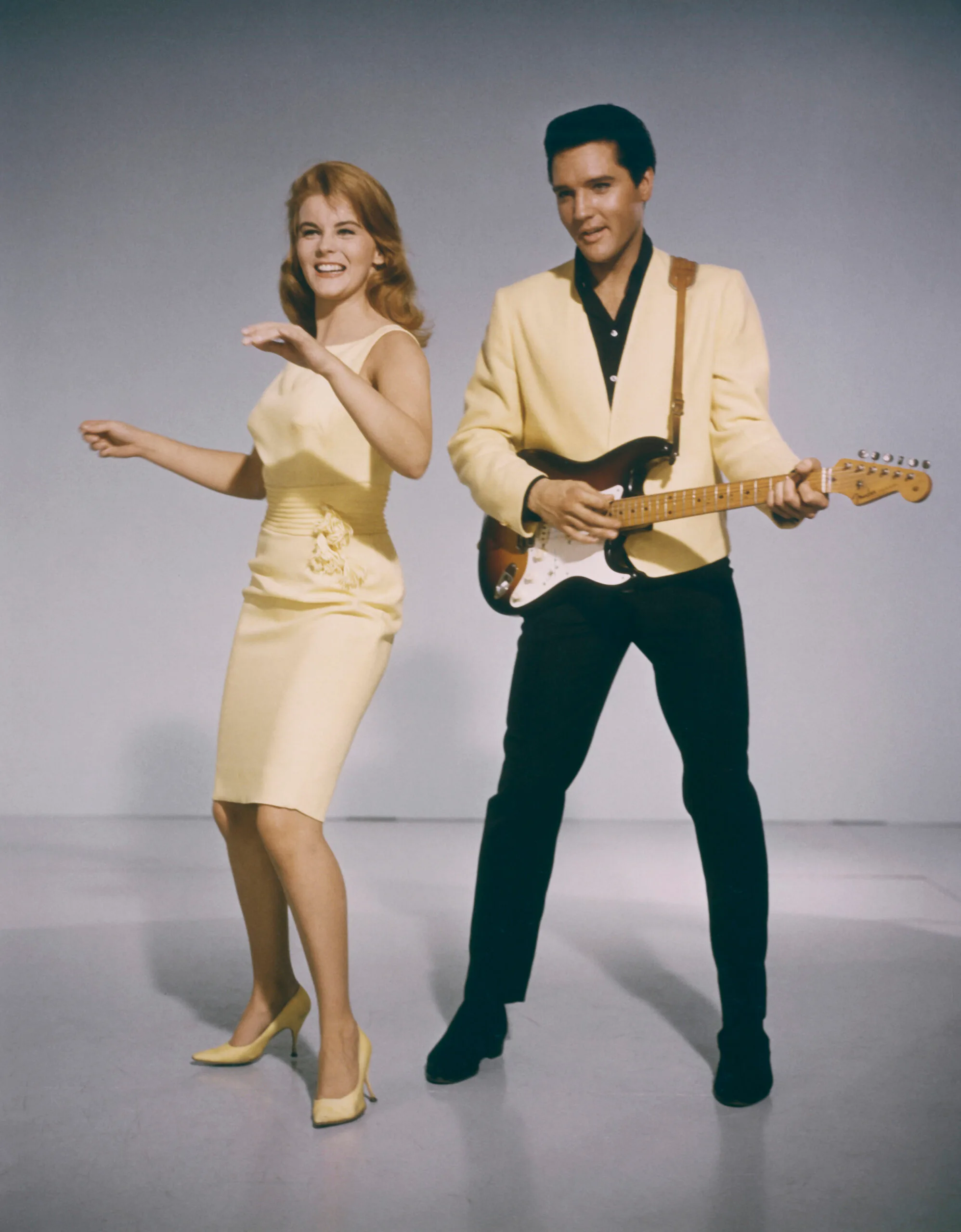
One of the most pressing issues, from Elvis’ point of view however, was that one of the conditions of the Beaulieus allowing Priscilla to move to be with Elvis was that his intentions were honourable. That is, he would eventually marry the much-younger beauty. There was another very persuasive voice in the discussions as well. Elvis had been under the management – and influence – of Colonel Tom Parker since 1956.
In fact, the Colonel had been instrumental in Elvis serving his time in the military, on the basis that it would add to the star’s relatability and appeal. When it came to Priscilla, the Colonel was, in accordance with the morals of the times, keen to demonstrate that Elvis was a good Southern boy with a true heart. Between him and Priscilla’s parents, the pressure was on.
Ann-Margret knew this to be the case as well, even though Elvis had lavished her with gifts such as a circular bed in pink, her favourite colour. “We both knew that [staying together] was impossible… Elvis and I knew he had commitments, promises to keep, and he vowed to keep his word.”
Things came to a head when Ann-Margret travelled to England to promote Viva Las Vegas and was harassed by the press about her relationship with Elvis. She has always denied leaking anything to reporters, but the headlines the following day were full of the news of their “engagement”. Ann-Margret called ‘EP,’ as she’d nicknamed him, to explain that her statements had been grossly exaggerated – but it was too late. The news had already reached America.
It’s said that a furious Elvis returned home from the studio immediately, with the newspaper in his hand, to tell Priscilla. When she retaliated by throwing a glass vase against the wall, Elvis allegedly pinned her down and shouted, “I didn’t know this was going to get out of hand. I want a woman who’s going to understand that things like this might just happen. Are you going to be her, or not?”
And so Priscilla and Elvis were engaged in 1966, and married in May 1967. A week later, Ann-Margret wed divorced actor and father-of-three Roger Smith, to whom she remained married for 50 years until his death in 2017.
Despite this, the connection between Ann-Margret and Elvis persisted. As was the King’s way with people he was immensely fond of, he continued to address the actress with a variety of nicknames, including Rusty (her name in Viva Las Vegas – and, oddly enough, also his character’s name in 1965’s Girl Happy) as well as Thumper and Scoobie.
He also never missed an opportunity to send her elaborate, guitar-shaped bouquets of flowers, usually to mark the opening night of her headline Las Vegas shows.
When she opened at the Hilton on August 15, 1977, it was the absence of one of these gifts that left Ann-Margret with a dreadful premonition that something had happened to Elvis – a feeling that was confirmed the next day by a call from the star’s road manager, Joe Esposito. Elvis had died.
Ann-Margret and her husband flew straight to Graceland, where Elvis’ body was on display in an open casket for two days before his funeral at the mansion on the 18th.
In an interview with the Musicians Hall of Fame & Museum, James Burton, one of Elvis’ band members, recounted that a distraught Ann-Margret would spend hours by her ex-lover’s body.
“She would go in for maybe three or four hours and come out and then go back in,” he recalled.
Ann-Margret was the only one of Elvis’ leading ladies permitted to attend his funeral. It was to be the first time that she and Priscilla, who had (amicably) divorced Elvis in 1973, had ever come face to face.
There was nothing of the jealousy and rage that Priscilla had previously felt towards the star.
“Ann expressed her sympathy so sincerely,” she wrote in Elvis and Me. “I felt a genuine bond with her.”
Once rivals, the pair were united in their heartbreak over the loss – the tragically early loss of the man they had both loved.
This article originally appeared in issue 28 of The Australian Women’s Weekly Icons magazine. Purchase here.

