




At a glance
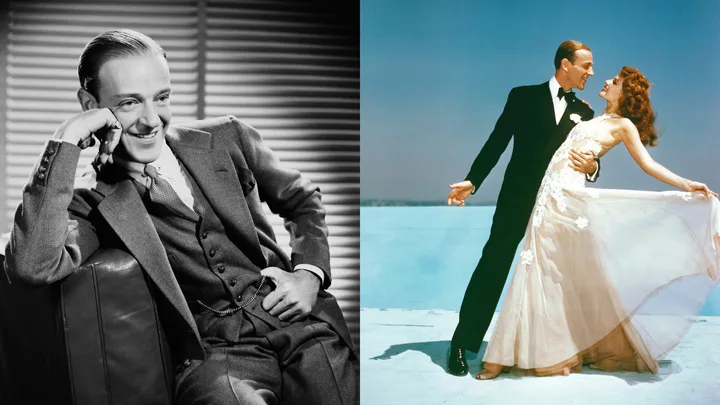
- Fred Astaire was arguably Hollywood’s most talented dancer, revolutionising film musicals with his inventive performances.
- Born on May 10, 1899, in Omaha, Nebraska, he got his start in vaudeville with his sister Adele.
- He was almost passed over by Hollywood, however film producer David O. Selznick gave him a shot at RKO Studios.
- Fred’s pairings with the equally talented Ginger Rogers would shoot him to fame.
Fred Astaire took a sip of water as he sat down for a moment to catch his breath and wipe his damp brow.
“You look exhausted, let’s call it a day,” director Stanley Donen urged him. The 51-year-old had already been on the set of 1951’s Royal Wedding rehearsing his “You’re All the World to Me” dance solo for hours before the crew arrived. They’d filmed for at least a dozen more since.
For while the dancer and actor’s moves might have come across as effortless on-screen, in reality there was a whole lot of work that went on behind the scenes.
“The only way I know to get a good show is to practice, sweat, rehearse and worry,” Fred once said.
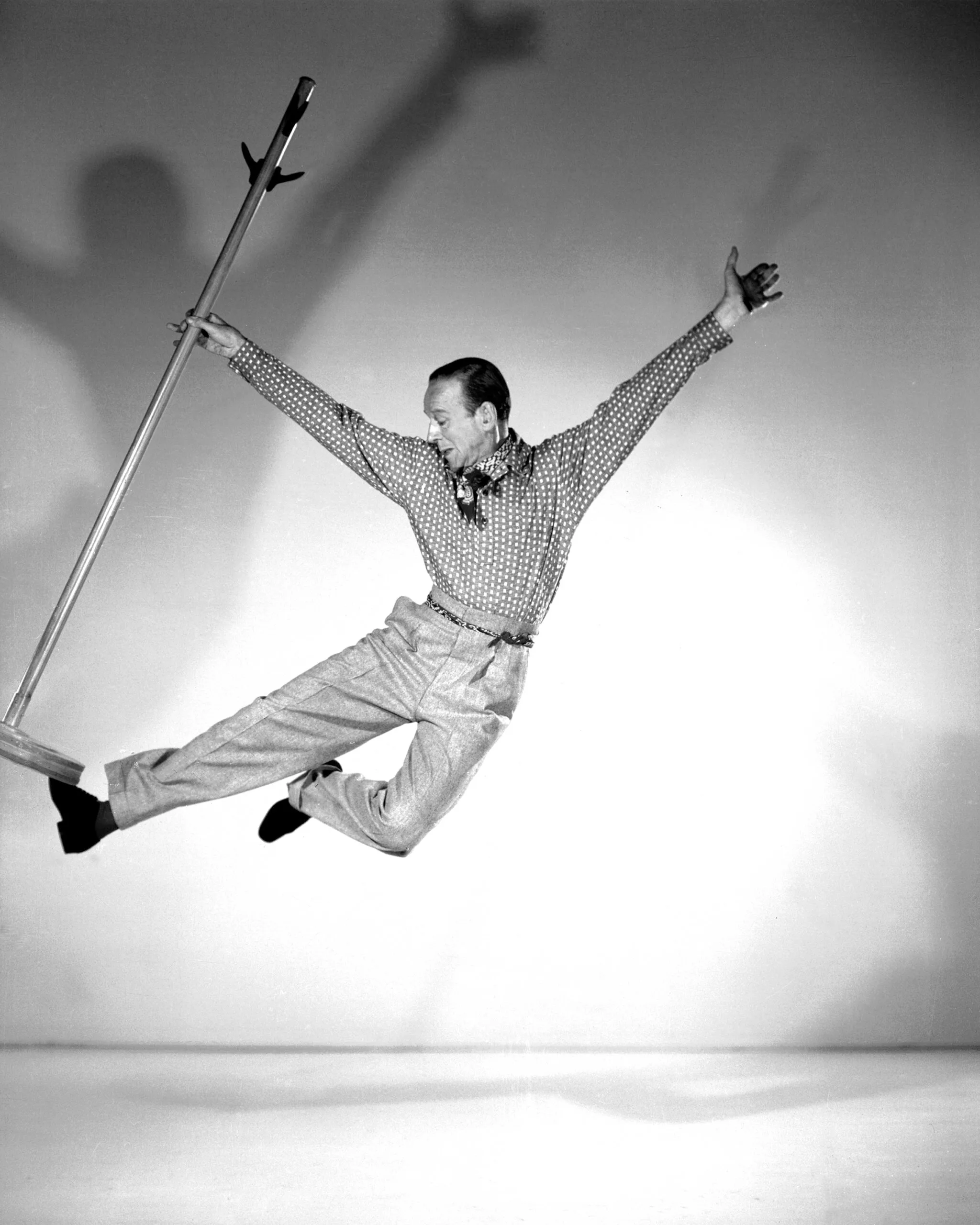
Anything less than perfect just wasn’t good enough, so Fred bounded to his feet. Just as skilled in filmmaking as he was in dancing, he saw no reason why the laws of gravity or the limitations of a set should interfere with him pulling off the perfect scene.
“Let’s just do it once more,” he said, looking up at the cameraman who was sitting on top of a suspended ironing board so he could get the whole sequence in one glorious shot.
“Either the camera will dance or I will,” he added with a wink.
Hopping back in his harness, Fred opened the door to a specially built room, designed to look like a small hotel room, with the rotating platform he needed to pull this revolutionary scene off.
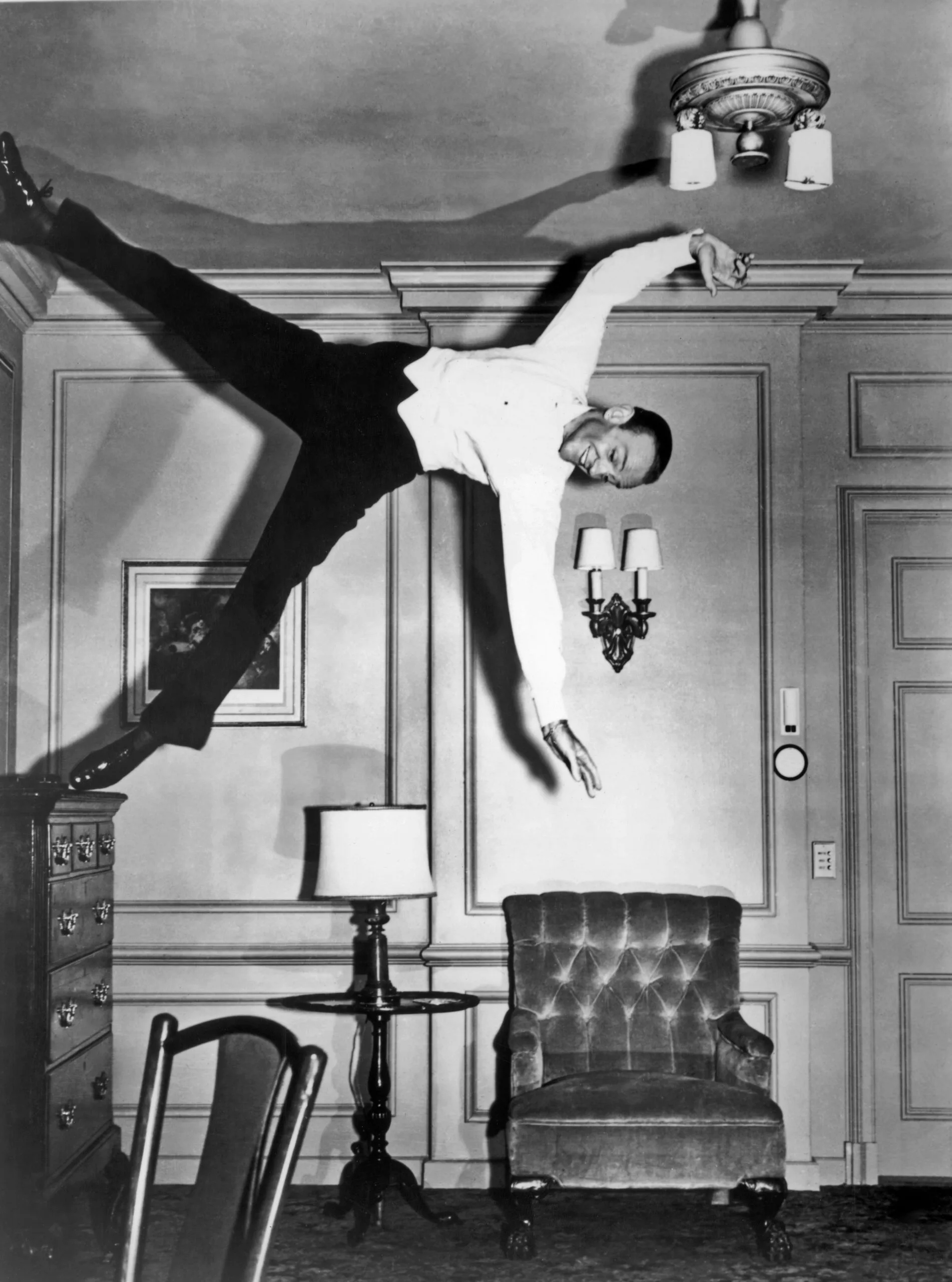
Belting out the lyrics as he began to tap, spin and glide across the floor, Fred stared at a framed image of his co-star and on-screen love interest Sarah Churchill. Teasingly he placed a foot on each chair in the room, until with the help of his special platform, it appeared that his love for her character had just defied gravity and propelled him to walk right up the wall and onto the roof where, with his arms outstretched, he continued to tap away on the ceiling.
“Cut,” yelled Stanley. “That was perfect,” he reassured his leading man.

Reluctantly finishing up, Fred wondered if it was good enough. Not that he would know until it was out in the world. Notoriously nervous, Fred refused to watch the daily rushes, but he needn’t have worried.
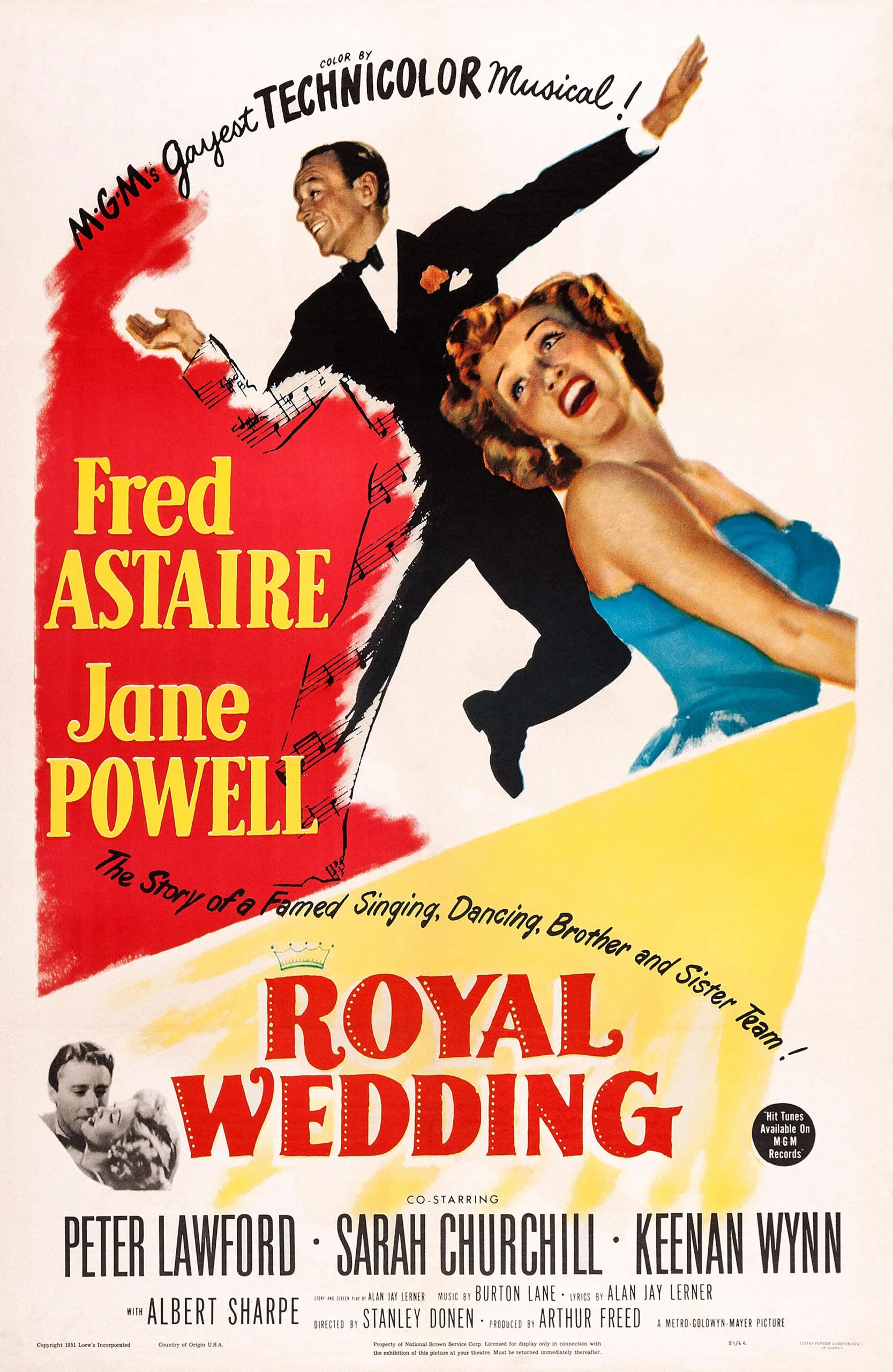
When Royal Wedding premiered in cinemas, it was one of the biggest box office hits of 1951. It made a whopping $2,548,000 just in the US and Canada alone. Audiences were reported to gasp when they first saw Fred walk up to the ceiling and standing ovations weren’t uncommon. Notoriously brutal New York Times film critic Bosley Crowther even called the scene “rib-tickling”.
The dance was just one of several in the film which helped cement Fred’s status as a screen legend. There was also a highly animated “Sunday Jumps” number. In this, he danced with a hat rack and bits of gym equipment. And there was a hilarious scene where he and Jane Powell dance on a rocking transatlantic liner, with each one helping to move the plot of the story along. This had been unheard of until Fred came on the scene. Before that, song and dance numbers were used to show off the talent of the stars while remaining superfluous to the plot.
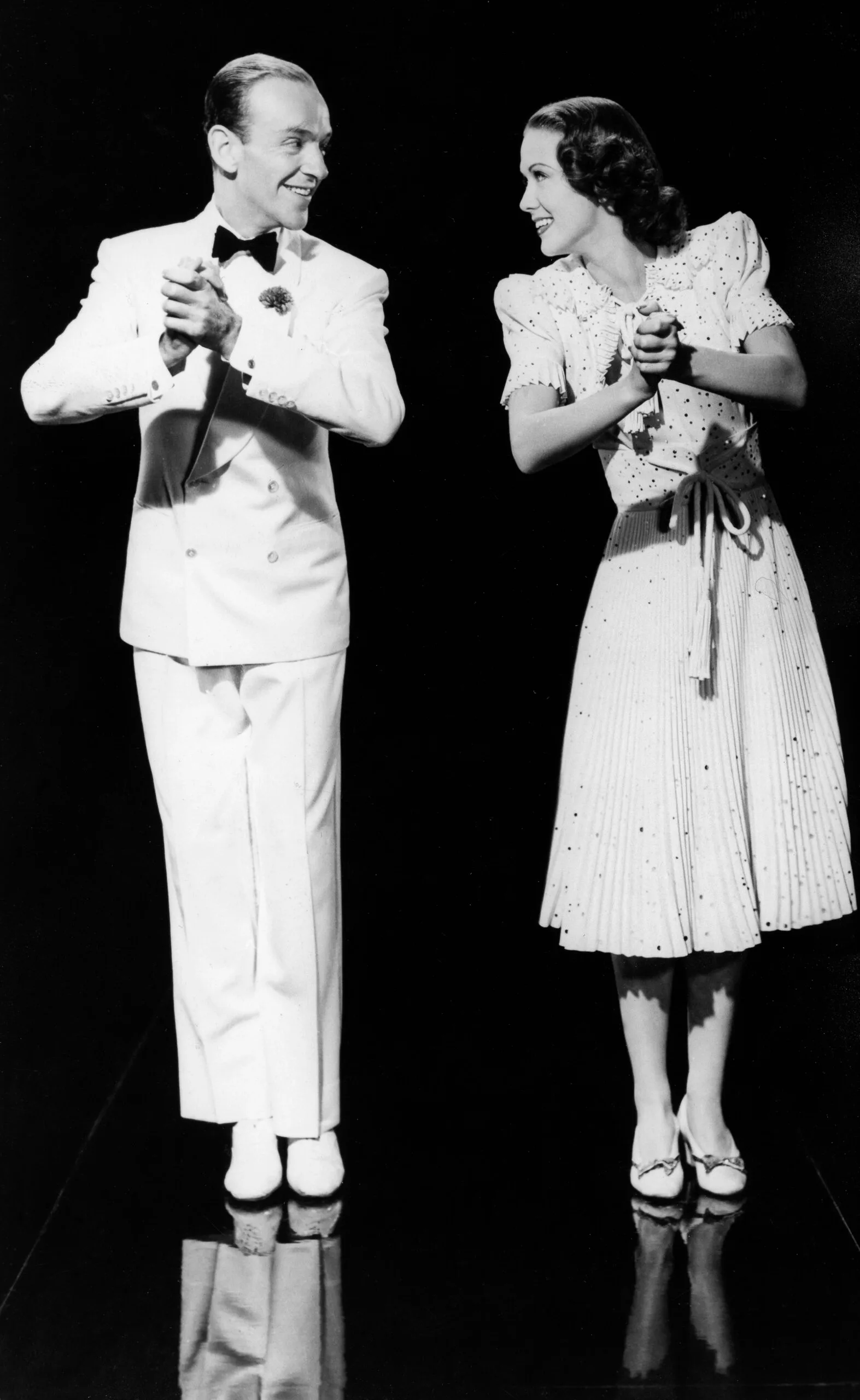
Just as he’d done with his Royal Wedding ceiling jig, it wasn’t uncommon that Fred would put in over 300 backbreaking hours of rehearsal per routine to make it appear flawless.
“Dancing is a sweat job,” he once admitted to Life magazine. “You can’t just sit down and do it, you have to get up on your feet. When you’re experimenting you have to try so many things before you choose what you want, that you may go days getting nothing but exhaustion.”
Fred’s innovations made him a bona fide dance legend. And they are directly responsible for some of the most memorable moments to ever make it on a screen. But his path to stardom wasn’t an obvious one. In fact, his time in Hollywood was almost over before it began.
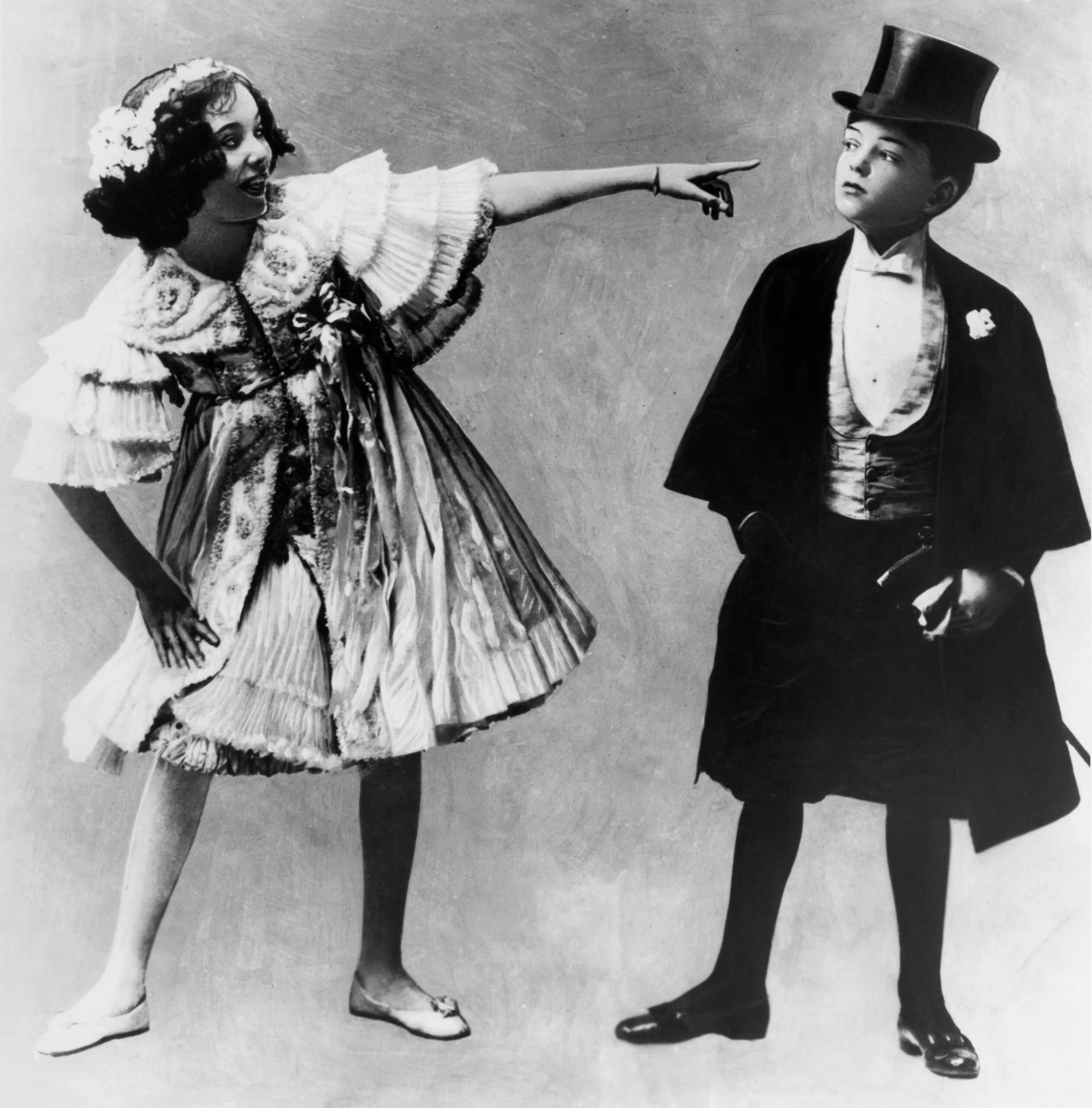
Born Frederick Austerlitz on May 10, 1899, in Omaha, Nebraska, Fred’s mother Ann enrolled his older sister Adele in ballet classes when she was just three. Fred would soon join her.
“The story goes that one time when I had gone with my mother to fetch Adele, I put on a pair of ballet slippers,” Fred recalled in his autobiography, Steps in Time.
“I found them in a corner while I was dawdling around the place, killing time, waiting for Adele to finish her lesson. I had seen other children walk on their toes, so I put on the slippers and walked on my toes. It was as simple as that.”
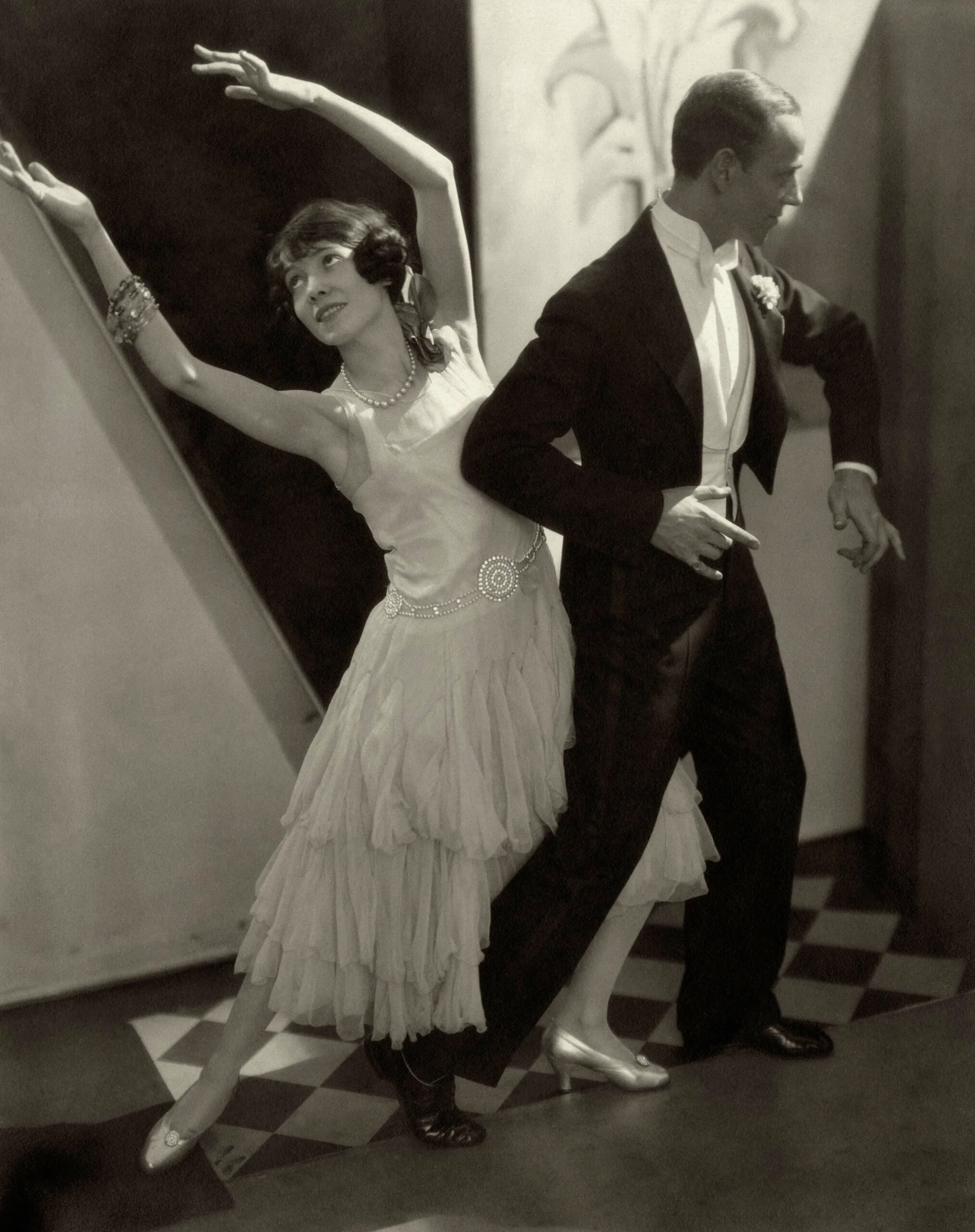
Ann dreamed of escaping their humdrum existence in Omaha and thought her talented tots might be just the ticket. When their dad, Fritz, lost his job in a brewing factory, Ann seized her opportunity. The family packed up and moved to New York City. Fred and Adele began training at the Alvieni Master School of the Theatre and Academy of Cultural Arts. They also changed their last name to Astaire.
With their talents for dancing and singing making the pair perfect for the stage, Ann put together a “brother and sister act” for her children on the vaudeville circuit.
In November 1905, the duo debuted at a tryout theatre in New Jersey. They were an instant hit. The local newspaper even declared that “the Astaires are the greatest child act in vaudeville”. Success on Broadway and the West End followed.
The Astaires performed together for 27 years until Adele took early retirement to wed British aristocrat Charles Cavendish. Adele had long been considered the more talented of the pair, few thought Fred would thrive on the stage without her. But he’d now set his sights on Hollywood.
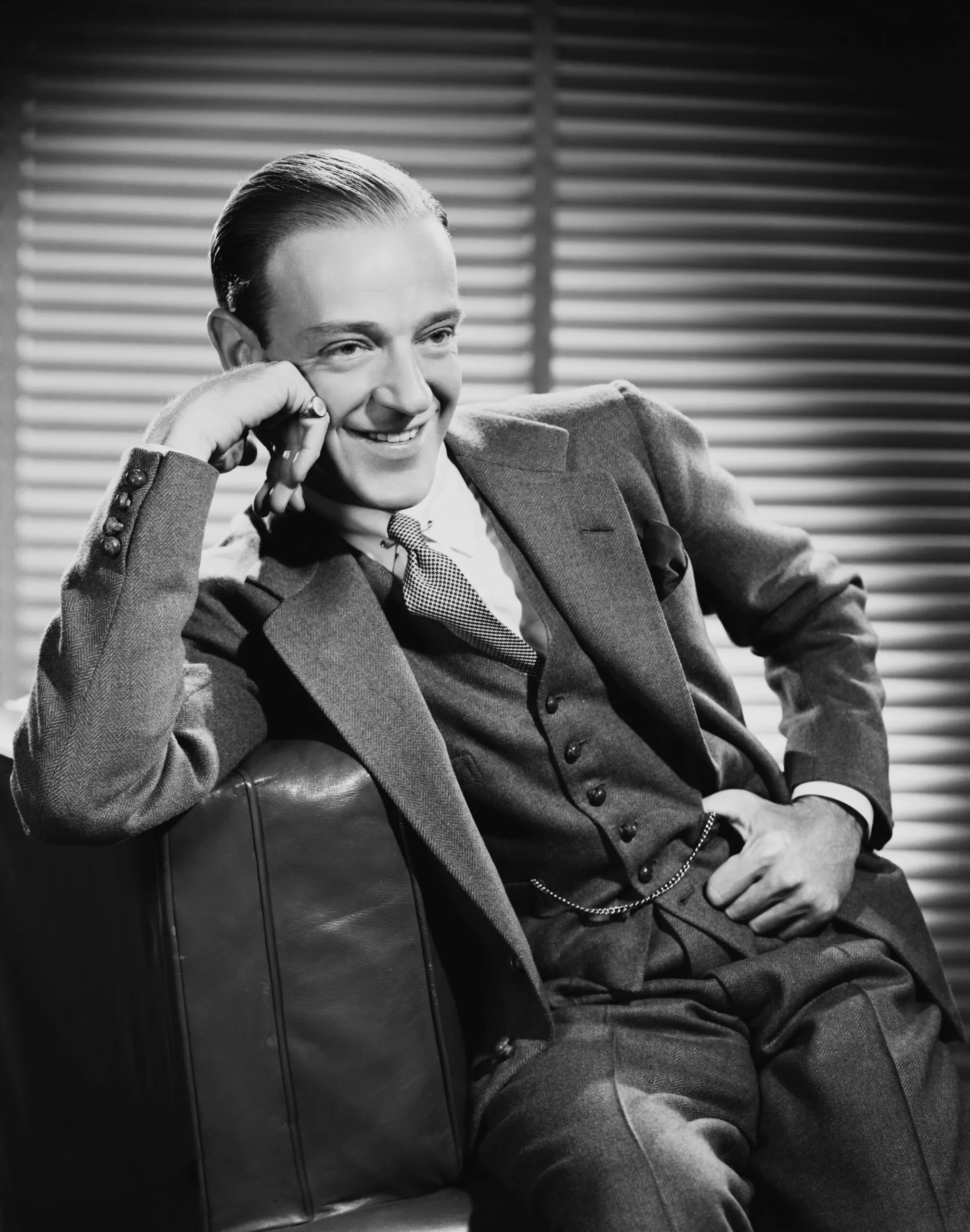
With his lanky legs and receding hairline, Fred headed into RKO Pictures for a screen test. It turned out to be a disaster.
“Can’t act; slightly bald, also dances,” the star later revealed was the feedback the casting agent had given him.
Despite this, film producer David O. Selznick was still keen to sign him, having seen Fred perform on stage.
“I am a little uncertain about the man. But I feel, in spite of his enormous ears and bad chin line, that his charm is so tremendous that it comes through even in this wretched test, and I would be perfectly willing to go ahead with him for the lead in the [Lou] Brock musical,” was his reply in a memo.
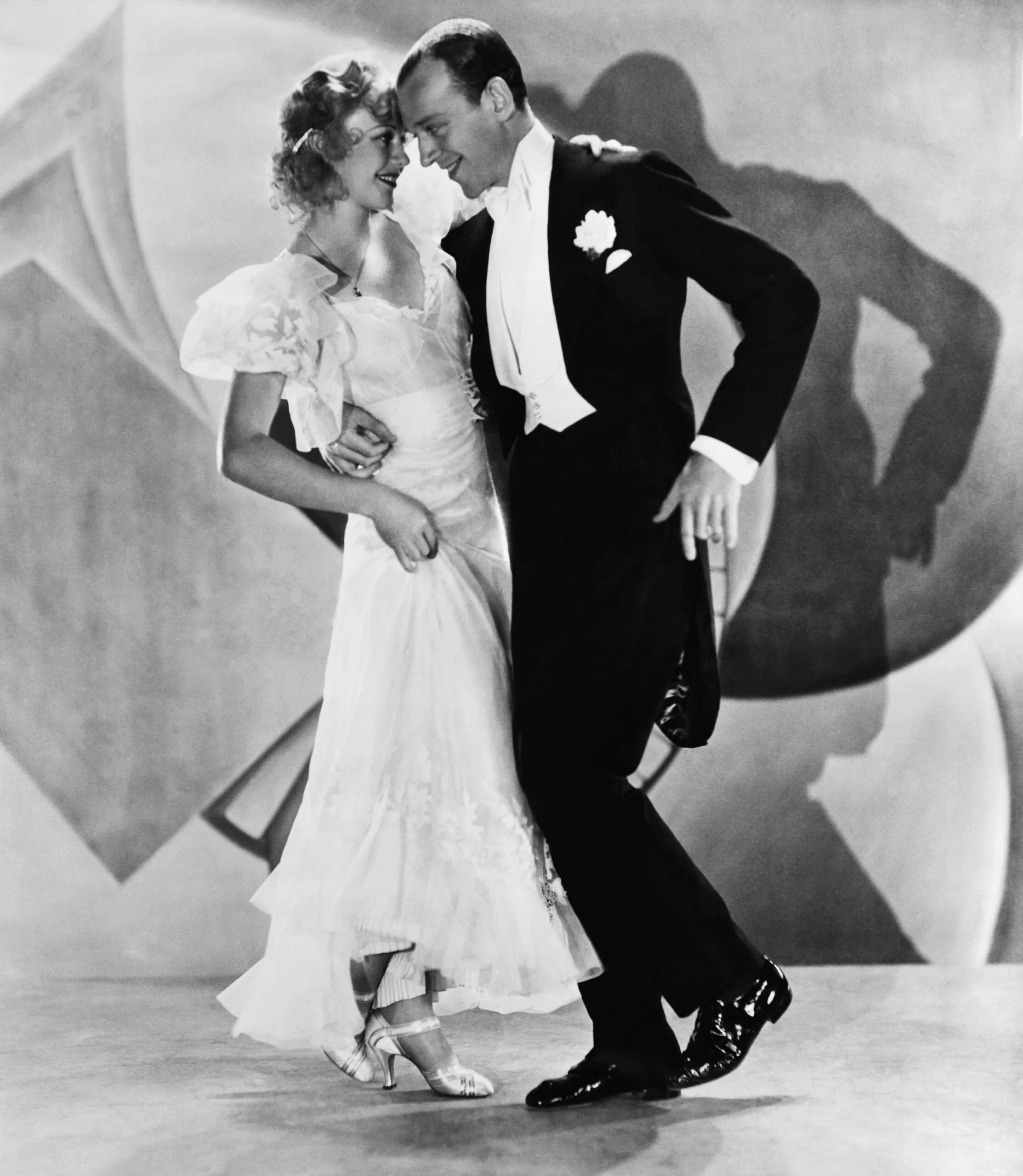
While Fred scored a contract with the studio, he didn’t land the lead role. His Hollywood debut at the age of 34 came with a small role in the musical Dancing Lady, where he performed a few numbers with Joan Crawford. Next came a supporting role in Flying Down to Rio (1933). Here he was paired up with another former childhood vaudeville performer, Ginger Rogers.
While Ginger and Fred were given fourth and fifth billing respectively, they stole the show, performing a charming and funny dance number to “Carioca” where they tap-danced with their foreheads pressed together.
“The main point of Flying Down to Rio is the screen promise of Fred Astaire … He’s assuredly a bet after this one, for he’s distinctly likable on the screen, the mike is kind to his voice and as a dancer, he remains in a class by himself,” read a review in Variety magazine at the time.
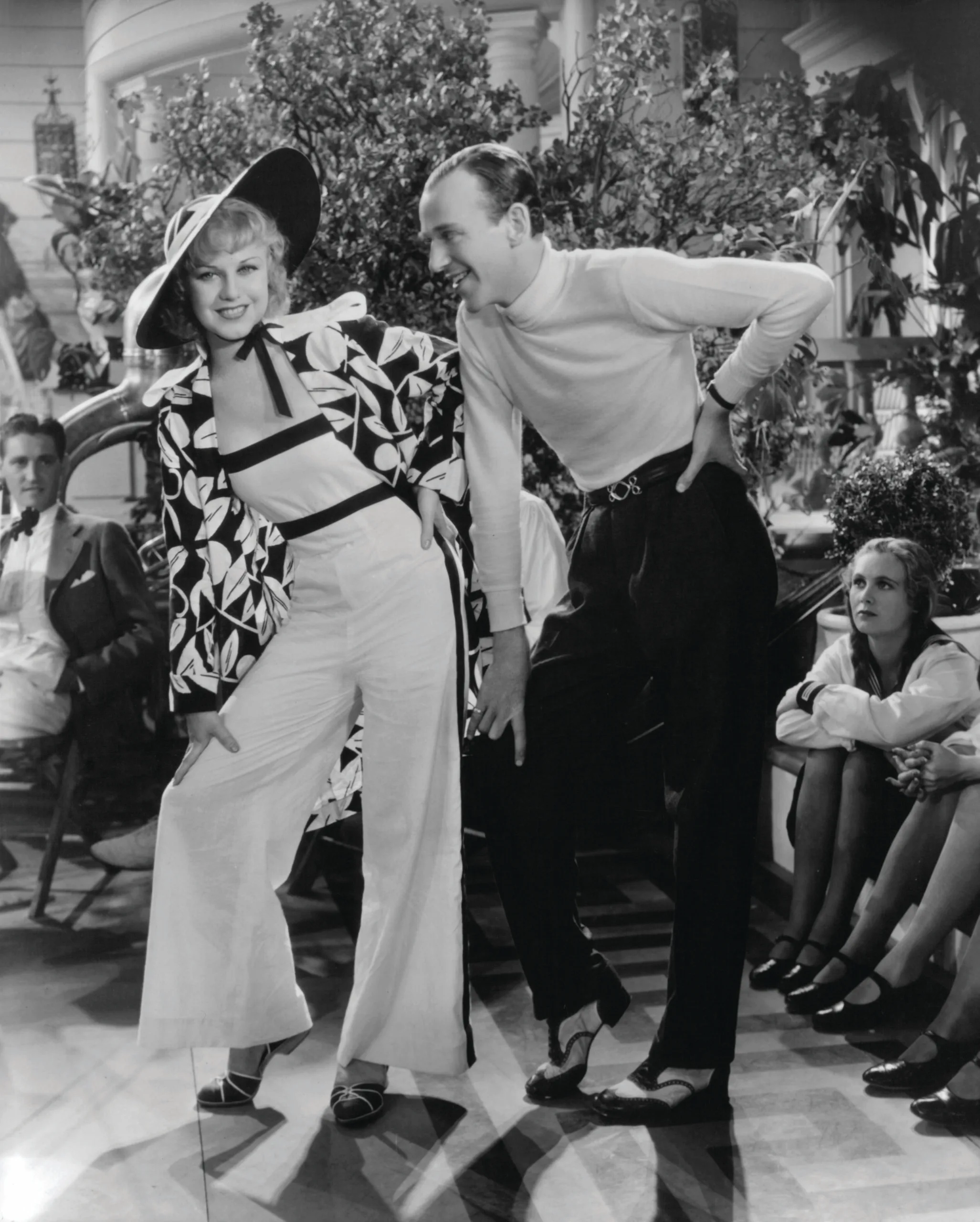
The on-screen chemistry between Fred and Ginger was palpable and the audience wanted more. So for their next project they were offered the lead roles in the screen adaptation of The Gay Divorcee (1934). After so many years in Adele’s shadow, Fred was reluctant to form another partnership.
“I don’t mind making another picture with her, but as for this ‘team’ idea, it’s ‘out’! I’ve just managed to live down one partnership and I don’t want to be bothered with any more,” he wrote to his agent.
His dances with Ginger were a hit. But The Gay Divorcee allowed Fred to show off a fun and carefree side.
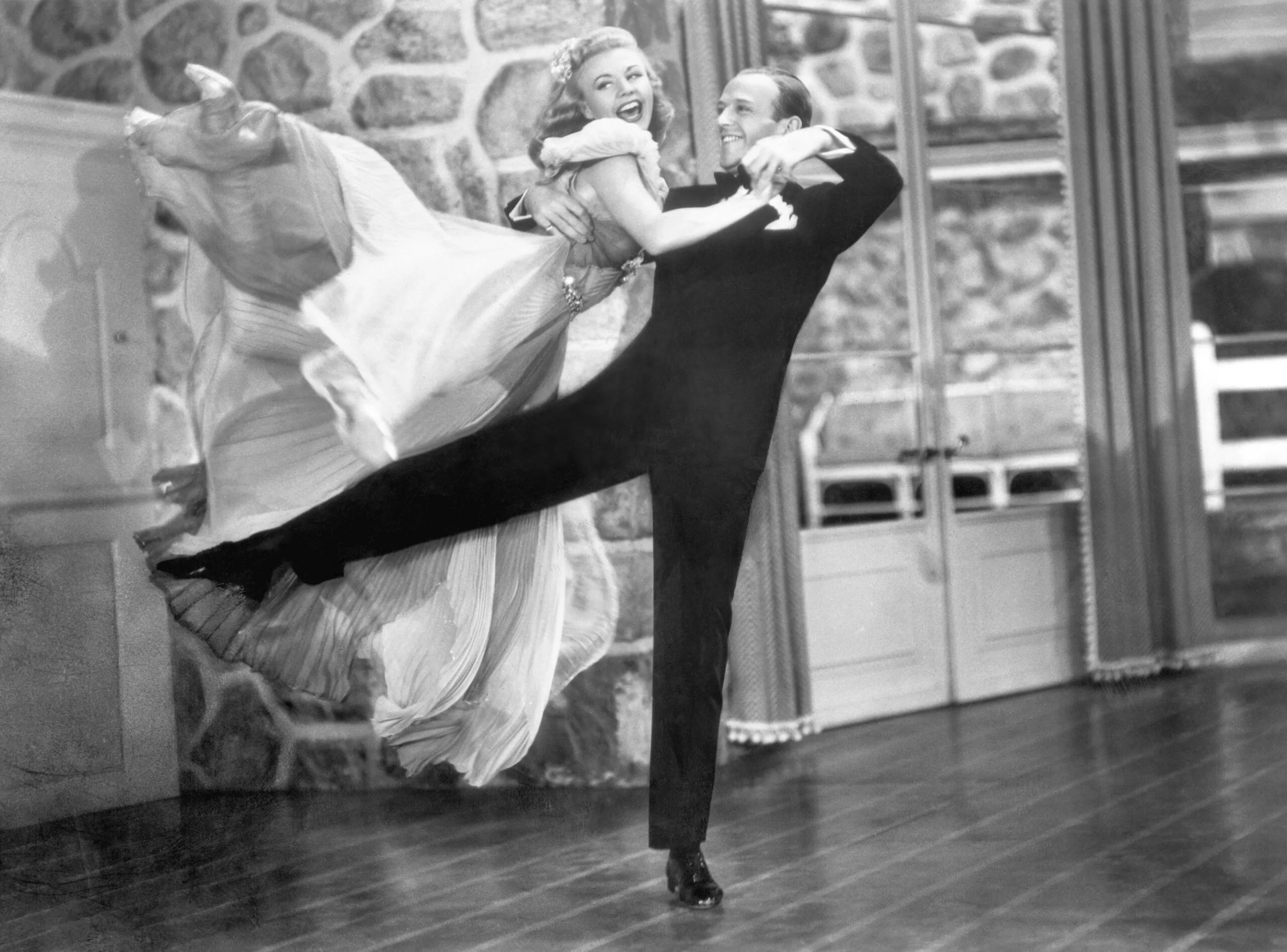
During his solo “Don’t Let It Bother You” number, he energetically tapped with his arms flailing about as he appeared to spin about uncontrollably before suddenly landing on his backside with a large thump. The scene was inspired by some foolhardy antics during rehearsals. This frivolity became a much-loved feature in Fred and Ginger pictures.
While filming The Gay Divorcee, Fred made another fundamental change to the way dance was portrayed onscreen which would change film forever.
Previously, dance sequences were filled with extravagant aerial shots and filmed in dozens of cuts with quick takes, zooming in and out on arms or legs or a chorus line. But Fred insisted all dances in his films be shot in wide view – this always kept the whole performer in the frame – with as few cuts as possible. This gave the illusion of an almost stationary camera filming an entire dance in a single shot. It left the audience captivated.
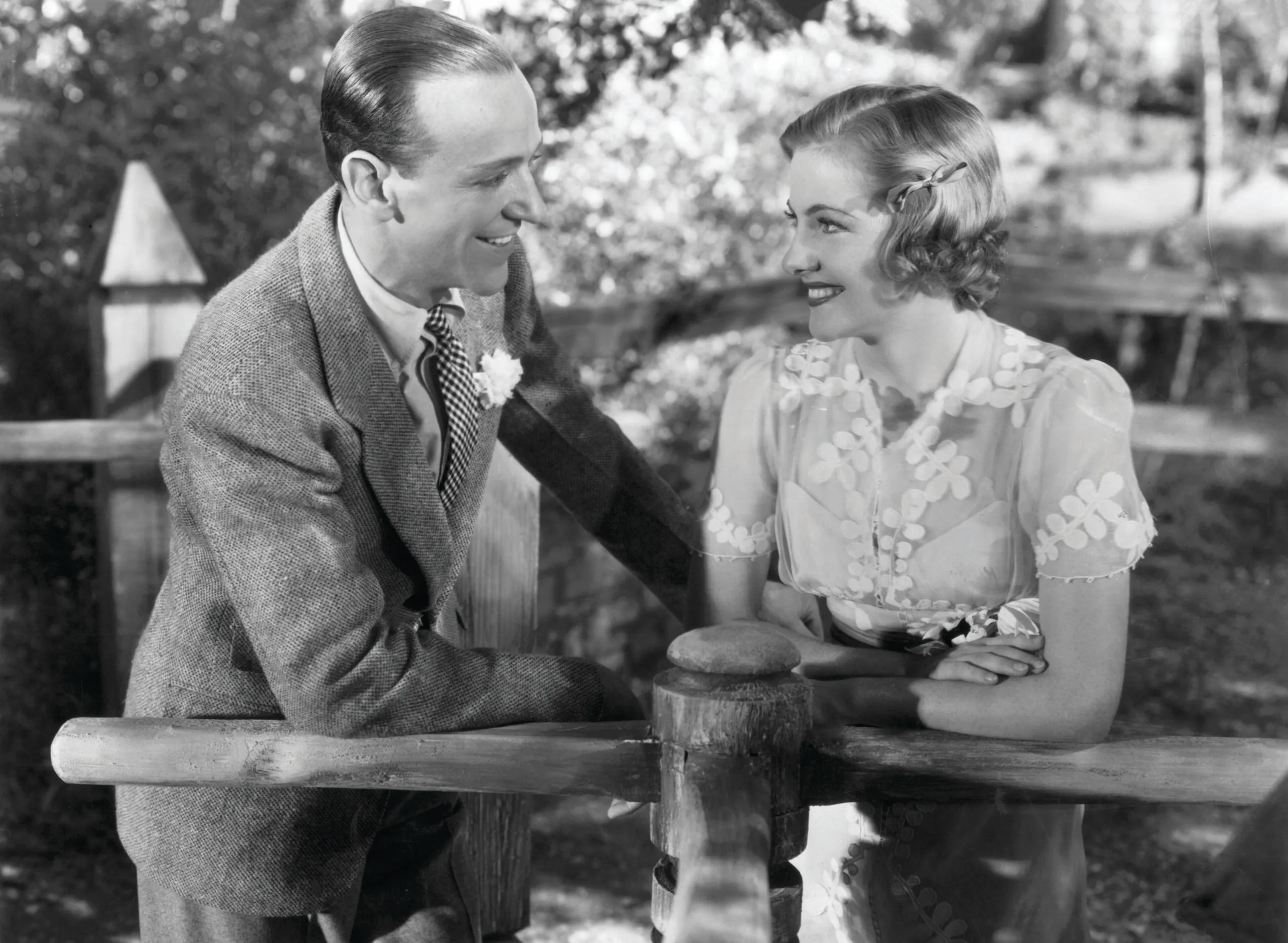
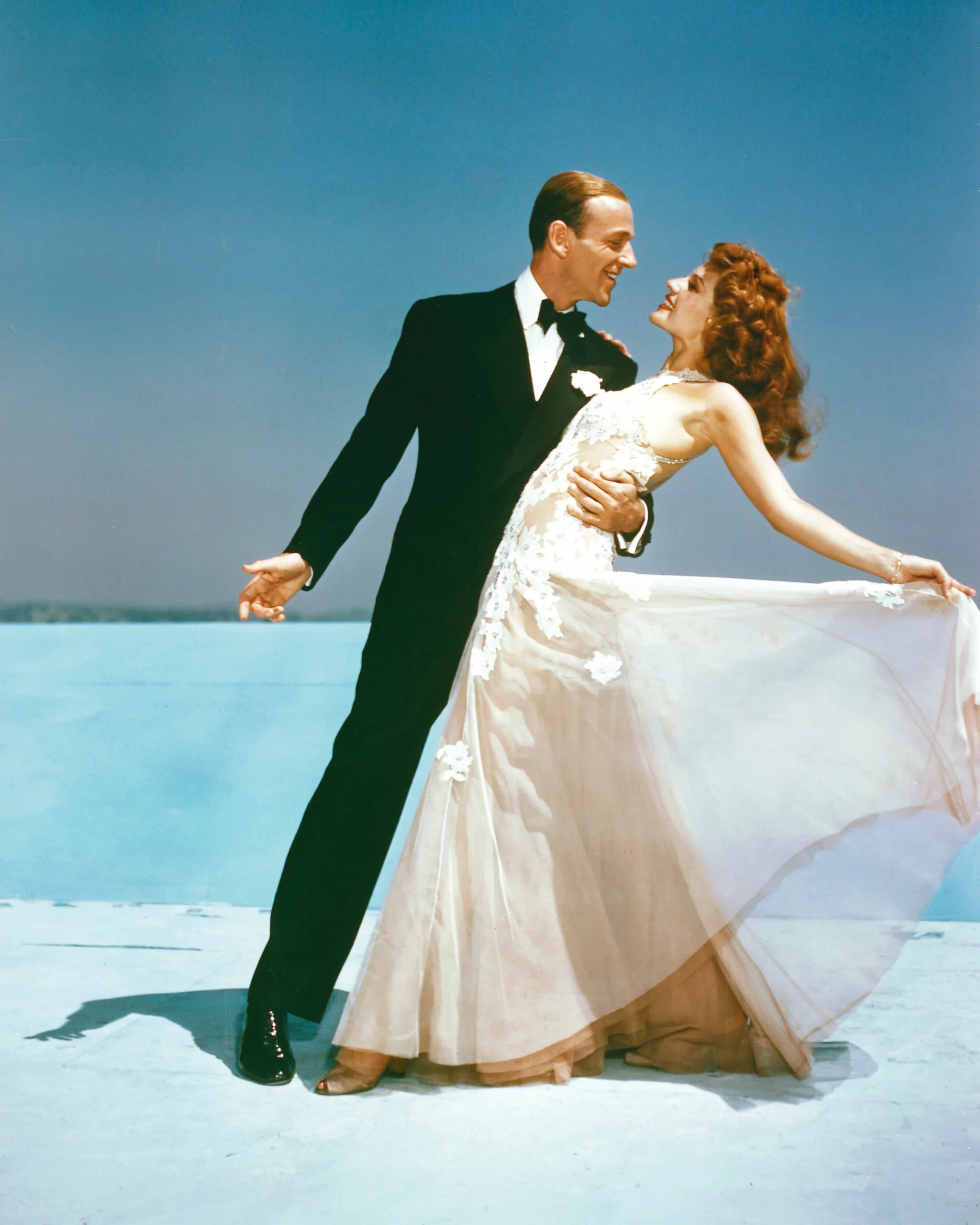
He didn’t want to be trapped into a partnership. So Fred insisted on making films with other actresses including Rita Hayworth and Joan Fontaine. These had varying degrees of success. But he always returned to Ginger. The pair made 10 films together – six of which went on to make RKO’s top 10 list of biggest money-makers ever.
“He gives her class and she gives him sex appeal,” Katharine Hepburn reportedly said of what made them the perfect pairing.
As the 1940s rolled around, rising costs of filmmaking started to eat into the profits of Fred’s movies until they were in the black. And he found himself labelled as “box office poison” by the Independent Theatre Owners of America. Always insecure about his looks and career anyway, losing the girl to Bing Crosby in Blue Skies (1946) turned out to be the final straw. Fred shocked audiences by announcing that he was retiring that same year.
Having discovered he was a talented and patient teacher with novice dancers on his sets, Fred had a plan. He wanted to share his techniques with the world. And so he opened his namesake dance studio on Park Avenue in New York City on March 1947.
The Fred Astaire Dance Studio taught a three-tiered system that included regularly scheduled private lessons, group classes and practice social sessions. Celebrities looking to shape up for their dance roles frequently stopped by for his expert instruction. It soon became so popular that more locations popped up around the country. Fred threw himself into teaching, thinking his screen career was behind him.
But little did he know that his best days were ahead …
This story appeared in the 21st issue of The Australian Women’s Weekly ICONS. Buy back copies HERE.

