




At a glance…
- The force of nature that was Gloria Steinem sadly died on 2 September 2026 at the age of 92.
- Before her 85th birthday, Samantha Trenoweth sat down with the feminist trailblazer, still out to change the world.
- Read that powerful interview, our last with Gloria, from the December 2019 issue of The Australian Women’s Weekly.
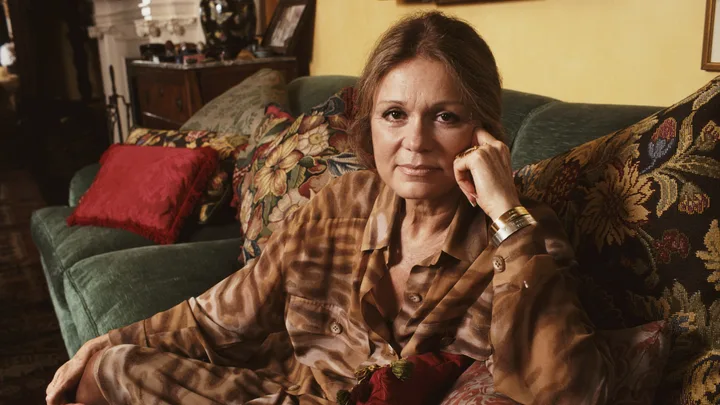
The sun is setting, and New York City’s buildings and pavements are exhaling the heat from a record-breaking autumn day. It’s 6.30 pm, and Gloria Steinem has thrown open the windows hoping for an evening breeze.
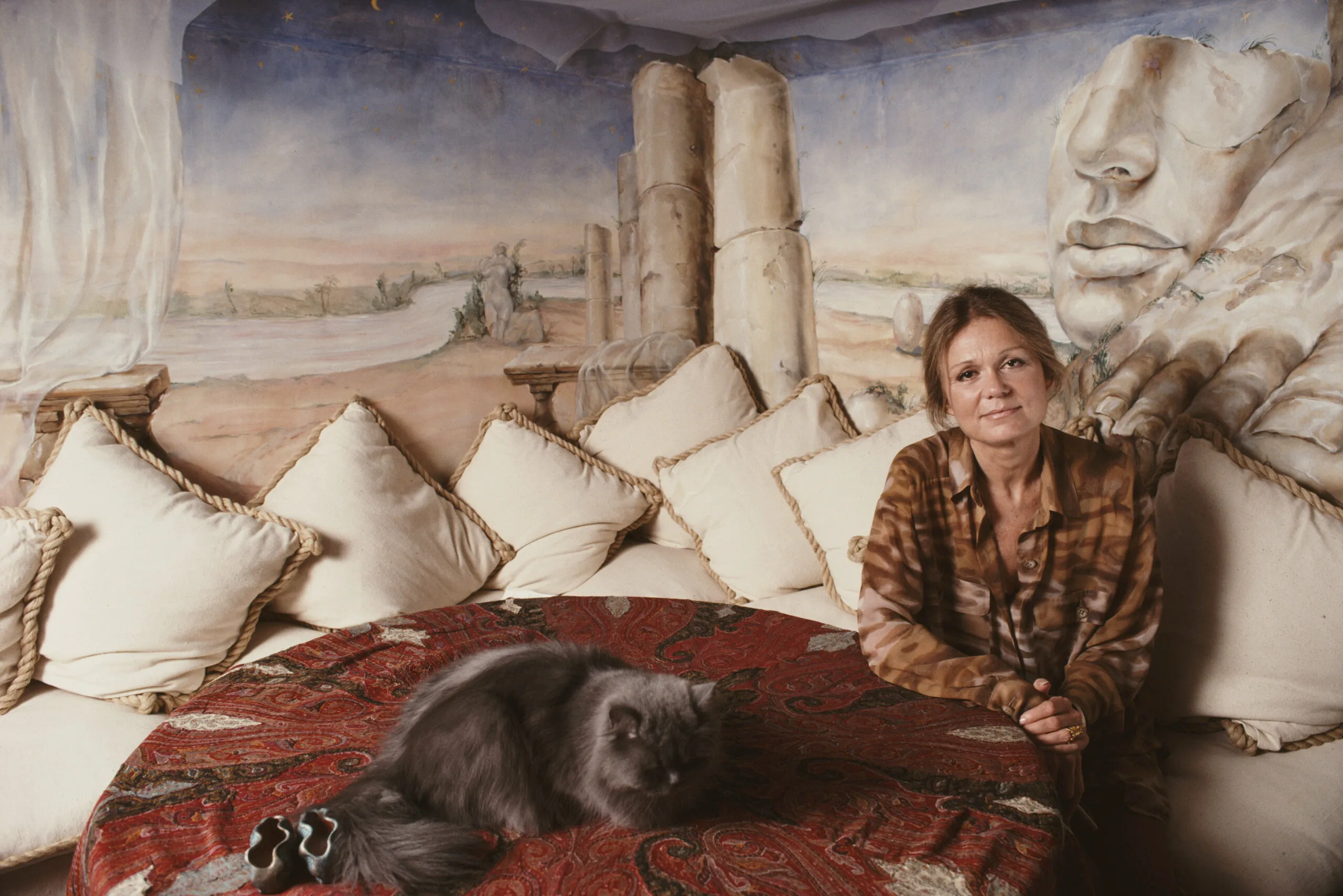
Gloria has lived in this leafy Upper East Side street since 1968, when her apartment was rent-controlled and just a single story with a couple of crowded rooms. It’s expanded over the years. She bought one apartment first, then another, and connected them with a staircase. Today, her “nest” is scattered, as her friend, the young actress Emma Watson, says, “with sacred objects, talismans, photographs, books,” a Tibetan thangka painting, a vase of flowers, richly coloured weavings and rugs. She has made a home.
When she was younger, there would have been a half-packed suitcase in a corner, ready for a fast escape. In those days, Gloria was constantly in motion – organising, speaking, shaping the game-changing Ms. magazine, igniting what became known as second-wave feminism. As she says, “the road felt like home”, perhaps because perpetual motion is in her gene pool.
Gloria grew up in Toledo, Ohio, on the western tip of Lake Erie. From her father Leo, she inherited her free spirit, her independence, her propensity to follow a wandering star. From her mother, Ruth, she inherited a love of writing, of literature, of quotable quotes.
Before she married, Ruth had worked as a journalist – no small feat for a woman in the 1920s. She was also an avid reader and a theosophist, inquisitive about both eastern and western spirituality (which Gloria believes accounts for her own cross-cultural agnosticism).
“She would wake me in the mornings,” Gloria remembers, “with a poem from The Rubaiyat of Omar Khayyam: ‘Awake! for Morning in the Bowl of Night, Has ung the Stone that puts the Stars to Flight.’”
Leo bought a tract of land by the lake in southern Michigan and built a small resort with a dance pavilion.
“In the summer months,” Gloria remembers, “he booked touring jazz bands, and holidaymakers came to dance, swim and enjoy the sunshine. In the wintertime, he turned travelling antiques dealer, driving all over the country collecting and reselling old wares.”
In the beginning, Leo left Ruth and the two girls (Gloria and her older sister, Susanne) alone in the draughty, cold house by the lake. There was no phone, no heating, no car, often no radio and no one for miles around. But after one particularly distressing winter, Ruth insisted the family bundle into the back of the car and travel together. Ruth had suffered one breakdown and been hospitalised before Gloria was born. In the years that followed, her mental health deteriorated further.
Gloria remembers her as “someone to be worried about and cared for; an invalid who lay in bed with eyes closed and lips moving in occasional response to voices only she could hear.” In an essay, ‘Ruth’s Song (Because She Could Not Sing It)’, which was published in 1983, she also describes her mother as a “loving, intelligent, terrorised woman” and admits that “in many ways, our roles were reversed: I was the mother, and she was the child.”
When Gloria was 10, her parents divorced, her footloose father hit the road for good, and Susanne moved away to college. Gloria cared for her mother alone from age 10 to 17. She has thought a lot about the impact those years had on her life – about the opportunities they presented as well as the challenges.
“I’ve always understood,” she says, “that having been a caretaker as a child might be part of the reason that, later in life, I didn’t feel compelled to have children. In a way, I’d already done that. But it took me way longer to understand that I hadn’t always had
a mother. That happened only when I began to have friendships with women older and smarter than I was.”
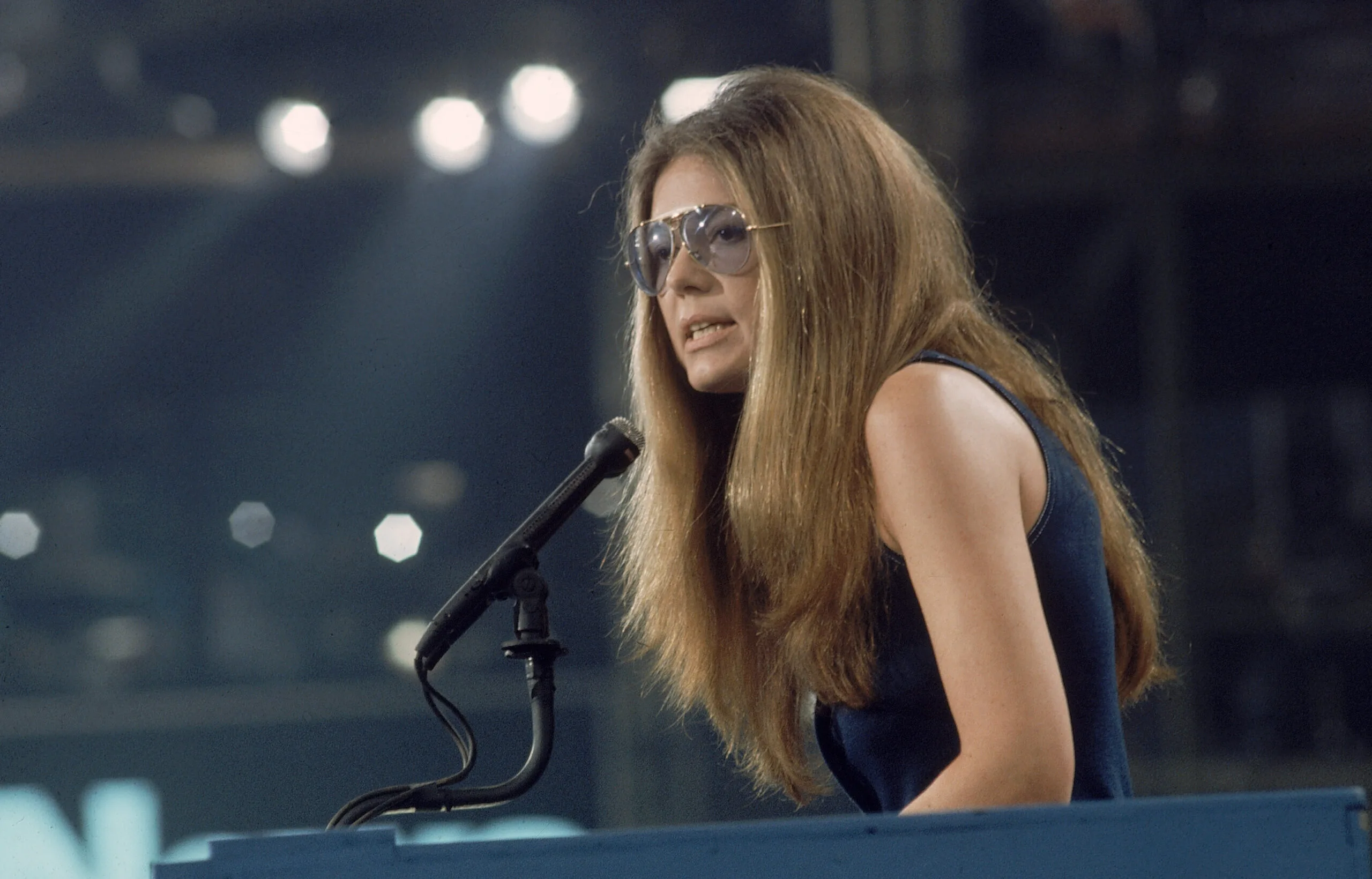
Years later, she also realised that her mother’s mental illness was a feminist issue, intimately bound up with the isolation and missed opportunities that came with her marriage. More positively, her parents’ divorce put an end to the winter travelling. So Gloria could escape to school, where she was both a bookworm and a dancer. One of her particular skills, she once told The New Yorker’s Jane Kramer, was dancing down a flight of stairs while playing ‘Anchors Aweigh’ on ankle bells.
“I imagined myself, with some impracticality, dancing my way out of Toledo,” she said. In the end, she didn’t dance her way into a new life. Susanne married and took on more responsibility for Ruth, who sold the family home so that Gloria could go to university. After college, at just 21, Gloria travelled to India and stayed there, working and studying, for two years.
“India had recently become independent,” she says, “so it was a centre of hope.” But the primary reason for the trip was more personal.
“Really, I went to avoid getting married,” she says with a wry smile. “In college, I’d become engaged to a very tempting man – we’ve stayed
friends forever – but I knew at the time that I shouldn’t marry, and his life was so much stronger than mine that I feared I would give in.”
Her opposition to marriage was partly gleaned from her mother’s experience, but it was more than that.
“When I was growing up, women were told that our lives would be determined by who we married,” she explains. “If you really believe that, you keep putting off marriage because it seems like the last choice you’ll ever be able to make.”
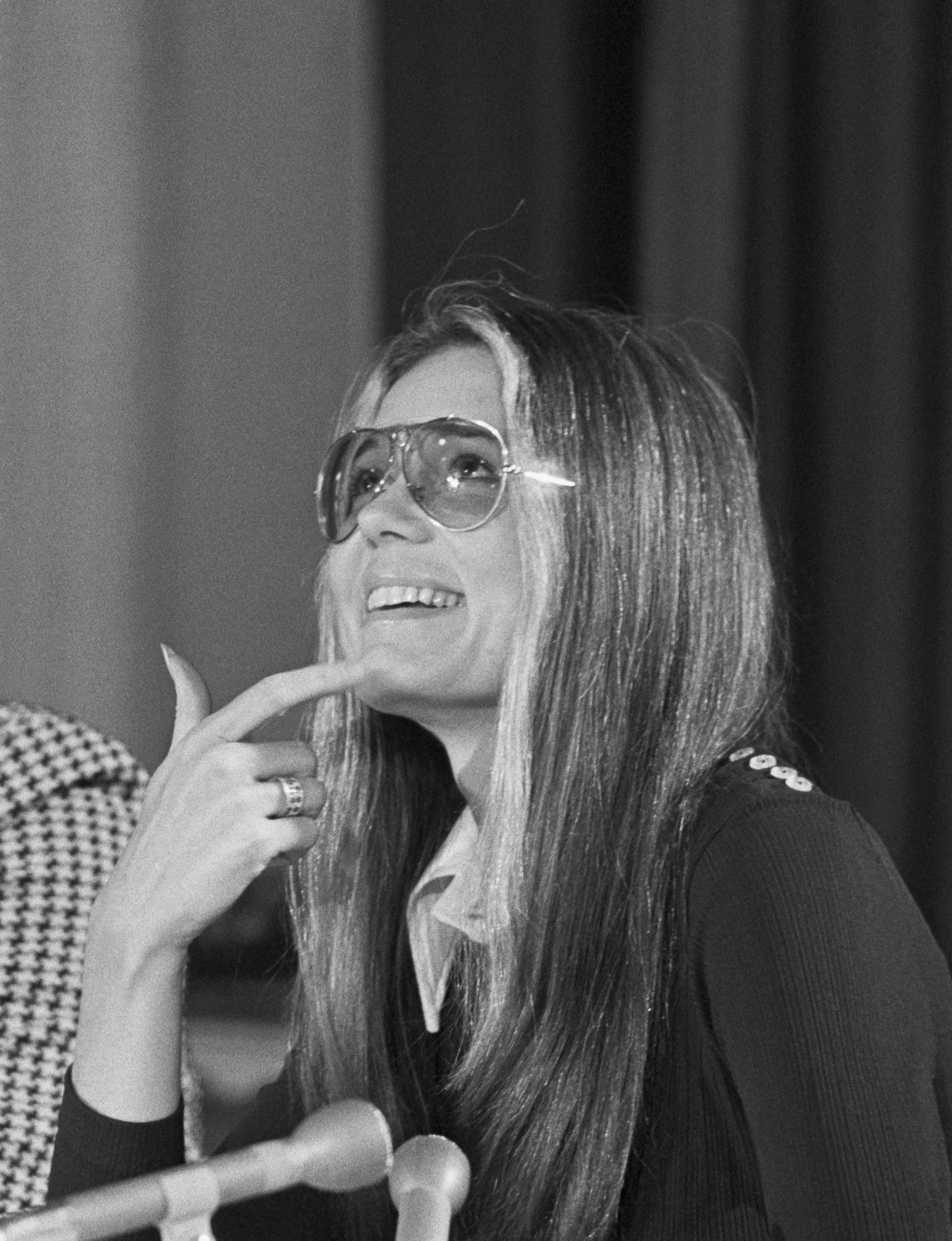
Gloria was reporting for New York Magazine (which she’d helped found) on an abortion rights protest in Greenwich Village when she first
got a sense of what feminism could mean both as a movement and to her personally.
“It was a protest against a New York State legislative hearing on abortion at which 14 men and one nun had been invited to testify,” Gloria
recalls pithily. No woman who was likely to reproduce, let alone use an abortion service, had been invited to speak, and the protest called
out that injustice resoundingly.
“For the first time in my life,” Gloria remembers, “I heard women telling the truth in public about an experience that was exclusively female, illegal and supposed to be a matter of shame. I learned that one in three women had, at some point in their lives, needed an abortion. I had been one of those women. So why was abortion illegal and dangerous?”
The story, which appeared in her regular column, The City Politic, was among the first in the mainstream media to seriously address second
wave feminism. Gloria went on to become one of the most significant midwives to the birth of the movement. And women’s right to make decisions that affect their bodies became a keystone of the cause. She was later fond of quoting an elderly Irish woman taxi driver who told her: “Honey, if men could get pregnant, abortion would be a sacrament.”
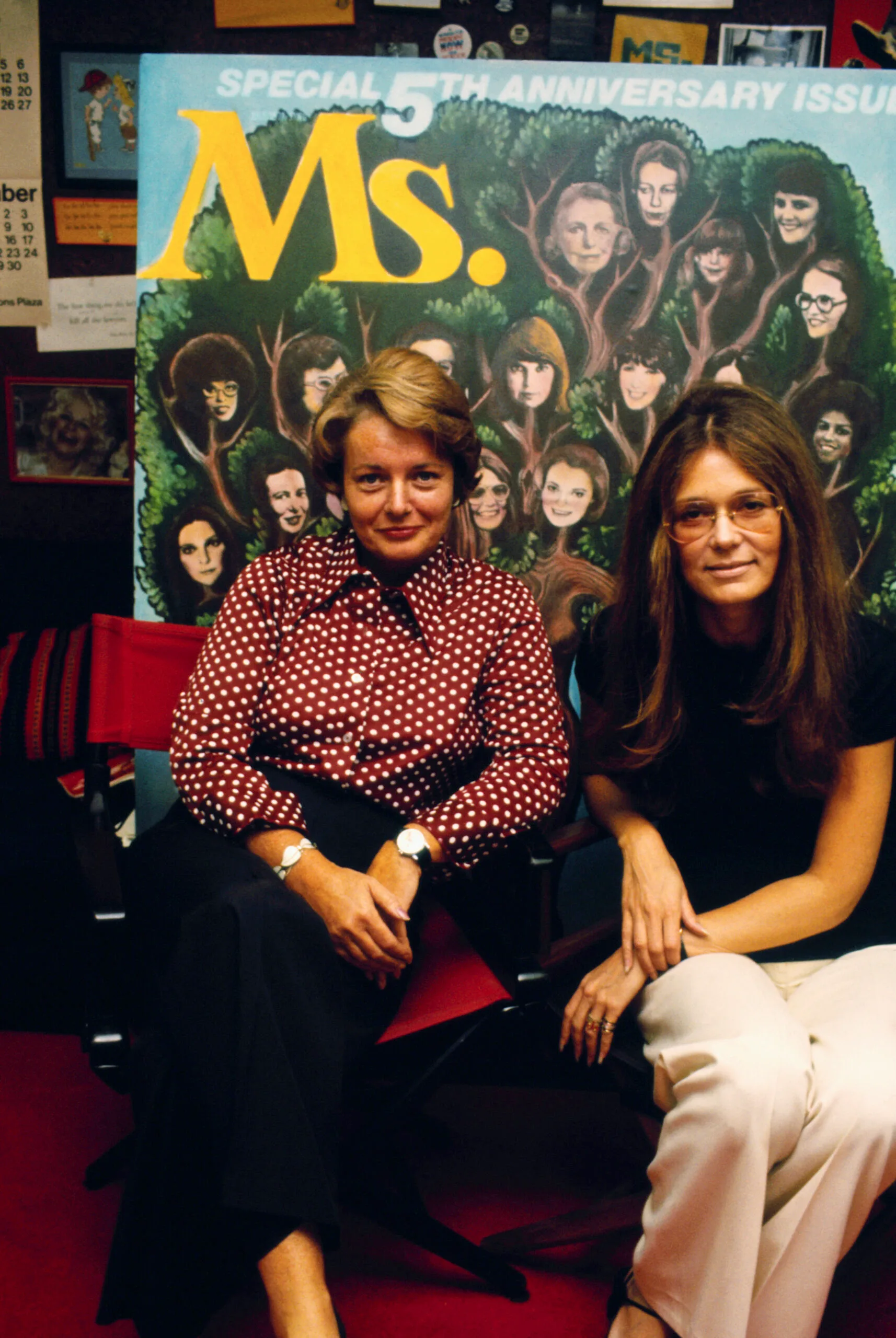
In December 1971, the first issue of Ms. magazine appeared as a supplement in New York. It included a printed declaration – “We Have Had Abortions” – signed by 52 women, including the tennis star Billie Jean King, writer Anaïs Nin and Gloria.
The response to the magazine was overwhelming, and by mid 1972, Gloria, co-founder Dorothy Pitman Hughes and their team were pumping out regular issues.
“Ms. was the first national magazine for women to be owned and controlled by women,” Gloria says proudly. “Ms. published the first
national articles about everything from battered women to sexual harassment, plus fiction and poetry.”
The movement became Gloria’s life, and for much of it she has remained unmarried, “but not unpartnered,” she is quick to add. Certainly not. For many years, she was romantically involved with the powerful philanthropist and lawyer, Franklin Thomas, whom she’s described as “the longtime love of my life and best friend”. At one time or another, she has been linked with legendary saxophonist and composer
Paul Desmond, film director Robert Benton and billionaire publisher and property developer Mort Zuckerman, among others.
“The men I’ve loved in my life,” she says, “are still my friends.”
In 2000 Gloria married David Bale, a South African-born entrepreneur and environmentalist. He needed a green card. Otherwise, she says, they’d have remained happily unwed.
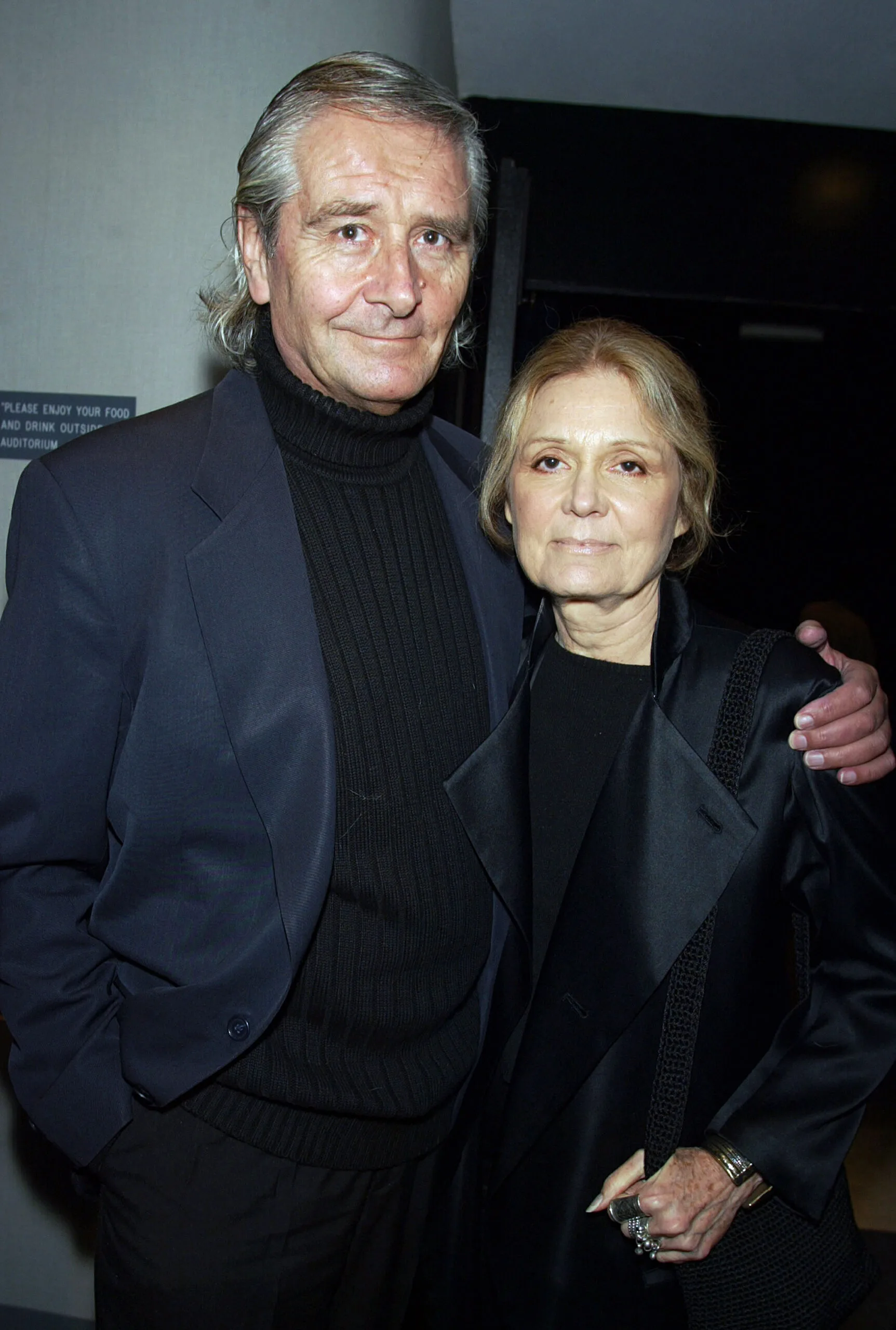
“In my 60s,” she explains, “I fell in love with a man who was having worries about his legal status here. By then the marriage laws had
changed. If I married him, I would no longer lose my name, residence or legal identity, which would have happened if I’d married at 21.”
Gloria was still in two minds, however, so she asked the advice of Wilma Mankiller, Principal Chief of the Cherokee Nation and one of Gloria’s closest friends.
“She was not only encouraging about the marriage; she offered us a Cherokee ceremony – and who could resist that?”
It was a happy marriage, but it lasted just three years, until David was taken by brain cancer. Today, Gloria can be philosophical about those years. She says they taught her to care for someone she loved as an adult, and to understand that as a very different experience from
caring for her mother, “which at times was frightening”.
“I’d always lived in the future,” she explains, “and I needed someone to force me to live in the present. David and his illness did that. Also, David needed someone to ease his journey out of life, and I could care for him in a way that I hadn’t been able to care for my own mother when I was a child. As unexpected as all this was, I think our time together had a deep purpose for both of us.”
Gloria has now drawn a “chosen family” around her. Among them are “women friends and colleagues, and men who have been lovers in the past and are still family.”

She doesn’t have a romantic partner and is content with that. “Those hormones inhabit our brains in the central years of our lives and then
leave those brain cells open for other things,” she says with a smile. “It’s not better or worse. It’s equally wonderful. Our cultures are so sexualised that they fail to tell us how great the early and later years really are.”
At 85, Gloria claims she’s grown less restless, but that said, she has just returned from a meeting with fellow women peace activists in Seoul; she has one book (The Truth Will Set You Free. But First It Will Piss You Off!) about to hit bookstores and two more in the wings, and her feisty and fittingly titled memoir (My Life on the Road) is soon to become a film, with Julie Taymor (Frida) directing and Julianne Moore in the lead.
Nowadays, what gives her most joy is when “someone tells me that a movement I’ve been part of changed their life. There’s no bigger reward.”
And that happens often because Gloria is a beacon for young writers and activists, who knock on her door.
“Being older,” she says, “is great for being hopeful because you remember when things were way worse. Being young is great for anger because you can’t believe things are not better. That’s why we need each other.”
This article originally appeared in the December 2019 issue of The Australian Women’s Weekly. Subscribe so you never miss an issue.

