




At a glance…
- CONTENT WARNING: This article discusses addiction and gambling, which may be distressing to some readers. Help is available.
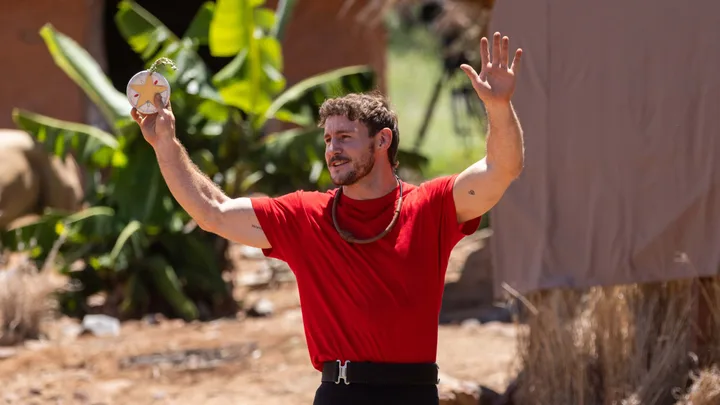
- Luke Bateman had the world at his feet as a celebrated NRL player, all the while battling a gambling addiction.
- We’re revisiting our interview with the former footballer, current author, media personality and addiction advocate following his appearance on I’m A Celebrity Get Me Out of Here Australia.
- On the anniversary of his first year of sobriety, he opens up about addiction and the woman who saved him: His mother.
Luke Bateman is many things: He’s a son, a farmer, a former NRL player, a frequent flyer on reality television shows, an author, and a survivor of addiction. Not any one of these things defines who he is, but every layer builds the man I speak with today.
We chat the day after his final episode on I’m A Celebrity Get Me Out of Here Australia. Luke was a revelation on the 2026 series. He quickly became the emotional heart of the show, and I commended him for his emotional intelligence that he showcased on the series and his openness about his gambling addiction.
It was something that was hard won, he tells me, as the day we speak is also a momentous occasion for him. On this day, Luke Bateman was celebrating his one year of sobriety from gambling. Since he left professional sport, Luke has become an advocate for gambling addiction.
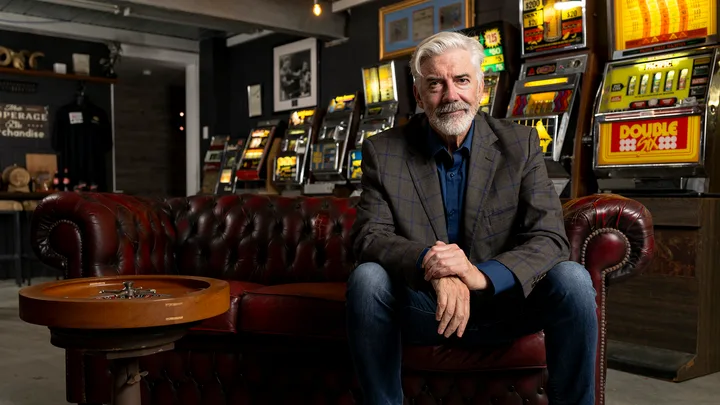
In August 2026, Luke Bateman claimed during a parliamentary inquiry into gambling that when he was in the throes of his own gambling addiction, betting companies encouraged him to bet more via “bonus bets” and personalised invitations to exclusive events. He alleges that the “predatory nature” of the industry furthered his activity and he lost around $1 million thanks to his gambling addiction.
“I’m here because I’ve experienced firsthand the destruction that gambling harm causes,” Luke said in his statement. “I know that behind the horrifying stats and figures, that these are real people with real lives, real families and real children who are impacted by gambling harm.”
“This is not about stopping people from having a bet,” he added. “This is about stopping the relentless targeting of vulnerable individuals through advertising, through promotions, and through inducements that encourage and normalise incredibly destructive and harmful behaviours.”
“Gambling destroys lives. It destroys families, it destroys relationships, it destroys mental health,” he said in addition to the financial hardship.
Annually, we lose $31.5 billion to sports betting apps, pokies, and casinos. Read more about what’s being done here.
Read on for our conversation.
The Weekly: How are you feeling after being a runner-up in the season?
Luke: So amazing. I’ve had truly an absolute dream result for me. I kind of wanted my charity to win and Concetta to win. So that was an impossible result to get, but it is truly a dream come true for me. There’s no one more deserving of it. I’m happier waking up this morning with her winning than I would have been with me winning.
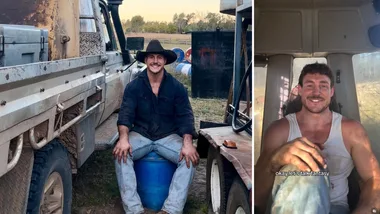
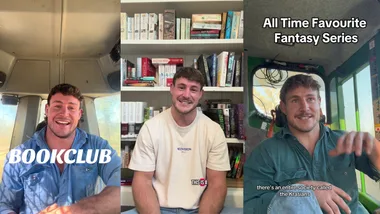
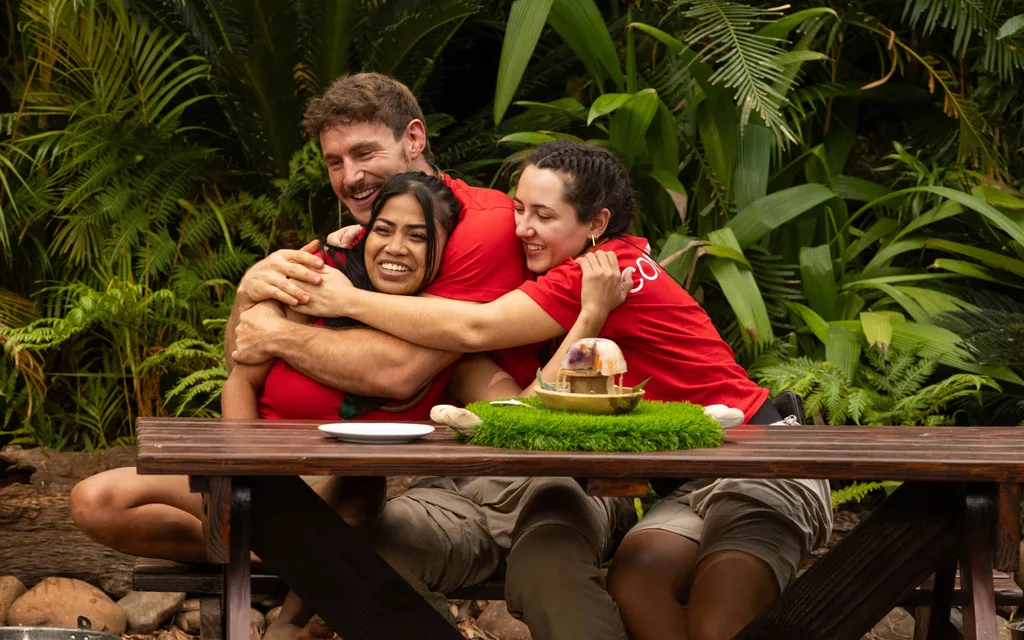
You and Concetta had a very close relationship. It was really beautiful to see. And I think everyone at home did a little giggle every time you called her “an angel”. Why do you think you two became so close so quickly?
Chet is an extremely special woman; I adore her. She just brings a light to every interaction that you have with her. When you’re with Chet, she just gives everyone the ability to feel seen and feel heard and feel loved. She does that for everyone.
I think it’s an angelic quality. She’s an angel walking amongst us. I just took to her immediately. I loved her energy, and we just formed such a special one because we were just really, really emotionally intimate with each other and vulnerable with each other about our past and stories and just connecting in that way.
For me, it was invaluable to have such a special bond, and it takes a really special person to do that. I just love her so much.
I’m A Celebrity is always very emotionally charged, and this season felt even more so. You yourself led a lot of the gratitude moments. Is that something that you do in your regular life, or was that something that you started in the jungle?
No, that’s something that I do every single day, every single day. It’s something I start my morning with, and it’s something that I end my day with. That came about through my journey with addiction and my journey in 12-step programs and in recovery. Because gratitude is something that I already had started in rehab. There, gratitude was something that we practised every single day. It is such a wonderful practice to do. It’s a foundational practice of my life now.
We live in a world where it’s always more and more and more, but just taking a step back and actually being so happy for what we have. For me, gratitude is kryptonite to addiction. So, that’s a really important practice to me.
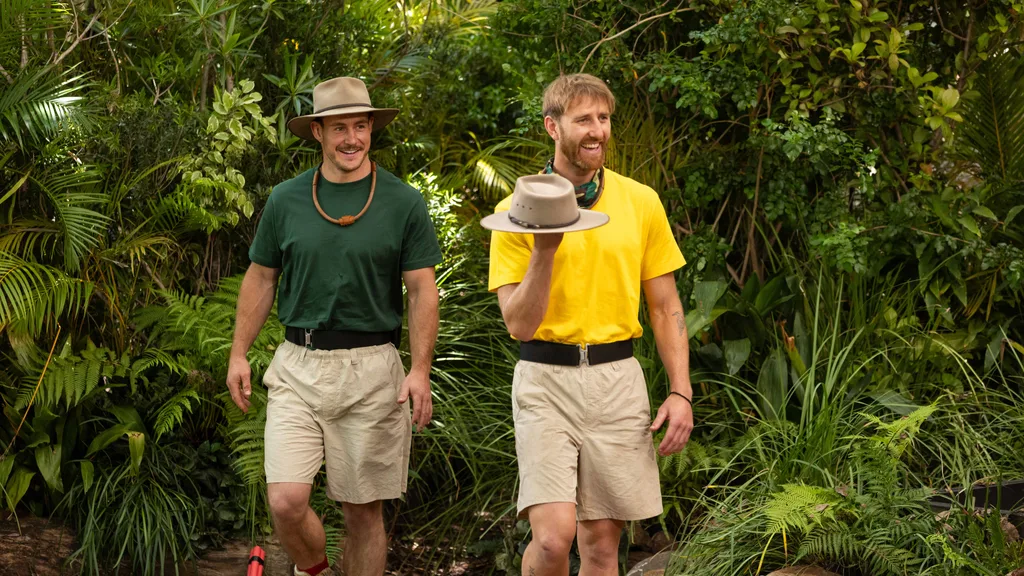
That’s a really beautiful sentiment. Addiction is something you will deal with your entire life, so having that mental fortitude is incredible, and sharing it with others is commendable. So, congratulations.
Oh, thank you. Today, I’m celebrating my one year of being free from addiction. It’s amazing and something I’m really, really proud of. As you said, addiction is something we as humans all struggle with in some way, shape and form. Probably not in the same way that I did. But as I said, gratitude is kryptonite, so it’s something that I’ll have to practice for the rest of my life because you never just finish with addiction and then move on. It’s something I’ll always have to be proactive about.
Yes, it’s probably a little bit out of left field for people, but that’s the beautiful thing about that show: you get to see the parts of people that you wouldn’t expect.
Was there anyone in the jungle that really surprised you?
Everybody! Everyone brought their own unique story, their unique history, their own special ways about them. Everybody brought something beautiful into camp, and every single one of my 12 campmates was a wonderful human being that had such an incredible presence to them.
So, to single anybody out would be an injustice to everybody else in camp. I obviously formed a really close friendship with Dyson Heppel, who I thought was an incredible bloke, but I really don’t want to take away from everybody else in camp. It was wonderful.
Was there a moment in the camp where you felt comfortable and, like, you could keep living in the jungle?
Not at all! [laughs] I think every single day got more and more uncomfortable for me. And by the time I got to the end, I was just like, ‘Thank God, this is the last thing I need. I need out of here’. I was struggling. I truly was. The physicality of it started to just eat away at me, to eat me alive. I was starving, I was tired, there was no point at all when I thought to myself that I could keep going.
Was there anything or anyone that you missed while you were in there?
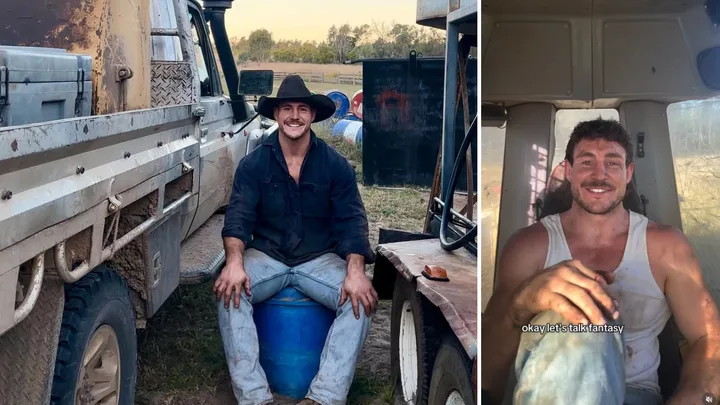
Just my family, really my family. I really missed my family while I was in there. They’re so important to me because of my journey over the past couple of years through addiction and all that and rehab and recovery. They’ve been my pillars. I talk to them every single day, and not being able to talk to them was really, really hard. I felt like I was missing a limb at times.
In terms of, you know, the objects, I didn’t miss anything. It was nice to get away and not have a phone and not have internet. But I really struggle without the people in my life whom I love.
It was really sweet when your mum came on the episode last night. It’s very clear the two of you were very close.
My mum and I have a really special relationship, and once again, I wouldn’t be here talking to you today if it wasn’t for that woman. I mean, both for the fact that she gave birth to me, but she also saved my life.
It’s something I really struggle with. My mum carried me through the hardest times of my life. It’s another thing I’m really grateful for because I know that there are people out there who don’t have that parental relationship. I’m just so, so grateful for her because without her, I wouldn’t be here. It makes me wonder about what could have happened if I didn’t have such a beautiful, kind, caring, supportive mother.
Switching gears a bit to your book. What can you tell me about it?
Everyone always asks this question. I can say I get a bit of free rein; what I can say. I obviously can’t tell you exactly what it’s about because I want people to read it. But I’ve taken a lot of reflection from my own journey, and I’ve put a lot of those learnings and lessons and wisdoms and things from my own life into the book. It’s a story about a young man who discovers his magic in a world where magic is outlawed, and then he has to navigate that.
Ooh, intriguing. Would that be your favourite genre to read, fantasy?
Yeah, fantasy is my number one. It’s where I go; it’s what I’ve always loved; it’s where I go to feel like I belong. It’s a home for me; fantasy stories are a home for me. They are where I go when I need to reconnect with myself and get away from the world and find peace and belonging; that’s where I go for fantasy. That’s just who I am at my core: a fantasy nerd.
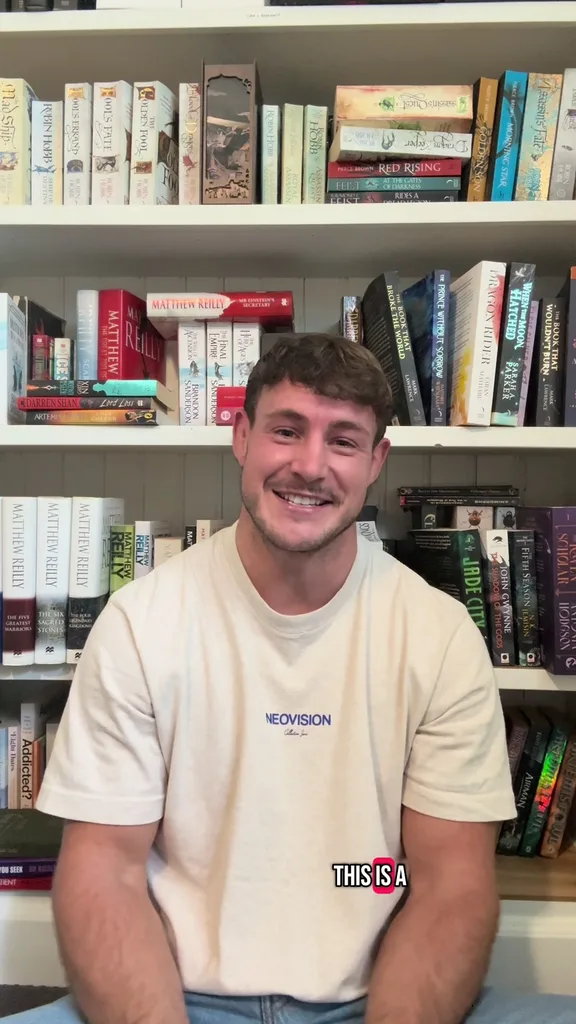
And people might not expect that when they look at you, like, ‘Oh no, that’s a footy guy, that’s a farmer’. Not a man who writes fantasy.
Exactly. That’s, I mean, that’s my life journey in a lot of ways, you know, that’s my life story. How I presented externally was not how I felt internally.
And I think a lot of people would look at me and cast aspersions and cast a narrative onto me based on how I look and how I present and what I do. Which is obviously farming and footy, et cetera; for most people, that comes to expectations. I think for a long time, I really lived up to those expectations and tried to live to that narrative.
I was like, okay, well, this is who I need to be. Whereas internally, that wasn’t me at all. And that placed me at war with myself and placed me in opposition to who I was. And that came with its own damaging repercussions.

It sounds like it put a lot of pressure on you to be someone that you weren’t at your core. What would you say to someone, maybe like a young person who’s going through something similar?
It’s a hard one. This is a journey of years and decades for me, so to sum it up into one sentence is so difficult. But I would really just say to someone, like, this is a great quote that I love, and it’s: “Cherish the music that stirs in your heart”[from As a Man Thinketh by James Allen]. I think that that’s something that I would love for everyone to do, especially young people. Cherish the music that stirs in your heart because that’s just who you are, what lights you up. Cherish that thing and then hold on to it.
On the show and on your social media, you often criticise traditional gender roles. Do you think that attitudes are changing in that regard?
Absolutely. It’s moving slowly, but like that’s humanity, that’s society. We can’t have large-scale change overnight. But the needle is definitely moving. I think we’re just seeing so much more empathy and awareness and education around it all, which is wonderful. It’s something I like to be a part of too.
If 10-year-old Luke Bateman could have seen someone like me, it could have changed my entire life. I think opportunities and dreams and the narrative of what young boys and girls can be are really opening up. It was so, so, so streamlined for so long as in what a boy and a girl could be, could aim themselves towards, and that’s really opening up.
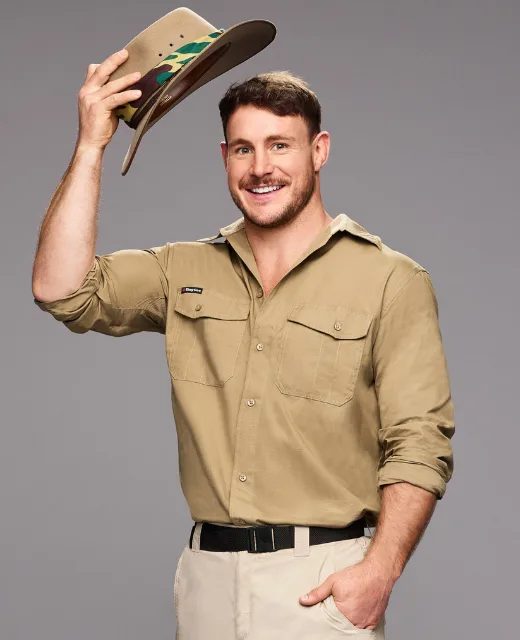
Well, now you’re becoming one of those role models, but that must be very rewarding for you.
It is, it is. It is something that’s really meaningful to me.
Your charity, can you speak a bit about why you chose to compete for Farm Angels?
Absolutely. I’ve been speaking about Farm Angels for years. I’ve worked with them in the past, and I’ll continue working with them for the rest of my life. They support rural families through anything that they need. Whether that is buying groceries, paying the electricity bill, or if they’ve had floods, fires, droughts, or need livestock feed. Anything that someone in a rural or remote location needs, any help that they can give, Farm Angels work to provide that in any way, shape and form. Whatever that looks like for people.
And I know how remote and isolating it can be growing up in the country and living and working out in the country. I’m a nine-hour drive to Brisbane. When you’re so far away from even your neighbour and when you’re so far away from amenities and access to healthcare and psychologists, it’s a need. There are no psychologists out here. It’s so important for people who work in rural, isolated locations to feel like they have support and to have access to help. And Farm Angels do that. They’re just a wonderful, wonderful charity who help the people in the communities that I grew up in and the community that I still live in now.
The majority of the Australian population live in metropolitan areas. When you have such a small minority of people, money doesn’t flow to them; help doesn’t flow to them; support doesn’t flow to them. Instead, it goes to the majority. It doesn’t make someone less deserving of help just because they live in a rural area.
So what’s next for Luke Bateman?
Oh, I think for me, it’s just, I’m just writing, writing my book, author. Writing and being an author is where I’m just ramming all my energy and my fuse towards. It’s something I love. It’s something I really want to do and do for a long time and write many, many books. inspire and inspire many people and change many people’s lives so that’s sort of that’s where I’m hoping to go to and we’ll just see what else comes up you know I love seeing opportunities always arise and saying yes to the right ones is really important to me so we’ll just see what happens but writing and books are you know where the majority of my future what I’m hoping my future looks like.
I’m A Celebrity Get Me Out of Here Australia is currently switching from Channel 10 to Seven after the former cancelled the series and the latter picked it up.
If you or someone you love needs gambling support, call the Gambling Helpline on 1800 858 858. If this story causes distress, call Lifeline on 13 11 14. You can also chat online at lifeline.org.au
Find out more about Farm Angels here.


Share this post