At a glance…
- Justice Mary Gaudron QC has died at the age of 83. She was a trailblazing figure for women’s rights and equality, tirelessly pursuing justice from her youth.
- She became the first woman to hold some of Australia’s most senior legal positions, including NSW Solicitor-General, Queen’s Counsel and, in 1987, the first woman appointed to the High Court of Australia.
- Her career was shaped by a determination to challenge discrimination, inspired by witnessing the treatment of Indigenous Australians growing up in Moree and later through her advocacy for equal pay and women’s rights.
- As a High Court justice, she helped shape Australian law, including sitting on the historic Mabo decision bench, before retiring in 2003 after 16 years on the nation’s highest court.
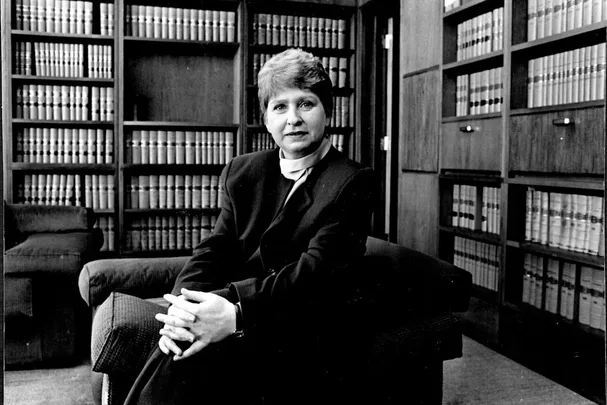
Australia’s first woman High Court judge, first woman to be the NSW Solicitor General, and first woman to be Queen’s Counsel, Mary Gaudron, has died at the age of 83. The High Court of Australia shared the news of her passing on Sunday, 13 September.
Born in New South Wales on 5 January, 1943 and lived in Moree. In 2005, she gave a speech, at the request of Senator Penny Wong, at the UNIFEM International Women’s Day Breakfast. In her speech, she says that witnessing racism towards Indigenous Australians in her hometown inspired her to fight against discrimination.
She said that Indigenous Australians “were not allowed on the bus that travelled from East to West Moree, nor in the Municipal swimming pool. They were allowed into the picture theatre but only in the front rows, which were roped off from the rest of the audience.”
“Aboriginal children did not go to school like the rest of us, although some few received a rudimentary schooling on the Mission. And if they were ill, Aboriginal people were treated, if at all, in the isolation ward of the local hospital. It was impossible – absolutely impossible – not to be aware that, in the phrase made famous by George Orwell, some people were more equal than others – indeed significantly so.”
At the age of 8, she came across Dr Herbert Vere “Doc” Evatt making a speech about the Constitution and with the bravery of a child, she asked him what it was and if she could have one. When he sent her a copy, she became determined to be a lawyer, not knowing that at the time, women couldn’t legally be one yet.
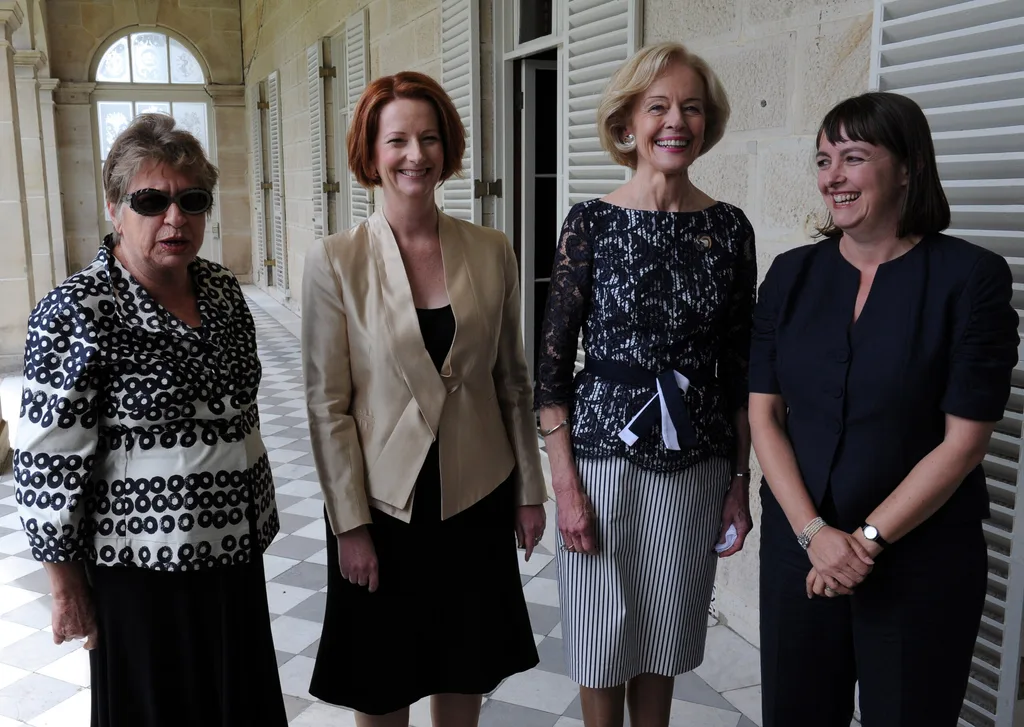
“In 1951, when these events occurred, nobody bothered to tell me that girls couldn’t be lawyers,” she said in her speech. “True, my grandmother thought it might be more ladylike if I became a concert pianist.”
“I was in for something of a shock when I arrived as a part-time student at Sydney University Law School in 1961. The first indication that things might be amiss was when I was taken to the Women’s Common Room and could not fail to observe that it had, in the previous year, served as men’s urinal.”
Additionally, lectures commenced with the standard greeting of “Gentlemen.”
“So, as a brand-spanking-new law student who hadn’t opened a single book, I knew that the laws of this country discriminated against its women and its Aboriginal people, against more than half the population. The laws were clearly ripe for reform, as the expression now is.”
She questioned the way things were as a child and continued to fight for equality throughout her career. From not being served in an “up-market Sydney hotel” to equal pay for women. In 1973, she successfully represented the Commonwealth in the landmark Equal Pay Case before the Arbitration Commission. The case was a major step in Australia’s movement towards equal pay for women.
She graduated from the University of Sydney in 1965 with first-class honours and the University Medal in Law while working and raising her first child. Mary was admitted to the NSW Bar in 1968, the first woman to be appointed. Initially, she struggled to find chambers because male barristers would not accept a woman on their floor. Despite that, she persevered, and in 1981, she became the first woman appointed as a Queen’s Counsel.
Before her time on the High Court, Mary Gaudron was the Deputy President of the Commonwealth Conciliation and Arbitration Commission, Chair of the New South Wales Legal Services Commission and Solicitor-General of New South Wales.
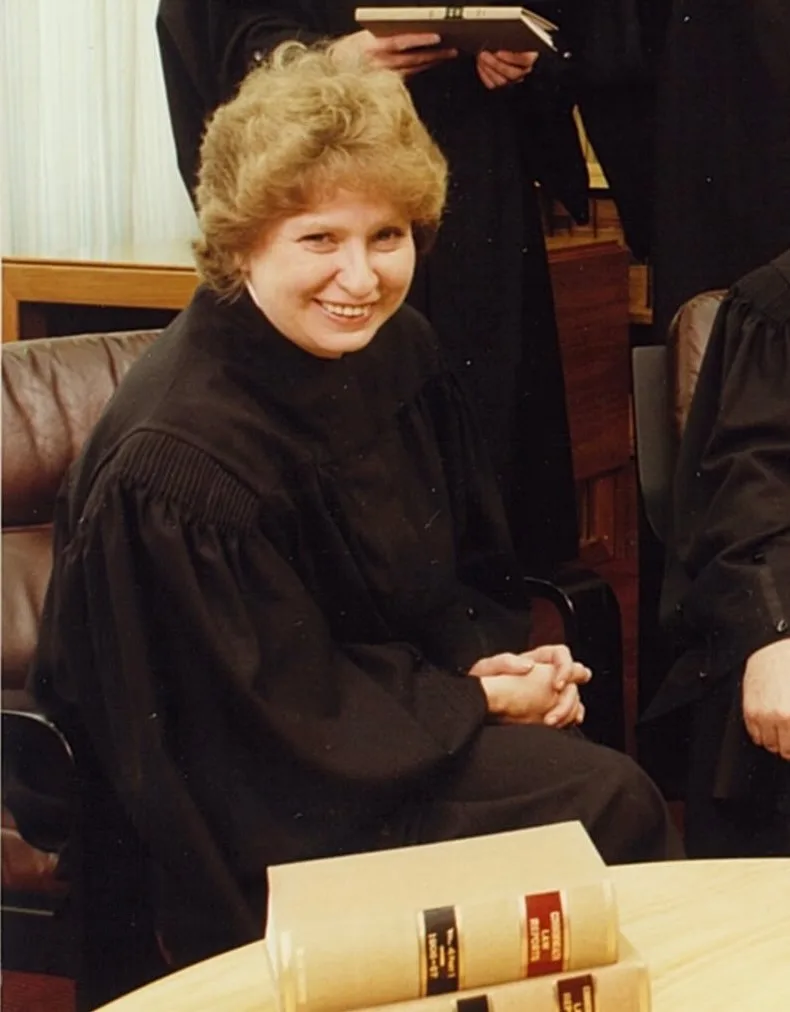
When she was 43, then-Prime Minister Bob Hawke nominated Mary to the High Court of Australia. She was approved and became the first woman appointed to the High Court.
As a High Court justice, Mary was part of the bench that delivered the historic Mabo v Queensland (No 2) judgment, which rejected the doctrine of terra nullius and recognised the existence of Indigenous native title. After retiring from the High Court, Mary was a member of the International Labour Organisation’s Administrative Tribunal for close to a decade.
“Throughout her distinguished career, Ms Gaudron advanced the role of women in the legal profession and in the judiciary by her advocacy as well as her example,” the release from the High Court read. “As a Justice of the High Court for 16 years, her impact on its institutional character and contribution to its work were profound.”
Once the news was shared, tributes to the trailblazing Justice started coming out.
“The nation remembers Mary Gaudron KC, whose distinguished career transformed Australia’s legal landscape,” Governor-General Sam Mostyn wrote in a tribute. “As the first woman appointed to the High Court of Australia, and the only woman Justice in the Court’s first century, she broke new ground and inspired generations of Australians to pursue careers in the law and public service.”
“From her upbringing in Moree NSW to her advocacy for equal pay and her distinguished service on the nation’s highest court, Justice Gaudron brought her fierce intellect, integrity, compassion and a deep commitment to justice to every role she held. Her legacy endures in the Australian legal system and in the many people who continue to follow the path she helped forge.”
“Mary Gaudron changed Australia’s legal landscape,” wrote Tanya Plibersek, Minister for Social Services. “Her intellect, integrity and courage made our country fairer and opened doors for generations of women who followed.”
Mary had two daughters, Danielle and Julienne, with her first husband Ben Nurse and a son with her second husband John Fogarty.
Vale Mary Gaudron. Thank you for everything you’ve done.

Related stories

Native ad body.
Native ad body.