




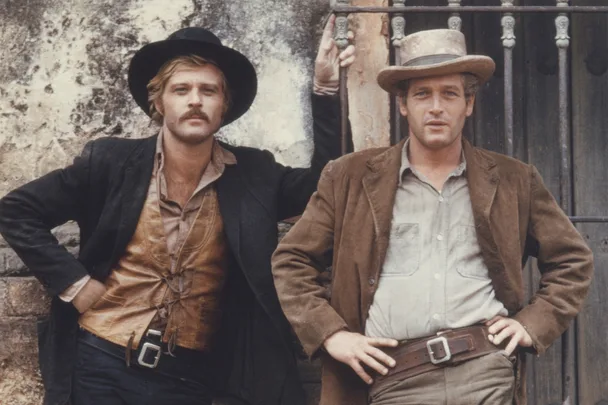
On-screen, Robert Redford and Paul Newman were a handsome dynamic duo. Off-screen, they had a friendship to rival some of Hollywood’s greatest ever captured on film. As the world reels at Robert’s death at the age of 89, we revisit this feature, which first appeared in an issue of The Australian Women’s Weekly Icons. Read on…
In 1969, when Paul Newman signed on to play affable outlaw Butch Cassidy, he had just come off Cool Hand Luke (1967), which earned him an Academy Award nomination, and had an enviable list of film credits. He’d beaten Warren Beatty and Steve McQueen for the role, and now the film’s producers needed to find a co-star who would be able to hold his own opposite the blue-eyed all-American screen legend.
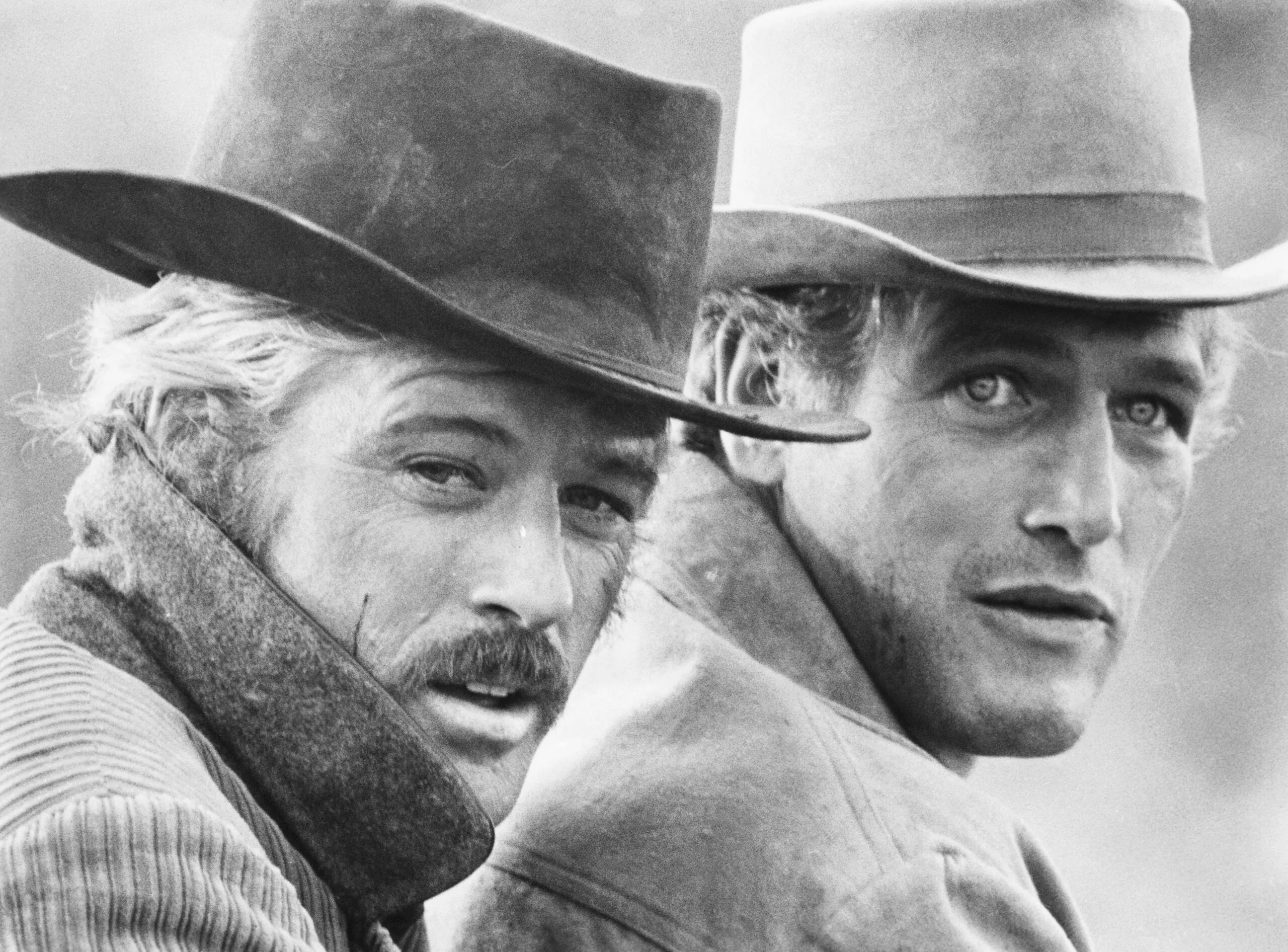
Steve McQueen was earmarked for the Sundance Kid, but he felt he didn’t suit the part. It was Paul’s wife, actress Joanne Woodward, who suggested the relatively unknown young actor, Robert Redford.
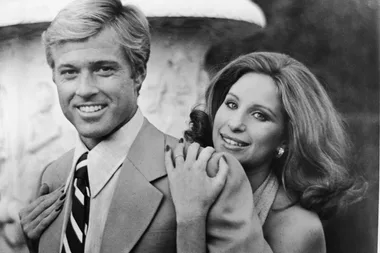
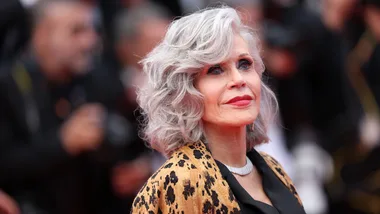
But with only a few screen credits to his name, and his most prominent part being a light romantic comedy opposite Jane Fonda, the studio was not convinced. They couldn’t picture sandy-haired Robert as the violent, crack-shot killer, The Sundance Kid.
“I was an unknown actor at that time,” Robert revealed in 2005. “Paul was extremely well-known. The studio didn’t want me. They felt it would be an imbalance for Paul, but it was really Paul’s call, and he stood behind me.
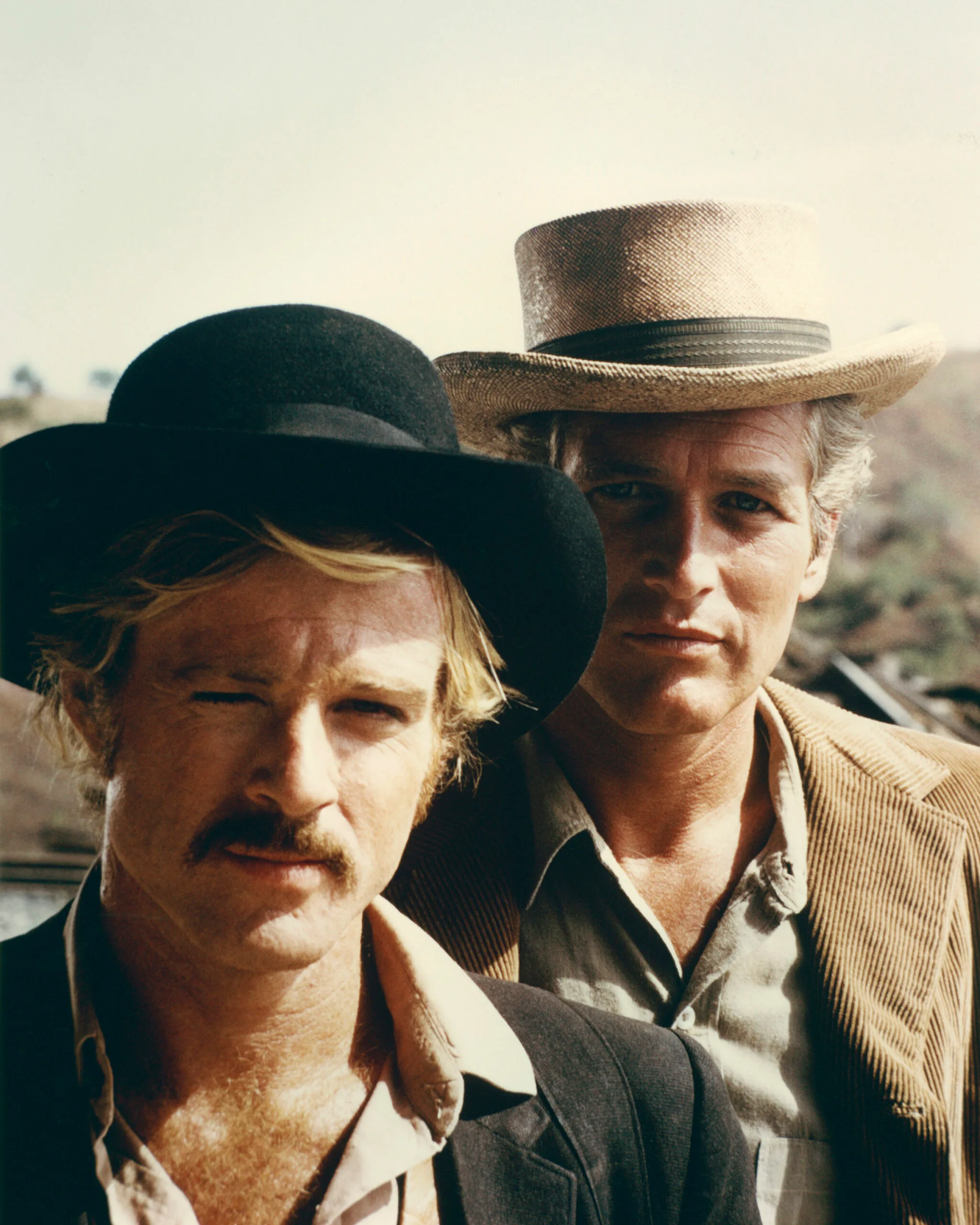
“That was a pretty generous move. I didn’t know him. He didn’t know me. We approached it from the standpoint of actors playing characters. From that point on we just sort of built on it.”
The film was being directed by George Roy Hill who also wanted Robert from the beginning. “[His] qualities worked very well for Sundance, including a genuine warmth under a very cool exterior,” George said in a documentary on the making of the film.
Certainly, Butch was perfectly suited to Paul’s persona. “I saw him as a warm, open, amiable guy, and that’s exactly what Newman is,” George added. When Paul and Robert began working together, their rapport and chemistry were instantaneous. It was movie magic.
“We have a lot of fun together. We bounced off each other very well,” Paul told The BBC in 1982.
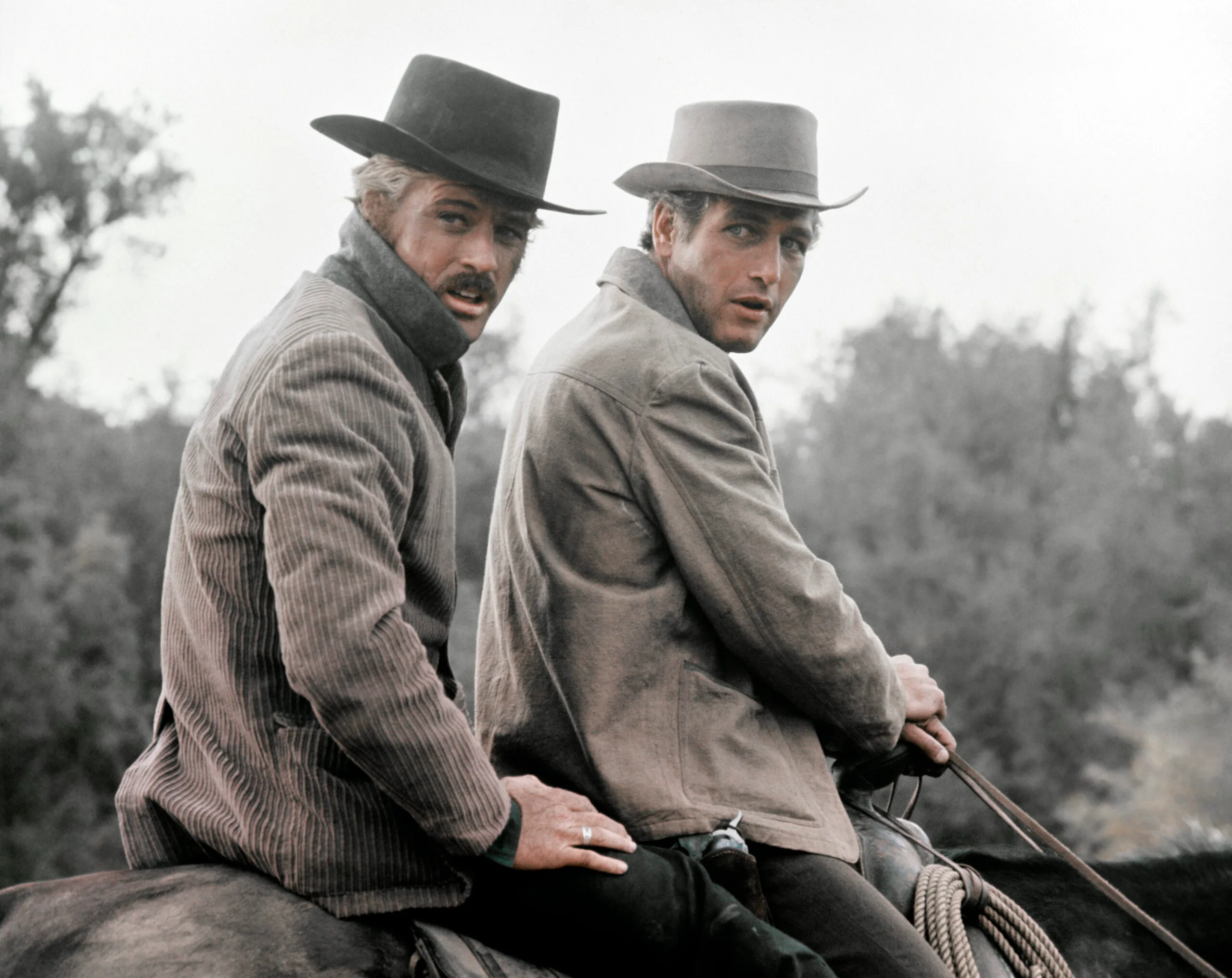
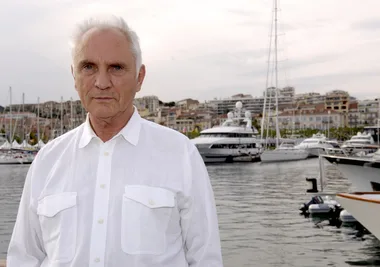
Butch Cassidy and the Sundance Kid (1969) went on to win four Oscars and is considered one of the greatest Westerns ever made. It would also mark the start of a lifelong friendship between the two actors.
“Paul’s a big kid. I guess I am, too,” Robert said in 2005’s Iconoclasts. “And we just had fun. We just had a good time.”
Perhaps the reason the two screen legends found such an easy friendship was that they had a lot in common. “We both came through the theatre. The hard way, auditioning and studying in New York,” Robert continued.
Paul Newman had traversed the path 10 years before Robert. He’d studied at Yale and paid his tuition selling encyclopedias. He’d done some theatre work in Wisconsin, where he met his first wife, Jacqueline Witte.
Paul arrived in Broadway in the 1950s, hoping to make it on the stage. He was not only supporting his wife, but also their two children. A third child, a daughter, would be born in 1954, a year after his Broadway debut. It was tough.
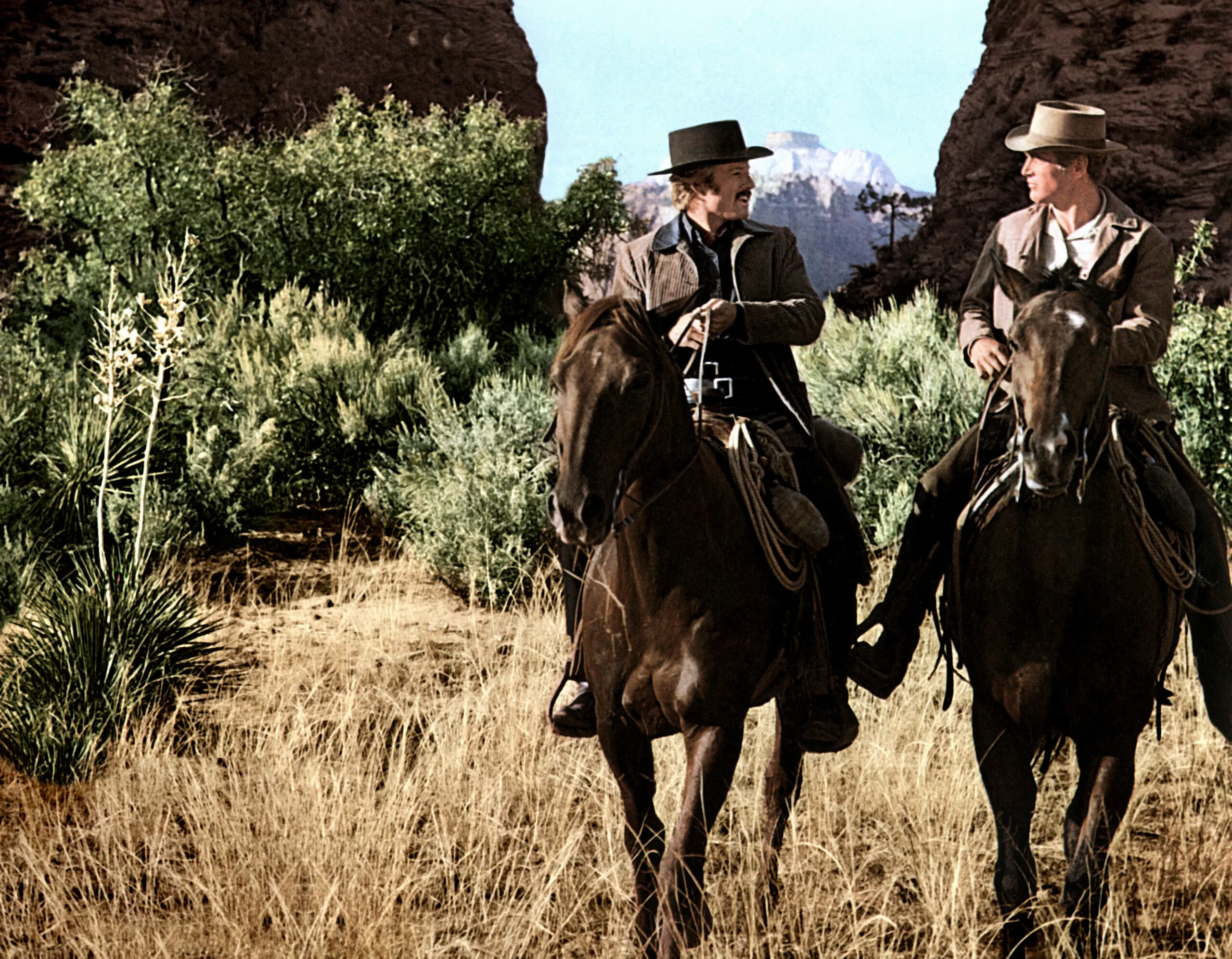
“My first review that I read said: ‘Mr Newman delivers his lines with the emotional fervour of a Putnam Stop Conductor announcing local stops,” Paul remarked in 2005.
He made his Broadway debut in 1953’s Picnic, which ran for 14 months. Then the Hollywood offers started coming in. He appeared in The Silver Chalice (1954), which, despite being what he regards as the worst film made in the 1950s, launched his career.
In 1958, he starred with Joanne Woodward in The Long, Hot Summer and soon after divorced Jacqueline to marry Joanne.
Like Paul, the early disdain of critics remains with Robert. “I got a review when I was starting in live television where this guy Jack O’Brien called me hammy and overwrought.”
He picked up a few screen roles, including playing opposite Natalie Wood in 1966’s This Property Is Condemned, but it was Butch Cassidy and the Sundance Kid that changed Robert’s life, and for that he has always been grateful to Newman.
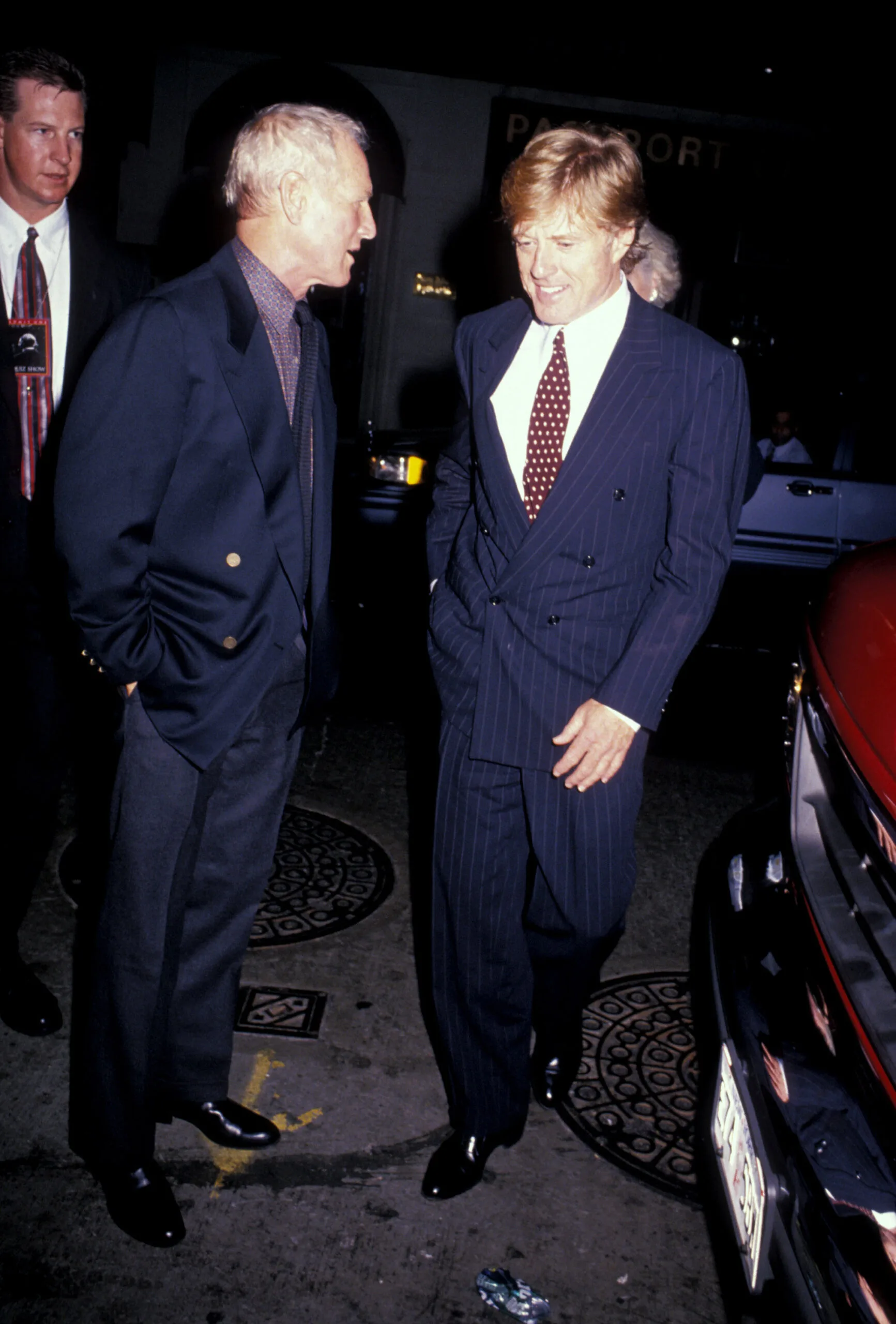
Reflecting years later on the film, Robert identified their mutual commitment to the craft of acting as the backbone of their creative partnership, as well as their friendship.
“[Paul] said, ‘I want to work with an actor,’ and that was very complimentary to me because that’s, I think, how we both saw our profession. Acting was about craft, and we took it seriously because we both came from the same background of theatre in New York,” Robert told the ABC in 2008.
“Once the film started, we then discovered other similarities that just multiplied over time, a common ground that we both had between us, interests and so forth, and differences.”
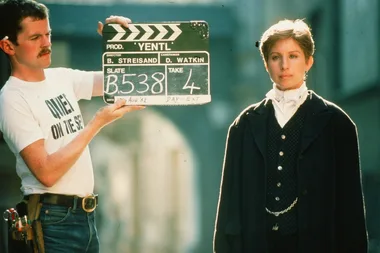
After Butch Cassidy, Robert took memorable roles including the titular character in The Candidate (1972) and Hubbell Gardiner opposite Barbra Streisand in The Way We Were (1973).
When Paul and Robert reunited for The Sting in 1973, they were both big-name stars.
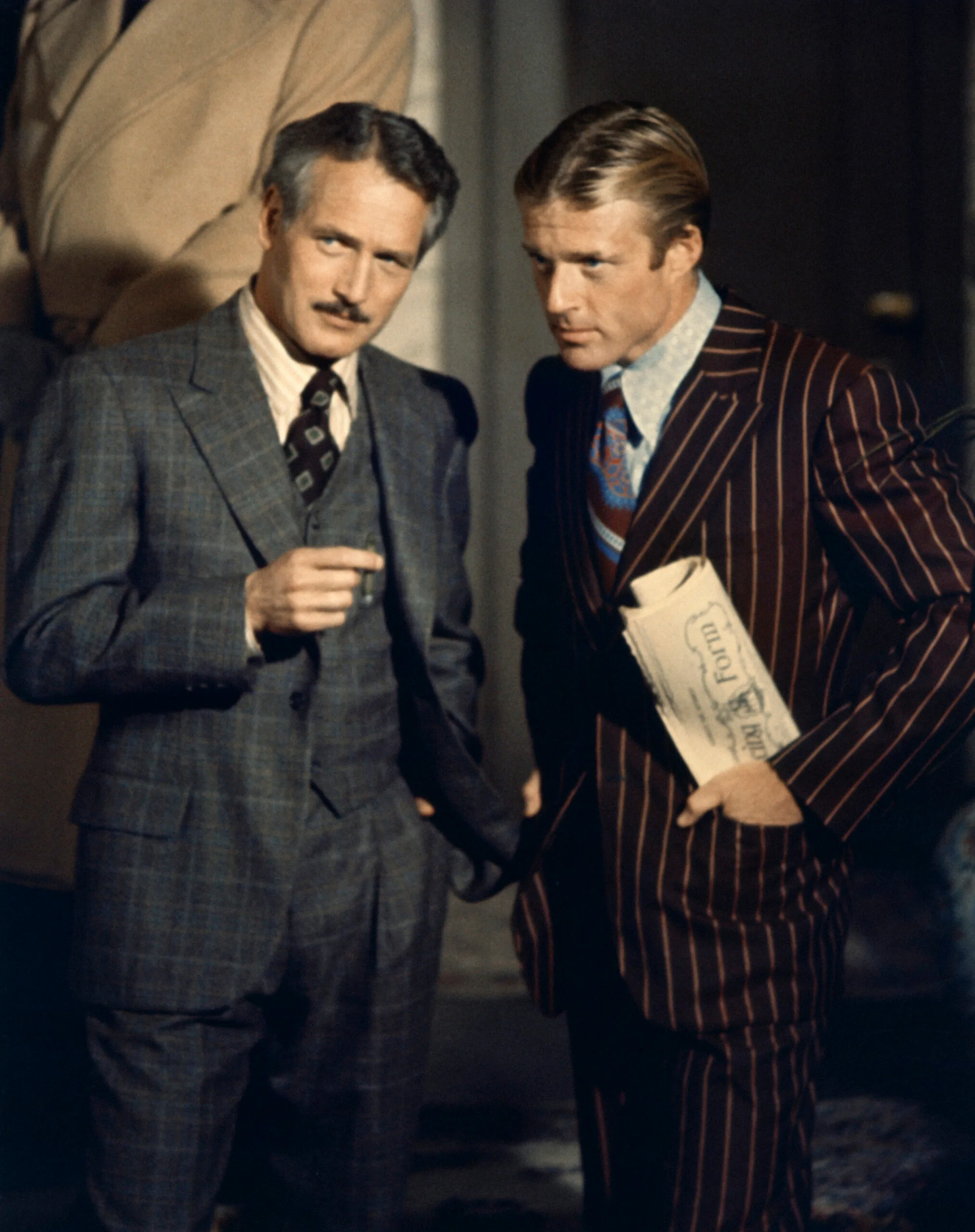
The Sting was a box-office smash and received rave reviews. It won seven Oscars, including Best Picture. Following the success of The Sting, Robert and Paul knew they wanted to do another project together but they couldn’t seem to find anything right.
But their friendship endured. Robert moved to Connecticut and, for a time, lived about a mile from Paul and Joanne’s family home. They had kids who were around the same age. In some ways, Paul and Robert’s friendship was as normal as any other co-workers and neighbours. In others, it was bigger than Ben-Hur.
“We have been known to play some eccentric practical jokes,” Paul recalled in 1982. “He sent me a Porsche for my birthday, except it had hit a tree sideways at about 130 miles per hour, and there was no transmission in it. It was just left in my driveway with a big bow around it. So, I had the whole thing compacted … and left it in his vestibule. It took five guys to carry this thing into his house.”
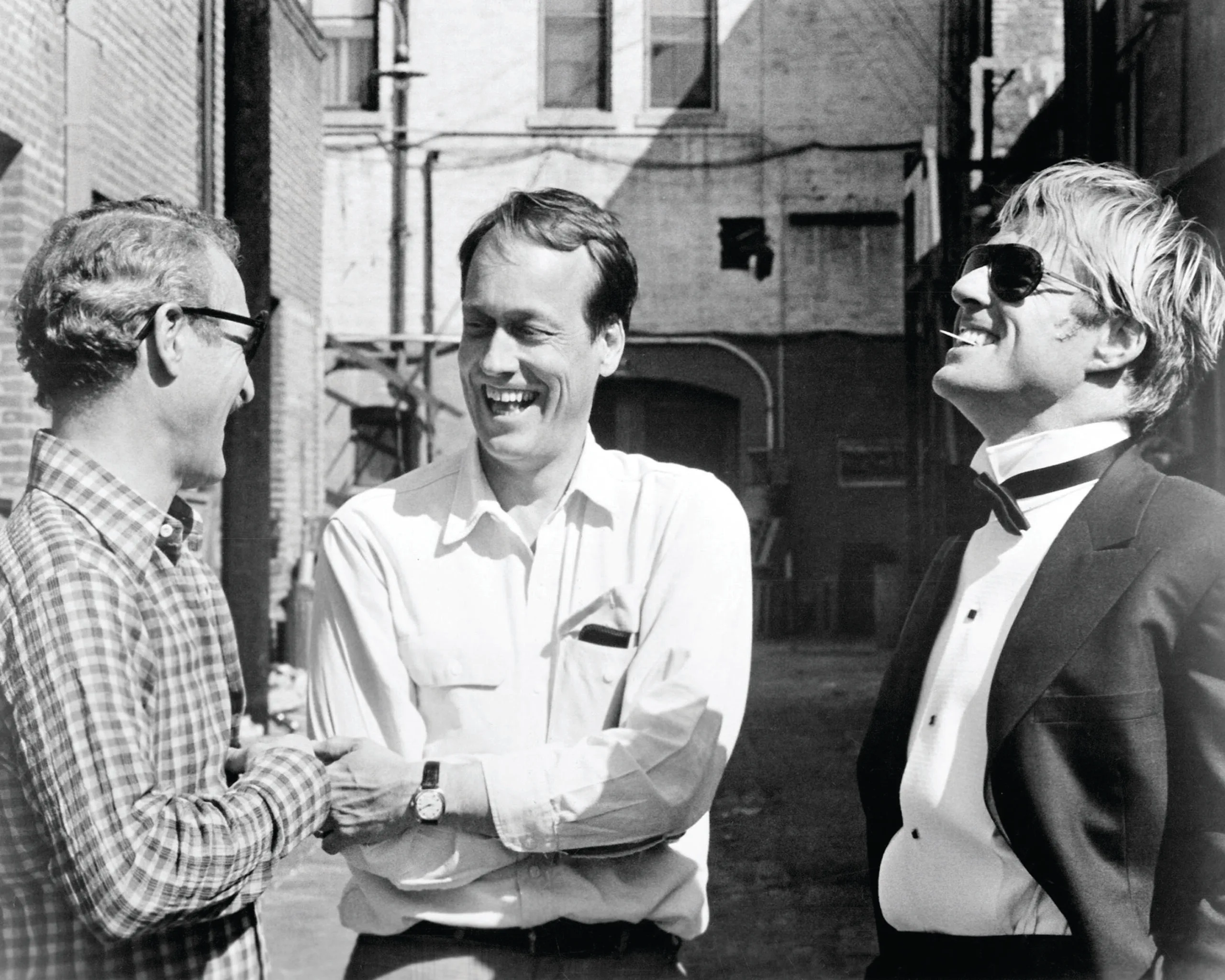
Paul says Robert won that round because he never mentioned the car.
“The idea was you would never acknowledge the trick that was played on you,” Robert explained. “We were at a restaurant once in California. The waiter came up to me at the table and he said, “Oh, Mr Redford, Mr Newman is in the next room. I said, ‘So? Can’t you see I’m busy?’”
Despite their pranks, they admired each other deeply. In 1992, Robert introduced Paul when he received a Kennedy Centre Honour.
“He’s a generous man who brings the gift of giving to each day. And he never asks for reward or recognition,” Robert said of Paul’s philanthropy. “He tells the worst jokes in the world, and that would be okay if he didn’t keep repeating them over and over again.”
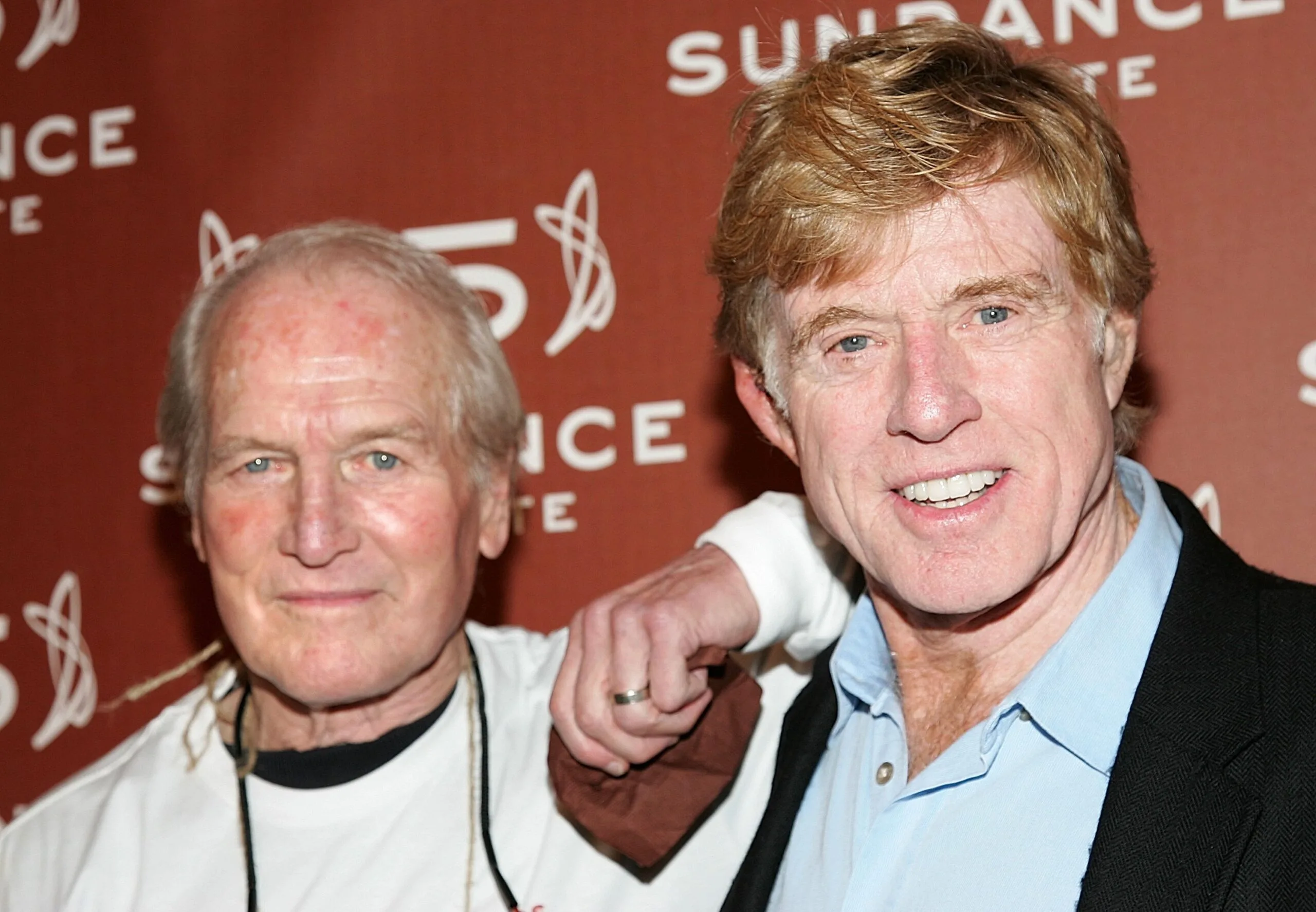
Paul returned in kind, paying tribute to Robert’s work with the Sundance Institute: “What Redford has done to encourage and find talent that is about to emerge is exceptional both in its timing and in its quality.”
Robert has said it was their shared values that were the bedrock of their bond. “He was very generous, and he had a lot of integrity, and all those qualities were pretty fierce, and I liked that.”
Yet, that magical third project eluded them.
In the late 1990s, Robert read the best-selling Bill Bryson memoir A Walk in the Woods and began developing it with the intention of it being the project that would finally reunite him with Paul. Together, the old friends would walk the Appalachian Trail for a film that celebrated friendship and adventure. But it was not to be. Paul became gravely ill and in 2008, after a lifetime of memorable screen work and humanitarian generosity, he passed away aged 83.
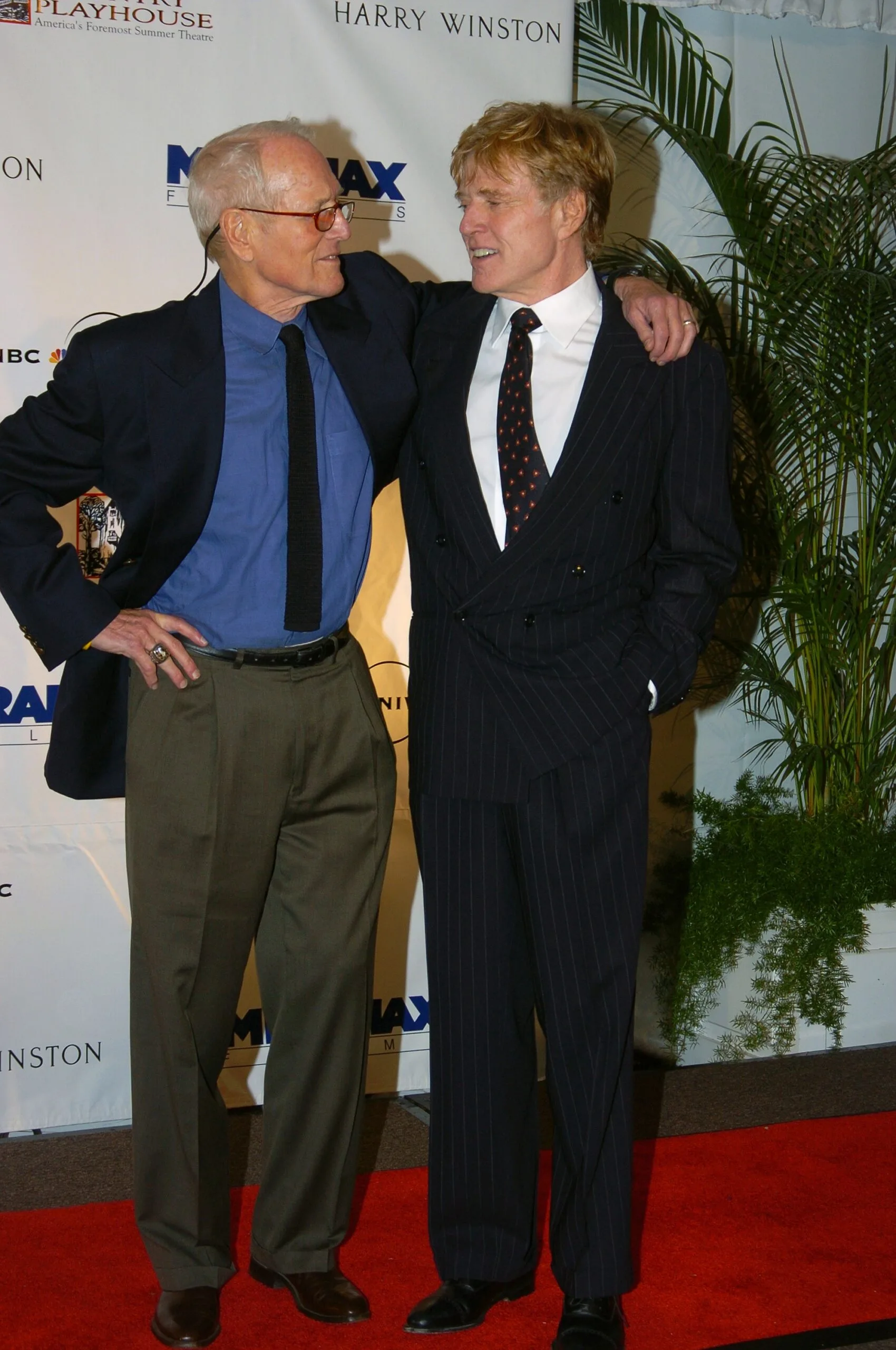
Robert was bereft. He remembered his friend with this simple but powerful tribute: “This was a man who lived a life that really meant something and will for some time to come.
“He was a real friend ,and that humour that we had, I’ll miss that. I’ll miss him.
“We’ve had quite a road together, Paul and I.”
This article was originally published in issue 20 of The Australian Women’s Weekly ICONS. Purchase back copies here.

