


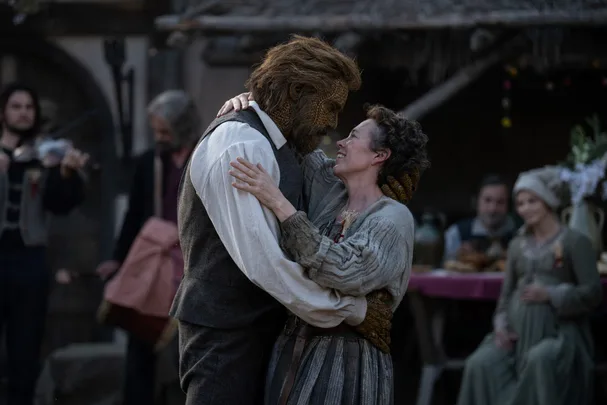
At a glance…
- Australian filmmaker Eleanor Wilson and her husband Alex Huston Fischer began adapting The Wicker Husband during a COVID-19 lockdown in Australia, just months after getting married.
- Their film Wicker, starring Olivia Colman, Alexander Skarsgård and Elizabeth Debicki, explores marriage, gender roles and the idea of the perfect partner.
- Speaking to The Australian Women’s Weekly, the married filmmakers reveal how their own creative partnership helped bring this unconventional love story to life.
- Olivia Colman, Elizabeth Debicki and Alexander Skarsgård star in Wicker, directed and adapted by husband-and-wife duo Alex Huston Fischer and Australian Eleanor Wilson.
What makes the perfect partner? Is it grace? Commitment? Communication? Understanding? Or perhaps a wicker-faced Alexander Skarsgård fixing your bed and roof after a night of passion? For Australian filmmaker Eleanor Wilson and her husband and creative collaborator Alex Huston Fischer, it was a question worth exploring.
The then-newlyweds were just months into their marriage when, during a COVID-19 lockdown in Australia, they began adapting Ursula Wills-Jones’ short story The Wicker Husband. What emerged was Wicker, a fantastical and surprisingly moving film about marriage, human ego and the expectations placed on men and women in a patriarchal society.
Arriving in Australian cinemas on November 5, the film might appear to be a rather risqué tale about a woman commissioning her perfect husband. But beneath the basketry lies a much bigger love story.
“The Wicker Husband had this examination of marriage and relationships and what a perfect relationship might look like,” Eleanor tells me over a video call.
“And how a perfect relationship can disrupt any other relationship,” Alex adds.
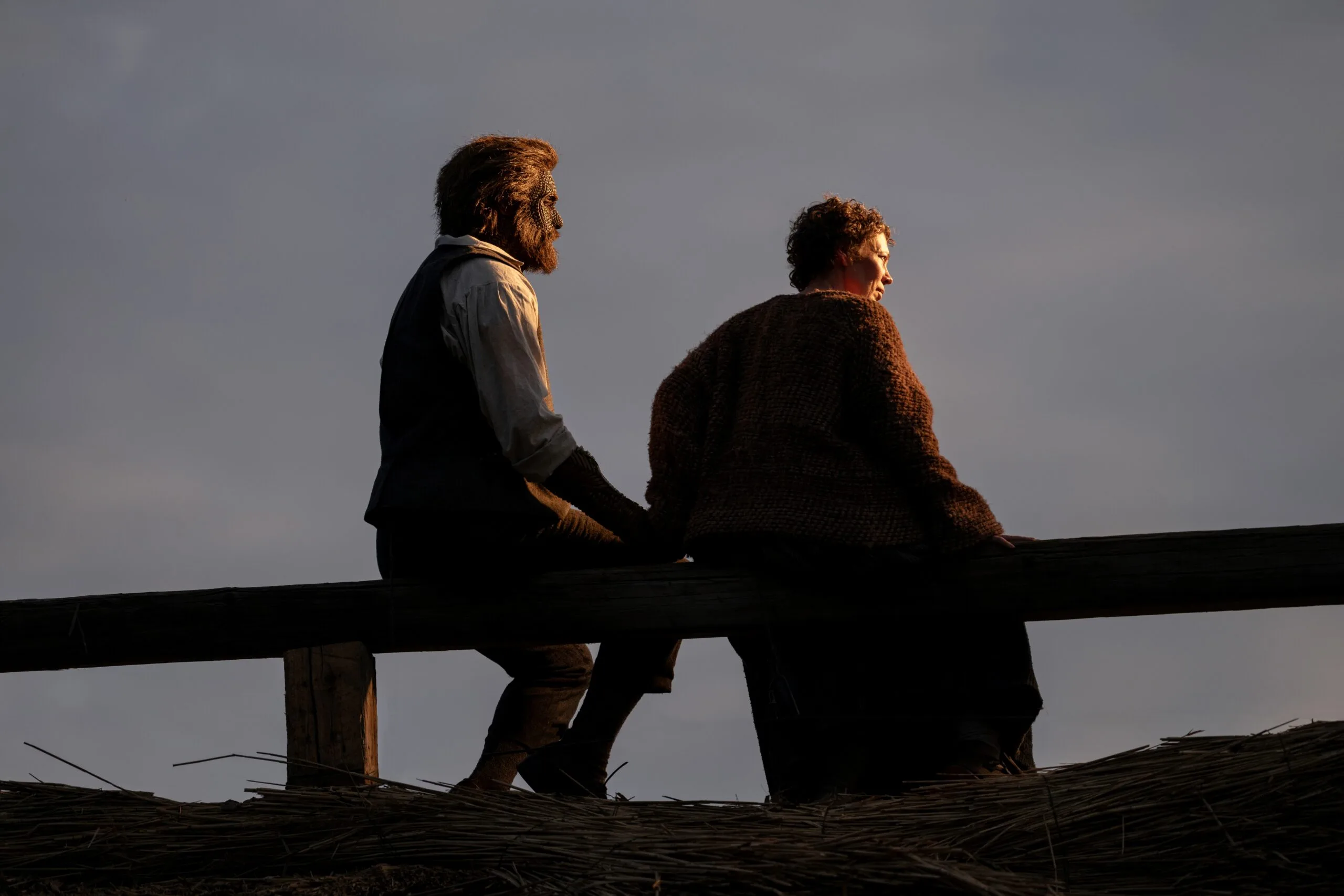
The two were freshly married when the short story came into their lives. They were primed to dive into a satirical exploration of marriage – although Alex insists they “also celebrate marriage.”
“It was really fun to dig into all the different townsfolk and see how they react in different ways to this new…thing,” Eleanor says – the “thing” being the Wicker Husband (played by Alexander Skarsgård clad in wicker).
“To really look at what would the perfect marriage look like? What would an ideal relationship look like, or an ideal partner look like? It’s complicated, right?” she asks Alex, sitting next to her as we discuss the nuances of the script and their creative process. “It’s not an easy thing to answer, and I don’t think we actually answered it in the film at all. But we put a spotlight on it.”
Despite what the trailer would have you think (or hope), this isn’t actually a smut film about Olivia Colman getting absolutely wrecked by a wicker-faced Skarsgård. In fact, it has incredible emotional depth, courtesy of the script from the co-creators and its small cast packed with heavy hitters. Primarily, their lead, Oscar-winner Olivia Colman.
“My gosh, I mean a dream come true, really,” says Eleanor of Olivia coming on board. Olivia has also said that it was one of her top three favourite film scripts that she’s worked on.
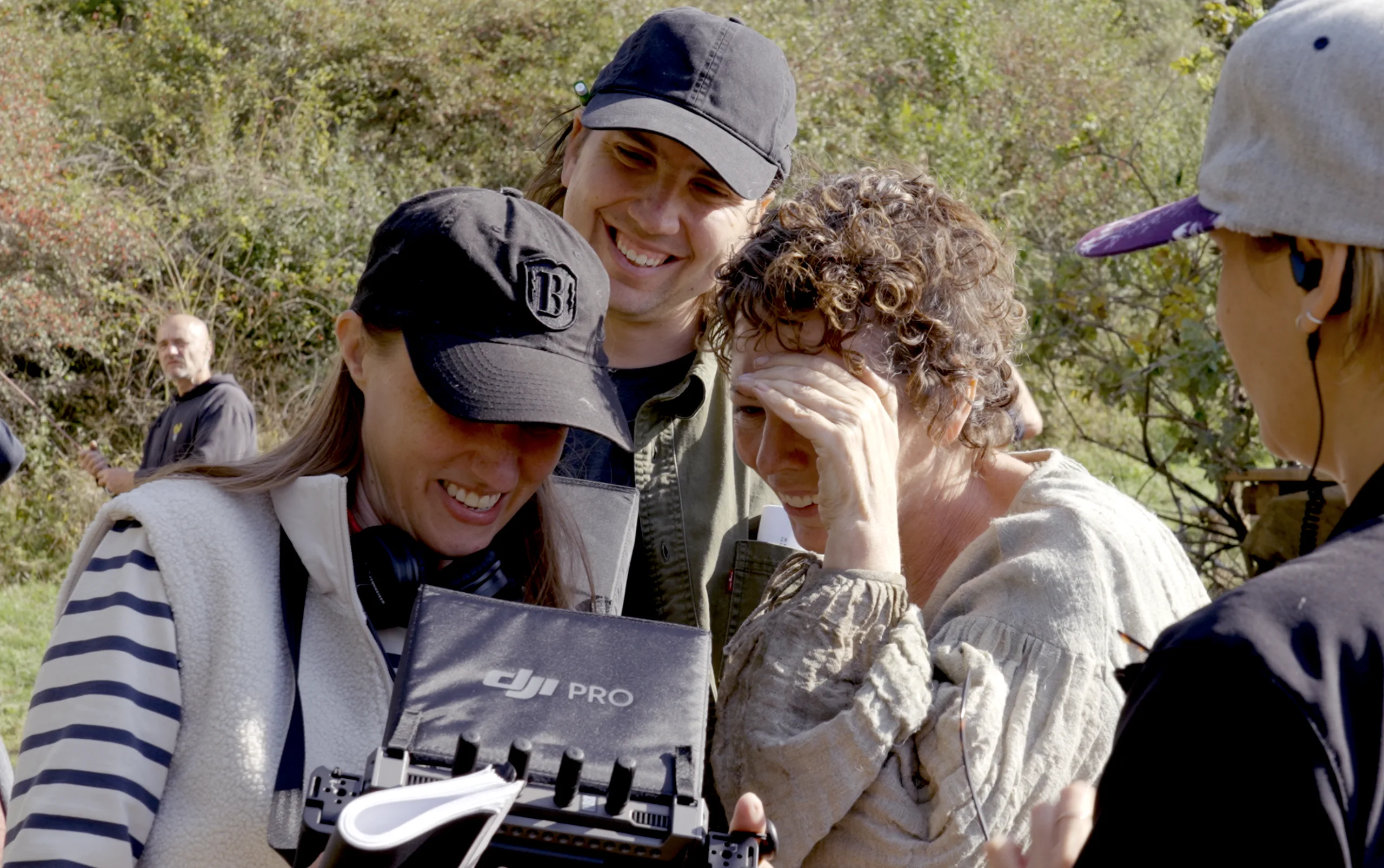
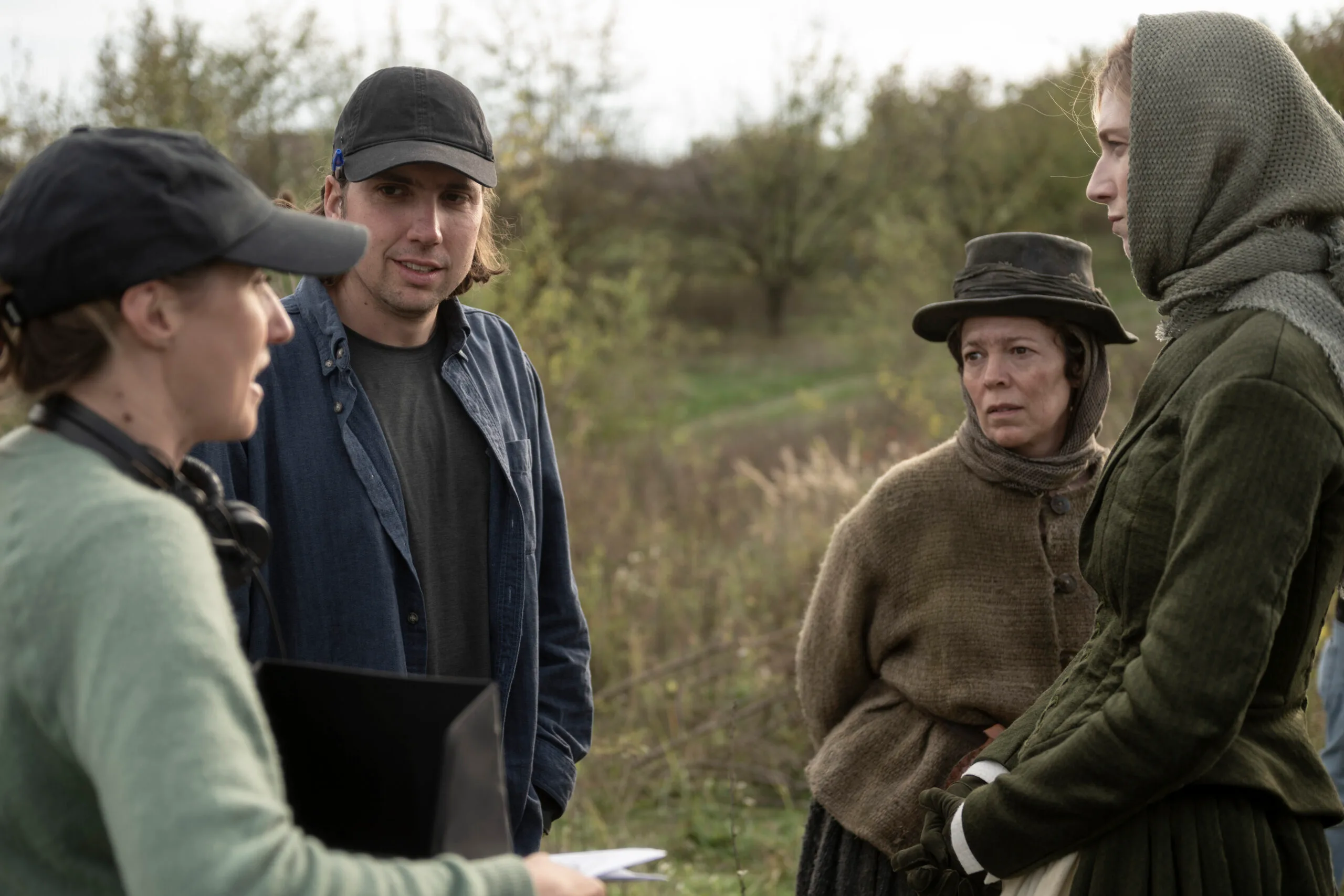
“We would have never allowed ourselves to think we could do a movie with Olivia Colman,” Alex says. “She played a couple of queens. She’s won an Oscar. But the first thing you notice when you meet Olivia Coleman is that she’s your friend right away. She’s very kind and easy and fun.”
They both credit Olivia for creating a “good vibe” on set. The Roses actress is renowned for her deft handling of both drama and comedy, a treat on chat shows, and clearly a fun person to be around.
“She’s a dream,” says Eleanor. Olivia plays the Fisherwoman, ostracised by her fellow townspeople, single and independent. Tired of being looked down on, and perhaps a little lonely, she commissions a Wicker Husband (Alexander Skarsgård) of the Basket Weaver (Peter Dinklage). Her newly created husband is completely devoted to his wife – and his creation and attitude set the plot in motion.
Olivia’s character’s antagonist in the film is the Tailor’s Wife, played by Australian actress Elizabeth Debicki. The women in the film – besides the Fisherwoman – are only identified by their relationships to men, rather than by their own names. Elizabeth’s character is the Tailor’s Wife, and before that the Doctor’s Daughter (the doctor played by an avant-garde Richard E. Grant).
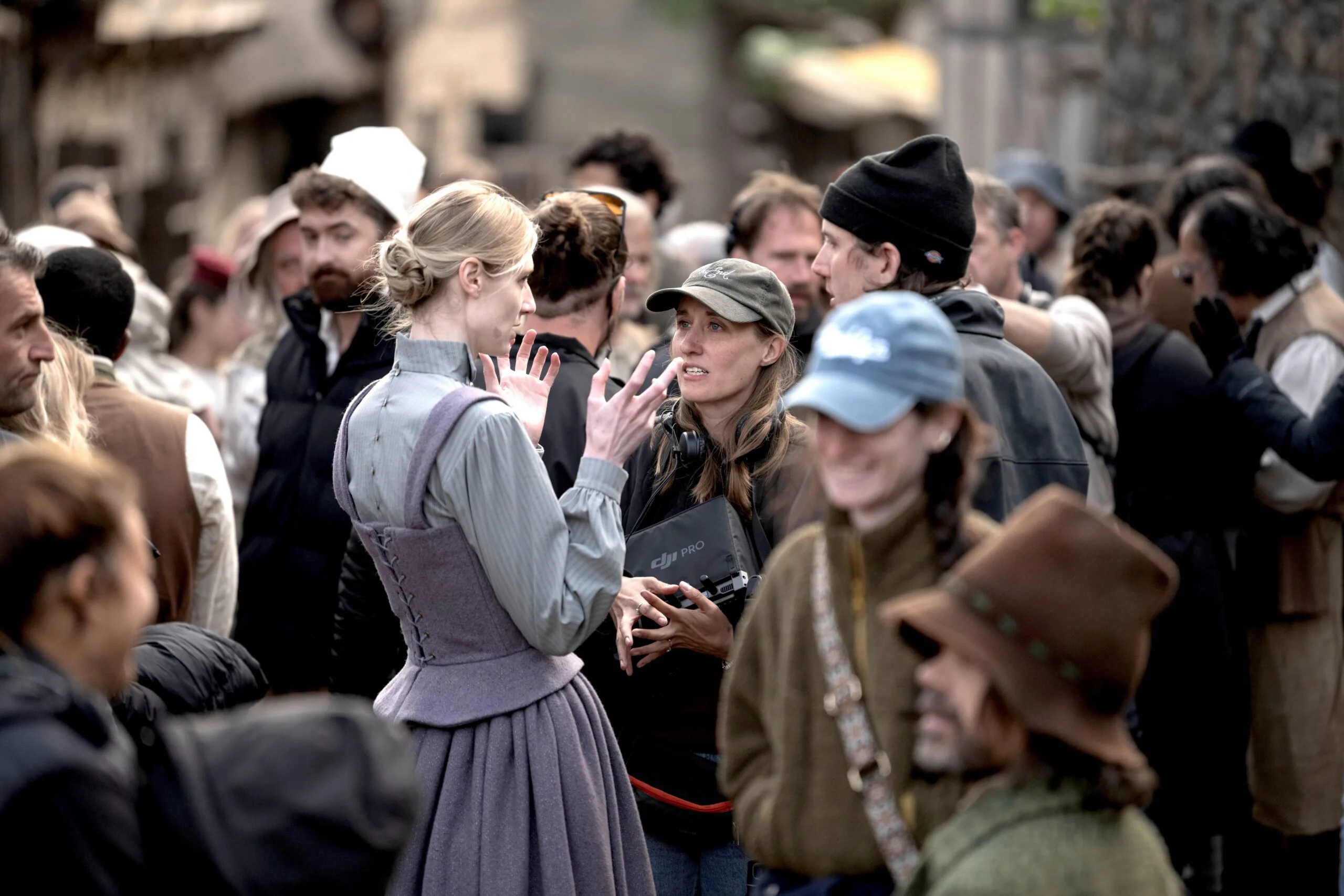
Elizabeth has a commanding screen presence in the film. Her character is clearly strong and capable but confined by the patriarchal society she’s in. Despite that, she wields great influence on the fellow women of the town, without having any actual power over her own destiny.
“We’ve obviously been a fan of Elizabeth’s work for a long time, but getting to dig into the character with her was so fun,” says Eleanor. The role of the Tailor’s Wife is rich and complex and one that was important to the directors to get right with the right actress.
“We knew as soon as we met Elizabeth that she needed to play this part,” Eleanor continues. “It felt like it was in her bones. But Elizabeth really understood that this is a complex, layered character. You can see her relishing in the power play, and you feel the true pain she’s experiencing.”
“Elizabeth brought humanity to that character that could have otherwise just been a two-dimensional villain in the wrong hands. She really understood it,” Alex says.
“It was just kind of a bonus that she’s an Aussie, so we had that little shorthand,” says Eleanor with a laugh.
The role of the soliloquising, potentially megalomaniac Basket Weaver is a pivotal one in the story. Like the Fisherwoman, he lives on the outskirts of society with the power to “augment” the natural order of the world. In the film, he gives these eloquent Shakespearean speeches that illustrate his hubris.
“We wanted the Basket Weaver to have this sort of god complex and for his motives to be a little shaky, a little bit ego-driven, because that would make for a more fun character than a perfect person, trying to do something perfect.”, Eleanor explains.
“Or just some unspecific magic guy,” adds Alex. “He lives alone, so he would talk to himself. He would have to talk to himself.”
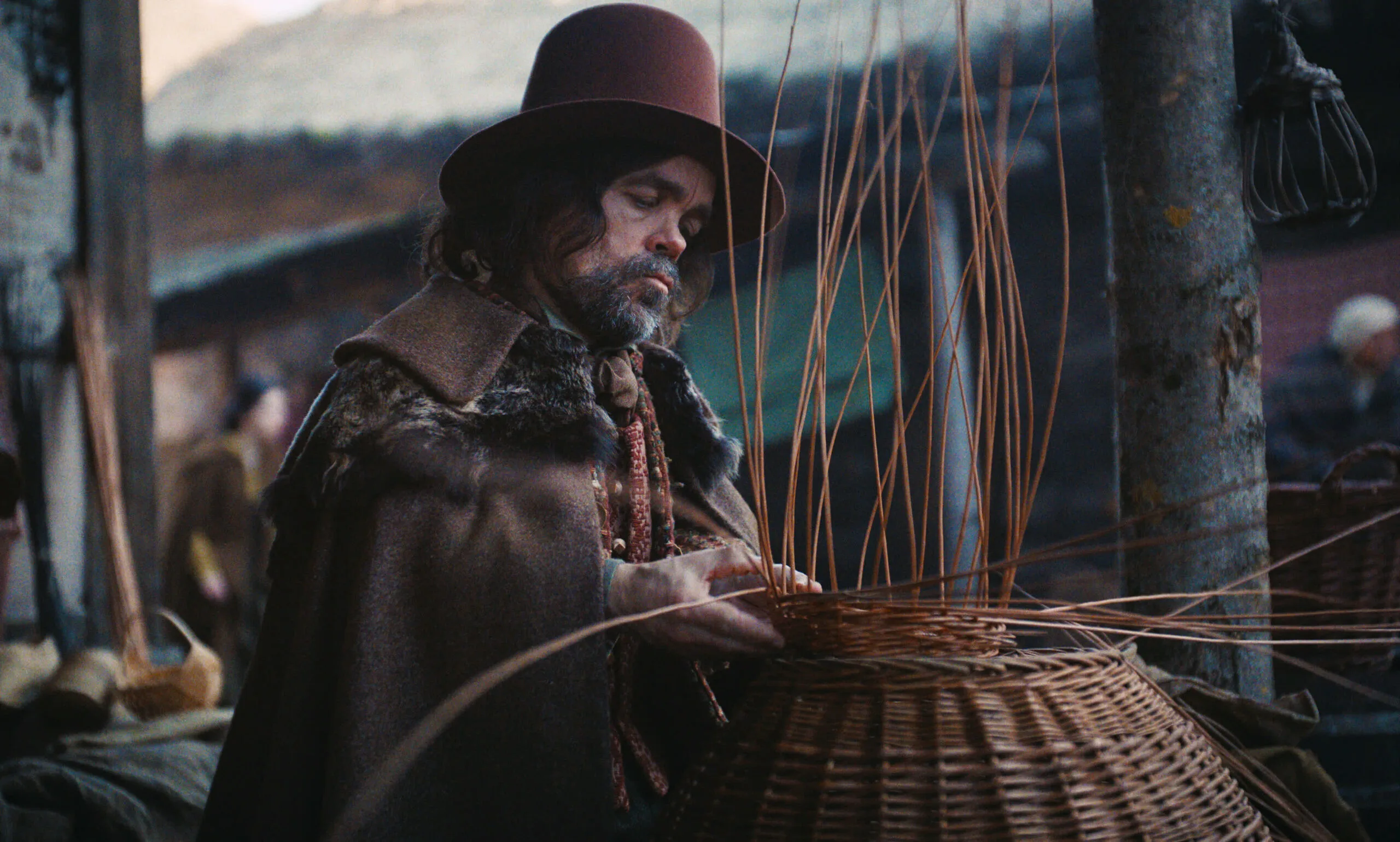
They found the perfect actor in Peter, who, like Elizabeth, relished in his character’s complexities.
“When he said he would do the movie, we fell off our chair. We fell off our chair,” Alex emphasises.
“We knew that he would really delight in playing these scenes. He’s so great with language. And he’s truly such a joy to work with. He’s a little unhinged in this movie, but that’s the character!” Eleanor laughs.
As mentioned, his creation, the Wicker Husband, rattles the townsfolk of this unnamed fictional period town. Many of the wives look on with desire, while the men appear to feel emasculated, their way of life and beliefs undermined. In one memorable scene, the men of the town confront the Wicker Husband and ask him why he is so devoted to his wife. It’s a revealing scene about masculinity, male vulnerability and the expectations that shape relationships in this patriarchal society.
In the original story, the Wicker Husband isn’t present in the scene. However, Alex and Eleanor add him to bring a layered contrast to the emotional reactions of the men.
“That scene was really fun to write,” Eleanor says, as the scene captures the various reactions to the Wicker Husband, from rage and jealousy to envy. Not all the responses are negative; some wish to learn from him. Some simply wish to vent.
“We loved that there were just all these different ways of looking at this new thing that’s not always a negative reaction,” she continues, adding, “it’s not just men suck, men are bad, but maybe men are challenged in their own ways.”
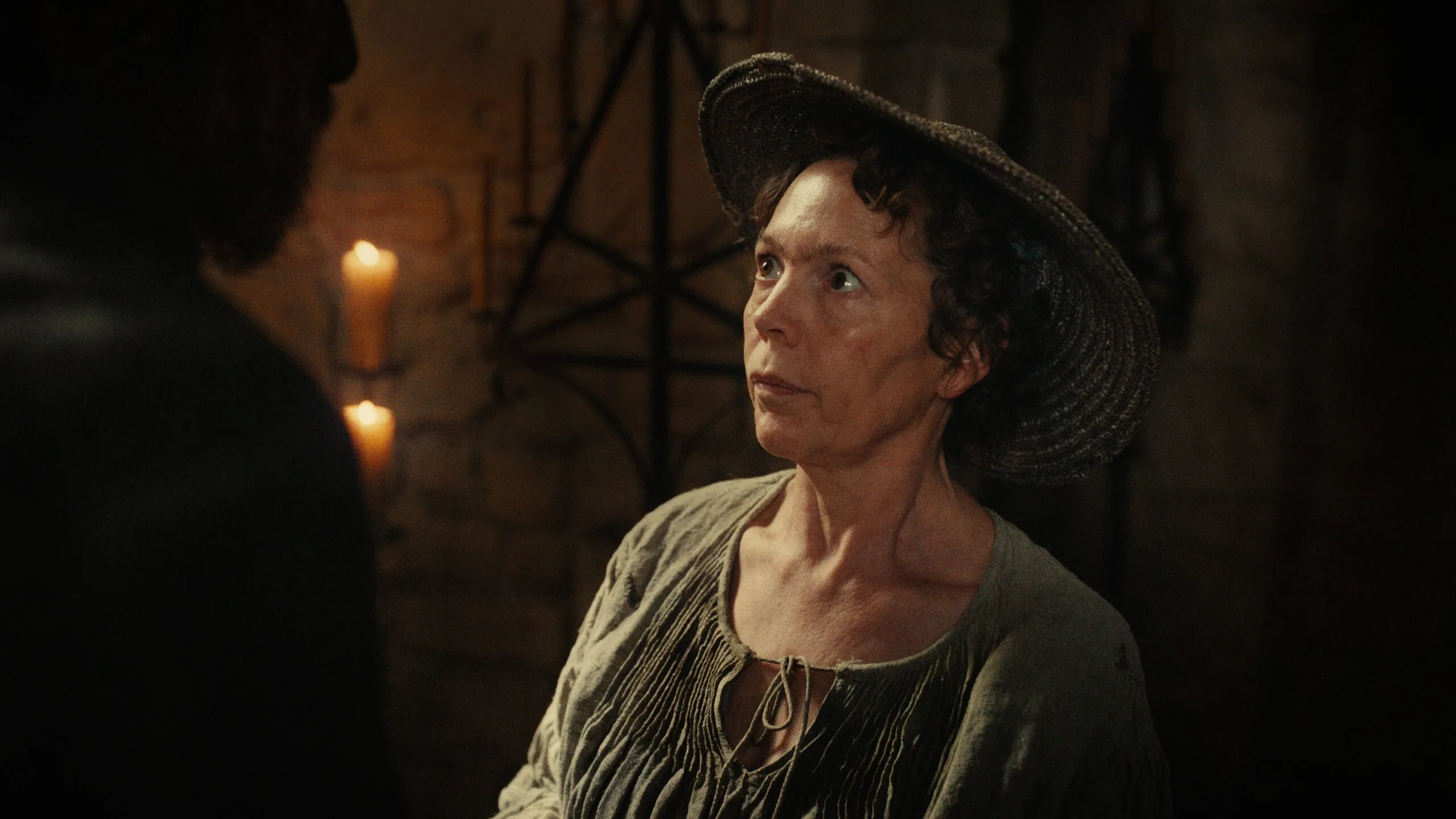
“Men and women can constantly complain about their relationships – which is a strange thing to do, but very common (“very common”, Alex agrees) – but what are we getting at here with all this complaining? What are we achieving?” Eleanor asks. “And then the Wicker Husband just cuts through with this by asking, ‘Do you love your wife?’ And it for a moment rattles them into maybe there’s like something true and vulnerable and beautiful underneath.”
There is no straight-up “villain” in the film; there are villainous acts, but no character is a cut-and-dry “bad guy”. However, you could argue that the real antagonist is human ego and its fragility.
According to the filmmakers, by creating the Wicker Husband, the Basket Weaver holds up a mirror to humanity and, in so doing, helps “retune the harmony of human nature.”
“But then you find that humanity is pretty corrupt; it’s hard to fix,” says Alex.
Wicker’s rich storytelling is further emphasised through its stunning visuals. As Olivia Colman said of her co-star, he makes a “very sexy basket.” The look immediately took the internet by storm. Even IKEA got in on the action with a Wicker-inspired campaign dubbed “Husband Material”.
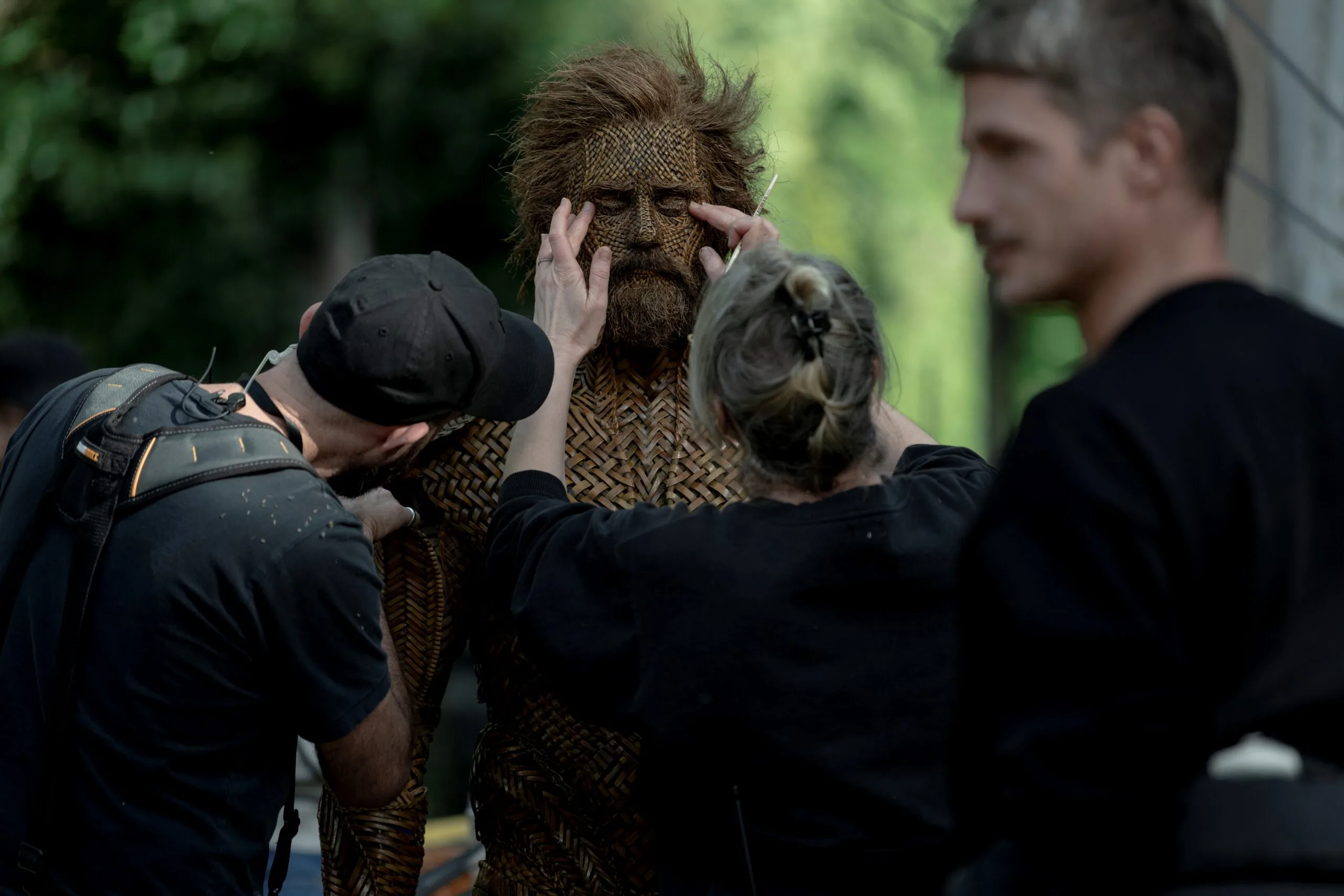
“We knew it always had to be practical effects,” says Alex. “It’s a romance with Olivia Colman, so he has to be a real actor there working with her. And there’s a lot of physical touch in the movie, and it’s really hard to have physical touch with a human actor and a CG character.”
New Zealand design company Wētā Workshop created the Wicker Husband’s realistic visage. Described by Eleanor as “the best in the business of this kind of practical effects.” It was a challenge that even they hadn’t undertaken before. They spent a year and a half developing the concept and the “suit”, but it didn’t stop there.
“They invented a new technology to do this,” says Alex. “It was the 3D printing technique that had never been done before. And at the end of all of that, we have this spectacular visual spectacle of Alexander Skarsgård as a basket.”
The final look helped Alexander to “embody” his character. Digital effects were used sparingly, for example, to create the illusion of the Wicker Husband’s hollow body. To really sell it, fellow Australian Andy Neal came on board as the sound designer to add authenticity to every movement, every creak – and probably destroyed a house full of baskets in the process.
“It really enhances the performance in this very beautiful way because you’re reminded of his fragility when you hear this crackling,” Eleanor says.
“And the strength,” Alex adds.
“Yes, and the strength,” she agrees. “That aspect of it was really fun. That he’s hollow and that there’s a vulnerability to him that is physical as well as emotional.”
This is the second major collaboration the husband and wife duo have worked on together. Their first was Save Yourselves! (2020), an offbeat comedy and satire (sensing a theme) on modern relationships and our dependence on technology. The film follows Jack and Su, a millennial couple who realise they’ve become overly dependent on their phones, laptops and the internet after deciding to disconnect from technology for a week, only to miss an alien invasion.
Like Wicker, which is essentially a satire on marriage, it explores what it means to be a man or a woman in a modern relationship. However, Wicker dives deeper and explores the concept of being worthy of love.
No matter your status, sex, or occupation, or whether you are made of wicker. But opening yourself up to love can be scary. Love of another person (or being), or even love and acceptance of yourself. It’s about love.
“I think that was like a bit of discovery throughout the process of writing the film that we really felt that when making it,” Eleanor says.
“It’s a very vulnerable thing to open yourself up like that,” Alex adds.
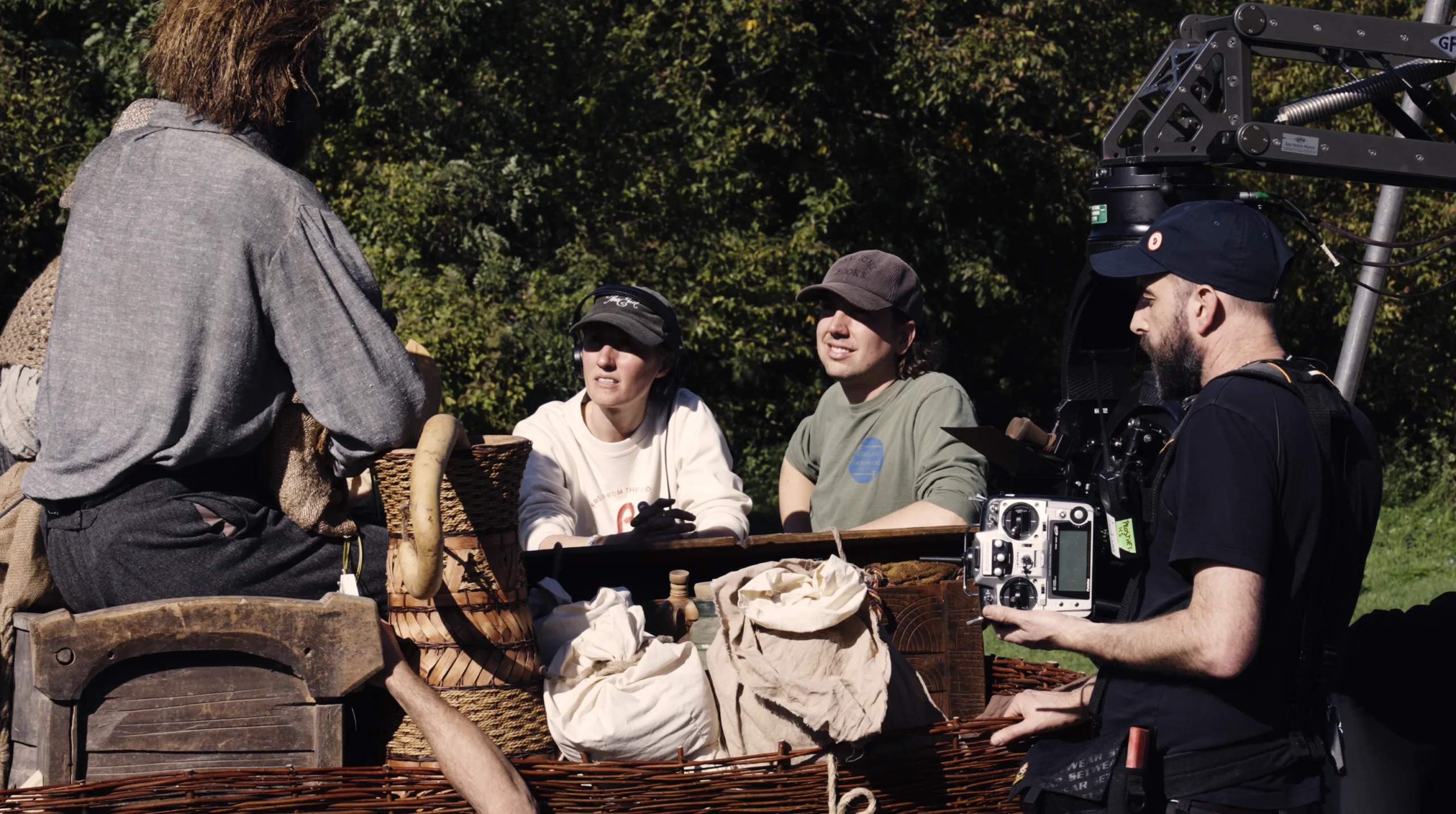
One could imagine that being a married couple and creative collaborators could come with challenges, but not for Eleanor and Alex, who thrive in the arrangement.
“It’s really nice,” Alex says. “I made this joke back when we wrote our first movie, that you can take a nap and the screenplay still gets written!”
“Directing a movie requires a lot. It can break you. So having a buddy, someone that you spend all your time with, it’s really nice to always just have someone there to figure out what’s important, what to spend your time on and how to navigate it all. And we have the same taste and very different sort of brains. So we come at things slightly differently, and I think it helps to be able to handle sort of a behemoth of directing a movie.”
“The fact that there are two of us is really nice,” adds Eleanor. “Just to always have someone else there who you can check in with, who cares as much as you do. And with Alex and me, we are married as well. Some of the best ideas and thoughts come up at midnight when you’re lying awake in bed, and the other person is right there to tell. So it’s quite…convenient.”
Wicker comes out in Australian cinemas from 6 November 2026.

