




At a glance…
- Whyalla Steelworks are Australia’s largest manufacturer of structural steel. In 2026, the steelworks faces closure.
- Then, in September, its blast furnace was shut down, and 600 employees face losing their jobs.
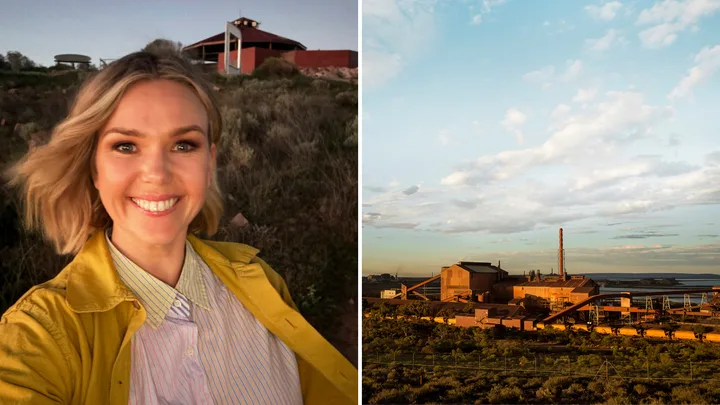
- In July 2026, our guest editor for our special Rural issue of The Australian Women’s Weekly, Edwina Bartholomew, journeyed to her hometown of Whyalla to investigate the steel city in crisis.
There is only one real hill in the steel city of Whyalla: Hummock Hill. It’s just gone 6:30 in the morning, and I’m here by myself, save for a wallaby peering up from the red dirt. On one side is the brand-new circular jetty sitting proudly in the Spencer Gulf, and on the other, the shining lights of the Whyalla steelworks, humming on a 24-hour shift cycle.
I was born here in July, 1983. My dad worked at the steelworks. Our house on Essington Lewis Avenue was a three-minute commute from the punch clock at BHP. Back then, the whole town was covered in iron ore dust from the pellet plant, as if the company were laying claim to the whole community.
“The joke used to be if BHP gets a cold, we all blow our nose,” Mayor Phill Stone tells me. BHP no longer owns the steelworks; it’s currently not owned by any company. In February 2025, the South Australian government forced the steelworks into administration, with the previous owner, GFG Alliance, owing $300 million to creditors, including many small businesses in town.
Those debts have now been settled, but the overarching issue of who will buy the Whyalla steelworks has not.
I visited Whyalla the week after the Federal Budget when the steelworks were labelled a “fiscal risk”, words that gave steelworkers the shivers.
“You know, in a town like this, language matters,” chides the Mayor. “We know what that means. It is just a definition, but when it comes out of the blue, and you have these new phrases, people are more likely to react. We know there will be more pain before there is gain.”
He’s right. In any rural area, words do matter. Drought. Fuel shortage. Urea prices. Flood. Cyclone. ‘Structural adjustment’, as the government would call it. We would simply say ‘closure’. They all pack a punch.
While city folk watch the disaster unfold at a distance, national issues become breakfast-table conversation in the country, where livelihoods and a town’s survival can depend on the ebbs and flows of industry.
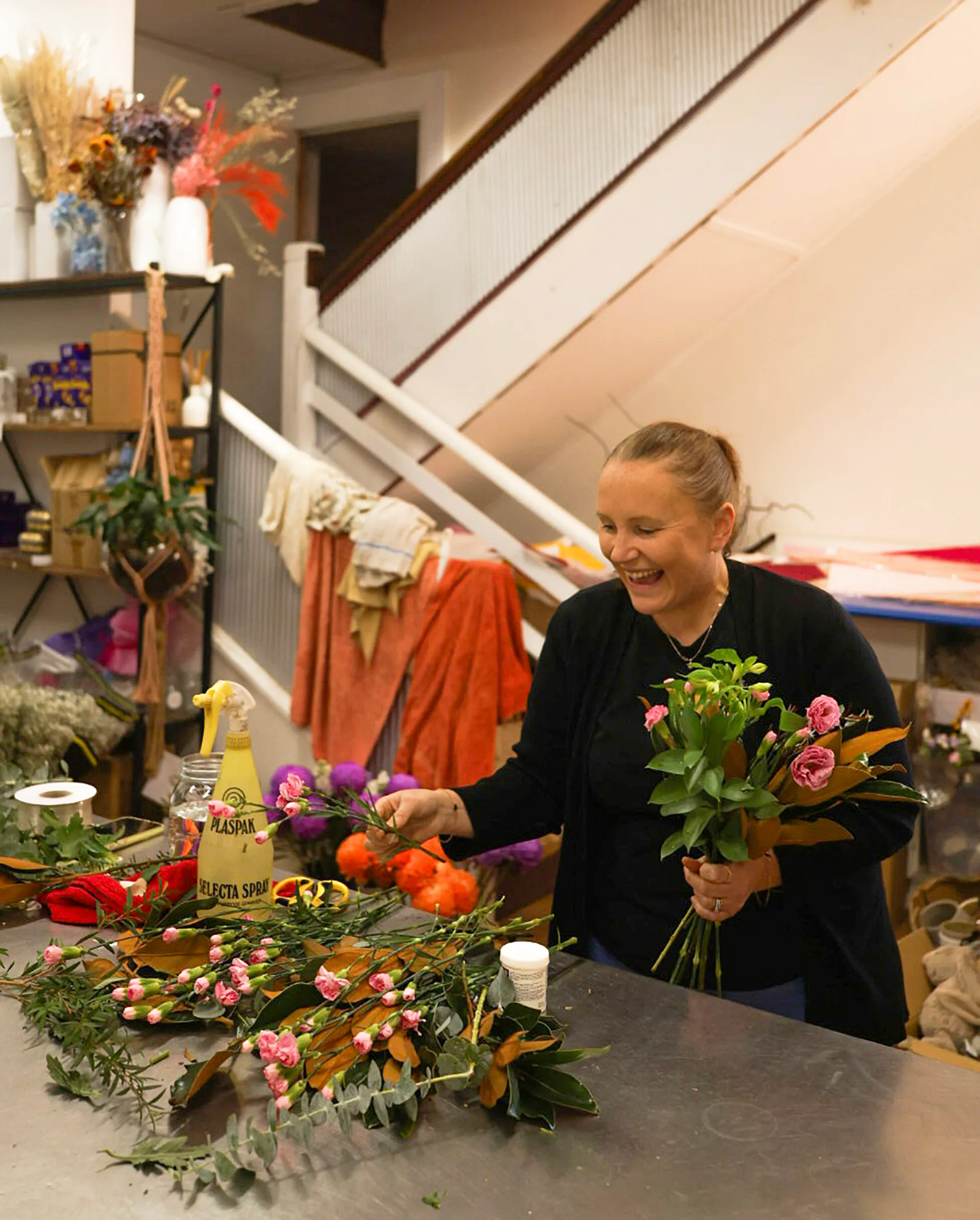
Alicia Wilson is arranging a bouquet at the back of her shop, Flowers by Alicia, a stone’s throw from the hospital where I was born, and where, every day, new Whyalla babies are welcomed into the world.
“It’s pretty amazing because you generally know them and you get to see the baby, and some of the family hasn’t even seen [the baby] yet,” she smiles. “Then there are the other times when they have lost someone, and you get to give them a cuddle and comfort them in a hard time in their lives.”
I tell her about a 21st at the pub last night. A long table with blue balloons; the celebrations continue in the city that is really a town.
“We’ve certainly been through the wringer, that’s for sure,” Alicia agrees. “There is always going to be a bit of doom and gloom, but I feel people stand strong, and it’s a great community spirit.”
Whyalla was originally designed for 50,000-plus people, but it never quite got there. Roughly 22,000 people now call it home, and hundreds more fly in and out. That’s a foreign concept to Noel Goldsworthy, who started work at the Whyalla steelworks on September 25, 1968, and is the longest-serving employee.
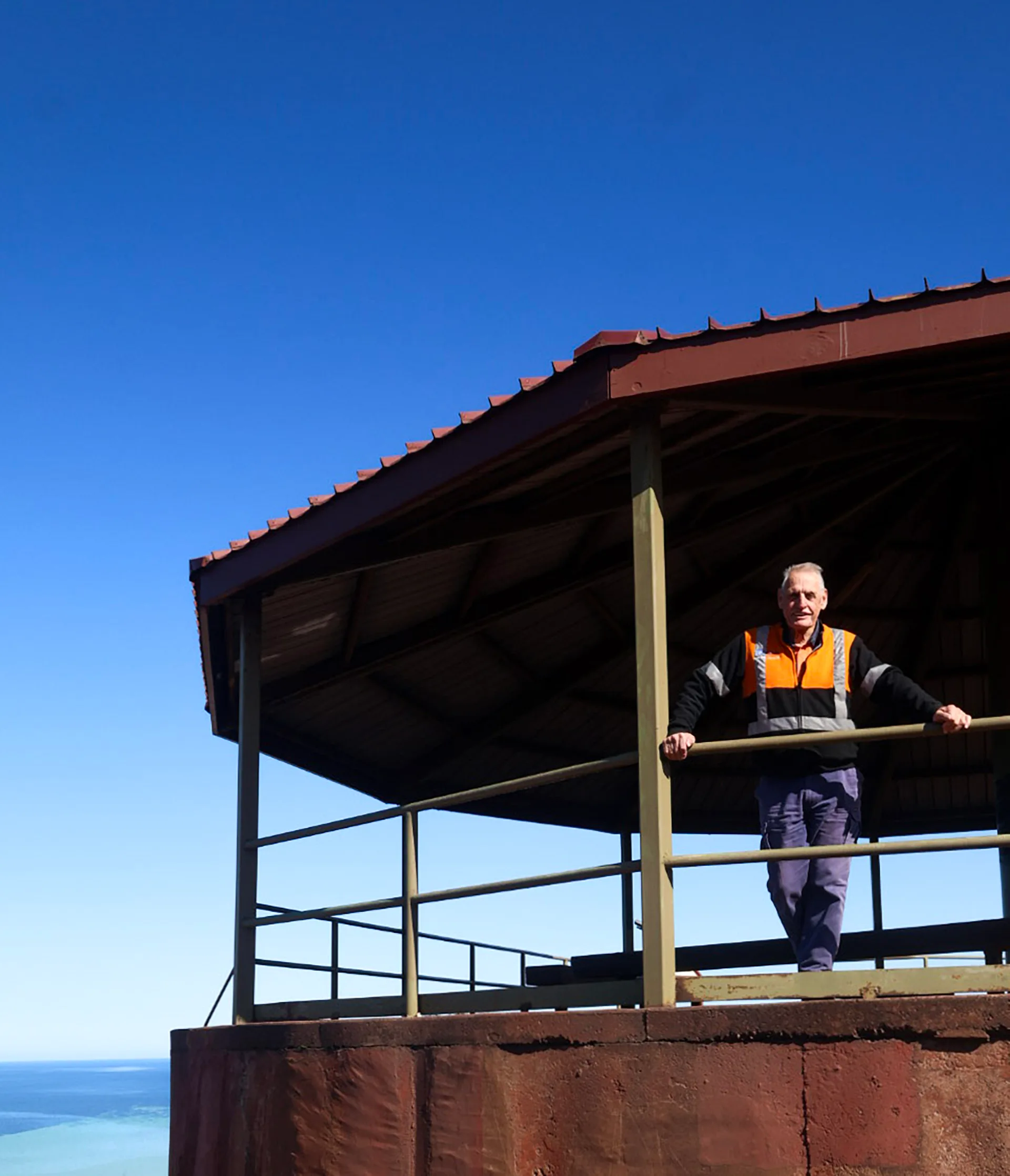
He is due to retire, but because the steelworks are in administration, he will have to wait to access his benefits. “We are sort of in limbo; everyone’s in limbo right now, and that is frustrating,” Noel tells me as we sit on Hummock Hill together. Noel used to work with my dad, and he kindly invited us back as a family for the 50th anniversary of the steelworks in 2015.
It’s because of workers like Noel that the place is still going. Even Peter Malinauskas can see that. The week after my visit, the South Australian Premier addressed the Whyalla workers, wearing his hard hat and with the broken blast furnace as a backdrop. “I love this place. It’s full of good people,” the Premier posted on TikTok. “There are thousands of people who make this enterprise work. They are keeping it alive amongst some pretty tough circumstances.”
I asked him to share with The Weekly what the future holds for the people of Whyalla. “Whyalla is an extraordinary town, and through generations its people have demonstrated remarkable resilience. The challenges at the steelworks are not of their making, and the sale process continues at pace.”
They are down to two potential buyers, but while Whyalla waits, the town suffers. “When I was driving up the street then, I just saw another business for sale,” Noel adds. “But there are strong pockets of people here determined to make this place a success.”
Malcolm McLeod is one of them. The sign at his car yard reads: “It’s nice to go to someone you know!” Malcolm knows pretty much everyone in Whyalla. He’s a life member of the West Whyalla Football Club, President of the Chamber of Commerce and celebrates 30 years in business this year.
Like a good car salesman, the measure of Whyalla is taken in mileage. “It’s just an easy place to live. It’s a 10-minute drive to the beach from the furthest point in town, and $20 in a taxi from anywhere. You don’t have to line up. You can get a car park out the front of the doctor’s, you can get a car park out the front of the chemist.”
Yet even he admits that Whyalla is not out of the woods yet. “I think the government has our back. It’s very important that they sell it to the right consortium that is going to invest in us. They can’t just rip the iron ore out of the hills and send it overseas.”
If anything, what is happening overseas right now is benefiting Whyalla.
The Middle East war has raised an important conversation about sovereignty in Australia and the value of our regional and rural communities. Where does our food come from? Where does our steel come from? What are we giving away as a nation that we should be protecting?
A bloke sits at Shannon Rae’s cafe wearing a T-shirt that reads, “Tough times make tough people.” Fitting, given the conversations I’ve been having all day.
Shannon grew up “quite rough” in Whyalla, his words. Like many young people in regional areas, he finished school and left for the bright lights of a capital city.
“I feel like it’s always been an ambition. You grow up in Whyalla, you go to school here, everyone seems to have the same ambition to move to Adelaide. I was there for 10 years.”
When Shannon lost his job during COVID, he came back with his partner, Danielle, to start a family. “I’ve come back, under circumstances I didn’t expect to, but we have made the absolute most of it. People will move away; they’ll try something different, but somehow, Whyalla has a way of bringing everyone back.”
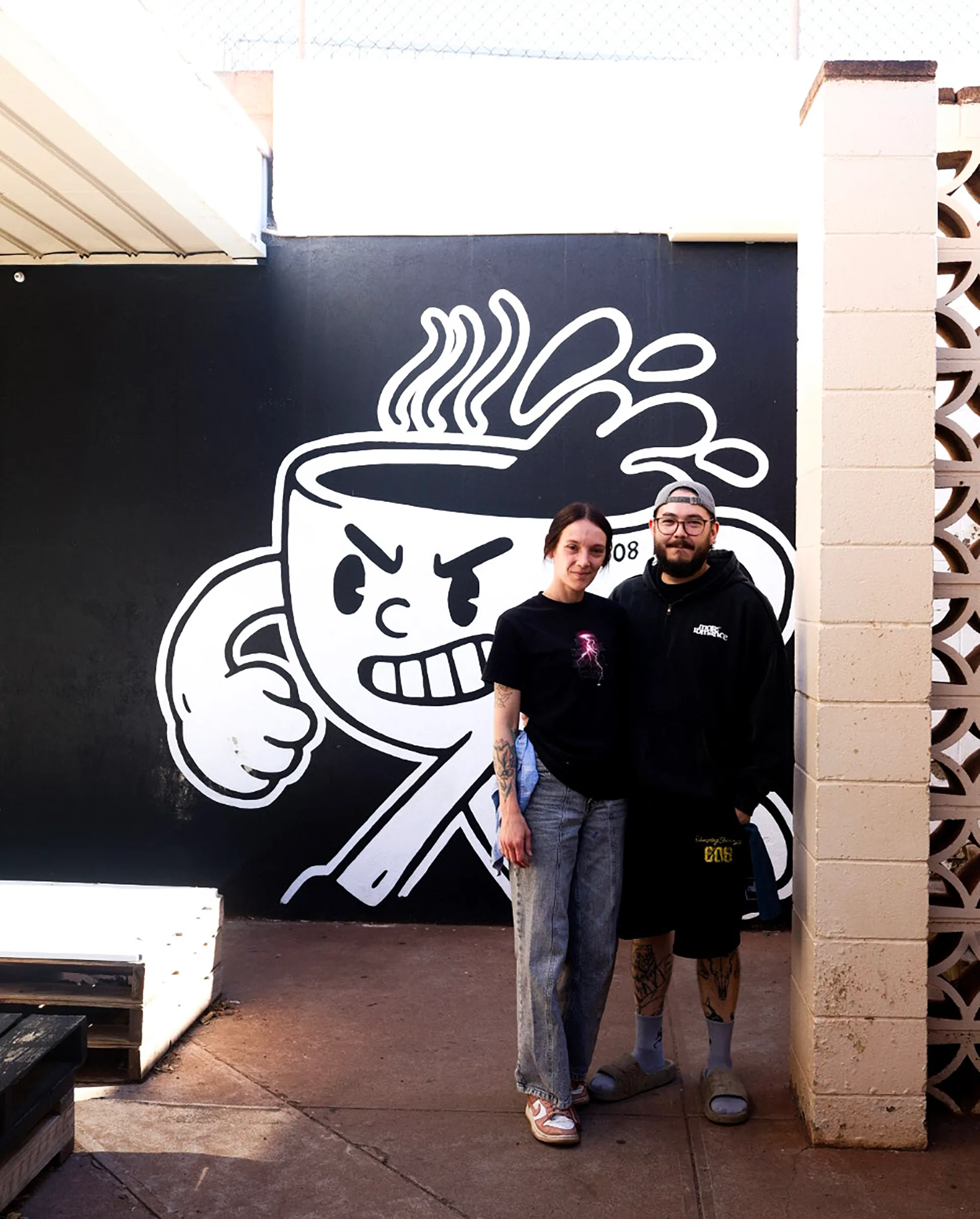
Shannon’s cafe, Steel City Made, sells streetwear and offers hospitality training to teenagers who might otherwise slip through the cracks. What are you creating here, I ask? “A community. That’s it,” he says without question.
“The people of Whyalla are headstrong, super headstrong. They are very set in their ways, which can have its pros and cons in a regional town. But at the core of it, everyone just wants the best for Whyalla and to see it become an even better community.”
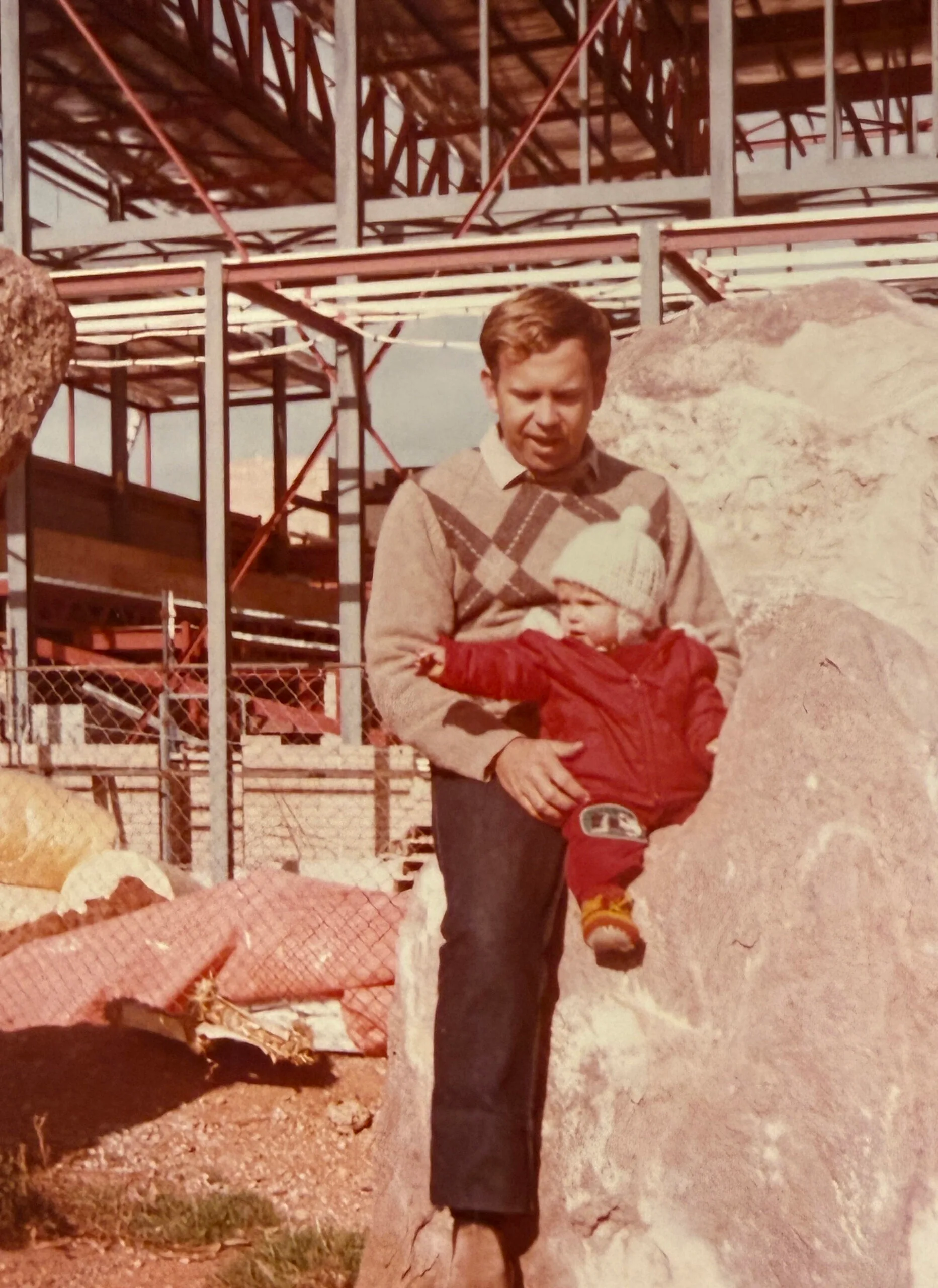
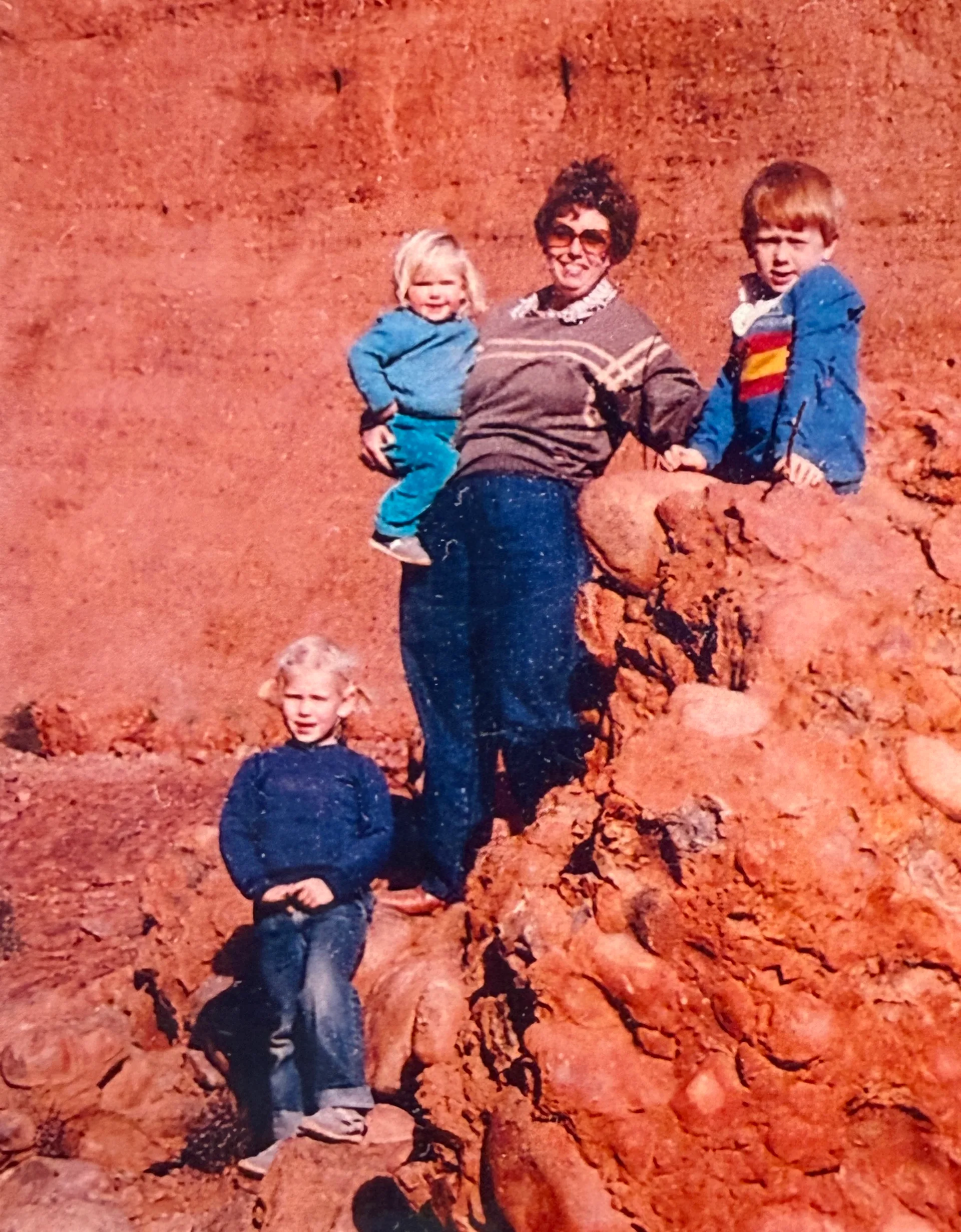
Over coffee, we chat a bit longer about Shannon’s three-year-old son, Aari. I was about the same age in many of the photos I have of Whyalla. In one, I’m playing in the red dirt of the Middleback Ranges, sitting in our front garden before my brother and sister went off to Whyalla Town Primary. Then there’s my first (and last) modelling job for Walker’s Whyalla on Forsyth Street, sitting on my dad’s lap with the framework of the steelworks behind us. They are wonderful, dusty memories.
Shannon is not working at the steelworks, but as the name of his cafe and clothing label suggests, he is ‘Steel City Made’.
“At the end of the day, it’s not our first rodeo when it comes to issues with the steelworks. It’s been an ongoing thing for as long as I can remember. I just want to show my son that no matter where you are, what you’re doing, what is happening around you, if you have a vision to chase that dream, you know, shoot for the stars,” he says.
Before I fly out, I wander down to the foreshore. There are signs for glass-bottom boat tours, and grey nomads are settling in for the night. The annual ‘Cuttlefest’ is about to start.
No one remembers when the giant sea creatures started coming to Whyalla to breed, but sometime in the last decade, their steady migration became more solid than steel. Tourism numbers are booming, and the Council is investing in more campgrounds to accommodate the number of caravans.
“I never expected to be spending a life watching iron ore prices,” reflects Phill Stone, who hopes to see a final sale of the steelworks in September before the Council elections in November.
“It becomes part of you, it’s in your blood. You’ve got this one industry, keeping a whole city together. Even though there are challenges ahead, we’ve got people up to the task, and they wouldn’t leave Whyalla for quids.”
This article originally appeared in the July 2026 issue of The Australian Women’s Weekly, a special Rural Issue. Subscribe so you never miss an issue of The Weekly.

