


At a glance…
- For the first time in decades, young men and women hold more regressive views on gender equality than the generations that went before.
- The Weekly investigates the brave new world of tradwives and the manosphere, and meets young people struggling to find their way.
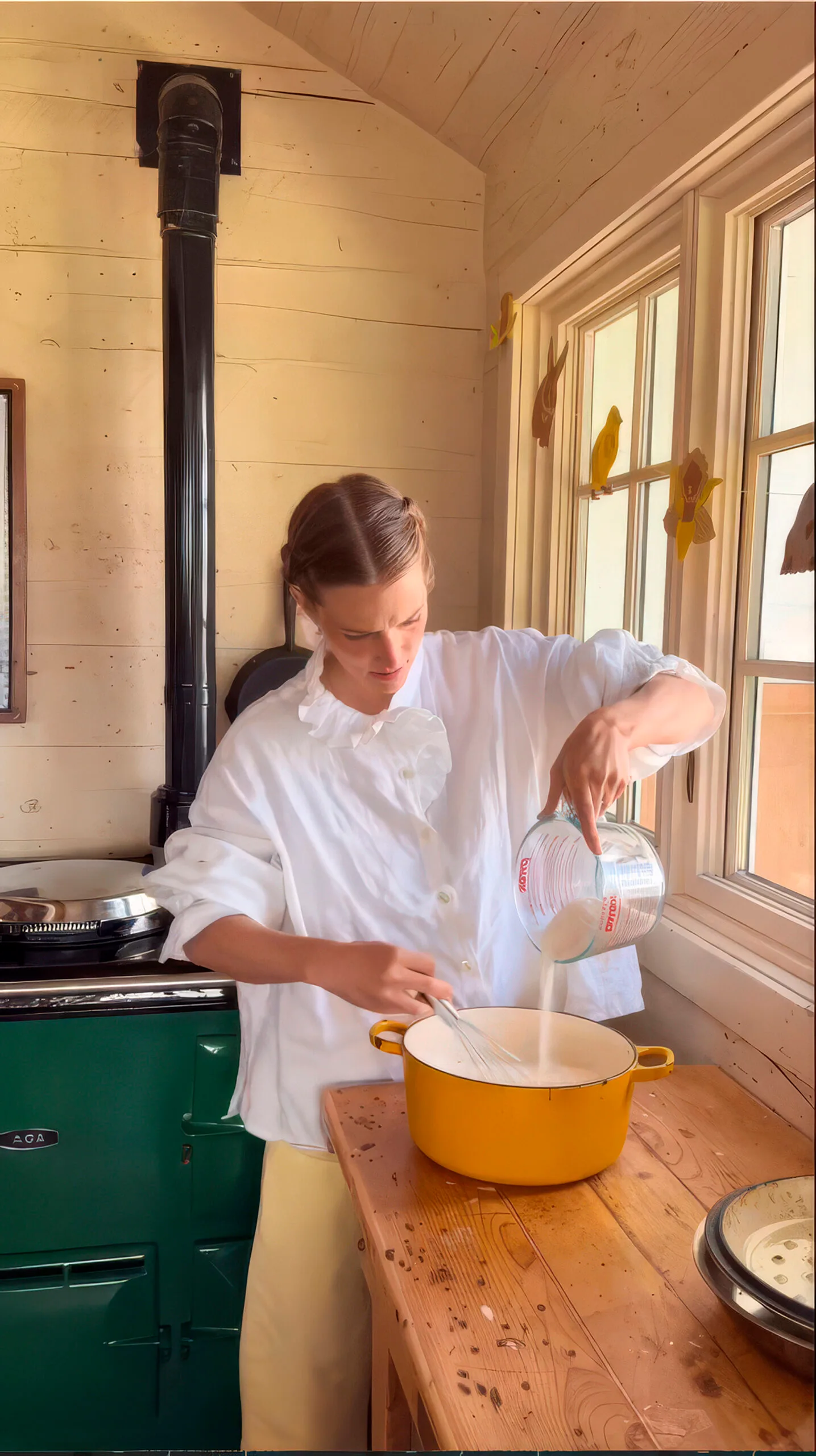
A breastfeeding mother sits before her green cast-iron stove, the kind that has been warming homes, day and night, since the 1920s. It’s a brief moment of respite before her morning – and Instagram videoing – begins in earnest. “It was a full day in the kitchen, which honestly are my favourite days,” she shares in her usual monotone fashion, before making her own panna cotta and hot cross buns, then entertaining a gaggle of guests.
This is the world of Hannah Neeleman, mother of nine, cottagecore aficionado and creator of the Ballerina Farm social media phenomenon. While Hannah doesn’t view herself as a “tradwife”, she’s become the face of this modern internet entity and – many have speculated – the inspiration for Caro Claire Burke’s wildly popular novel Yesteryear.
Caro’s debut – which is set to become a film starring Anne Hathaway – follows Natalie Heller Mills, a wife, mother and Christian fundamentalist who builds an Instagram empire before waking up in 1855 and being forced to live the homesteader existence she promotes online.
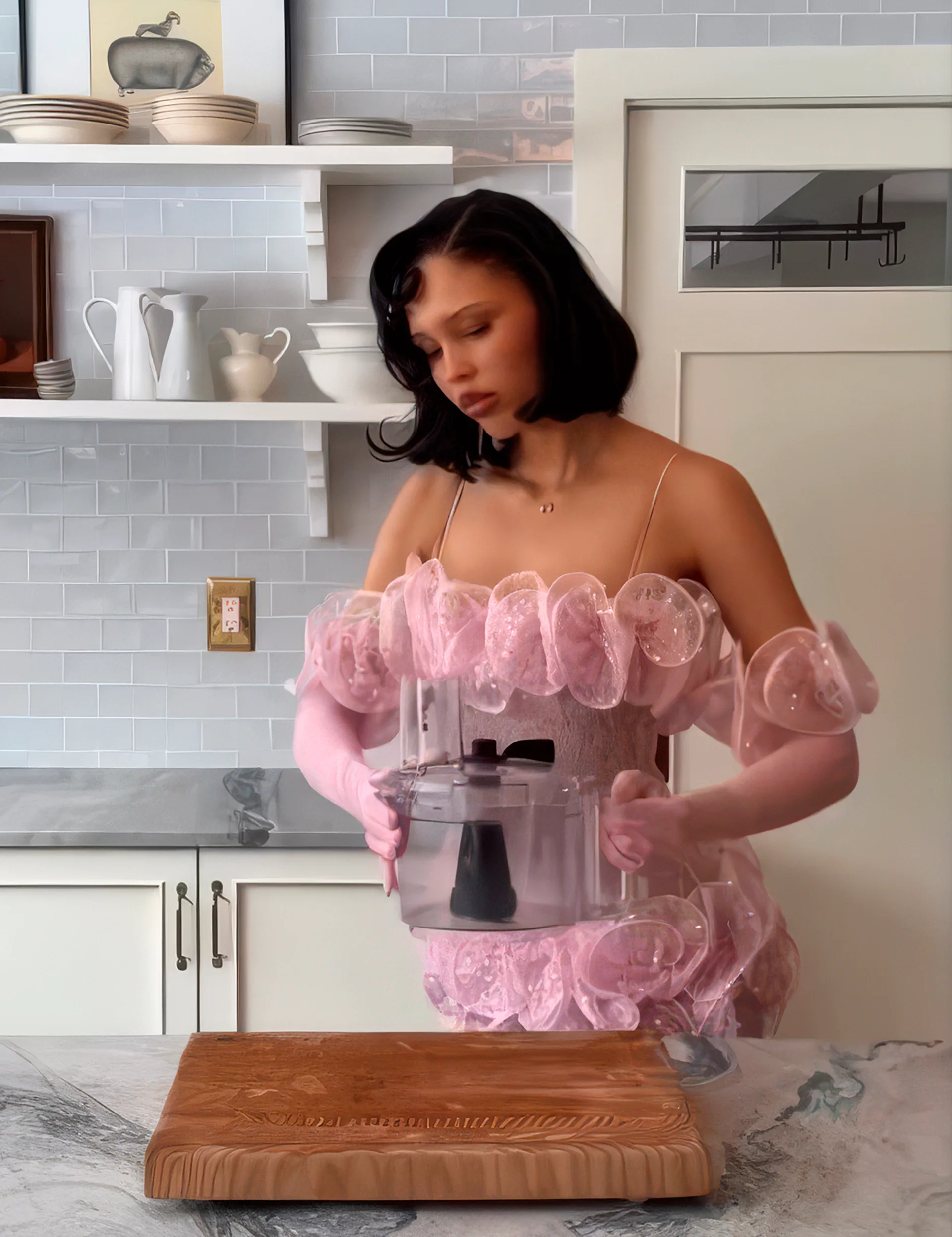
It’s a deeply satisfying plot for anyone who’s doomscrolled the feeds of Ballerina Farm or Nara Smith, the Mormon mum-of-four who makes cereal from scratch while dressed to the nines.
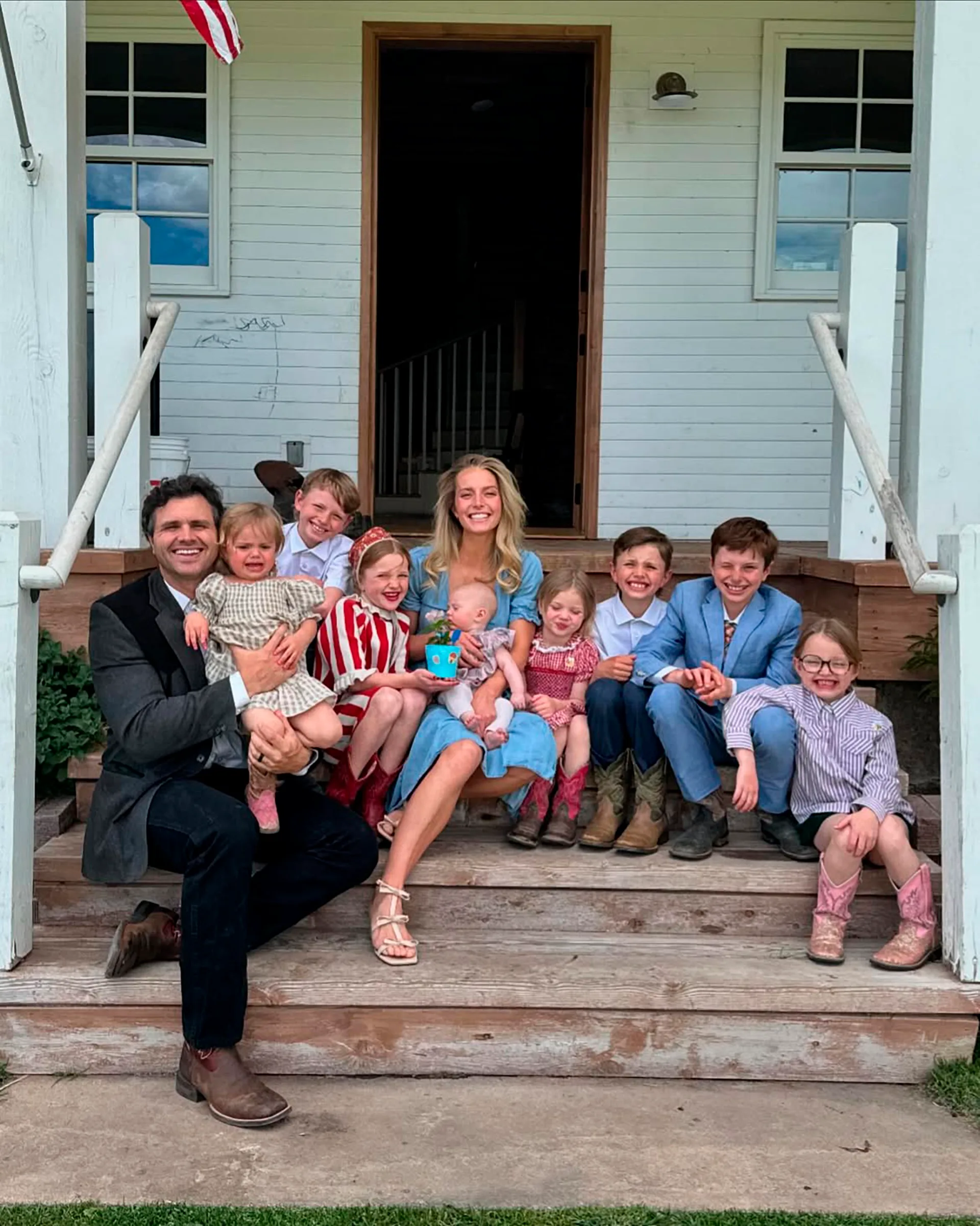
Depending on who you ask, tradwives range from being aesthetic inspiration to harbingers of Christian nationalism. They present traditional gender roles as the answer to modern malaise – ‘Homemaking will make you happy’ – and often promote heterosexuality, homeschooling, family and faith.
The irony, of course, is that many of the best-known figures are the breadwinners in their relationships. Or, in Hannah’s case, cushioned from reality by her airline tycoon father-in-law’s immense wealth.
Astrid Lorange, a cultural scholar at the University of New South Wales, says tradwives blend 1950s values with pioneer nostalgia, captured through the lens of smartphones and social media.
“They’re pulling [historical moments] together to have this fantasy of what family, wealth, racial purity and authority, and gender tradition looks and feels like,” says Dr Lorange. “It’s very much a grab bag of different things without, of course, thinking about the social conditions of those times. There’s a lot of, ‘This is what our ancestors would have done,’ without thinking about, ‘This is what infant mortality and maternal health looked like.’”
The movement, she says, is typically “conservative evangelical Christian, almost certainly white and from the US”. Nevertheless, it could be that tradwives are the precursors to a much wider phenomenon. Research suggests that a growing number of young people are hankering for a bygone era of gender relations – or perhaps a romanticised version of it.
For decades, successive generations have become increasingly progressive in their attitudes towards gender norms. However, Gen Z men are proving to be the exception. According to survey findings from King’s Global Institute for Women’s Leadership, this group holds more traditional views than Millennials, Gen Xers and even Baby Boomers on gender roles. The 29-country study found that 31 per cent of Gen Z men believe a wife should always obey her husband, while one-third said a husband should have the final word on important decisions in the home.




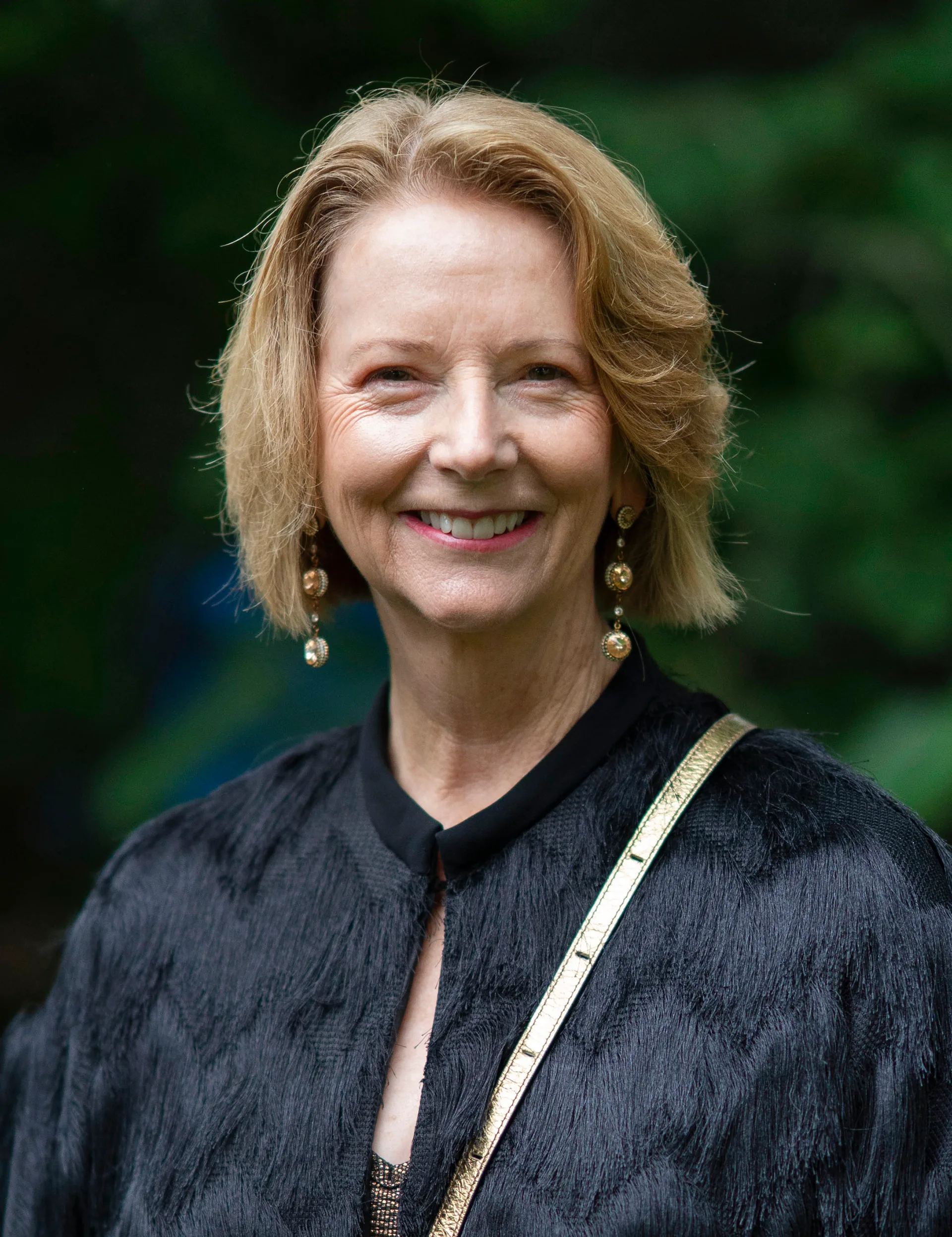
Former prime minister Julia Gillard, who founded the institute at the UK’s King’s College and now sits as its chair, said she was confronted and deeply troubled by the data.
“We have allowed an impression … that more for women always means less for men, whereas actually, the research clearly shows – my own life experiences show – that when we rise, we rise together,” she told the BBC’s The Interview. “A gender-equal world would be a better world for men too, but that is not commonly believed.”
Underscoring this growing tension, the survey found that 60 per cent of Australian males feel society has gone so far in promoting women’s equality that we are discriminating against men.
John Martin, a 20-year-old theology student and the national coordinator for Young Conservatives for Christ, believes feminism is one catalyst behind this cultural change.
“Young men have sort of been told that they need to become feminised, that strength isn’t necessarily something that can be associated with men. That gender roles don’t exist – they’re just a means of oppression, rather than something that [humans have] been designed with,” he says.
In response, John believes that men his age have gravitated to extreme male influencers such as Andrew Tate, a former kickboxer and self-proclaimed misogynist who has been accused of rape and human trafficking.
“There have been a lot [of men] that have swung towards Andrew Tate and others in that space, where it’s frankly gone to an extreme of men just becoming sexual beings, rather than being protectors and leading and guiding their families.”
John says his views on gender are shaped by his Christian faith, rather than political ideology.
“What I believe is that we were made in the image of God … that men are primarily supposed to be the protectors and that women are primarily to support their husbands,” he explains. “Obviously [this means] both being completely equal in their worth and value, but just having different roles that support each other, and neither of them in subjection to the other – that’s a ridiculous idea.”
It’s not just young men who are drawn to the idea of more traditional gender roles. Young Australian women increased their support for gendered roles from 43 per cent in 2010 to 57 per cent in 2024, according to research led by Dr Linda Peach, a psychology lecturer at Charles Sturt University.

Dr Peach studied how Australians aged 17-24 view the idea that men are naturally providers and women are best suited to looking after the home and family. This belief, she says, is a form of benevolent sexism. It’s “couched in admiration for women” but reinforces their subordinate status.
“[It’s] the type of thing that says, ‘Women are wonderful. They’re such good mothers. Where would we be without them being able to raise children in the way that they do?’” she explains. Yet “it is grounded in the belief that women are weaker than men and need men’s protection”.
Dr Peach isn’t convinced, however, that young women are becoming more conservative in all areas of their lives. Broader research indicates that young women are far more politically progressive than their male peers. So, what could be behind the social shift?
“I think they’re trying to find a path between getting what they want out of life, which for a lot of young women continues to be having children, and not ending up in the circumstances that they might have seen their mothers or their grandmothers end up in,” says Dr Peach.
Indeed, Australian women still do the majority of child care, housework and caring for ageing parents, despite the fact that many also balance full-time or part-time paid work.
“The whole concept of getting men to step up and take 50 per cent of the [household] responsibility … we’ve been banging our heads against that brick wall for decades and very little has changed,” says Dr Peach. “I think young women may be looking at that and going, ‘This is all just too hard.’”
While Gen X and Millennial women were told – and often believed – they could have it all, Gen Zers are acutely aware that the attempt to do that is very often a precursor to burnout.
The tradwife movement also taps into anxiety around current economic challenges, Dr Lorange says.
“It’s almost impossible to have that model of a single-income family,” she explains. “That’s what makes the fantasy very powerful and, I think, appealing. All of a sudden, you’re offered this glimpse of: ‘Well, what if I did find someone who wanted to provide for me … and all I had to do was hang out at home and tend to the garden and cook food?’
“Now, of course, anyone who actually thinks about this for a moment knows that [domestic labour] is hard work and it can be alienating; it can be isolating. It is not a refuge from work. It’s just a different kind of work that isn’t paid.”
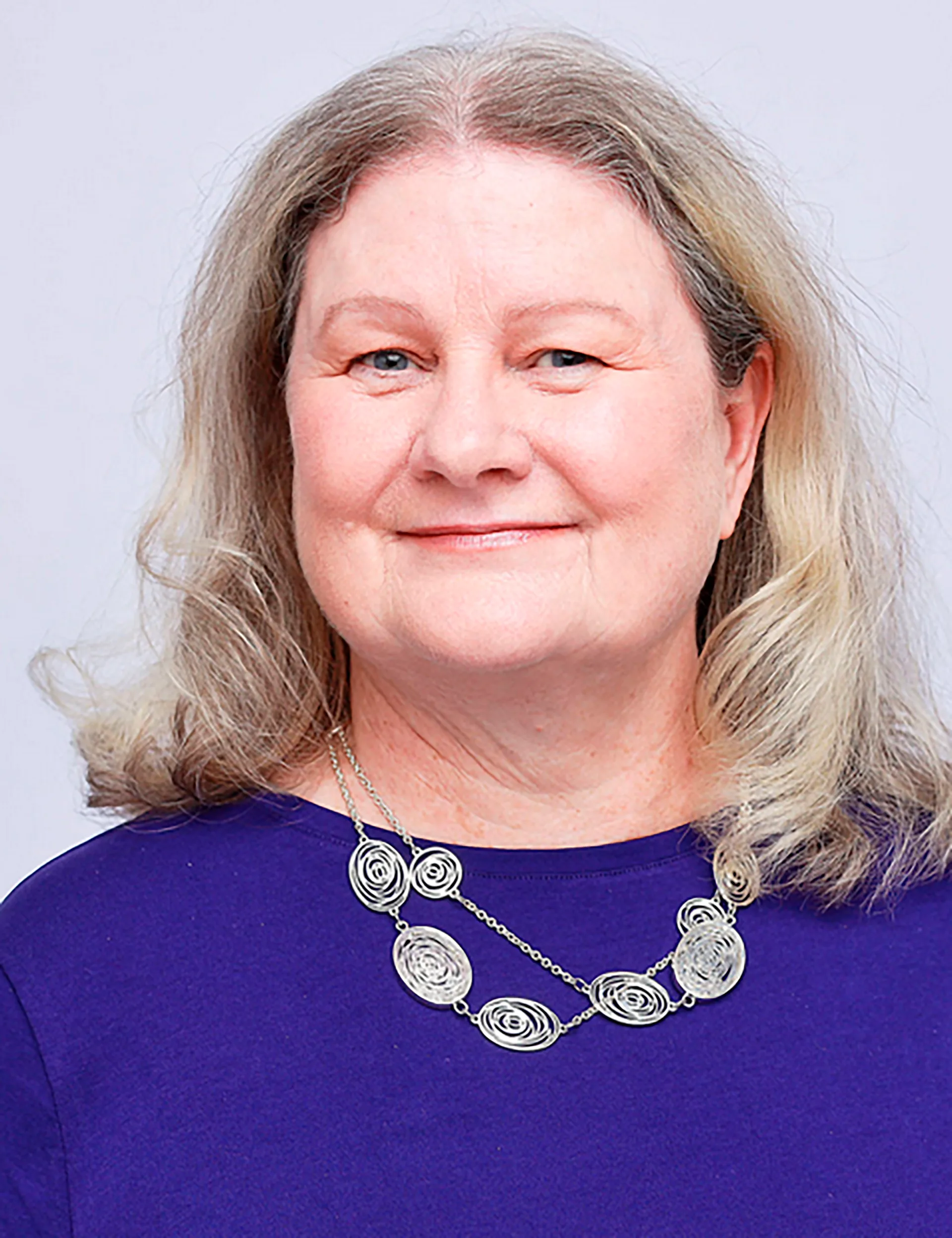

Melody Kiptoo, an acting student in her 20s, says that while she would prefer to follow in the footsteps of Cher – who iconically said in a 1995 interview, “Mom, I am a rich man” – she knows other young, progressive women who are actively interested in marrying a wealthy partner.
“I wouldn’t be shocked at all if there are a lot of Gen Z women who want to grow up and stay at home and raise kids and not work – power to you, you know – but I think that we have to protect the choice to do either.”
Freya Leach, 23, director of the Centre for Youth Policy at the Menzies Research Centre, views the tradwife movement as a social media aesthetic, rather than a genuine philosophy on family formation.
“It’s women in dresses, baking bread,” she says. “It’s fun to watch, but should people order their whole lives around what they see on Instagram?”
Freya believes the popularity of such content speaks to the nostalgia many Gen Zers feel.
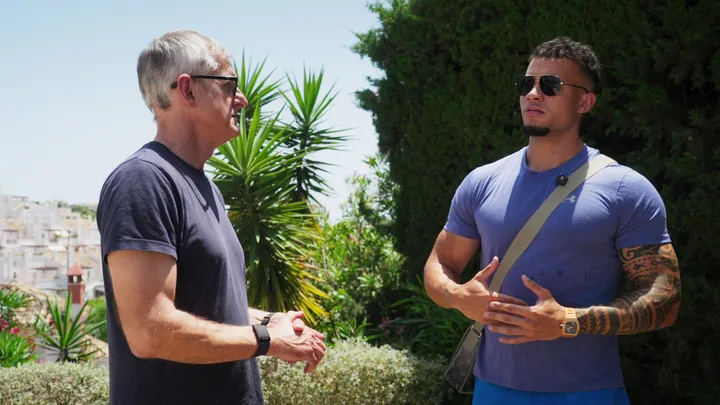
“There is a real sense that young people have lost something,” she says. “They’ve lost a sense of meaning, of attachment, a deep sense of community. Even just the amount of time they spend socialising has decreased.”
For Freya, who came to prominence as a conservative commentator on social media and later Sky News, there’s been a shifting of priorities among people her age.
“The narrative really was, you know, ‘Go to university, have a career. Kids and family can all be put on the back burner until you’re in your mid-to-late 30s, until you’re financially comfortable,” she says. “I think we went too far in the kind of: ‘Children are just a burden. All you need to worry about is your career.’ We’re coming back to a more sensible view, which says, ‘Actually, there are many paths to happiness.’”
As the daughter of an Anglican pastor, Freya was drawn to conservative family values from an early age. Now pregnant with her first child, she plans to embrace a traditional division of labour with her husband.
“I do think at different stages, especially when you’re having kids, that’s the natural way things tend to fall,” she says. “But that’s not necessarily prescriptive for everyone all the time. The fulfilment I find in becoming a mother and in my family is more important and significant than anything I can do in my career.”
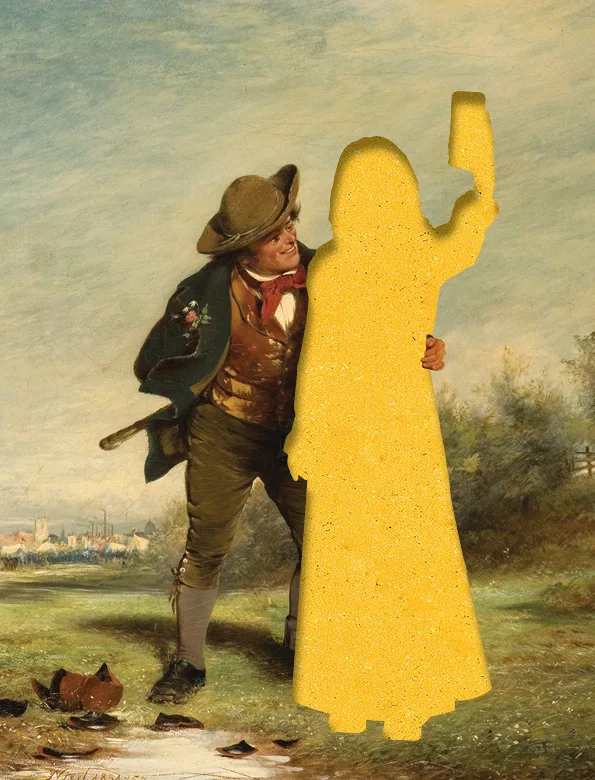
For many Gen Zers, however, having and raising children is the furthest thing from their minds. Birth rates have been declining across much of the world since the 1960s. Last year, in Australia, the number fell to its lowest point since records began in 1924.
Hundreds of think pieces have theorised about the causes of that, attributing responsibility to everything from smartphones and a lack of real-world connection to eco-anxiety and the cost-of-living crisis. Then there’s the rise of “hetero-pessimism”: an attitude of despair, disappointment or cringe about the state of heterosexual relations.
Twenty-year-old law and arts student Daniel Cash points to a viral Vogue article that encapsulated this trend. It was titled ‘Is Having a Boyfriend Embarrassing Now?’, and his sister sent him the piece with a single word: “Period.”
“Women used to, in many ways, depend on men in an economic sense,” says Daniel. “Their hand was forced. The value proposition that a man represented was huge. Whereas now, that’s not so much the case – thank God – as women’s independence has grown. But it means, I think, that men have to try a bit harder in other respects.”
He believes this shift is driving insecurity among some men his age, alongside the fear that they’re falling behind. It’s well documented that boys and young men are trailing their female counterparts in both education and early employment markers in Australia and abroad.
As Julia Gillard told the BBC this year, “Gen Z … were in school when a lot of programs were coming through for the girls, and people like me were creating those programs – girls in leadership, girls in science and all the rest of it. But maybe [boys] looked at all of that and thought, ‘Why are they getting all of these things and we’re missing out?’”
Daniel says there’s a tendency to view the two outcomes as a zero-sum game – women get ahead and men lose ground – while emphasising he does not share this belief.
“Lots of young men feel that they are [demonised], ostracised, alienated or not accorded a fair role in today’s society,” he says. “It doesn’t matter if it’s right or not. Not engaging with that feeling is dangerous because it risks losing further boys to, I suppose you could put it, the dark side.”
And it’s not just the radical right influencers and members of the ‘manosphere’ who are leveraging this discontent.
“The 2024 [United States] election, I think, was a great example of how a right-wing platform, Trump’s platform, harked back to a time when men were breadwinners, and there was a twisted sort of nostalgia in that,” says Daniel.
While tradwife content predominantly targets women, he believes it’s also imprinting on young, impressionable men.
“It is a completely manufactured picture that is designed entirely to appeal to those insecurities and confusions about what it is to be a man, and to be admired and manly today,” says Daniel. “So, yeah, I think there are lots of factors that are swirling around together to make a nasty cocktail that is having a regressive effect on young men.”
While tech regulation and Australia’s under-16s social media ban can help prevent young people from falling down internet rabbit holes, the tradwife phenomenon – like the manosphere – is merely a symptom of a greater malaise.
The yearning for purpose, meaning and a general slowing down is deeply felt by young Australians across the political spectrum. Until those desires are addressed, the lure of a happy tradwife life – no matter how unrealistic – will, for some, remain tangible.
This article originally appeared in the September 2026 issue of The Australian Women’s Weekly. Subscribe so you never miss an issue.

