


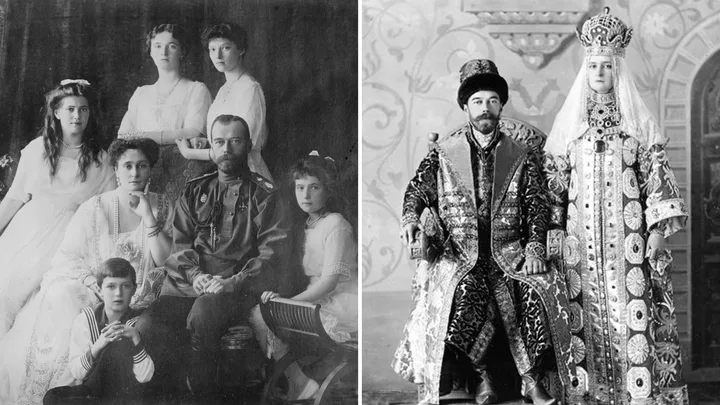
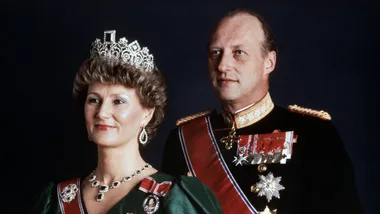
On October 31, 2026, Princess Marie-Cécile of Prussia died, aged 84. She was the great-granddaughter of Germany’s last emperor, Kaiser Wilhelm II, and a distant relative of Russia’s last emperor Tsar Nicholas II and Alexandra.
In light of this news, The Weekly is reflecting on its previous examination on the last Tsar of Russia and his bride. The love between Tsar Nicholas II and Alexandra was as legendary as their tragic deaths in 1918.
The Weekly’s Deputy Editor Tiffany Dunk delves into their ill-fated romance below.
There was a glorious love affair brewing at the wedding of Grand Duke Sergei Alexandrovich of Russia and Princess Elisabeth Of Hesse and by Rhine on June 15, 1884. But it wasn’t the marriage between the bride and groom.
Instead, it was at these nuptials that Sergei’s nephew Nicholas – then 16 and yet to ascend to the throne as the Tsar of Russia – would meet his future wife and greatest passion: Elisabeth’s 12-year-old sister Alix. It was love at first sight, both would later declare.
And while they’d see each other briefly in the years to follow, it was a fateful visit by Alix back to Nicholas’ hometown that would see them defy all odds to become man and wife.
“It is my dream to one day marry Alix H,” a besotted Nicholas wrote in his diary shortly thereafter. “I have loved her for a long time, but more deeply and strongly since 1889 when she spent six weeks in Petersburg. For a long time, I have resisted my feeling that my dearest dream will come true.”
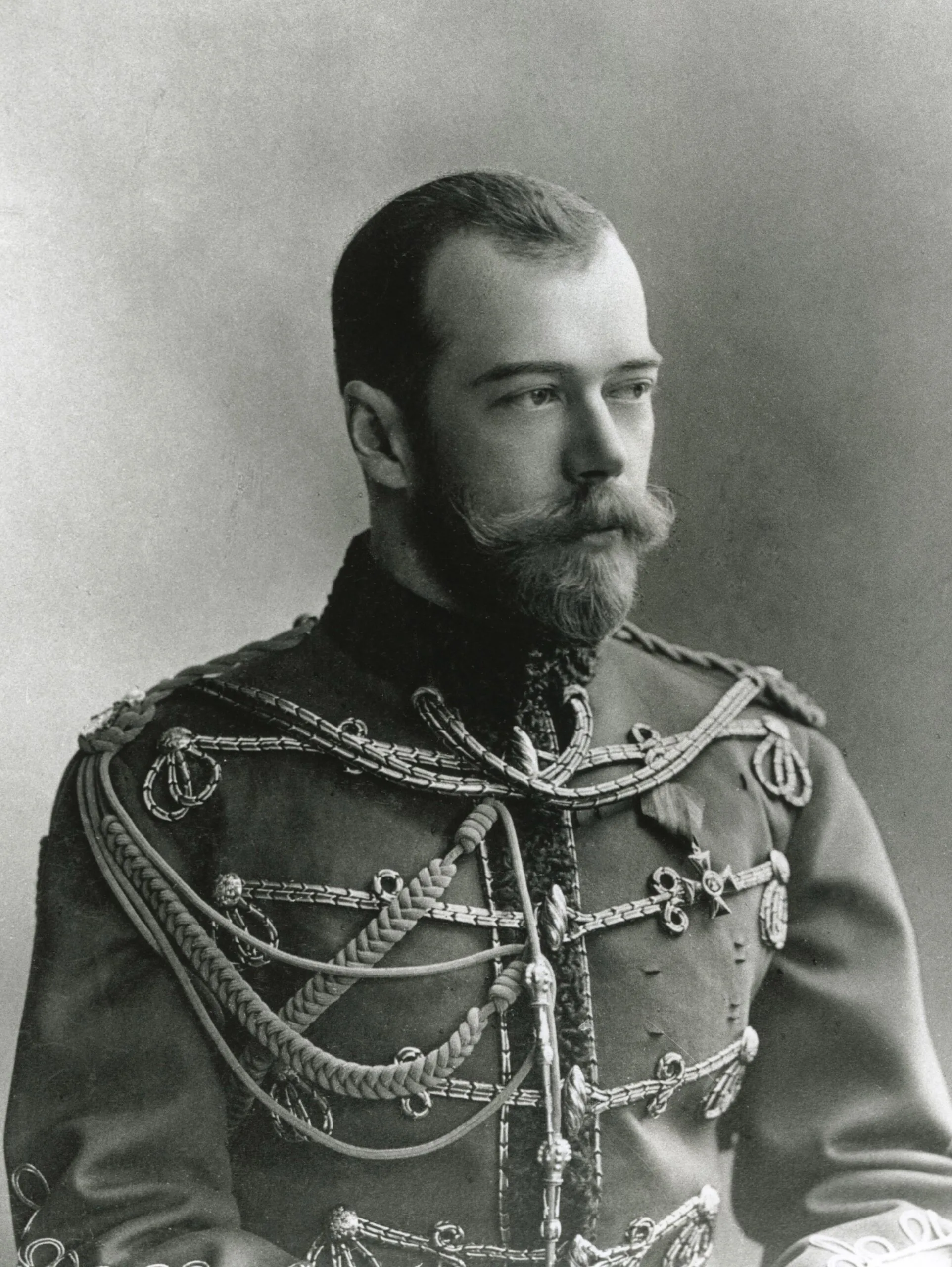
That resistance largely lay in the protestations of their respective families. Britain’s Queen Victoria, Alix’s maternal grandmother, wished for her to marry Prince Albert (who, had he not passed away in during the influenza pandemic of 1892, would have become King of England.) But a strong-willed Alix, by then desperately in love with Nicholas, refused.
Nicholas, for his part, faced serious objections from his parents. His father, Alexander III, held strong anti- German sentiments, as did many Russians at that time. And Alexander also had several higher-born matches in mind for his son. First was Princess Hélène of Orléans, daughter of the Comte de Paris.
Luckily for Nicholas, she would flatly refuse to convert to Russian Orthodoxy, so the proposed match was off. The second was Princess Margaret of Prussia who, Nicholas boldly declared to his outraged parents, he would rather become a monk than wed. “You would do well to forget the girl,” Nicholas’ mother warned him of his obsession of Alix.
But in April 1894, Alexander III’s health nosedived: it was time for Nicholas, his eldest son and heir, to choose a wife. Throwing caution to the wind and praying he’d win his parents’ favour retrospectively, Nicholas proposed to Alix.
To his utter horror, she refused. Like her forerunner Hélène, Lutheran Alix was reluctant to renounce her religion, despite being madly in love with the Russian royal.
Days later, however, a second proposal – and some serious encouragement from Kaiser Wilhelm II of Germany – saw Alix relent her stance and giddily accept. As Nicholas returned home to convince his parents of the suitability of his bride, the two would exchange letters every single day. It was a tradition they would continue whenever separated – starting with the endearments “Sunny” and “Lovey”, and professing their deep and abiding desire to be together.
An ill wind
Alix was officially introduced to Nicholas’ father before he passed away in the early evening of November 1, 1894. He was just 49 years old. The next day, she was received into the Russian Orthodox Church as “the truly believing Grand Duchess Alexandra Feodorovna”, and within the month she and Nicholas walked down the aisle.
But many Russians saw the marriage as a terrible omen so soon after the death of the much-loved Tsar. Add in the fact that the shy German newcomer to the Royal Family was “distant” and “uncaring”, and a deep mistrust was soon born.
“She has come to us behind a coffin,” was one lament. “She brings misfortune with her.” Talking to her sister later, Alexandra admitted that the wedding was “a mere continuation of the masses for the dead”.
The public’s disdain also extended to their new Tsar. Just days after his coronation, he would earn the nickname “Bloody Nicholas” when nearly 1400 Russians were trampled in a stampede at a festival held to celebrate the occasion. (It would stick in future decades after a slew of deaths occurred during conflicts entered into by the Tsar on Russia’s behalf.)
Crowned at 26, he was ill-prepared for the role of head of state by his father – an autocrat who had ruled Russia with an iron fist, banned non-Russian languages in the Empire, denied press freedoms and more. Not only would Nicholas prove to be an indecisive leader, he would remain oblivious to the unease growing in the country.
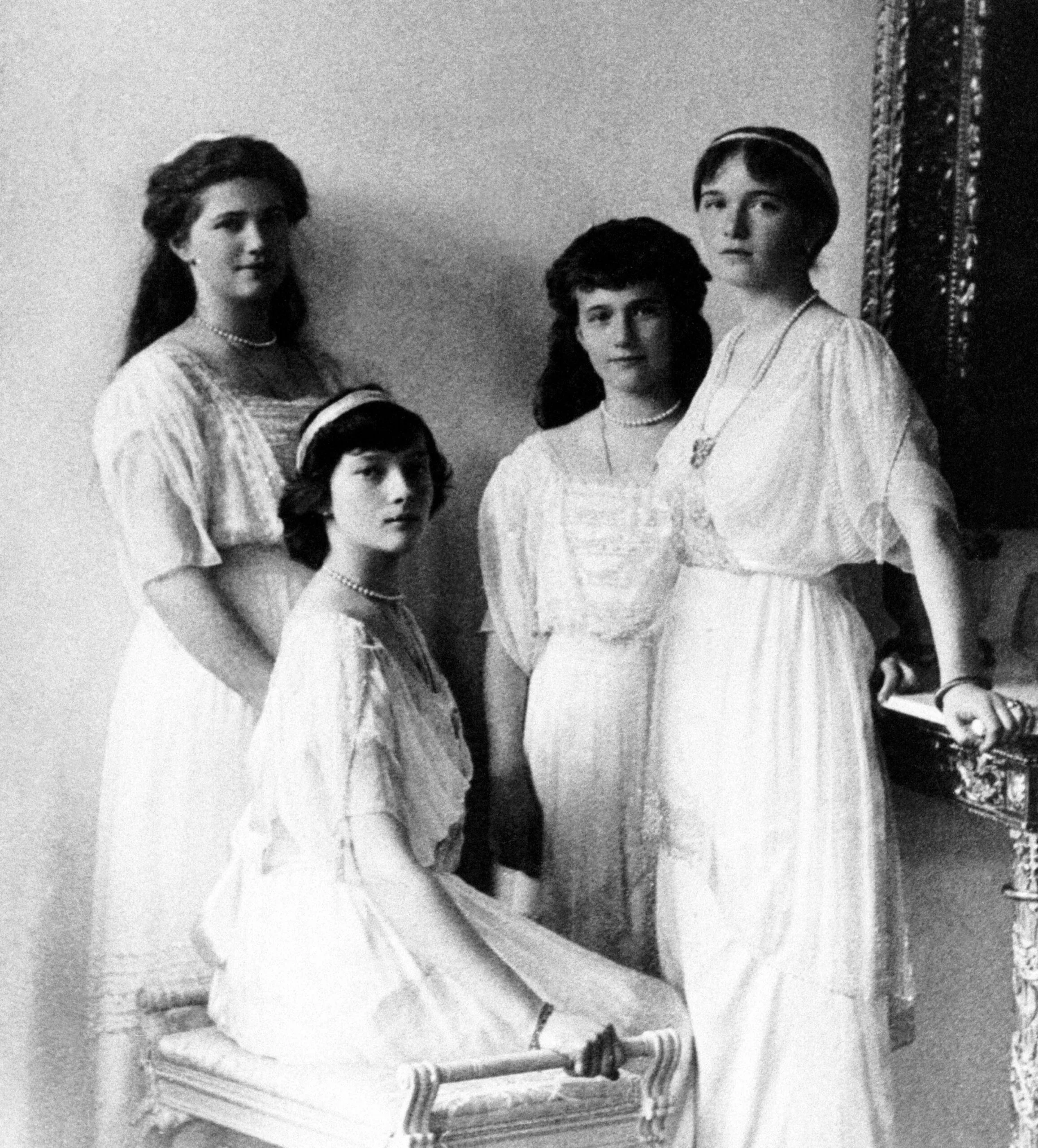
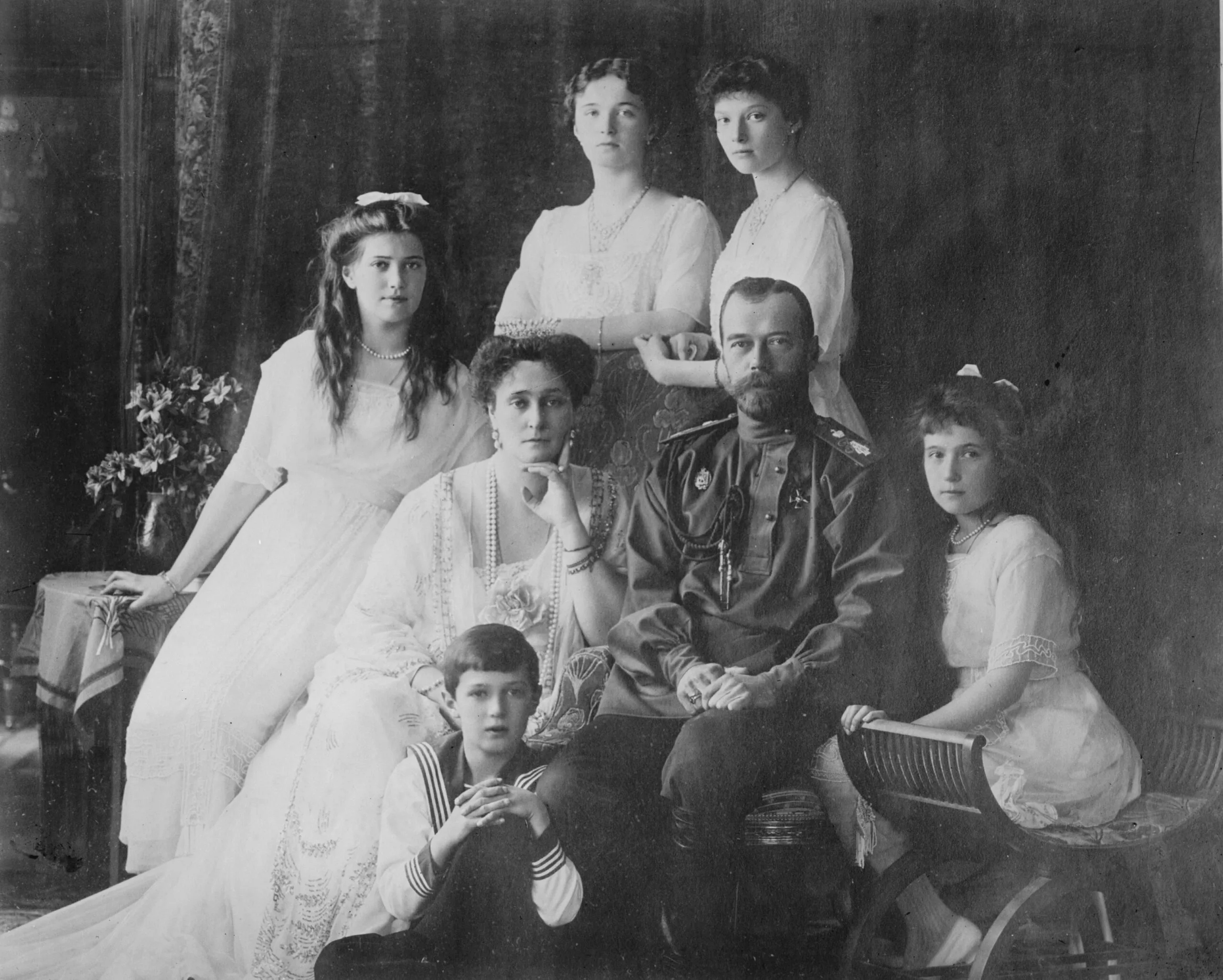
Still, despite these ill omens, the newlywed couple delighted in their marriage and it was a picture of domestic bliss behind closed doors. They welcomed four daughters – the Grand Duchesses Olga (1895), Tatiana (1897), Maria (1899) and Anastasia (1901) – in swift succession. A smitten Nicholas doted on their girls, forever snapping happy photos of the family whom he loathed being away from.
At first, the public derided their Tsarina for her failure to produce a male heir, but then came Crown Prince Alexei in 1904. He was, unbeknownst to anyone outside the palace, a haemophiliac – a condition which, his parents were told, could see him bleed to death from the slightest nick.
All the family were devoted to the youngest of their brood, but none more so than Alexandra, who would sleep on the floor by Alexei’s bed as he recuperated after suffering a catastrophic bout of bleeding. At a time when the upper classes would have a remote relationship with their children, this was an act anyone else in her situation would have found unthinkable.
The beginning of the end
In 1904, an ill-advised war against Japan ended in Russian defeat, stirring public sentiment. The people grew even more enraged when, after rioters protested against rising food prices, palace guards opened fire and the Bloody Sunday massacre took place on January 22, 1905.
The arrival of self-proclaimed holy man Grigori Rasputin in the royal ranks that same year proved to be another nail in the royal coffin.
Alexandra had invited a multitude of healers inside their private residence to try to ease Alexei’s condition. During one of the worst bleeding episodes, Rasputin ingratiated himself with the Tsarina after she believed he had saved her son from certain death. Soon he was her most trusted adviser and a permanent resident of the palace, despite the populace nicknaming the lank-haired and wild-bearded Siberian drifter the “Mad Monk”.
Rumours abounded that he had also entered the Tsarina’s bed, further enraging the Russian public. However Nicholas, whose greatest desire was to please his beloved wife and children, refused pleas to remove him from court.
As Russia entered WWI in 1914, Nicholas travelled to the front to command his forces, who were suffering horrific losses. Left in charge at home, Alexandra was bereft at being apart from her beloved husband.
“Off you go again alone, and it’s with a very heavy heart I part from you,” she wrote to him soon after. “No more kisses and tender caresses for ever so long – I want to bury myself in you, hold you tight in my arms, make you feel the intense love of mine. You are my very life Sweetheart, and every separation gives such endless heartache.”
She was thought by many Russians to have German sympathies thanks to her heritage, and the situation wasn’t improved as Alexandra leant solely on Rasputin in her husband’s absence. She followed his disastrous advice to the letter, appointing a string of incompetent ministers who only added to the political turmoil.
Food shortages abounded and on December 30, 1916, Alexandra was devastated when a group of nobles orchestrated the murder of her most trusted confidant. Rasputin was bludgeoned to death in the basement of the residence of Russia’s richest man – who also happened to be married to the Tsar’s only niece.
By the beginning of the next year, Russia was close to collapse with an estimated 1.7 million soldiers having perished during the war.
The death of the monarchy
The Tsar remained on the frontline, despite pleas from his cabinet to return to help control the increasingly angry populace rioting in the streets. However, believing the situation was under control, Nicholas stayed put. Soon, soldiers joined the people in what would turn out to be a successful revolution, with the Bolsheviks taking control.
Nicholas was forced to abdicate his throne and the Romanov family was placed under house arrest Terrified for the future of his loved ones, Nicholas begged Britain for exile – a request that was eventually refused. The French government likewise declined to take in the Romanovs; once again, Alexandra’s German heritage made officials wary of her sympathies during the heat of the war.
Soon, the family was sent to Tobolsk, a small, fanatically anti-Tsarist town in Russia’s Ural mountains. “I would go anywhere at all,” Nicholas reportedly said in fear as the family approached what would be their final residence. “Only not to the Urals.”
Still, they made the most of their surrounds; Ipatiev House, the country estate where they were situated, had a garden which the family used for exercise, the guards were friendly to their charges (despite stealing from them at the same time), and even with increasingly basic rations, they were generally in high spirts.
But Alexandra and Alexei fell into poor health as winter came towards the end of 1917. And when Bolshevik Yakov Yurovsky arrived to take charge of Ipatiev House, he not only forbade staff from speaking to the Romanovs, he began planning their deaths.
In July, four local women arrived to clean the Romanov residence. Despite being instructed not to speak to the royal captives, they were surprised by their modest appearance – and the fact that the four Grand Duchesses threw themselves into cleaning alongside them with gusto, grateful for the diversion. They weren’t, the women felt, the monsters they’d been led to believe.
“They were not gods,” marvelled one later. “They were actually ordinary people like us. Simple mortals.”
Sadly, this would be the last time anyone would see the Romanov family alive. Shortly after midnight on July 16, 1918, Yukov woke the prisoners and warned them that fighting had broken out in the city. They must, he said, take refuge in the basement. Carrying his son in his arms, Nicholas led his family and their four remaining loyal servants down to the small bare room.
Reading from a prepared statement, Yukov told the shocked party, “The presidium of the Regional Soviet, fulfilling the will of the Revolution, has decreed that the former Tsar Nicholas Romanov, guilty of countless bloody crimes against the people, should be shot.” The guards opened fire.
Soon both Nicholas and Alexandra lay dead. The children survived, however – the jewels they had sewn into their clothes saw the bullets simply ricochet off them. But then one soldier began slashing at the survivors with his bayonet in a horrifying 20-minute attack.
Nobody lived, although their deaths would not be confirmed until 1926.
For decades, rumours would persist that some of the Romanov family had escaped the bloody execution.
Not only was there confusion over the burial of the bodies, but official silence on the fate of the family saw some speculate that rescue may have occurred for one or more of the Grand Duchesses. Sadly, that proved not to be the case – and in 1998 the remains of the deceased (Alexei and Maria’s bodies were the last to be found in 2007 and so joined them later) were laid to rest in Saint Petersburg’s Saint Peter and Paul Cathedral, the traditional burial place of the Tsars.
At last in death, as in life, they were once again all together.
This article originally appeared in The Australian Women’s Weekly.

