At a glance…
- Content warning: This article contains details of a landslide involving the deaths of children, which some readers may find distressing.
- October 2026 marks 60 years since the Aberfan Disaster, which claimed the lives of 116 children and 28 adults.
- In 1966, The Weekly reported on the ground in Wales, speaking with locals about the impact of the disaster.
- Not visiting the area in the aftermath was Queen Elizabeth II’s one regret.
Queen Elizabeth II came face-to-face with many tragedies in her 70-year reign: World War II and the London Blitz, the death of Princess Diana, and more. But Her Majesty had only one regret: Aberfan.
At 9 am on Friday, October 21, 1966, a coal-waste tip collapsed in Aberfan, Wales. The ensuing landslide engulfed the village school and surrounding houses. 116 children and 28 adults lost their lives.
In 1966, The Australian Women’s Weekly’s London staffer, Kerry McGlynn, visited the town shortly after the catastrophe.
“I will never forget the village doctor who tore into the muck with his bare hands, his desperate wife at his side covered in filth. They were trying to find their only boy. They were thankful to find his body,” she wrote.
“I will never forget the cluster of men and women outside the little chapel that had been set up in Aberfan’s main street as a temporary mortuary. The way they stared at the ambulance as it arrived with yet another pair of little bodies. The way the young vicar stood near them, trying to say something, not knowing what to say.”
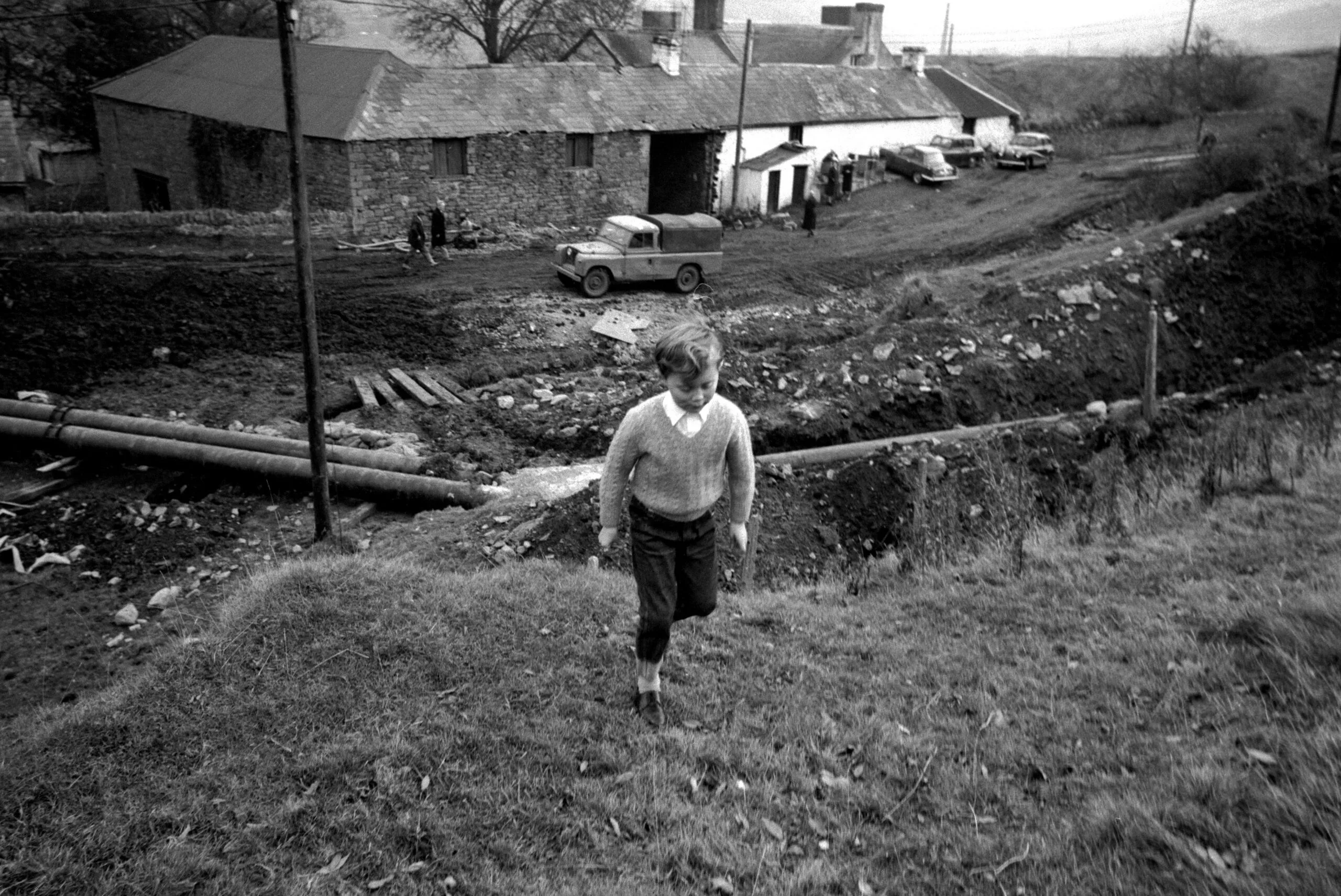
Kerry joined the mothers that day, trying to help with tea, a cigarette or anything else she could offer. One mother reflected on her final moment with her son who died in the landslide.
“It’s a terrible thing,” the mother began, “but my little boy wouldn’t get up… I pulled him out of bed, and I said, ‘You’ll get no breakfast this morning, young man.’ He went off crying, and that’s the last I saw of him. What could I do? I couldn’t tell him it was just because I had a headache.”
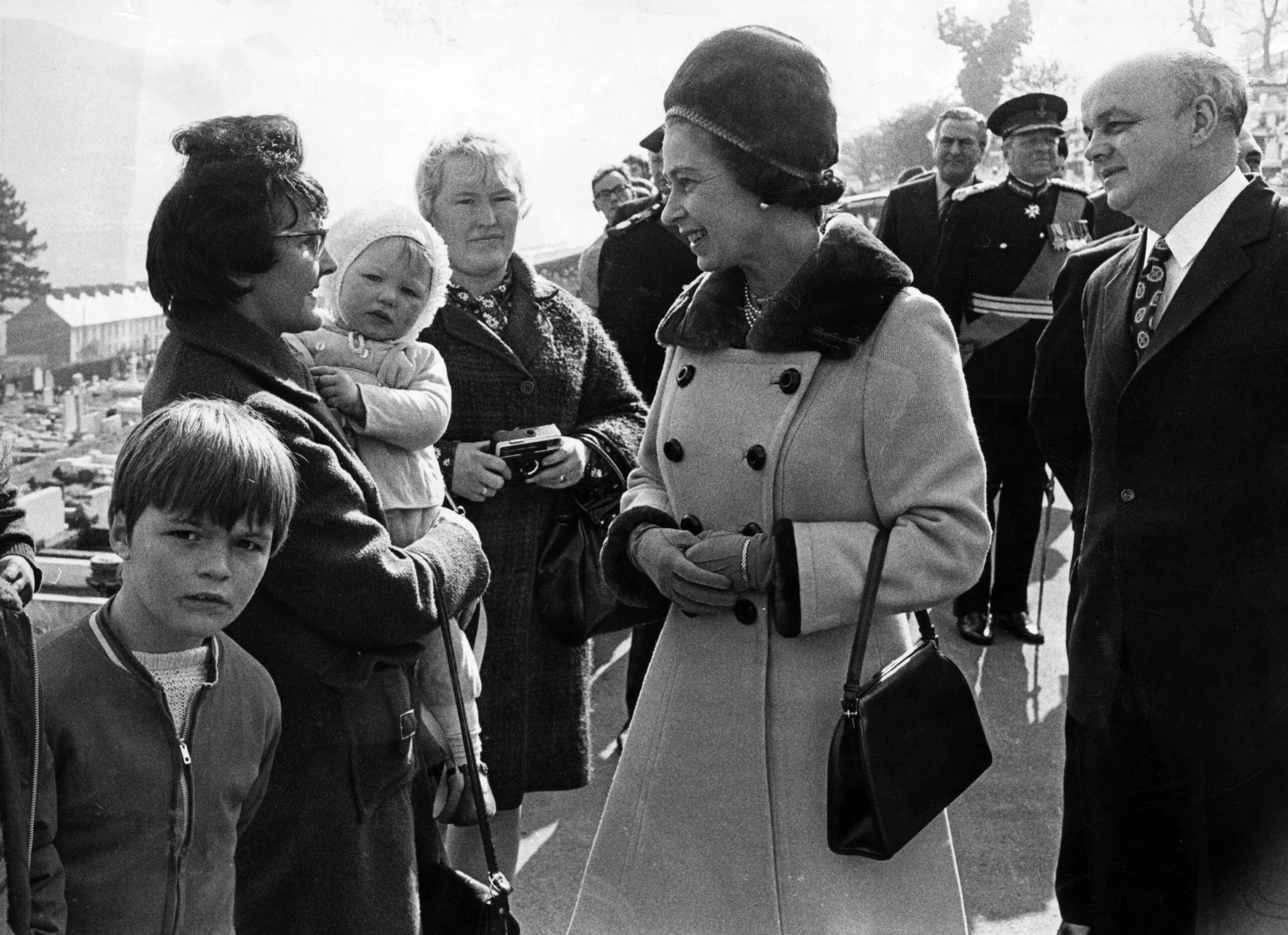
Queen Elizabeth, 40 years old at the time, decided not to visit immediately. Instead, the late Queen expressed her sorrow in a public statement. She eventually came eight days later. That decision would later become her greatest regret.
Both Prince Philip and Lord Snowdon, Princess Margaret’s husband, arrived at Aberfan the following day. Princess Maraget didn’t physically visit the town, but she did launch an appeal for toys to donate to the surviving children.
“While the country mourned the dead, it was Princess Margaret who publicly showed compassion and insight for the children who were left,” read a letter sent to The Weekly by a reader in 1975. “She will always have a warm spot in my heart because of it.”
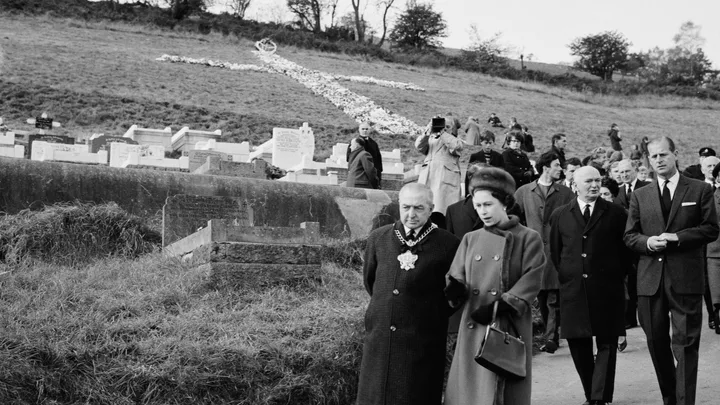
Her Majesty was accompanied by Prince Philip during her visit on October 29. Touring the disaster and meeting with grieving families, it was one of the only occasions when Queen Elizabeth was moved to tears.
“After she had spent a few minutes alone at the remains of the school, it was the only time I saw her cry in public,” Brian Hoey, who worked for the BBC at the time, wrote in the Daily Mail for its 58th anniversary.
In January 1967, Kerry returned to the village, finding its people suffocating in hatred and grief. Welshmen no longer sang in the local pub, and women no longer chatted to one another in the early morning.
Mrs Fudge, one of the townsfolk, recalled to Kerry the day her twins, Daphne and Diane, were caught in the landslide. Somehow, little Diane survived the horror. Villagers had already found Daphne’s body when they pulled Diane out of the muck; she screamed at the sight. To calm her down, someone told her it was a doll. “She pretended to accept that,” Mrs Fudge recalled.
“We can’t sleep at nights. My husband and I have hardly slept since it happened,” Mrs Fudge told The Weekly. “When I start crying in front of Diane, she gives me a kiss and tells me that I must have a cold in the eye and I should see a doctor.”
“They always used to wash their hair together on Saturdays. Even now Diane says to me, ‘Mummy, can we wet our hair today?’ She doesn’t say ‘I’, she says ‘we’.”
At the time, Mrs Fudge opposed the idea of a memorial garden, believing the families didn’t “need anything to remind us.” Grief was a constant reminder, but so too was Mrs Fudge’s perfect view of that “vile tip” from their home. But the Aberfan Memorial Garden stands today at the former Pantglas Junior School.
October 2026 marks the 60th anniversary of the Aberfan tragedy. King Charles III, Queen Camilla, and Prince William will visit the town in Wales to join survivors and the community to pay their respects. The British Royal Family will also meet retired emergency service workers who helped on that tragic day.
In honour of the dead, a prayer and a moment of silence will take place. The village’s Ynysowen Male Voice Choir, formed in the aftermath and became a support group for local men, will also perform.
With thanks to Trove.