




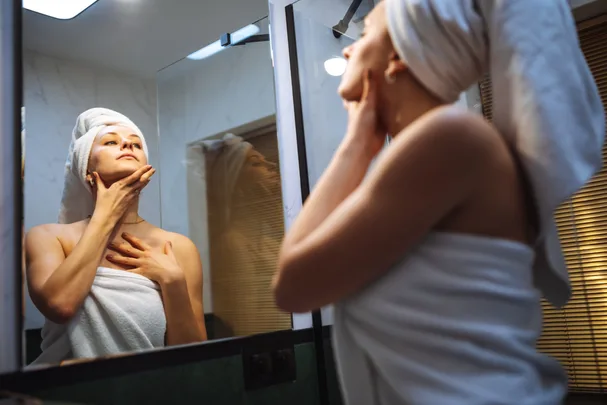
There is a question that sits quietly behind many women’s skincare frustrations, rarely asked out loud: what if the thing I’ve been managing isn’t what I think it is?
Sensitive skin and rosacea are two of the most commonly confused skin conditions — and the confusion is entirely understandable. Both cause redness. Both react badly to certain products. Both flare under stress and environmental triggers. But they are fundamentally different conditions, with meaningfully different causes and, critically, different management approaches.
Getting the distinction right matters more than most people realise.
What sensitive skin actually is
Sensitive skin isn’t a medical diagnosis — it’s a descriptor. It refers to skin that reacts easily and unpredictably to products, environmental factors, or lifestyle triggers. The underlying cause is almost always a compromised skin barrier: when that outer protective layer is weakened, irritants penetrate more easily and the skin responds with redness, stinging, tightness or breakouts.
Sensitive skin can affect anyone, at any age, and its triggers vary widely from person to person. It’s highly responsive to barrier repair — the right moisturiser, a gentler routine, fewer irritants — and tends to settle down considerably once the barrier is restored.
What rosacea actually is and how it’s different
Rosacea is a chronic, progressive inflammatory condition. It has a biological mechanism behind it: vascular reactivity, immune system dysregulation, and in many cases a genetic component. The redness it causes isn’t just barrier-deep — it involves the blood vessels beneath the skin becoming structurally more dilated and reactive over time.
Rosacea typically presents in the central face — across the cheeks, nose, chin and forehead — and often involves more than just redness. Visible blood vessels, a sensation of heat or burning, occasional bumps that resemble acne, and eyes that feel persistently irritated or gritty can all be signs that something more than sensitivity is at play.
The signs that point toward rosacea
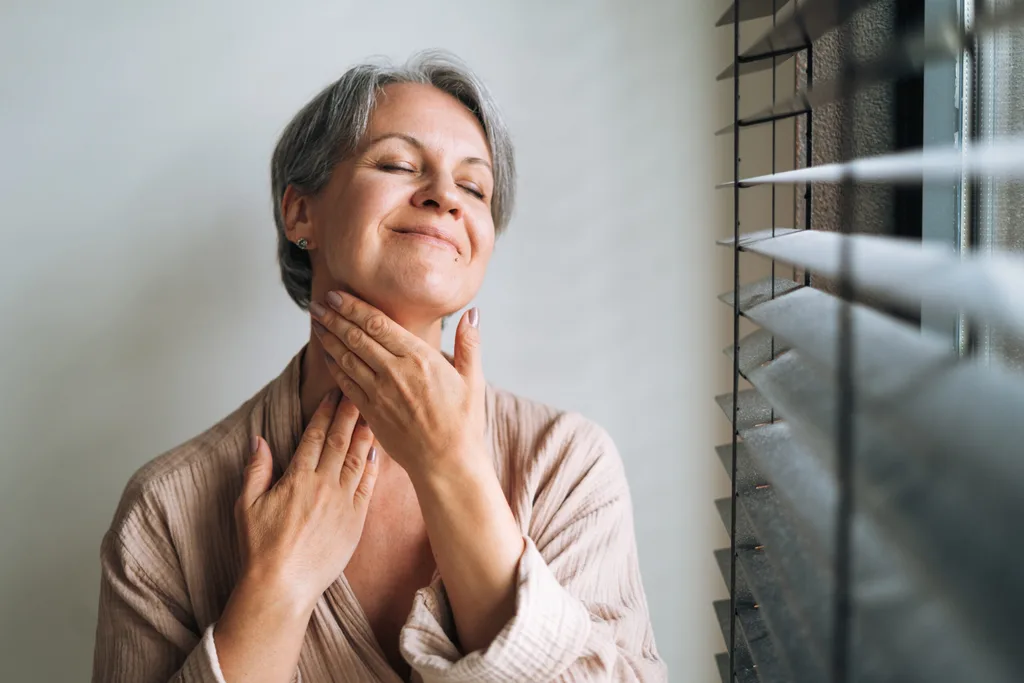
Some indicators that your redness may be rosacea rather than general sensitivity: the flush is persistent rather than occasional and appears in the same location every time; it’s getting worse over years rather than better; you notice visible thread veins on the cheeks or nose; gentle, fragrance-free skincare hasn’t resolved the issue; and triggers like alcohol, spicy food or heat reliably produce a significant response.
If any of these resonate, a conversation with your GP or dermatologist is genuinely worthwhile. Rosacea responds well to prescription treatment, and getting a formal diagnosis opens access to options that over-the-counter skincare alone cannot provide.
What both conditions share
Whatever the underlying cause of your redness, one thing applies equally: the gentler your skincare routine, the better. Reactive skin — whether classified as sensitive or rosacea — benefits enormously from fragrance-free, barrier-supportive products that cleanse without stripping and moisturise without irritating.

Related stories
Native ad body.
Native ad body.



Share this post