





Perhaps you do it when you have to spend time with a family member who’s difficult to get along with. You muster some confidence and patience, fix a smile on your face, feign interest in their conversation, laugh at their jokes – and count down the minutes until you can escape their company.
Or maybe you mask your true feelings when you’re around a colleague who’s tricky to work with. You avoid sharing your ideas with them, tolerate their blunt comments and support their perspectives even though, deep down, you’re not really on board.
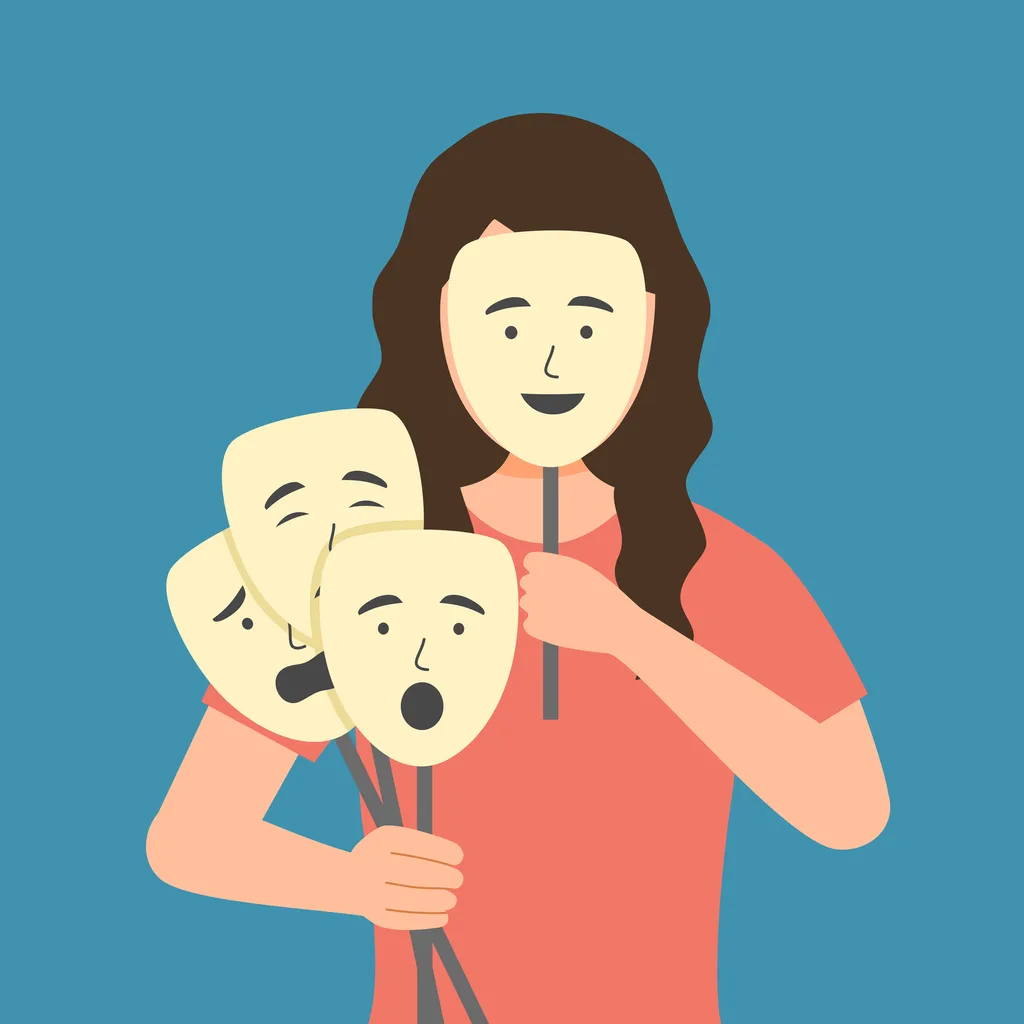
It’s human nature to sometimes mask how we feel and to say and do things that don’t truly reflect who we are, says clinical psychologist, Sophia Robson from Hardwick Psychological Services.
“It’s a coping mechanism that helps us blend in, feel more accepted, and it can help us avoid stigma. We all mask from time to time – it’s normal human behaviour,” she explains.
A social glue and self-protection
Dr Rebecca Ray, clinical psychologist and author of You Choose Your Response, agrees that masking can be a social glue and an effective self-protective mechanism in unfamiliar or uncomfortable situations.
“We’re wired to behave in a way that maximises our chance of fitting in with the clan because, once upon a time, not fitting in meant death! Masking sees us suppress or camouflage parts of ourselves to reduce the perceived risk of rejection,” says Rebecca.
“We make minor adjustments in our performance based on who we are with and the situation we’re in.”
But there is a tipping point when masking morphs from being harmless and helpful to causing “masking burnout” that leaves us feeling emotionally exhausted, irritable and resentful.
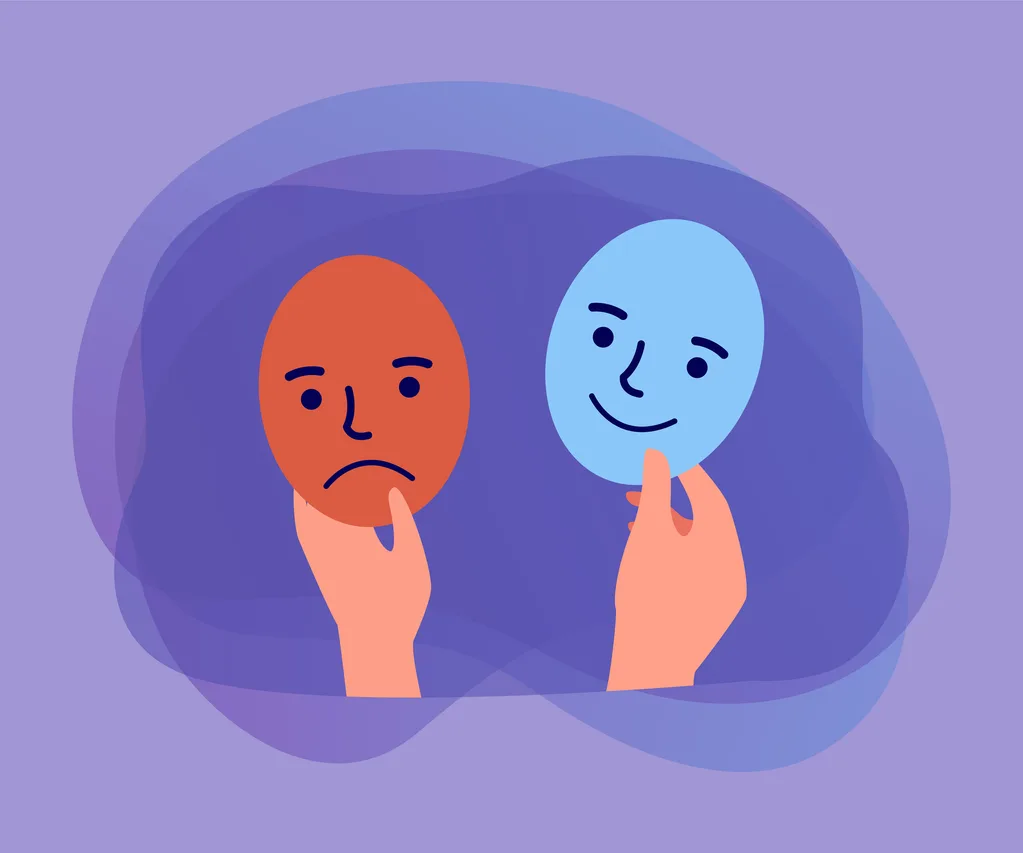
The tipping point
People pleasers who bend over backwards to accommodate people around them at the expense of their own feelings and needs are master maskers at risk of burnout.
“People pleasers are great at meeting other people’s needs, even if it costs them personally. People fuelled by anxiety who are so concerned about how they’re being judged also mask repeatedly to ensure they won’t be seen as not good enough,” says Rebecca.
“But you risk becoming disconnected from your own sense of authenticity and identity and only connect to the performance version of yourself, which can show up as anxiety and depression.”
So, if you’re masking more than is good for you, how can you gradually remove that mask? Here are the five steps you need to follow.


1. Know what you want and need
Can you actually name what you want and need from your personal relationship, from the relationships you have with family, or from your friendships? Or can you identify what you’d like to change about your relationship with that colleague who is challenging to be around?
“If you can’t answer this question, it’s an indicator that masking has become so constant in your life that you’ve become disconnected from your needs and who you are,” says Rebecca.
“Ask yourself what your life non-negotiables are – the things you personally need to live well. For example, if you’re an introvert, a non-negotiable may be having enough decompression or alone time during the week. If you’re an extrovert, your non-negotiable may be spending more time with people to top up your battery.”
Don’t compromise to suit people around you – your needs are as important as theirs.


2. Show up as yourself
Often, people mask unconsciously – they have low self-worth, live with insecurity and mask aspects of themselves because they’re anxious about sharing who they truly are with other people.
“Are there particular situations or certain people when the urge to mask is stronger, and which parts of yourself – which behaviours or emotions – do you feel you have to mask in front of others?” asks Sophia.
“On the flipside, what are your true thoughts, feelings and values, and what are your strengths and unique qualities? Often, we magnify our perceived flaws and don’t reflect on our strengths, the things we do well, and the qualities in ourselves that we like.”
3. Find ways to fill your cup
There are always going to be people who are difficult to be around. It might be that person in your social group who you find abrasive or downright rude, or that colleague who’s made it pretty obvious that they’re not your biggest fan.
“There will always be situations where you have to maintain connections and where you can’t show up authentically, and you’ll continue to mask. In those instances, look for other ways to fill your cup so the cost of masking doesn’t leave you emotionally drained,” says Rebecca
You might push that particular relationship a little further out of your circle of intimacy, so you don’t see that person as much. Or when you are with them, or when you’re in a challenging situation, you have people around who are on your side and who understand who you are. This can balance out the load and the toll of having to mask.
4. Bring in some boundaries
Many of us are not great at setting boundaries. We aren’t comfortable making clear what we will and won’t accept, so we go with the flow.
“You may have to learn to say ‘no’ to situations or relationships where you have to compromise your values. It’s important to know what you are and aren’t OK with, and to communicate that to protect what is important,” says Sophie.
If you’ve been a serial masker, this isn’t an easy process. Start by finding people whom you can unmask around and practice setting boundaries in those safe spaces. And be prepared for pushback from people who’ve benefitted from you not voicing what you want.
“Most people see setting boundaries as unkind or selfish – I see it as the kindest thing we can do in our relationships, as it takes away the guesswork. It’s an invitation for someone to have access to our personal user manual and to share their personal user manual with us,” says Rebecca.
5. Know that it’s a process and be kind to yourself
Taking off the mask is confronting. It isn’t a habit that can be changed overnight, and taking baby steps towards voicing who you are and what you want will be a gentler process. Find people who encourage you to be your real self and remember that your own brain will ‘throw a tantrum’ as you take off your mask, says Rebecca.
“Being able to tolerate the discomfort of the backlash brings personal alignment. You’ll gain a sense of who you really are and will no longer be prepared to abandon yourself for someone else’s benefit,” she says.
But also remember that masking is still a useful skill – you don’t have to abandon it forever and can still rely on it to get you through some situations or to get along with certain people you come across.
“Practice self-care by exercising, getting enough sleep, eating healthy foods and finding time for emotional self-care, perhaps by keeping a journal, finding a hobby or trying some mindfulness or meditation,” suggests Sophia.
“Find supportive environments and surround yourself with people who accept you for who you are without judgement.”
The article originally appeared in the June 2026 issue of The Australian Women’s Weekly. Subscribe so you never miss an issue.

