




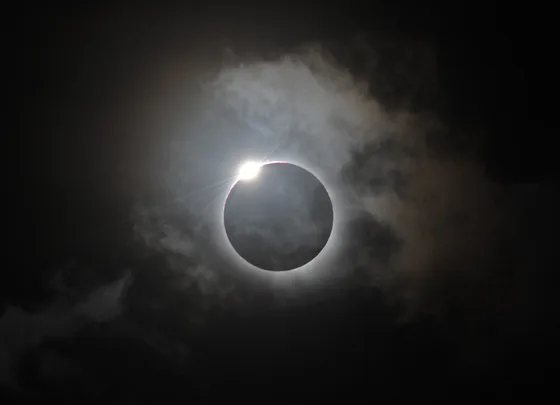
The internet is abuzz with news of the longest solar eclipse hitting our skies in early August 2027.
What is a solar eclipse?
A solar eclipse is when the Moon passes between the Earth and the Sun, blocking the Sun from our view.
When is the next solar eclipse?
According to NASA, the next total solar eclipse is happening on August 12, 2026, and it will be visible in the northern hemisphere (including Greenland, Iceland, Spain, parts of Russia and Portugal). This same eclipse will be partial for the rest of Europe, Africa, North America, and the world’s oceans. We will likely not see it here in Australia.
However, the most recent partial solar eclipse took place on 21 September 2025, and it was visible here in Australia! It began at 3.58am AEST, and reached its peak around 5.47am.
The next total solar eclipse visible from Australia occurs on July 22, 2028, with the path crossing the Kimberley (WA), Northern Territory, Queensland, New South Wales, and even right over Sydney, providing over 3 minutes of total darkness.
However, the once-in-a-century 6-minute-long solar eclipse that everyone is talking about coming on 2 August 2027.
How often does the solar eclipse happen?
Earth experiences two to five solar eclipses (including total, annular, and partial) every year. However, a total solar eclipse at any one location is rare. That typically happens about once every 300–400 years for a specific spot.
What are the different types of eclipses?
There are four different types of eclipses:
- Partial: only part of the Sun is covered by the Moon. It looks like a “bite” has been taken out of the Sun.
- Annular: the Moon passes directly in front of the Sun but appears slightly smaller, so it doesn’t fully cover the Sun. This creates a “ring of fire” effect.
- Total: the Sun is fully covered by the Moon and there is full darkness. This is the rarest type of eclipse.
- Outside Totality: this is when there is a total solar eclipse, but the location is not in the narrow path where a total solar eclipse can be seen (so they see a partial solar eclipse).
What’s the difference between a solar eclipse and a lunar eclipse?
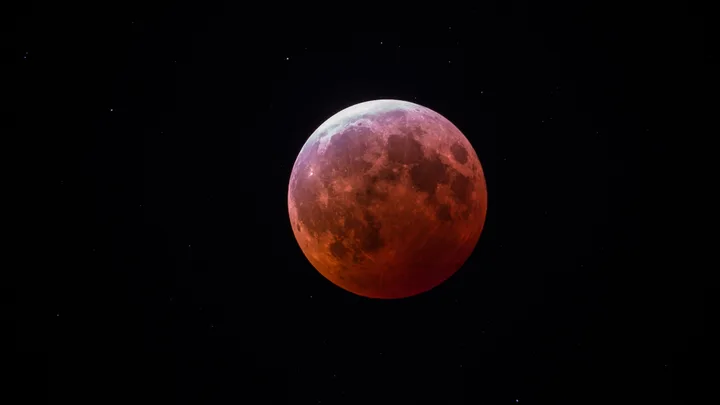
As mentioned above, a solar eclipse happens when the Moon obscures the Sun. Whereas a lunar eclipse is when the Earth comes between the Moon and the Sun. Thus, blocking the Sun’s light onto the Moon and so Earth’s shadow falls on the Moon.
Furthermore, solar eclipses happen during a new moon. But lunar eclipses happen during a full moon.
However, whenever a solar eclipse happens, it’s always either two weeks before or after a lunar eclipse. So around 18 July 2027, there will be a lunar eclipse which will be followed by the 6-minute solar eclipse in August.
Can a solar eclipse really damage your eyes?
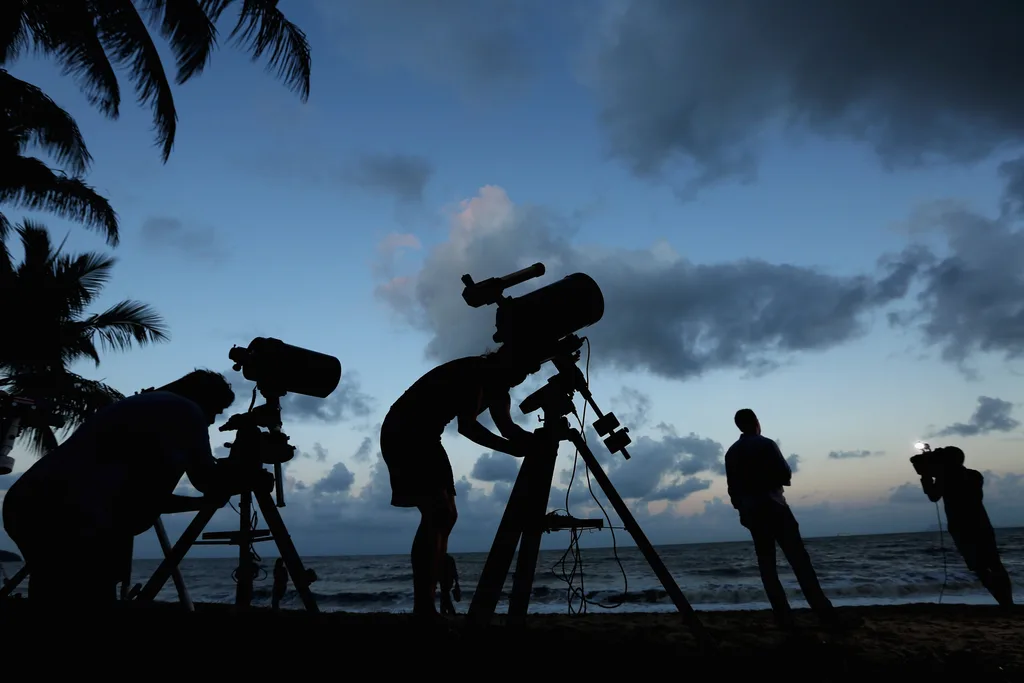
Absolutely. Looking directly at the Sun during any eclipse phase (partial, annular, or outside totality) can severely damage your retina. The only safe time to view it directly is during the brief, complete totality phase, when the Sun is fully obscured. Otherwise, you must use ISO 12312‑2 certified eclipse glasses or indirect viewing methods.
What folklore is attached to solar eclipses?
Solar eclipses have fascinated and frightened people for millennia, and many cultures developed rich folklore, myths, and superstitions around them.
In China, where records of solar eclipses go back over 4,000 years, the ancient Chinese people believed a dragon was eating the Sun. It was seen as a bad omen, and people would bang drums and pots to scare it away. Similarly, in Norse mythology, a giant wolf named Sköll chases the Sun across the sky and occasionally catches it, causing an eclipse.
In ancient Greece, solar eclipses were viewed as divine warnings. The historian Herodotus wrote that an eclipse halted a war between the Medes and the Lydians in 585 BCE because both sides took it as a sign from the gods.
Different Australian Aboriginal groups have distinct interpretations of the celestial event. Australian Indigenous Astronomy explains that in most Aboriginal cultures, the Sun is feminine and the Moon is masculine. During a solar eclipse, the Sun‑woman and Moon‑man “meet” in the sky, often interpreted as them making love. However, others interpret it as a bad omen or signal of spiritual imbalance.
Where will the solar eclipse be visible in Australia?
Unfortunately, the once-in-a-century solar eclipse will be visible only to those in southern Europe, north and central Africa, and the Middle East (as well as anyone who happens to be on a cruise in the Atlantic or Indian Oceans at the time. You can see the path of the Moon’s shadow here.
So, if you’re planning a trip to Gibraltar, Morocco, Egypt or Saudi Arabia in 2027, choose August dates! However, hundreds of locations will receive partial eclipses. According to Time and Date, roughly 57 per cent of the world’s population will see some kind of solar eclipse.

Related stories

Native ad body.
Native ad body.



Native ad body.