



AWW: The novel engages with so many issues, starting with pregnancy loss, and medical gaslighting, moving to explore other darker topics. What was the kernel of inspiration that everything else grew from?
The kernel of inspiration honestly was that I moved from Sydney, where I met my husband, to O’Connell. [A village between Oberon and Bathurst.] We were checking out the area to see if I could adjust from a big city to a small town and how well I would engage with that tree change.
We were in a little cottage on his parents’ property. It was such a different way of living. They didn’t lock their doors. There were no locks on the cottage doors at all, and it was beautiful and there were mountains and the views were stunning, but sometimes at night I’d think, ‘Anyone could come up this long driveway and walk into this cottage.’
It was just that city thinking, and perhaps it is also being a woman. We do think about our personal safety perhaps more than men are used to doing. I remember thinking I could write a great scary story out here. The landscape is so beautiful, but it is also so isolating. Once I had that kernel of not feeling safe I thought gothic is the way to go.
My husband and I were trying to get pregnant. The plan was good on paper. Move to the farm, start a family. And we did get pregnant, which was fabulous. Unfortunately, very similar to the opening of the book, there was no heartbeat at the nine-week scan and I had to wait a week or eight days for the miscarriage to happen. I just kept working.
After that I remember feeling really angry with myself. I’m not sure why I was so angry. I think it was a protective way of not feeling too sad. The discourse around miscarriage is it happens to two out of three women and you just try again. I just could not emotionally bear that. I found it really hard and I was really upset. I didn’t want to talk about it to anyone. I thought my body had failed and it was all my fault.
It took about six months and we started to try again and we had this completely random, unexpected medical crisis. It was life-threatening and it affected my fertility as well, completely unrelated to my miscarriage. I was in hospital for a while and coming out was a really tough time. By the time we thought we’ll give it a go my body just said no thank you. Everything we had planned was out the window. I just thought back to this book and I thought, Hmm, I was going to write this fun gothic ghost story but now I need to write this book because I need something to hang on to. I need something to process what’s happened over the past 12 months. It just all then started to come together for me and I wrote it quite quickly because it felt quite urgent to me.
It sounds like you were looking for writing and information about your experience and the anger you were feeling and what you were finding was this peppy, almost dismissive response. I get the sense you were compelled to contribute an alternative to that, to let women know that feeling angry was valid.
Yes. I think that’s fair to say. Certainly there’s a scene in the book with Leila and she’s Googling and she goes down a rabbit hole. There is a lot of support for women online who want to share their experience online but I didn’t want to do that. I didn’t want people saying to me, ‘Don’t worry, it will work out’. They mean well and I’m not upset by that.
I sort of wanted to understand and interrogate for myself; why didn’t I want to talk to my mum about it? Why didn’t I want to talk to my best friend about it? Why am I refusing to share this pain with them? I think I needed to share it on the page. As I was doing that, I thought, ‘This may be relatable to other women’. It may not be too.
I think a lot of women are incredibly strong with what they go through, and they go through multiple, multiple miscarriages. But I did feel like we probably don’t talk about the pain of the loss enough.
Thank you for being so candid with your responses. I did wonder if there was any over-lap between Leila’s experience and your own, because you did hint at that in some of your pre-release publicity.
You write what you know. Her job, I’ve done a similar job. Yes, we’ve both had fertility issues, but she is not me and her responses are not like mine and her personality is not like mine and her upbringing is different to mine.
We come to know Leila’s inner-most thoughts intimately, but the book has a great hook of the isolated farm. Did you start with character first, or story?
I always start with setting actually. Then character. Story is last. Setting gives me inspiration because it gives me a location. It gives me a feel. I love setting and a sense of place. Then immediately after that if I’ve settled on a setting, it’s character. Your characters drive your story. You have no story without your characters.
I went through a Faber writing course under Carrie Tiffany. It was amazing and came along at the perfect time. It was just a lifeline honestly. We talked a lot about making sure our characters weren’t flat, that they were three-dimensional. If you are getting to know them, their actions and their conflicts will be revealed to you.
You won’t have to force your characters into situations or force them into doing anything because their authentic reactions should be driving that drama. I think that’s where story and narrative becomes much stronger. It’s all coming from your characters.
The rural farm is a key part of the novel. Tell me how you conjured the eerie farm setting? What was involved?
I love being outdoors. I’ve always been outdoorsy because I grew up in Brisbane. It’s a very hot place. You’re usually outside trying to cool down. Moving out here I was just honestly struck by the beauty of the countryside. It’s different from the coastal countryside. If you’re at Kingscliff or Tweed Heads it’s greener, but out here it’s sort of huskier. It’s just an amazing place. I was struck by the mountains.
This is a really long way of saying I hadn’t experienced much countryside away from the coast before and I was struck by the beauty of it and it just inspired me. Whenever my husband and I would take drives anywhere I was constantly looking around. Taking video. Taking notes on my phone app. Every detail. If there was a rusted corrugated shed; what sort of shrubbery disappears at this point in the drive?
In terms of the hunting trip they take, my husband had been out there and I sat down and interviewed him on that landscape.
I think that if you set the scene of the place, once you have that level of accuracy, then you can start to have fun with, ‘How do I want my readers to perceive that place? Do I want them to perceive it as beautiful and welcoming or do I want them to perceive it as isolated and foreboding? How would a character like Leila feel when she’s being driven out to this camping and fishing trip when she already feels isolated?’
I think the Australian landscape in particular lends itself to Gothic so beautifully because you can have all these feelings while you’re driving into this potentially quite dangerous landscape.
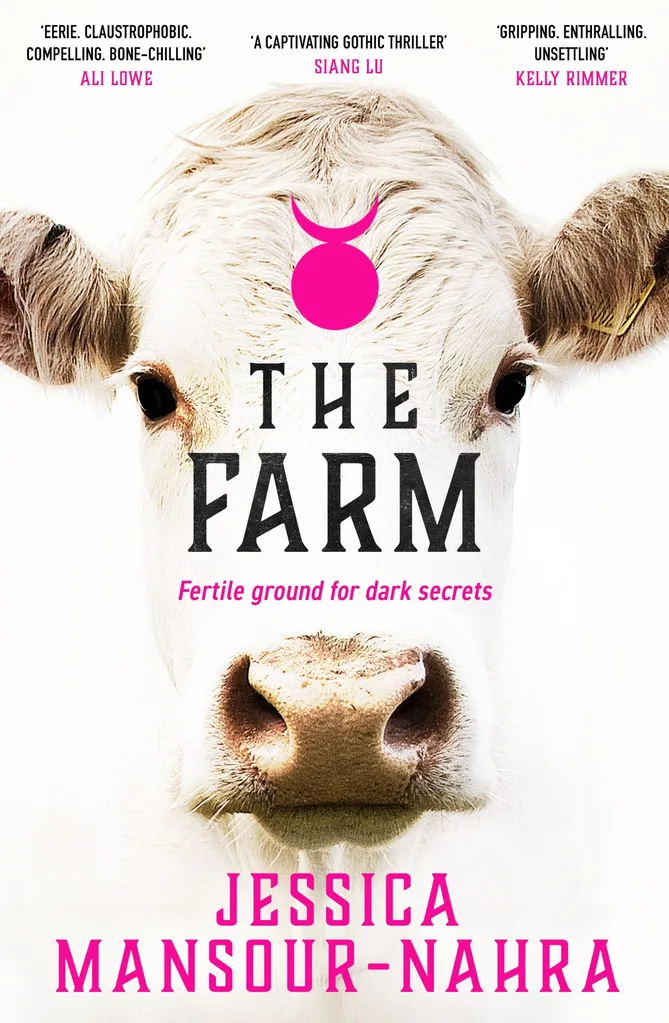
You mention in the acknowledgements that you finished the first draft on the day Roe V Wade was overturned in the US. Did that public shift in the way women’s bodies are policed influence the way you edited the original draft?
Definitely it was on my mind the whole time. I had written the ending in this burst of anger at what was happening overseas and what I felt was then a danger to happening here in Australia. I was just so angry but I had been angry as I was writing it in a way. I was processing a lot of emotions through my own medical and fertility experiences, and I was angry generally about the way women’s bodies were policed. The underlying, I suppose rage, was always in the book. It became about editing it in such a way that it felt authentic and not preachy and not didactic and serving the story more than my politics. It’s not a book that is trying to say, ‘You have to think this or you have to think that’.
Was it a cathartic or healing process to write the book. Did you feel it was therapeutic?
Absolutely yes. All my writing all my life has had that element to it. It’s a very meditative activity. It’s usually a fairly solo activity. When I’m writing I’m probably trying to work something out emotionally for myself through fiction. Often perhaps something I can’t confront directly. It might be too difficult but I can work through it while writing about someone else who’s going through something. It’s wonderful to take something that might have been confusing and difficult, and turn it into something worthwhile.
Do you look to other writers and works of literature for inspiration, and if so, who helped inspire you as you brought Leila and The Farm to life?
What a beautiful question because now I can tell you about all the writers I think are incredible. Carrie Tiffany! She is an exceptional writer. Her most recent book, which I read a couple of years ago, is called Exploded View. She’s a very spare and poetic writer. A lot of what she writes is unsaid. That in particular is a beautiful writing skill that I would love to try more of in the future. She’s incredible. I was being taught by her while I was finishing this so she was an enormous influence. Exit West by Mohsin Hamid is one of the books I think about all the time. It came out probably 10 years ago and it’s an account of a young man and young woman in an unnamed place in unrest and civil war and they have to escape. It’s beautiful. If you enjoy it just on the level of a tragic love story it’s really beautiful. But if you’re grappling with other things it’s also really interesting. But his writing is similar. It’s simple and it’s poetic and it evokes so much emotion.
Can you tell me about your next book?
What I will say, is it is about a group of friends that go on a road trip down to the South Coast. They end up in a very isolated place and it’s set slightly into the future, and there have been some horrific, Australia-wide bushfires that have been raging. There’s a sense that they are finally back together after a really terrible period of fires. They’re trying to re-get to know each other. There are secrets and lies and things they’re hiding from each other and they’re all then cooped up in this cabin in the forest. Then an unexpected fire begins to rage their way.
There’s again, a huge focus on landscape and setting and pushing these characters through their emotional narrative arcs. There are themes around the power of female friendship and it really starts to explore some of these online radicalisations that people have had during lockdown. I think it will be intense.

We seek out the best stories. We nurture them. Then we share them. Hachette Australia is a team of expert publishers and passionate readers dedicated to discovering and supporting talented writers and working with them to craft exceptional stories.

Related stories