




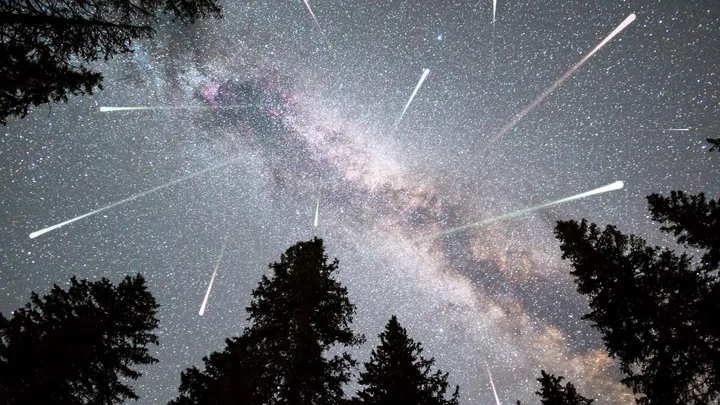
Have you heard of Halley’s Comet? Well, it’s making its annual journey around Earth, and its trail of dust causes a dazzling spectacle that is peaking in May 2026: The Eta Aquarids meteor shower.
This meteor shower is one of the most reliable, happening around mid-April to late May every year. Its peak tends to last a couple of nights, giving stargazers a better chance of seeing the phenomenon.
In 2026, the Eta Aquarids will hit their peak on Wednesday, 6 May and Thursday, 7 May.
What is the Eta Aquarids meteor shower?
The Eta Aquarids are created by debris from Halley’s Comet, one of the most famous comets to pass by Earth.
Each year, our planet travels through the trail of dust left behind by the comet. As these tiny particles enter Earth’s atmosphere at extraordinary speeds — around 66 kilometres per second — they burn up, creating bright streaks of light across the sky.
Under ideal conditions, observers in Australia may see 20 to 40 meteors per hour, many of which leave glowing trails that linger momentarily before fading.
Why are they called the Eta Aquarids?
The Eta Aquarids or Eta Equariid gets its name from its location in our skies. From Earth, it appears near the constellation of Aquarius, close to its brightest star, Eta Aquarii.
Is the Eta Aquarids meteor shower visible in Australia?
Yes — and in fact, Australians are among the best-placed in the world to see it.
Unlike some meteor showers that favour the Northern Hemisphere, the Eta Aquarids shine brightest south of the equator. That means those in Australia, particularly in darker, less built-up areas, can expect a stronger and more consistent display.
The further you are from city lights, the better your chances of spotting the meteors in all their brilliance.
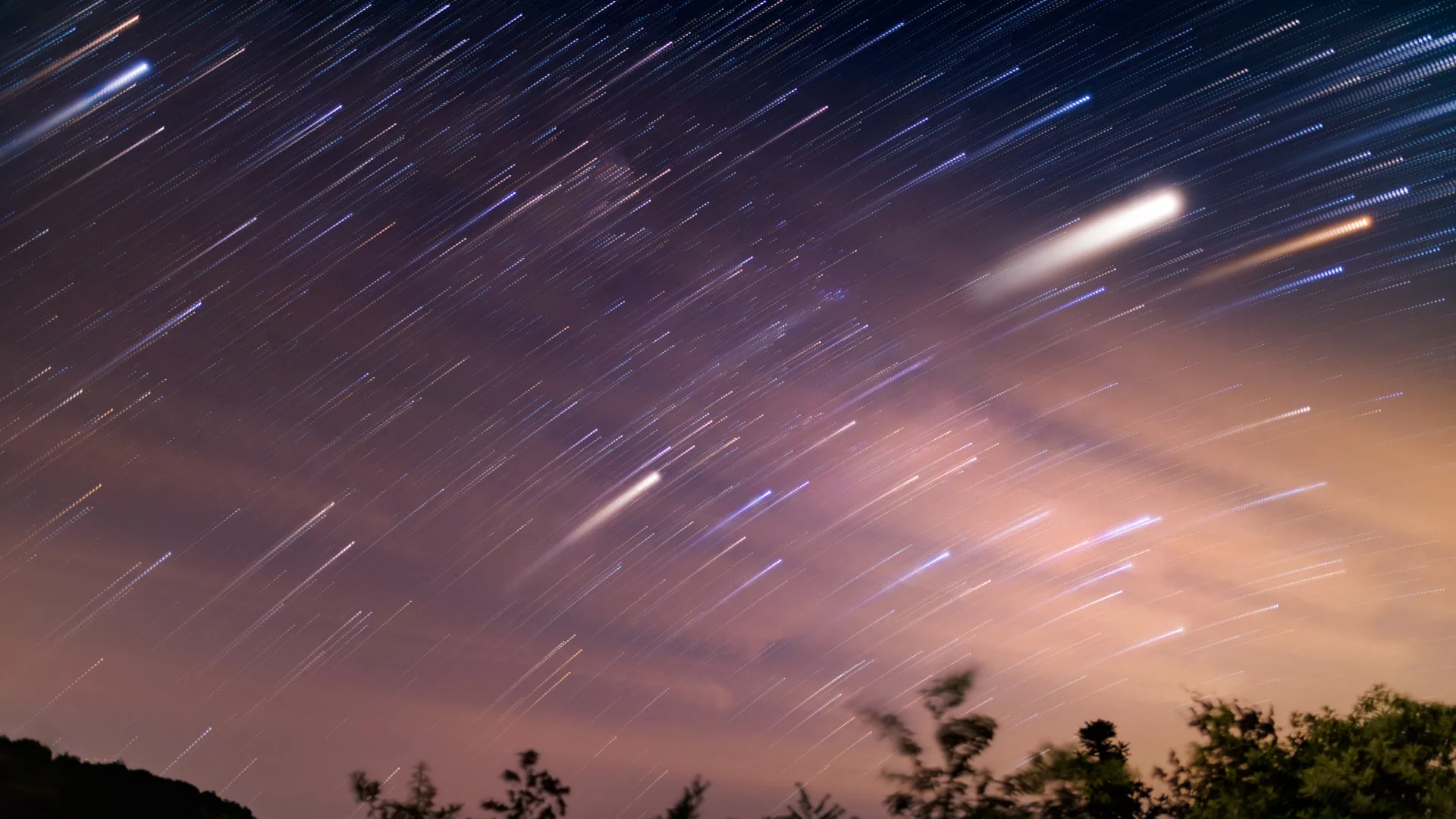
When is the best time to see the Eta Aquarids meteor shower?
The Eta Aquarids are best viewed in the pre-dawn hours, typically between 3 am and sunrise, when the sky is at its darkest, and the shower’s radiant point has climbed higher. So if you’re an early riser, be sure to look up before dawn.
The peak usually falls in early May, and unlike some celestial events, it can be worth looking up for several mornings in a row rather than just one.
You won’t need a telescope or binoculars — just a clear view of the sky, a comfortable spot to sit or lie back, and a little patience. Giving your eyes about 20 to 30 minutes to adjust to the darkness can make all the difference.
Are there any myths or meanings behind the Eta Aquarids?
While the Eta Aquarids don’t carry quite the same folklore as some other meteor showers, they are deeply tied to the enduring fascination with Halley’s Comet, a celestial visitor that has been observed for thousands of years.
Historically, comets were often seen as omens or messages from the heavens, recorded in ancient texts and artworks across cultures. Today, they’re less about superstition and more about wonder and a reminder of our place in a vast and ever-moving universe.
,However, there is some myth around its namesake Aquarius. In ancient traditions, Aquarius is usually depicted as “the water-bearer”, a figure pouring water from a vessel into the heavens. But who that figure represents depends on the culture telling the story.
In Greek mythology, Aquarius is most often linked to Ganymede. Ganymede was a beautiful Trojan prince who caught the eye of Zeus. According to myth, Zeus brought him to Mount Olympus to be a cupbearer to the gods.

