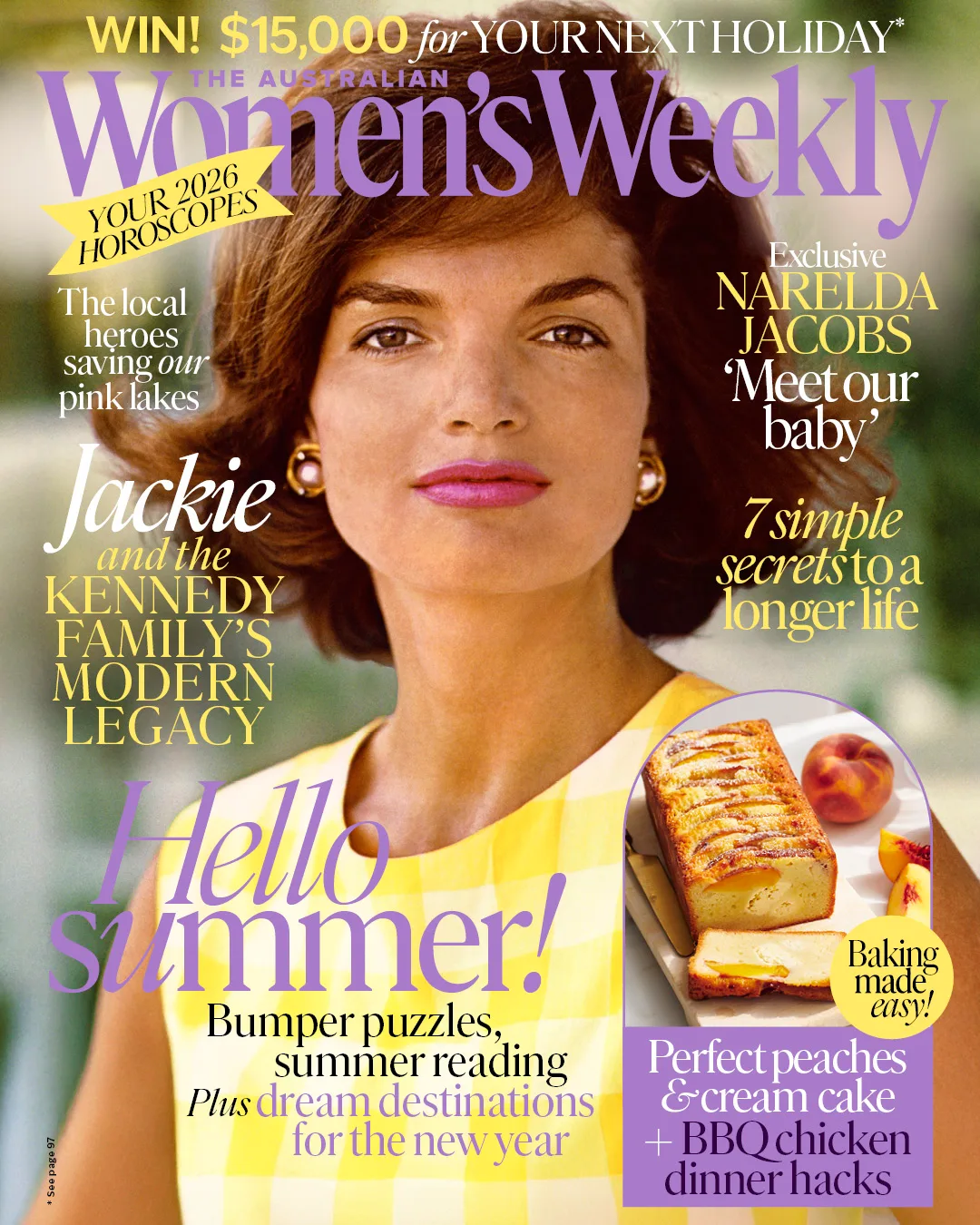




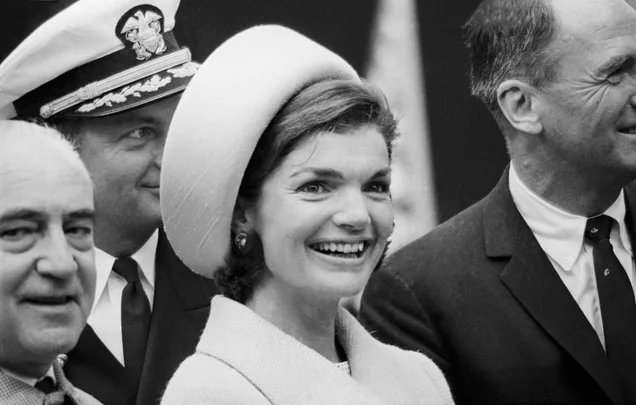
As the world embraces a new Kennedy renaissance, The Weekly explores the surprising inheritance of the family’s matriarch, Jacqueline Bouvier Kennedy, the First Lady of Camelot.
The transformation of the White House was a thing of beauty. Elegant, refined, the epitome of good taste. The year-long renovation had certainly raised eyebrows, not least because the first couple had accepted donations of antique furniture once owned by George Washington and Abraham Lincoln. Perhaps the gold drapes were a little extravagant for a residence intended as the home of a president, not a king.
Most of these concerns, however, were laid to rest when Jacqueline Kennedy invited in cameras from CBS News for a prime-time television special – A Tour of the White House With Mrs John F. Kennedy. Broadcast on Valentine’s Day in 1962 and watched by an audience of some 56 million, it turned the first lady into as big a political celebrity as her husband, John F. Kennedy, the youngest president ever elected.
Already she had become a fashion trendsetter, driving sales of pillbox hats, white gloves and suits with oversized buttons. Now she has become a style icon, celebrated both for her minimalism and modernism. Women the world over aspired to be like Jackie.
“Nobody wonders what Lyndon and I wear,” JFK once joked of his wife outshining him and Vice President Johnson.
It wasn’t always so. The first lady was a bookish intellectual, and the president loved her for it, but early on, some of Kennedy’s aids feared voters would see her as a snob from Newport who, in her words, “had bouffant hair, had French clothes and hated politics”. Consequently, she had rarely accompanied her husband on the campaign trail.
“Jack never made me feel I was a liability to him, but I was,” Jackie recalled in the oral history she recorded with historian Arthur M. Schlesinger Jr in 1964. “When we got in the White House, all the things that I’d always done suddenly became wonderful. And I was so happy for Jack that he could be proud of me then. So those were our happiest years.”
As Donald Trump has bedecked the White House in a Liberace-like blaze of gold, paved over part of the Kennedy Rose Garden, and bulldozed its East Wing to make way for a grand ballroom, there’s a new appreciation for the effortless sophistication of Jacqueline Bouvier Kennedy.
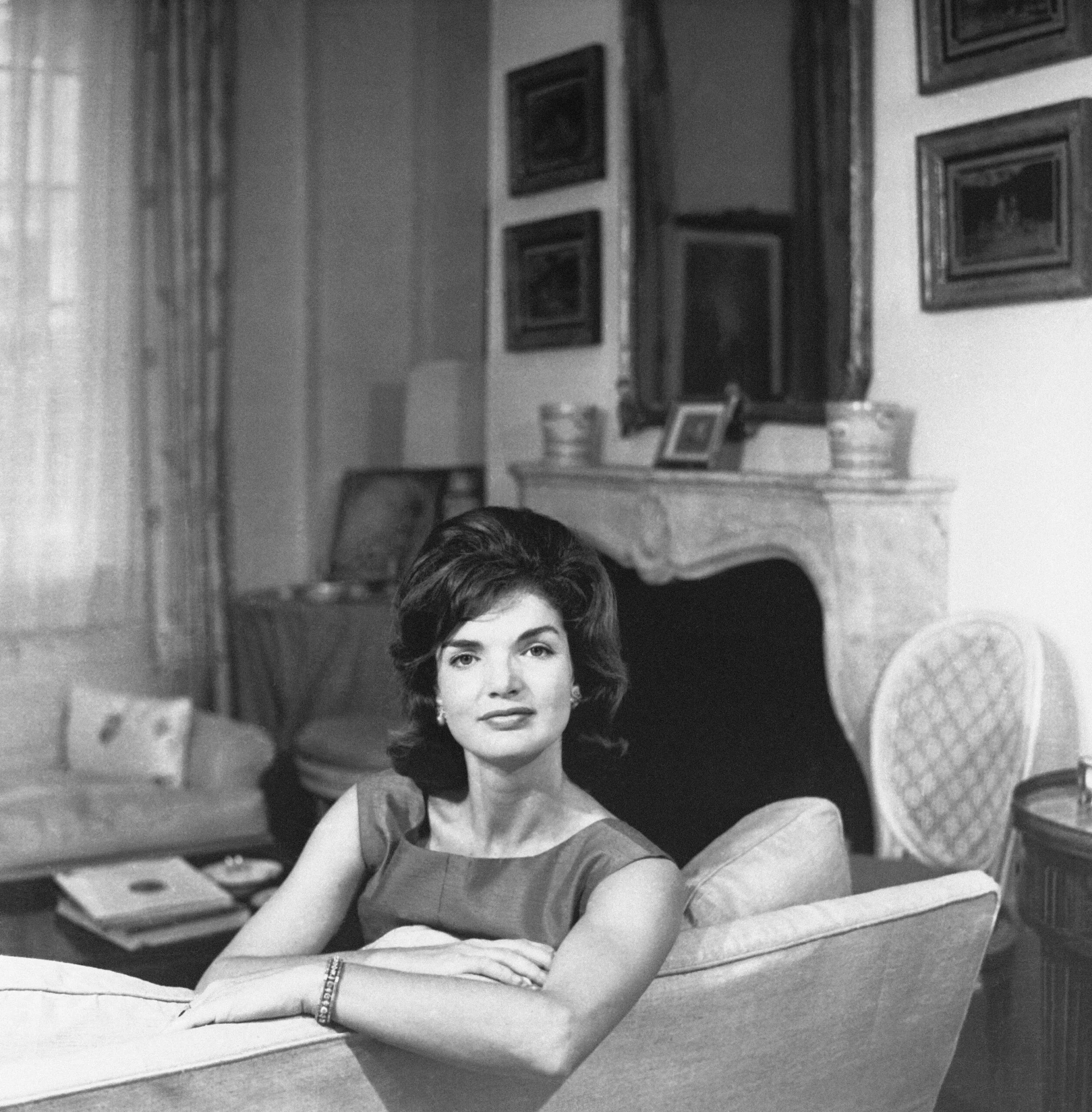
More than 30 years after her death, and more than half a century after the artist Andy Warhol made her his muse, she remains a staple of pop culture and a symbol of an idealised era.
Kennedys have never been far from the headlines, and often in the thick of controversy. Recently, family members have been horrified that Robert F. Kennedy Jr, the son of John’s brother Robert F. Kennedy, has become a prominent member of the Trump administration.
“Our brother Bobby’s decision to endorse Trump today is a betrayal of the values that our father and our family hold most dear,” five members of his family wrote when RFK Jr announced he was backing Trump’s return to the White House in 2024. “It is a sad ending to a sad story.”
Even the normally taciturn Caroline Kennedy, the former US Ambassador to Australia, who guards her family’s privacy as fiercely as her mother Jackie did, warned that her cousin used to enjoying showing off how he’d throw baby chickens and mice into the kitchen blender to feed his hawks.
As the Secretary of Health and Human Services, RFK Jr is heading up the Make America Healthy Again campaign, but his vaccine scepticism has drawn an acid shower of criticism from senior figures in US medicine. Six former Surgeons General have accused him of posing a “profound, immediate and unprecedented threat” to the nation’s health.
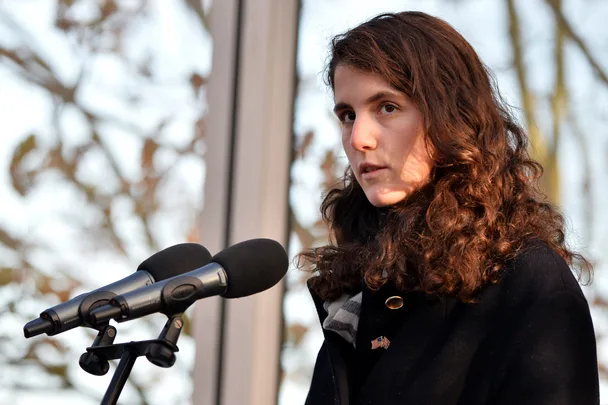
Caroline’s daughter, Tatiana Schlossberg, who has since passed away from a rare case of acute myeloid leukaemia, wrote in The New Yorker of the devastation being wreaked on the US health system by her uncle. She was heartbroken not just by his prevarication around vaccines but by his multimillion-dollar funding cuts to medical research.
Tatiana’s brother, Jack Schlossberg – always one to speak his mind – has said Trump’s promotion of RFK Jr reveals his fixation on the Kennedy legacy. “He is so obsessed with the Kennedys and the Kennedy name and the Kennedy brand that he caged one and put it in his Cabinet,” he quipped. “A rabid dog in his Cabinet.”
At a time when Donald Trump stands accused of acting like a monarch, there’s a lot of nostalgia towards the Kennedy dynasty, a family treated within the Democratic Party like royalty.
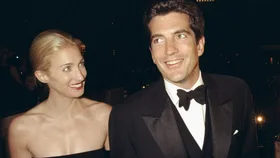
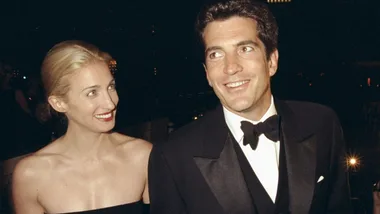
Netflix has just commissioned a new series simply entitled Kennedy. First, though, comes American Love Story, a miniseries based on the turbulent and tragic relationship of John F. Kennedy Jr and his wife, Carolyn Bessette Kennedy, starring Australia’s Naomi Watts as Jackie. These stories join countless others and stoke the powerful myth that rose up around the family in a time when the notion of the American dream was just beginning to exert its influence beyond US borders.
In introducing Jackie’s oral history, Caroline reminds us that, when her parents lived in the White House, many people “still looked to Europe for direction and leadership”.
“My mother played a critical role in the development of what is now called soft diplomacy,” Caroline said.
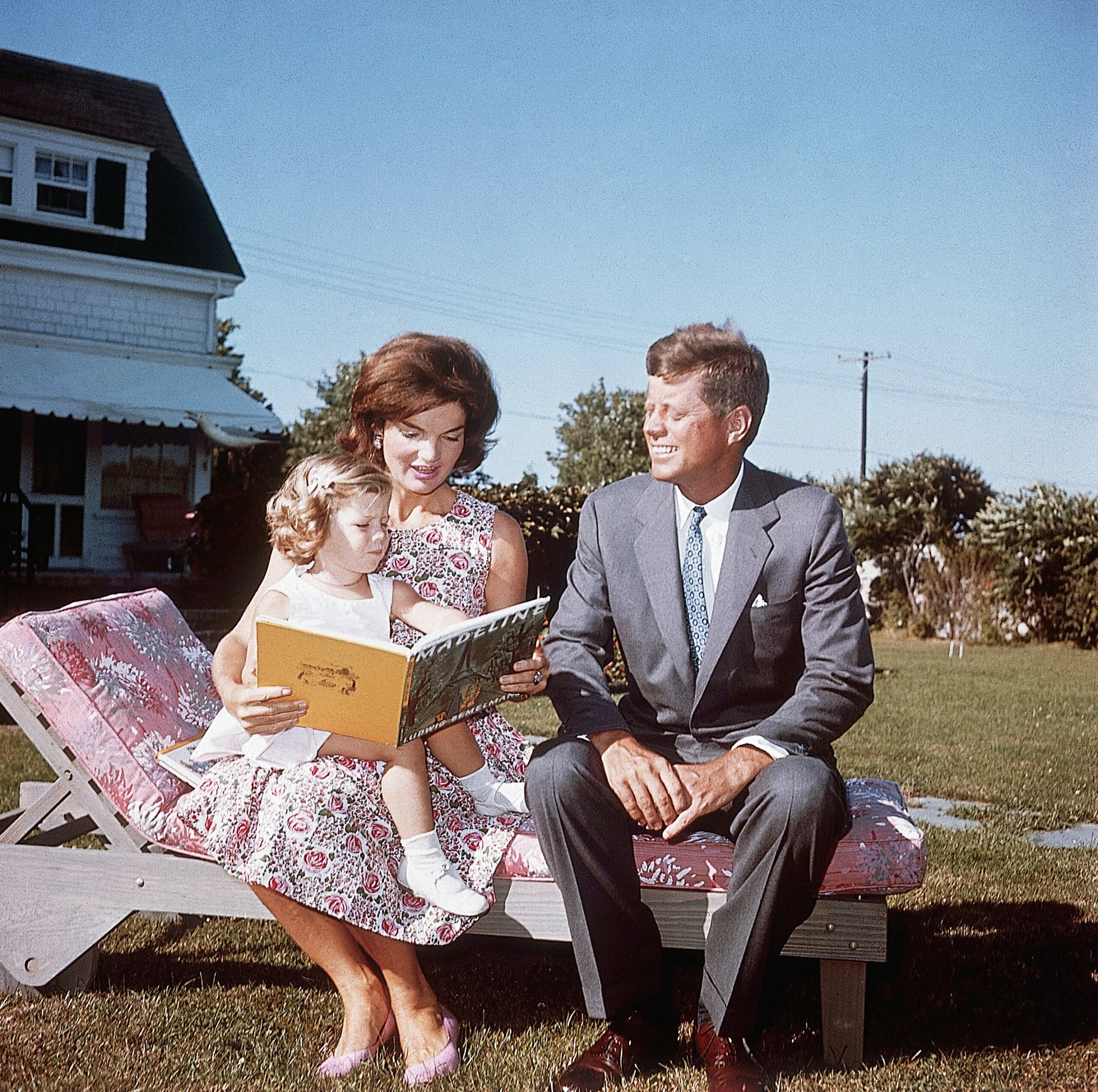
After JFK was shot in 1963, Jackie became not just the guardian of the legacy but one of its chief authors, designating the era “Camelot”, a name which was never used while JFK was alive but which has endured.
It was just days after her husband’s funeral that Jackie gave the first of only three on-the-record interviews she would ever give about her marriage, her time in the White House and the assassination.
The subsequent story by Theodore White, published in Life magazine in December that year, recounts with cinematic clarity what a bright, hot day it was, how Jackie had longed to put on her sunglasses but couldn’t disappoint the crowds, and how the sound of a backfiring motorcycle was common, so she didn’t immediately panic at the horrible bang. From the trauma of Texas, she traced her life back to happier times in the White House, reflecting on what she – and the world – had lost.
“At night, before we’d go to sleep, Jack liked to play some records, and the song he loved most came at the very end of this record,” Jackie said. “The lines he loved to hear were: ‘Don’t let it be forgot, that once there was a spot, for one brief shining moment that was known as Camelot’.”
Jackie was proud of the role shehad played in the White House, even though she didn’t like the term ‘first lady’, saying it sounded like the name of a cheap racehorse. If the White House were to be a kingdom, Jackie had been a queen in training since birth.
A New York columnist named Jackie 1947’s debutante of the year, and in 1951 she set her heart on winning Vogue magazine’s Prix de Paris essay contest, which she did. She became a press photographer for the Washington Times-Herald and, in 1953, covered Dwight Eisenhower’s inauguration as a roving photographer before changing into a gown to attend the inauguration ball on the arm of a young senator named Kennedy. She was proper, but not prim.
“The month before we were married, we both went bareback riding in a field in Newport on two unbroken workhorses,” Jackie told Arthur M. Schlesinger.
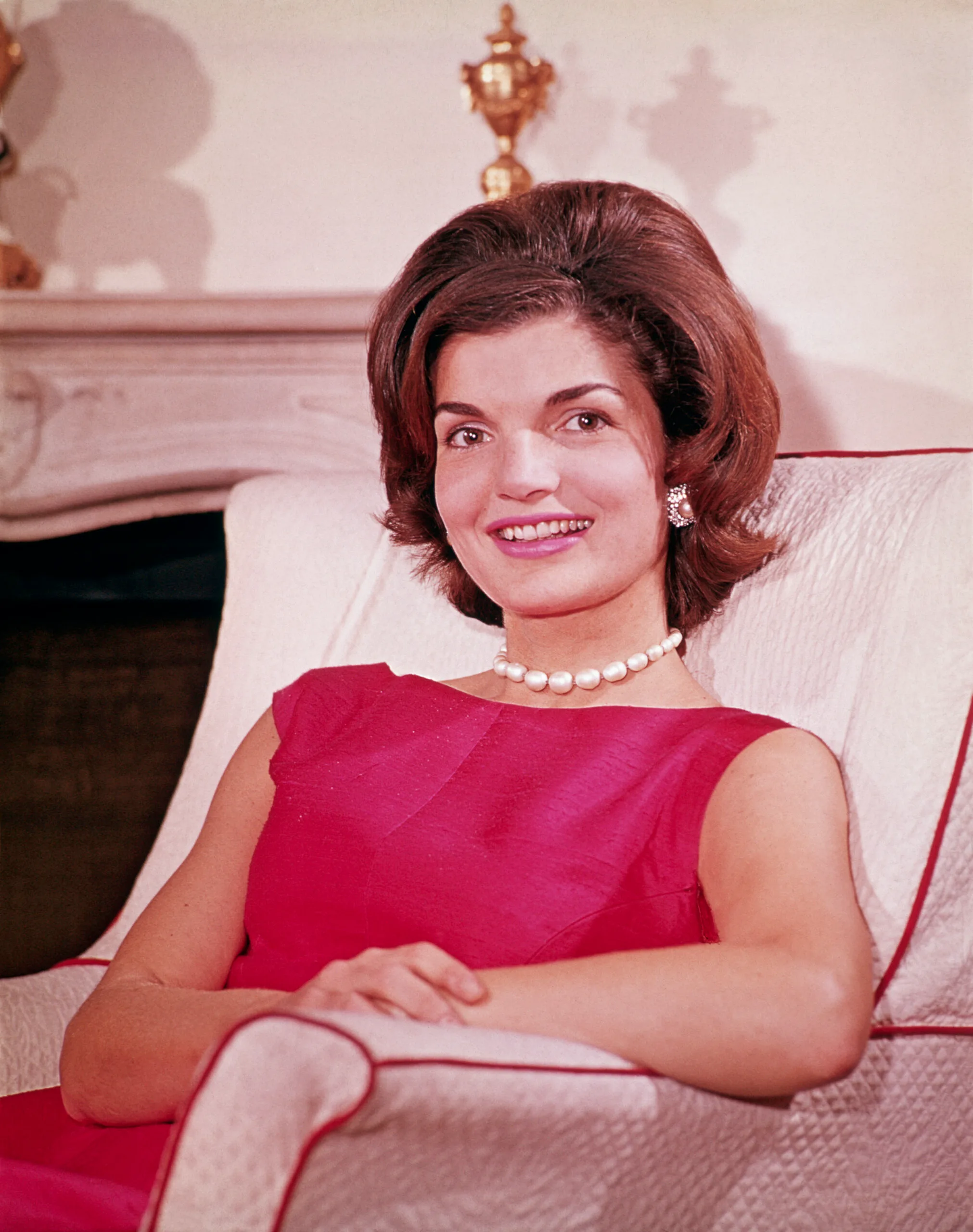
The Weekly’s coverage in October 1962 is emblematic of how the world saw Jackie. We praised her “Dresden china look” – a reference to the dainty porcelain figurines – and advised readers wishing to emulate her elegance to learn to read a menu in French. “Don’t chatter. An intelligent expression is worth 1000 words,” we chided, and printed instructions for making your own pillbox hat.
Jackie embraced her role, saying that JFK was a man who liked the husband to be the leader, and the wife to be someone who looked up to him.
“I think a woman always adapts. Especially if you’re very young, when you get married and, you know, are unformed,” she mused. “Someone said where do you get your opinions? I said I get all my opinions from my husband, which is true … his were going to be the best.”
JFK did trust and rely on her. Early in his career, he based a speech on a report Jackie had written about French colonialism in Vietnam. As he was preparing to announce his run for president, Jackie had been reading to him from Charles de Gaulle’s memoirs, in which the French president declared, “I’ve always had a certain image of France.” JFK borrowed the concept and paraphrased it for his own speech. Jackie would bring to his attention issues she felt were important, including persuading him to lobby Congress for monetary aid to save ancient Egyptian monuments at Abu Simbel from flooding.
The Jacqueline Kennedy the world knew then was different from the woman it remembers three decades after her death.
“She straddled two eras,” Caroline Kennedy told the White House Historical Association, which Jackie chartered in 1961. “The one she describes in her oral history, when women stayed home and had few opinions that differed from their husbands’, and the coming age when women broke free to become independent and self-supporting. She lived fully in both.”
After the assassination, art was Jackie’s solace. Assistant Kathy McKeon, who moved into Jackie’s prewar Fifth Avenue apartment in 1964, recounts in her memoir, Jackie’s Girl: My Life with the Kennedy Family, how Jackie would spend the evening hours, after Caroline and John had gone to bed, “hanging and re-hanging her pictures … it was her favourite thing to do when the house was quiet and still.
“I never saw her crying or outwardly morose,” Kathy observed, “but the toll of the horror she had survived was plain to see on her painfully thin frame.”
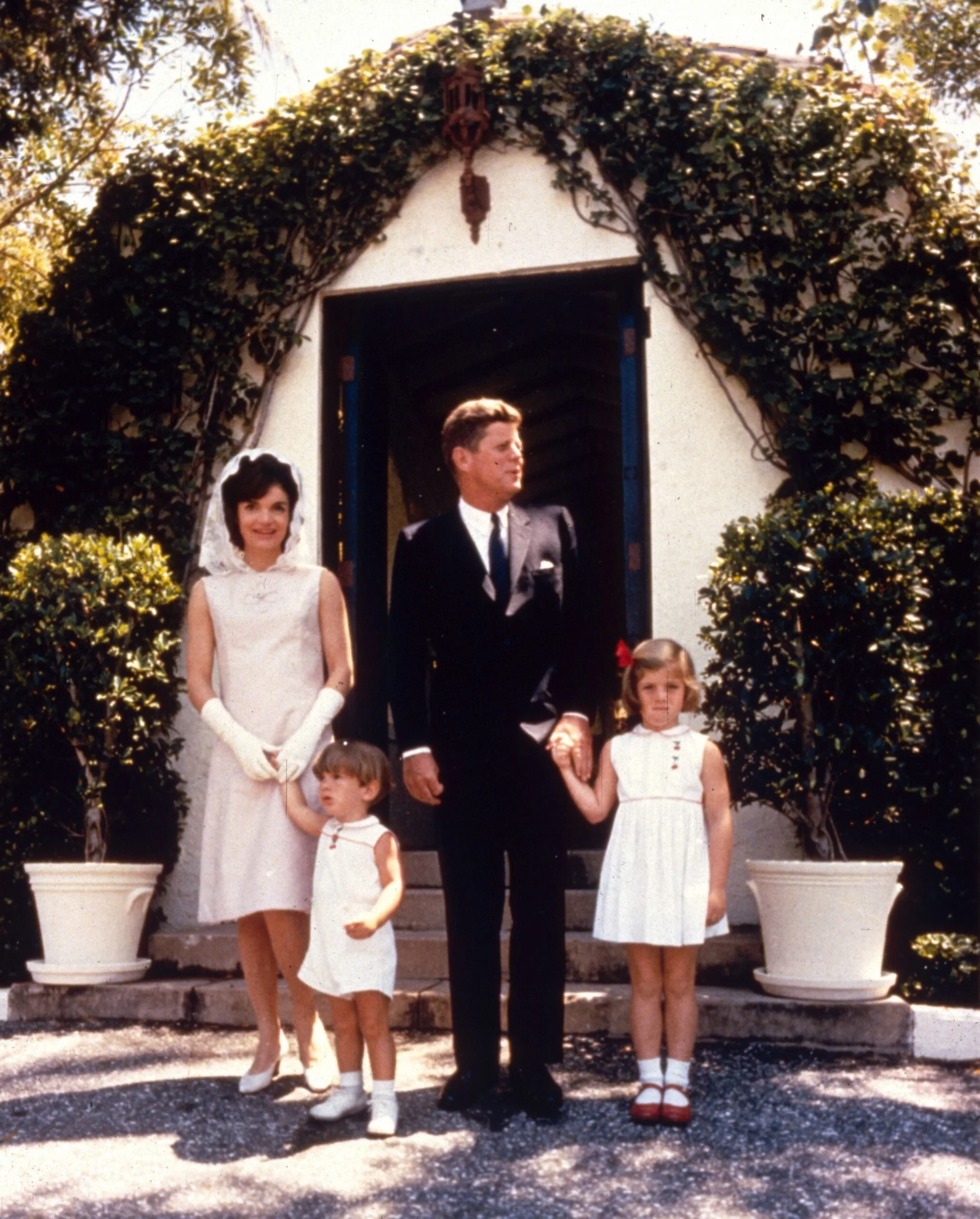
In her “cosy but elegant” apartment with its red brocade living room and views of Central Park, Jackie tried to rebuild herself. Her 15th-floor residence had views of The Met, which houses the Egyptian Temple of Dendur, the gift from Egypt that she had formally received as thanks for securing the Abu Simbel aid funds. It would have been a potent reminder of her capabilities.
However, in 1968, when Jackie’s beloved brother-in-law Robert F. Kennedy suffered the same violent fate as her husband, she became fearful, saying, “If they’re killing Kennedys, my children are targets.”
Her marriage to Greek shipping tycoon Aristotle Onassis gave her safety. She could seclude herself and her children on his private island, but her choice was controversial and drew criticism from the American press and public.
In 1975, Jackie became a widow again. This time, instead of retreating, she got a job as a book editor and embraced the women’s movement. In 1979, she appeared on the cover of Gloria Steinem’s Ms. magazine alongside the headline: “Why does this woman work?”
“What has been sad for many women of my generation is that they weren’t supposed to work if they had families,” was her answer. “Of course, women should work if they want to. And you have to do something you enjoy; that is the definition of happiness: complete use of one’s faculties along the line of excellence and a life affording one’s scope.”
She edited, among many other titles, My Book of Flowers by Princess Grace of Monaco. Even as she was receiving chemotherapy for the cancer that would kill her in 1994, Jackie continued to work on books, living out her post-Camelot definition of happiness. She died at home, as John Jr said in the family statement, “in her very own way, and on her own terms”.
On Halloween in 2025, the actress Julia Fox donned a blood-spattered version of the iconic pink suit that Jackie wore in Dallas when her husband was assassinated. The images instantly went viral. Not in a good way. “Jackie O-no!” was the inevitable headline.
The provocative costume also drew a sharp rebuke from the late first lady’s 32-year-old grandson, Jack Schlossberg.
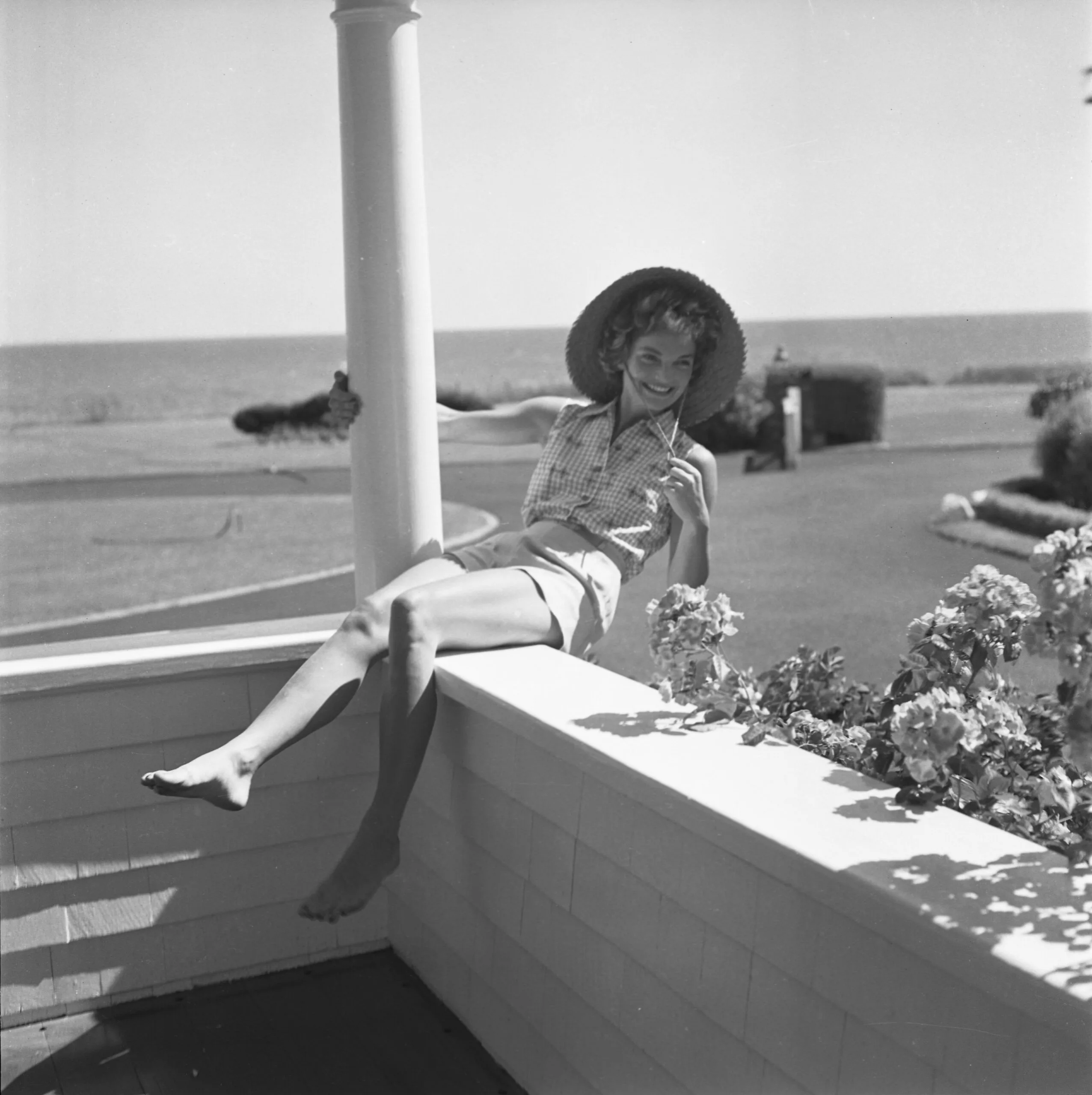
“Julia Fox glorifying political violence is disgusting, desperate and dangerous,” Jack complained, cementing his reputation as the unofficial spokesman and rising star of the family. A few weeks later, he announced his intention to run for Congress. His campaign leans into his legacy. “History is calling,” is one of his slogans.
While his grandfather, JFK, perfected the newest form of communication in his day – television – Jack has made his mark on social media, attracting hordes of fans and adulation. Accusations of nepotism and gross missteps also abound. He has sheepishly deleted more than a few posts, including a video mocking RFK Jr’s distinctly tremulous voice, which is a result of a neurological condition, spasmodic dysphonia. Other provocative posts, including one where Jack asked whether Vice President JD Vance’s wife, Usha, was “hotter” than his grandmother, seem to have been mostly received in the spirit he intended: as attention-grabbing jokes.
It’s impossible to know what Jackie would have made of Jack’s bombast. She was, by many accounts, quite irreverent herself, and the only picture the world has of her is the one she created for public consumption.
“Most people can identify my mother instantly, but they really don’t know her at all,” Caroline said. “They may have a sense of her style and her dignified public persona, but they don’t appreciate her intellectual curiosity, her sense of the ridiculous, her sense of adventure or her sense of what was right.”
Whether or not Jack succeeds in reviving the Kennedy legacy remains to be seen, but he’s not concerned that he, his cousin RFK Jr, or anyone else will tarnish the image of Camelot.
“I don’t think there’s anything anyone can do to change what JFK, my mom, my grandparents stood for,” he said.
This feature originally appeared in the January 2026 issue of The Australian Women’s Weekly. Subscribe so you never miss an issue.
Love Story: John F. Kennedy Jr. & Carolyn Bessette premieres in February 2026 on Disney+. This Ryan Murphy-produced anthology series (part of the American Story franchise) focuses on the courtship and marriage of JFK Jr. and Carolyn Bessette, starring Paul Anthony Kelly and Sarah Pidgeon, with Naomi Watts as Jackie Kennedy.
Kennedy (Netflix): An upcoming drama series starring Michael Fassbender as Joe Kennedy Sr., focusing on the patriarch of the Kennedy family, based on the book JFK: Coming of Age in the American Century.