




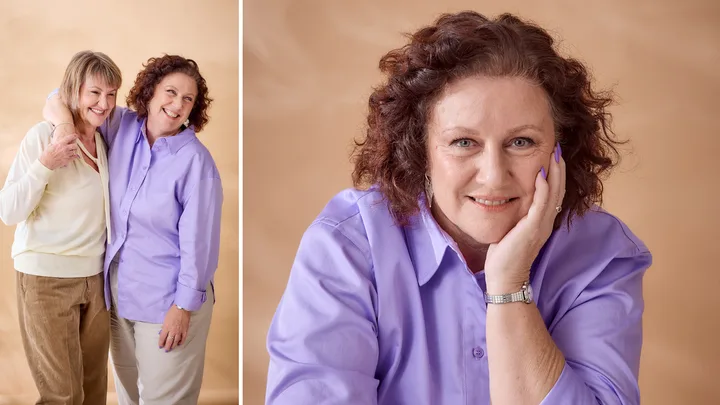
For 20 years, Kathleen Folbigg’s closest friends believed she’d been wrongly jailed for the murder of her four children. In 2023, they proved her innocence. Now Kath and her fiercest champion, Tracy Chapman, share their courageous story with The Weekly.
The world is good, thought Kathleen Folbigg in 1988. The curly-haired 21-year-old was settling into marriage with a man she adored, and she had just learnt she was pregnant. All the angst and uncertainty that had darkened her life so far was dwarfed by this wonderful, shining truth. She was going to be a mother, and in doing so, would fulfil the dream she had nurtured through her tough and confusing upbringing.
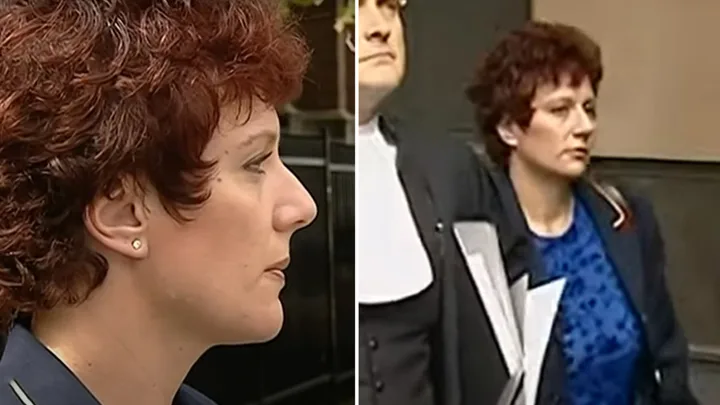
Tragedy had marred Kath’s life early. Orphaned before toddlerhood when her father was jailed for killing her mother, Kath was passed to an aunt, and then a children’s home, before being fostered into a family with a strict and volatile mother. Kath had a close-knit group of friends at school, but seeing their caring homelives left her battling feelings of being unwanted.
“I wanted the opposite of my life for my kids – a family full of love and happiness, laughter and joy,” she writes in her book Inside Out.
When she met Craig Folbigg, Kath saw a chance for a better life. After their son, Caleb, was born on February 1, 1989, she enjoyed 19 days of contentment. But on February 20, she woke in the middle of the night to find him lifeless in his cot. She screamed. It was the worst possible thing that can befall a parent, but for Kath, it was just the first in a series of unthinkable events, including three more harrowing infant deaths. Eventually, she was arrested, jailed for murder, publicly vilified, dehumanised, beaten, and after a decades-long battle, pardoned, released, exonerated and redeemed.
Through everything, she was able to keep putting one foot in front of the other thanks to a small group of supporters, most notably, Tracy Chapman, her “number one hero”, whose faith has meant “absolutely everything” to Kathleen.
“I wouldn’t have even probably bothered trying at all. I would have just rolled over, legs in the air, accepted the fate,” Kath says.
Kathleen’s friends, “provided my basis for my backbone and my spine to be able to keep … waking up every day and keep myself from sliding into mental health downward spirals, which threatened all the time.
“Even though I knew the decision was wrong, I didn’t think I was a big enough person or a big enough fish to bother fighting with it. I just thought the system was bigger than me; therefore, your average Australian goes, ‘How are you supposed to fight or do anything with that?’ Once Tracy said, ‘let’s go do this, this and this,’ I woke up a bit.”
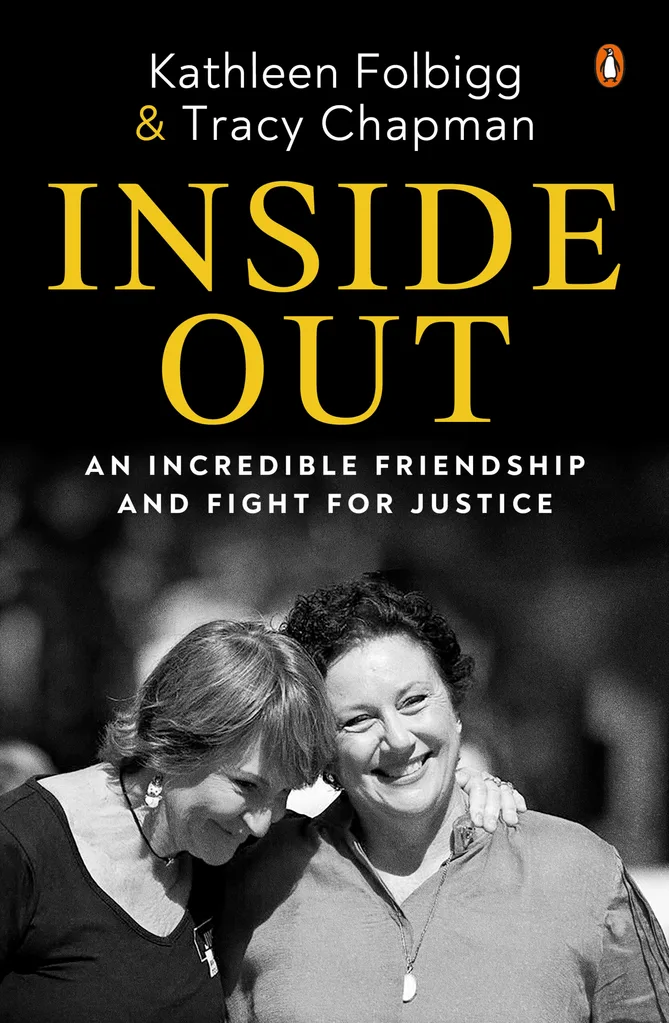
Now, Kath is telling her story in her own words. The two friends have written a book together, Inside Out, chronicling their remarkable odyssey to overturn the wrongful conviction.

For their interview with The Weekly, Kath wears a buttercup yellow shirt. Her greyhound-whippet cross, Snowie, is by her side, and she seems at ease with the world. She’s open, laughs easily and jokes frequently. Her self-deprecating quips and wry asides are followed by a gale of laughter. She and Tracy often descend into giggles.
“Don’t get me wrong. It’s a cover,” Kath says. “I can use humour as a cover.”
Kath owns that she is a larrikin. Her humour is an important part of the sense of self she protected through her years in prison. “I had to try and keep my core beliefs in who I was … for that 20-year trip,” she says. She kept her head down, worked hard and did her best to avoid conflict, even though her reputation made her a target.
She still carries layer upon layer of grief. “It’s an ongoing process,” she says of her re-adjustment and healing.
“I used to say, ‘This is not your story, Kath,’” Tracy shares. “It doesn’t matter how many times you get knocked down. Life’s not a dress rehearsal. I’ve always worked really hard to be the best humane person I can be. With so many bad things happening in the world, it’s up to me, it’s up to each of us, to be way better.
With that in mind, they are using their book to call for reform, including protocols for genomic testing in unexplained deaths of infants and children, and a national reliability standard for expert evidence aligned with international best practice. They won the fight of their lives, but that doesn’t mean they’re going to stop speaking up.
For 20 years, the story the world heard about Kathleen was that she was Australia’s worst female serial killer. Now, Kath is reclaiming her identity as someone who was and always will be a loving mother to Caleb, Patrick, Sarah and Laura.
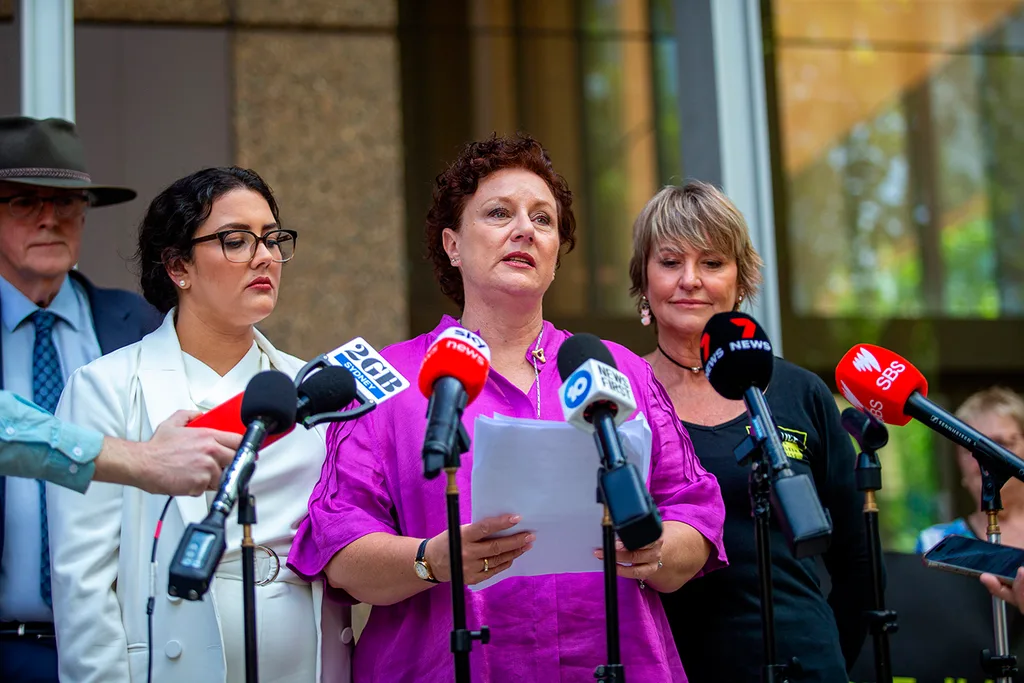
“I preferred not to speak about them,” she says, explaining that for a long time she kept her memories of her children private, partly out of necessity. If she spoke about them “inside”, it “usually didn’t get a good result”. Also, speaking about her babies evoked “an emotional response that was just traumatic. There were quite a few years where you probably wouldn’t have thought that I even had kids, simply because I didn’t refer to them at all. Now I’m happy to talk about them.”
“Each of those children was wanted, conceived in love and cherished with all I had,” she writes.
She describes the horror of losing them, one by one. She had drifted from her circle of friends and the relationship she depended on; her marriage was rocked by the litany of disasters.
“I blamed myself for everything,” Kath writes. Her journal became a receptacle for all her tortured feelings.
Tracy, hearing about Kath’s losses, ached for her friend. The duo had met at Kotara Public School. Tracy’s family had moved around a lot, and she didn’t have many close friends growing up, but she and Kath immediately clicked. With her coke-bottle glasses, Tracy was a target for bullies, but Kath wouldn’t stand for it and fearlessly told the girls picking on Tracy to rack off.
“Whenever I saw her stand up to someone, I wished I could be as brave,” Tracy says. They remained close through high school. Later, Tracy saw what an enamoured, attentive mother Kath was. “I remember clearly wondering to my parents then whether something genetic could be happening,” Tracy recalls after Kath was charged.
Following the death of the fourth Folbigg baby, Laura, in 1999, police opened an investigation. They installed listening devices in Kath and Craig’s home. The Folbigg marriage, which had already buckled, broke.
To Kath, it became a matter of, “Let’s go target the woman. She’s an easier target,” she says. “That’s how it felt because I was the children’s mother, one, and because I was the first responder and the person there at the time, two.”
When Detective Sergeant Bernard Ryan and a colleague came to her home to arrest her in April 2001, she went into shock. “For me, the trial went a bit like a blur because I wasn’t facing what was going on,” Kath says.
The prosecution painted a picture of a Monster Kath and Tracy did not recognise. Craig testified against her. For many years, she could not accept that he had helped the police investigation.
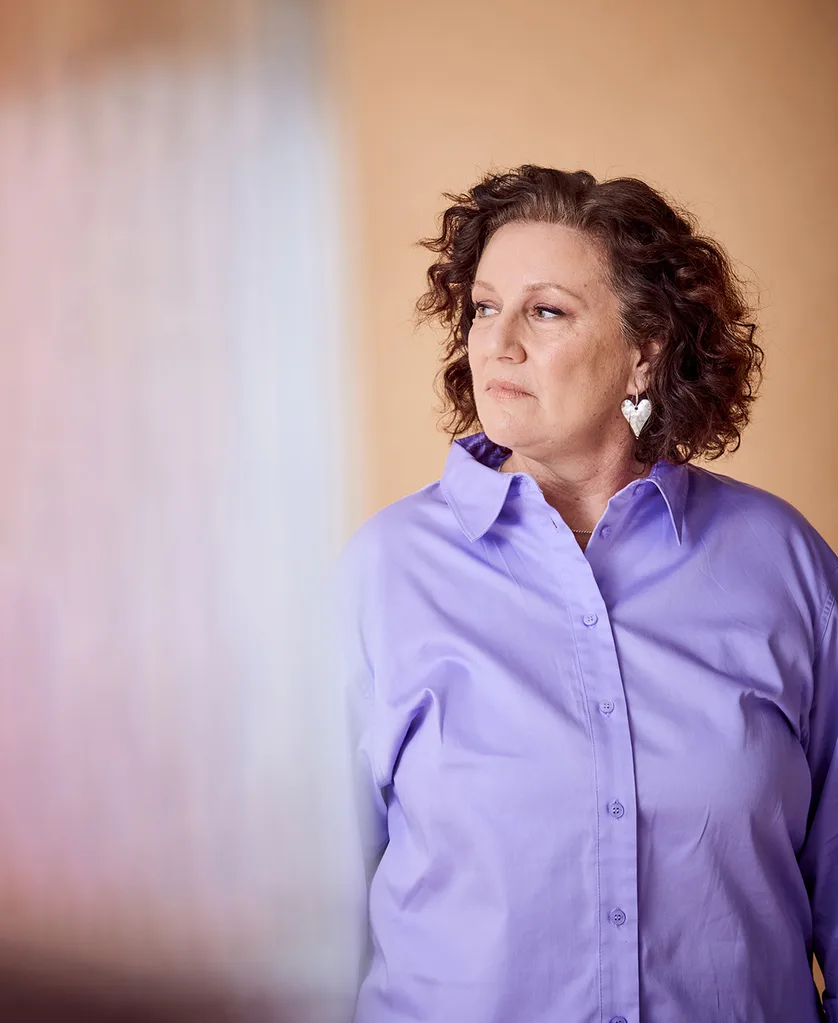
“I was constantly trying to find excuses for that man,” she says. “Possibly his grief is so bad that he’s turning on me because he can’t handle it … I think … he wanted answers because he could not accept that his children would just die … We both wanted answers for that.”
“People always want to blame,” Tracy adds.
“I was extremely saddened by it,” Kath says. “There was a grief process to go through as well. Someone that you love so much, that you tried to have a family with, that you tried to keep the relationship going with … That’s a grief in its own.”
The prosecution’s key piece of evidence in the circumstantial case was Kath’s diaries, in which she vented her sadness and frustrations. They sealed her fate. In 2003, Kath was jailed for 40 years.
Tracy had watched the trial from afar and tried to contact Kath, but it was not an easy process, and her early letters never reached her friend in prison.
“A lot of people have said, ‘Why weren’t you rocking in a corner like an insane person?’” Kath says. “Don’t get me wrong, the temptation to do that was there quite a few times. I guess my introduction into life had created a three-year-old that was stubborn in that regard, and decided I was on the earth whether people liked it or not. From that age, there was a bit of a streak that just digs its feet in.
“Suicide was not even a five-second consideration. Once I landed in prison, as I was crying, staring out the windows … there was a five-second consideration, how can I end this? My first thought was: I can’t do that, and why would I give them the satisfaction?”
Kath had never been an effusive person, but in prison, she had to lock up her bruised heart, shutter her emotions and watch her back. She was still a grieving mother, but her incarceration robbed her of the opportunity to properly process the loss of her last child, Laura.
“Once you’re in a place like a prison, you can’t afford to be stopping to think about those sorts of things because you’re in a mad enough plight as it is, trying to keep your mental health at a reasonable level … You’ve sort of got to park it, literally.”

Tracy finally got a letter to Kath. At first, their communication was cautious, but when Tracy decided to back Kath, she was all in. She was in anguish knowing her friend had been wrongly convicted.
“You can’t imagine,” Tracy says, “how hard it feels on the outside, knowing she’s experiencing that on the inside, and all you can be – even though she said it was a big thing – is there. Present. Mindful.”
Tracy sent Kath money, pyjamas and other necessities. Kath worked in prison, initially earning only $25 a week. Her meagre wages were garnished to contribute to the victim of crime compensation claim Craig had filed.
As Kath’s appeal against her conviction and sentence approached, Tracy phoned Kath’s Legal Aid lawyer and offered to help. Tracy was told it doesn’t work like that, so she set out to learn how it did work. She contacted experts, many of whom sent her useful information. She rallied friends and supporters and set herself the goal of discussing Kath’s case with five strangers every day. “The reactions I received were often uncharitable, hostile. But they honed my ability to communicate effectively, and I learned to deliver a more straightforward, concise message about the case,” she wrote.
Kath’s first and second appeals failed. It was a blow, but not a knock-out.
The relentless work of Kath’s allies began to bear fruit. A significant moment came when forensic pathologist Stephne Cordner concluded, “there is no pathological or medical basis for concluding homicide. The findings are perfectly compatible with natural causes”.
Experts who saw problems with the prosecution contacted Tracy. Among them was ANU Professor Carola Vinuesa, who analysed Kath’s DNA and found a mutation, CALM2 G114R, which could be responsible for the deaths of the children. Both her daughters carried the mutation, but a 2019 inquiry dismissed the discovery. The emotional diaries overshadowed science.
“The first inquiry was the point when I contemplated giving up altogether,” Kath says.
But it lit a fire under Tracy. “That first inquiry, when I got told, ‘Go away, you’re not an expert,’ I thought, I’ll ruddy well become one.” Tracy zeroed in on journaling and found expert support for her belief that Kath’s journaling was an expression of grief, not guilt.
In February 2020, Carola Vinuesa was asked to speak at the 60th birthday party of Peter Yates AM, a leader in the scientific community. Instead of talking about the man of the hour, she told the room full of scientists about the mother jailed for killing her children and the genetic mutation that could have been the cause of death. The scientists in the room grasped the significance of the genetic mutation immediately. Suddenly, Kath and Tracy had a phalanx of powerful allies.
In 2021, 90 of the world’s most preeminent scientists signed a petition to the NSW Governor asking for Kathleen to be pardoned.
The government announced a second inquiry to be presided over by former NSW Chief Justice, Tom Bathurst QC. Previously, the diaries had been Kath’s undoing, so Tracy tracked down Professor James Pennebaker, who testified on journaling and mental health. The scientific evidence was increasingly convincing.
When the inquiry wrapped in April 2023, Commissioner Bathurst said there was a significant body of evidence that Kath’s children had died of natural causes. Still, it was not a judgment. She and Tracy held their breath.
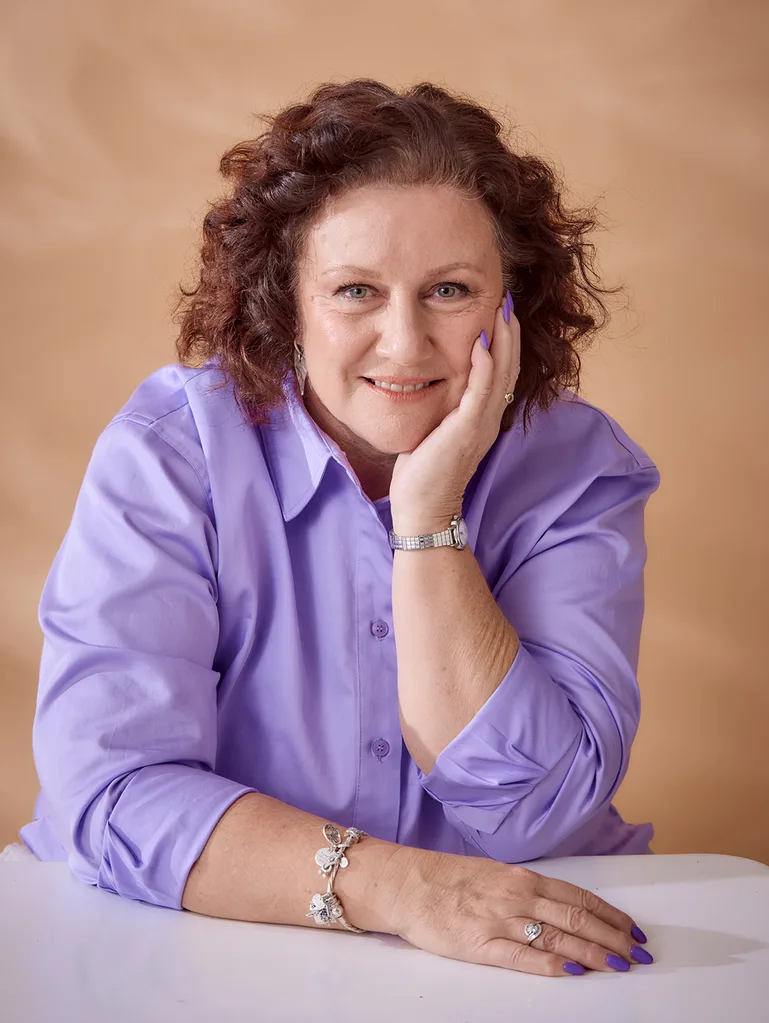
On June 5, 2023, more than 20 years after she was convicted, Kathleen Folbigg was officially pardoned and released from prison. Less than an hour later, Kathleen was pulling up to Tracy’s rural property. Tracy, who’d received a call 50 minutes earlier, was running towards the gate, arms open, ready to embrace her dear friend.
“Her laughter rang out, a symphony of relief and delight after years of longing,” Tracy recalls.
The moment they had fought for had arrived, and Tracy was overwhelmed with euphoria. There was more to come. In his full report, released months later, Commissioner Bathurst wrote, “I do not regard the diaries as containing reliable admissions of guilt.” Furthermore, he said, “Ms Folbigg was a loving and caring mother who occasionally became angry and frustrated with her children.”
When she read those words, Kath says, there were “nothing but tears. That finally someone had said to the general public that, look, this woman doesn’t deserve to be hung or killed or set on fire or anything else. She’s actually a good mother. I spent a lot of time that very first day just breaking out in tears … It was a relief. I’d been carrying the weight of the world around.”
“It should never have just been circumstantial evidence,” Tracy says. “They should have always used mental health practitioners to talk about the things that impacted Kath in her journals. There was enough evidence, even in the ‘80s, to have proved that. It’s shockingly bad.”
Five months later, Kathleen was formally exonerated by the Court of Appeal.
In 2003, words condemned Kathleen. Now she is using her words to reclaim her identity.
“The simple things make me happy now,” Kath says. “Where I’m sitting now is opposite a park, and I just keep looking up at it because it’s green, it’s fresh, it’s nature. A clear, sunny, beautiful day where you can take the dog for a walk – that’s my idea of fantastic.”
She is still working through her grief, but both she and Tracy have a new future to look forward to.
Tracy is setting up an animal-assisted growth and learning centre on her property. “It’s all about being the best humane being you can be,” she says. “I’m taking all of my expertise in education and coaching and business learning and my environmental science and everything to put that in a tight bundle, and it’s all about humane-centred learning and counselling. I want to take the frustration and turn it into something good.”
Kath is not sure what she’ll do next, but she has discovered she loves writing.
“With everything that I went through, there were moments when I thought, please show me some decent, kind people, because I was struggling,” she says finally. “Now, I sit down and go, this world’s not bad. There are actually some good people in it. You just need to find more of it.
“Now I can sit here and say the world is good.”
This article originally appeared in the October 2025 issue of The Australian Women’s Weekly. Subscribe so you never miss an issue.

