



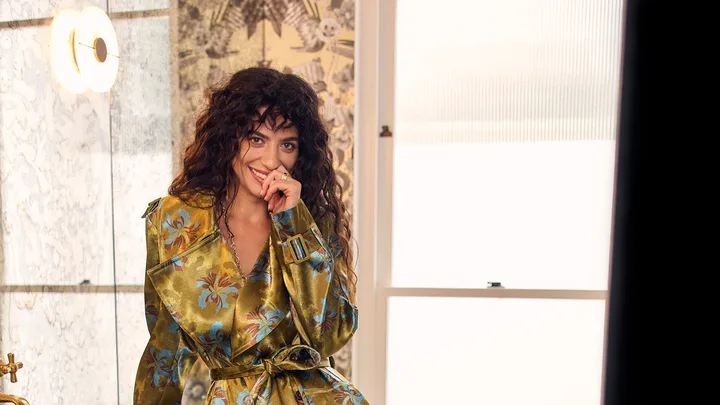
In a new generation of Australian performers reshaping our screens, alongside talents like Miah Madden, Yerin Ha, Philippa Northeast and Sophia Wright-Mendelsohn, Mia Morrissey stands out not just for her range but for her reach. Actor. Writer. Musician. Advocate. Big sister.
Spend an hour in conversation with her and one thing becomes clear: Mia doesn’t just want to take up space, she wants to make space.
“I was 15 when I started, and then I turned 16, on that job. So, a baby on Bat Eyes,” she laughs, remembering her first professional role.
She had wanted to be an actor “from when I was really, really young,” despite her father, an agent, warning her just how hard the industry could be. “He said, I don’t want you to be an actor. It’s really, really hard… It’s not a life that I wish upon anyone on purpose.”
But she was insistent. And when she was finally allowed to audition, she landed her first role straight away. What struck her most wasn’t just performing, it was the ecosystem around it.
“I remember being on set and seeing what everybody else was doing and how I was a small cog in this great big machine, and that was the thing that was most exciting for me. Being a part of something bigger.”
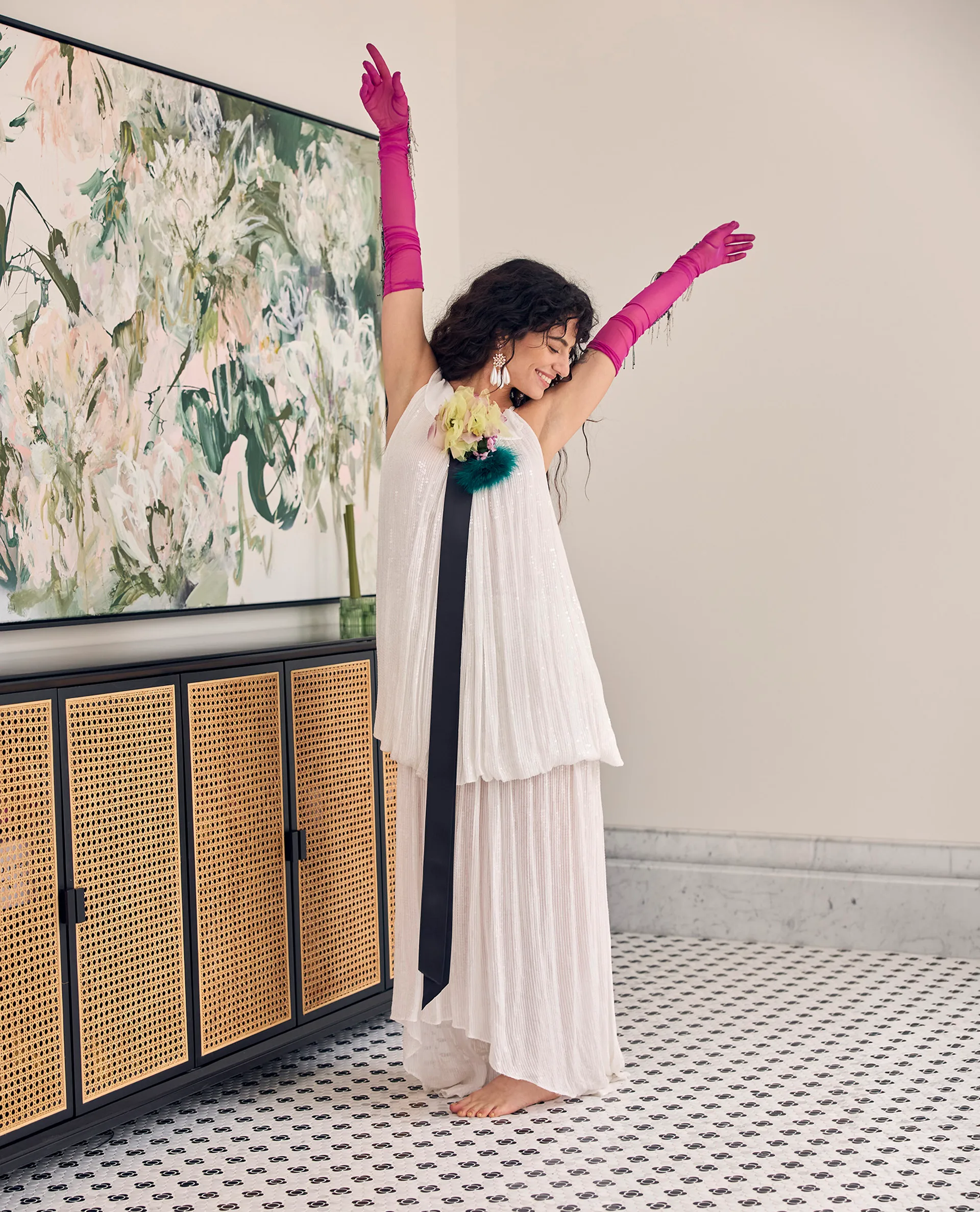
That sentiment, contribution over ego, still defines her work. “I like the autumn-ness of it all,” she says, searching for the right word. “I love the kind of, the mutual contribution into making opportunities for everyone around you as well as for yourself.”
It’s an ethos inherited from her father. Growing up, she watched him care deeply for his clients, sometimes even opening their family home to actors who couldn’t afford rent. “He cared about the artistic community so much, and that was something that was passed down. And so I just, they’re my family, and so I just want to care for the artistic community because they are literally and figuratively my family.”
If Mia’s artistry feels expansive, so too is her worldview. She speaks four languages, English, French, Spanish and Maltese, a product of both her schooling and heritage. “I started speaking French when I was three, and then I think my brain just kind of locked into it… I love speaking other languages. It feels like my brain is being massaged.”
Language, she says, isn’t just communication, it’s character. “Your kind of window into another character being the way that they see the world based on the language that they speak and how the language affects who you are, is so deeply interesting to me.”
Music weaves through everything she does. She wrote, composed and starred in In Loving Memory, a one-person musical about grief, first conceived during COVID when she was struck by the irony that funerals were deemed essential but the arts were not. “A funeral is just an expression of art. It’s just people who are relying on art to go through and process the biggest thing that we can go through as people.”
The project took on devastating personal meaning when her best friend, actor Bardiya McKinnon, died suddenly. They met while filming in In Your Dreams and wrote music together. She paused the show, worried it might become “gratuitous or indulgent.” But in talking with others about loss, she recognised something bigger.
“I tend to write things with the intention of sharing them, with the intention of it making someone’s life a bit better… grief is a universal language, as is music.”
That universality guides her choices. Whether on stage or on screen, she refuses to choose between mediums. “I love musical theatre, I love theatre, I love screen acting. I want to do all of it forever and ever and ever.”
She delights in the technical contrasts, the intimacy of a camera inches from your face versus the charged awareness of hundreds in a theatre. “There is an intimacy about being aware of the hundreds or thousands of people in front of you… And then there’s an intimacy in a camera being right up in your face and actively not thinking about the people that will be watching you.”
But if performance is her craft, advocacy is her calling.
An ambassador for Endometriosis Australia, Morrissey speaks candidly about her own delayed diagnosis. Years of severe pain were dismissed as “just period pain.” She was misdiagnosed with coeliac disease and stopped eating gluten for 12 years.
“My misdiagnosis was super annoying and a result of a really like a sexist and patriarchal medical system,” she says. “That’s not me calling doctors themselves sexist, but the system is inherently patriarchal and problematic.”
When she later sought fertility testing in her early twenties, she was told nothing could be done until she was ready to try for children. At 30, she returned and, by her own admission, lied about being in a heterosexual relationship in order to access testing. She subsequently discovered her egg reserve was low and began the costly process of freezing her eggs.
“If someone had done these tests when I had asked, it wouldn’t have been as much of a problem,” she says. “There just isn’t enough awareness or focus or conversations around all of it… And I would like to do whatever I can to help that, to change that.”
It’s the same instinct that led her to work with the Butterfly Foundation after recovering from an eating disorder — something she describes as “one of the things that I am the most proud of in my life.”
“I feel liberated from it,” she says. “I’m comfortable with the level of challenge that it will always be.”
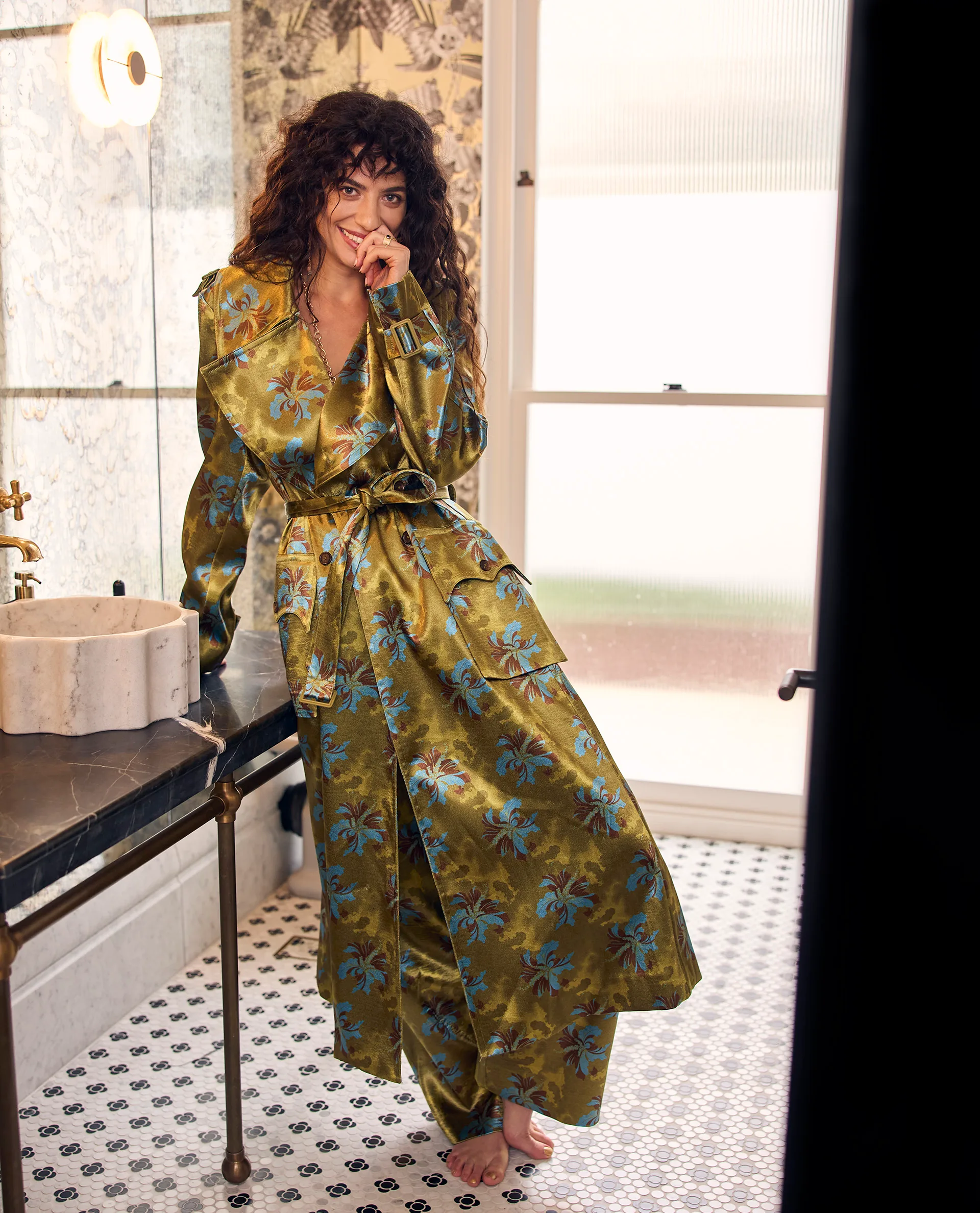
Over and over, she returns to the idea of being a “big sister.” When her younger sister was born, she recalls feeling a shift, a desire to model a different relationship with her body and with ambition. “I just kind of became a big sister to her and then became a big sister in the way that I live my life and then became a big sister as an artist.”
There is steel beneath the warmth. Mia is pragmatic and fiercely hardworking. “I love hard work. I love it so much,” she says. But she pairs that drive with a belief in joy over perfection. As a child, she wasn’t a naturally gifted singer, something her parents recently admitted with glee.
“You were not good,” she says they told her, laughing. “But, you just loved it so much. You never asked anybody if you were good at it. You just kept doing it.”
Now, she applies that lesson everywhere. “I try to focus more on what I enjoy more and what brings me joy and what I can bring, how I can bring joy to other people more than if I think I’m good at it or not.”
Looking ahead, she’s developing projects that integrate music and film, exploring consent, body autonomy and what she calls “innocent nakedness and celebrating the female body.” She wants to direct. To write more. To break rules alongside first-time filmmakers. “I just want to keep learning things and making things.”
And if she could offer advice to her younger self?
“I think I would just say… It’s okay to be big. And I mean that in every sense of the word.”
She pauses, then elaborates. “Whether that is your physical size, or the amount of space that you take up, or the opinions that you have, or the volume that you speak, or the things that you care about… Be as big as you are. Be as big as you want to be. There’s nothing shameful about being big.”
Then she grins. “And don’t touch your eyebrows. Leave your eyebrows and hydrate your curls.”
If this story has raised issues for you, help is available. If you are struggling with food, exercise or body image, you are not alone. The Butterfly Foundation offers free, confidential help and information. Call them 24/7 1800 33 4673, or chat or email via butterfly.org.au
An excerpt of this interview originally appeared in the March 2026 issue of The Australian Women’s Weekly. Subscribe so you never miss an issue.
Check out the rest of our leading ladies: Miah Madden, Philippa Northeast, Sophia Wright Mendelsohn, and Yerin Ha.

