




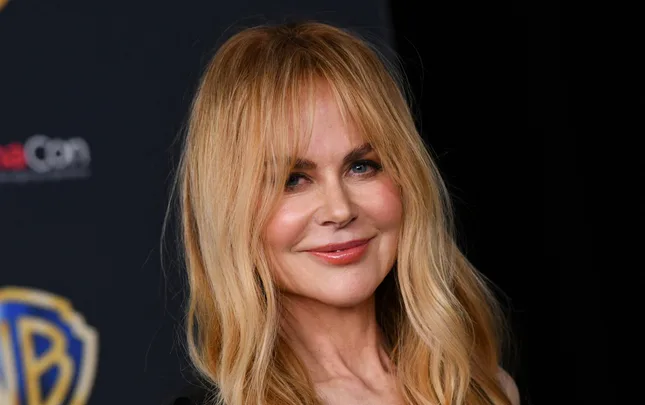
Oscar-winning Australian actress Nicole Kidman has revealed that she is considering a career change. She is learning to become a death doula. And she admits, it’s “a little weird.”
What is that I hear you asking? Well, just like how a birth doula helps to bring life into the world, a death doula helps people into the next stage of their life: death.
This decision was inspired by her mother, Janelle Kidman. She sadly passed away in September 2024 at the age of 84.
“As my mother was passing, she was lonely, and there was only so much the family could provide,” Nicole said to the San Francisco Chronicle.
“Between my sister and I, we have so many children and our careers and our work, and wanting to take care of her because my father wasn’t in the world any more, and that’s when I went, ‘I wish there was these people in the world that were there to sit impartially and just provide solace and care’.”
Those people do exist: death doulas. Now, inspired by that experience, she’s hoping to provide care to others. However, it’s unclear if this new career pivot will impact her filming career. She hasn’t shown signs of slowing down with Practical Magic 2 coming out in September 2026 and the television series, Margo’s Got Money Troubles, which came out in April, 2026. Other upcoming projects on her roster include the next season of Big Little Lies and Scarpetta.
At the time of her mother’s passing, Nicole felt she was experiencing an “enormous high” in her career with the success of her film, Babygirl. Then, she won Best Actress at the 2024 Venice Film Festival… But that’s when she received the heartbreaking news.
“I was about to go onstage and I found out my mother had died and I went right back to the room in Venice, got into bed and was completely devastated and thought, ‘I do not know how I’m gonna move forward or function now,'” Nicole confessed at HISTORYTalks in Philadelphia.
The Australian actress recalled the moment she tried to leave Venice in the middle of the night to be with her family in Australia.
“I remember getting into a boat in the canal, literally at night, trying to find my way to the airport, and then turning around going, ‘I can’t even do this.’ Then I went back to bed. And I was alone. My husband wasn’t there, my children weren’t there. I was there to win an award, which should’ve been a beautiful thing. That there is the contrast of life.”
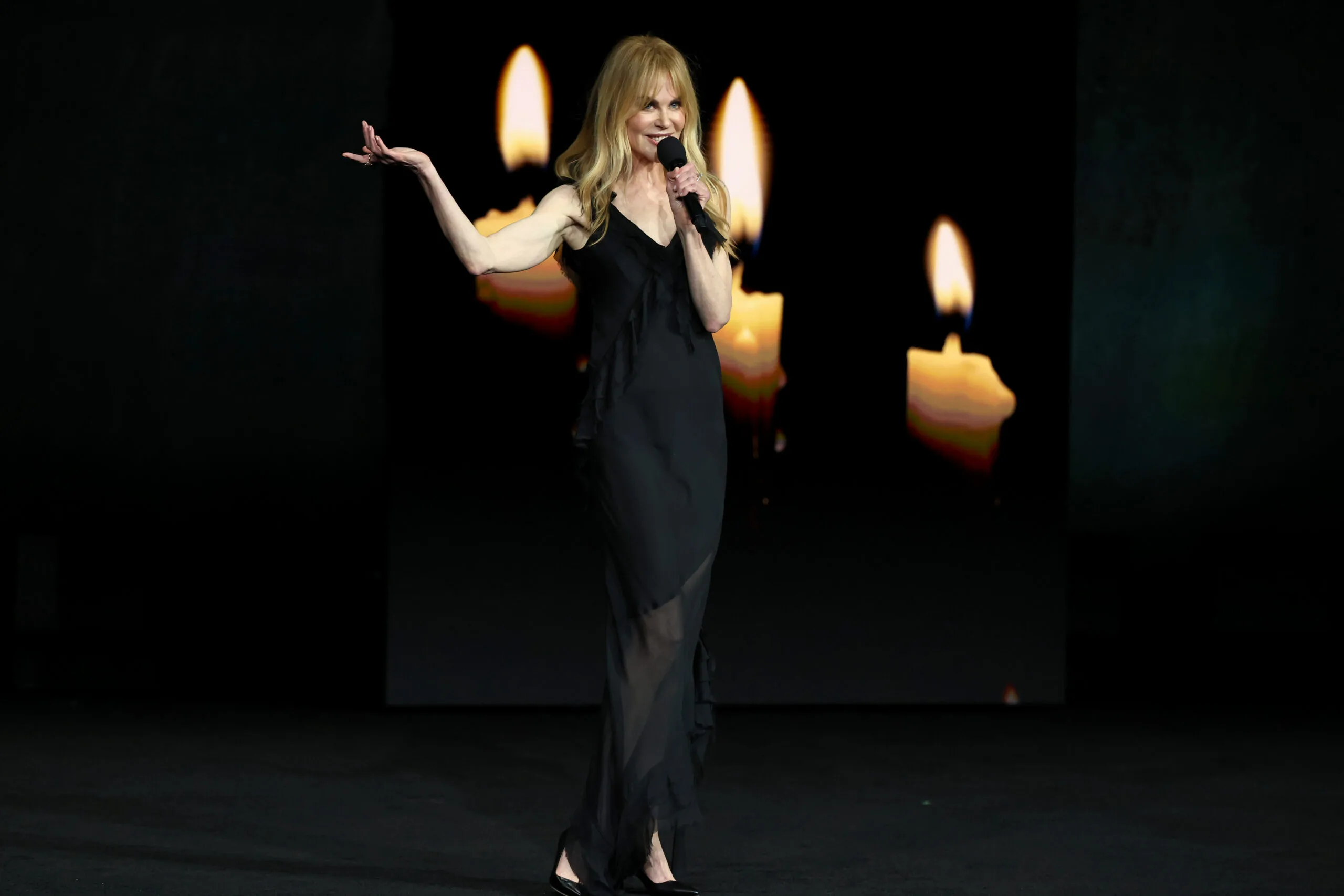
In the October 2017 issue of The Australian Women’s Weekly, journalist Caroline Baum met with some other Australian death doulas. In her feature, Caroline wrote that death doulas “prepare the way for the final journey with empathy and love.”
Read on for that feature.
Why are we so scared of death?
When Georgia Zweep learned her 12-year old daughter, Margot, had only weeks to live as a result of terminal brain cancer, she turned to a stranger to help her prepare for the worst. “I wanted to know what the rules were about dying at home,” Georgia says, “as that was Margot’s wish and I knew I’d be too preoccupied with my grief to be able to think clearly. I also didn’t want anything corporate, religious or formulaic.”
Instead, she called Victoria Spence, a Sydney-based celebrant who has gained a reputation for conducting highly individual funeral ceremonies and helping the families of the dying through every stage of their loss.
Victoria is at the vanguard of a growing trend: women who have dedicated themselves to offering us a different way of experiencing death. Often described as “Death Doulas”, these women consider their role as more of a vocation than a career.
They are part of a quiet revolution that’s reached Australia from the UK, Canada and the US, where attitudes to death have seen a gradual shift towards greater awareness and choice. You could say that death is getting a makeover – or a rebirth.
Victoria, 52, brings her expertise from a background in theatre to her work, while staying out of the spotlight. “My role is to make everyone feel calm, safe and able to express whatever emotions they need to share,” she says. To meet Victoria is to experience her serenity – she radiates an exceptionally calm focus. “She was caring and gentle every step of the way,” says Georgia. “Victoria provided a buffer between us and the funeral home she chose to work with, which matched her sensitivity. It was a very intense relationship, made more so because it was for a child. She even went to Margot’s school and talked to her year about what was happening, to help them understand.”
Behind the scenes, Victoria, a single mother, has been a mover and shaker in the emergence of the Death Doula movement for more than a decade. Like many who pursue this path, she was searching for alternatives after her own bad personal experience.
“My father died when I was 26,” she says. “The funeral was a debacle. There was no viewing and the celebrant got his name wrong. My grandmother died a month later, her life reduced to garbage bags all bundled up too quickly. It made grieving so hard; there was nothing to hold onto. Then, eight years later, when Mum died, we did it right, and I was able to heal.”
Today, Victoria, who has a degree in Death, Dying and Palliative Care, is in high demand, charging an hourly rate of $150 for a consultation and $1800 for a full funeral ceremony, which can include organising all the logistics and helping family and friends to craft and deliver a eulogy. There is no set pattern to the number of hours a client may require, with Victoria estimating her services can take between 12 and 40 hours, depending on the complexity of the situation and the need for follow-up care.

Initially, she is often called to the bedside of clients to discuss their wishes and fears. “Mothers and the very young are the hardest,” she says, having conducted rites for children killed in tragic circumstances.
“Sometimes I have to be able to contain the grief of an entire community that’s been traumatised,” she says, “or cope with complex family dynamics. No matter how violent or upsetting the circumstances, my belief is always that being informed and involved is healing, whereas denial is not.
“I can help map how it will play out, what the options are at every stage, from help with accessing care to designing a funeral. I also provide family follow-up – you don’t just walk away from the privilege of people giving you their trust.”
Part of her mission is to demystify dying. “I’m there to remove the taboo when it comes to questions like, ‘How long can I keep a body in my home before it smells?’” says Victoria. In a move that shocked many, including those in the funeral industry, she imported cooling plates for home viewings. People were initially hesitant, but the plates have since become popular. “They’re great for family vigils. At first, I was doing about five a year, now it’s about 30.”
Victoria sees her role as helping reconnect clients with long-lost wisdom. “My grandmother knew how to lay someone out,” she says. “In the 20th century, we forgot more about dying than at any other time. We have a short-term memory that’s eradicated profound ancient knowledge. I want to help uncover that again.”
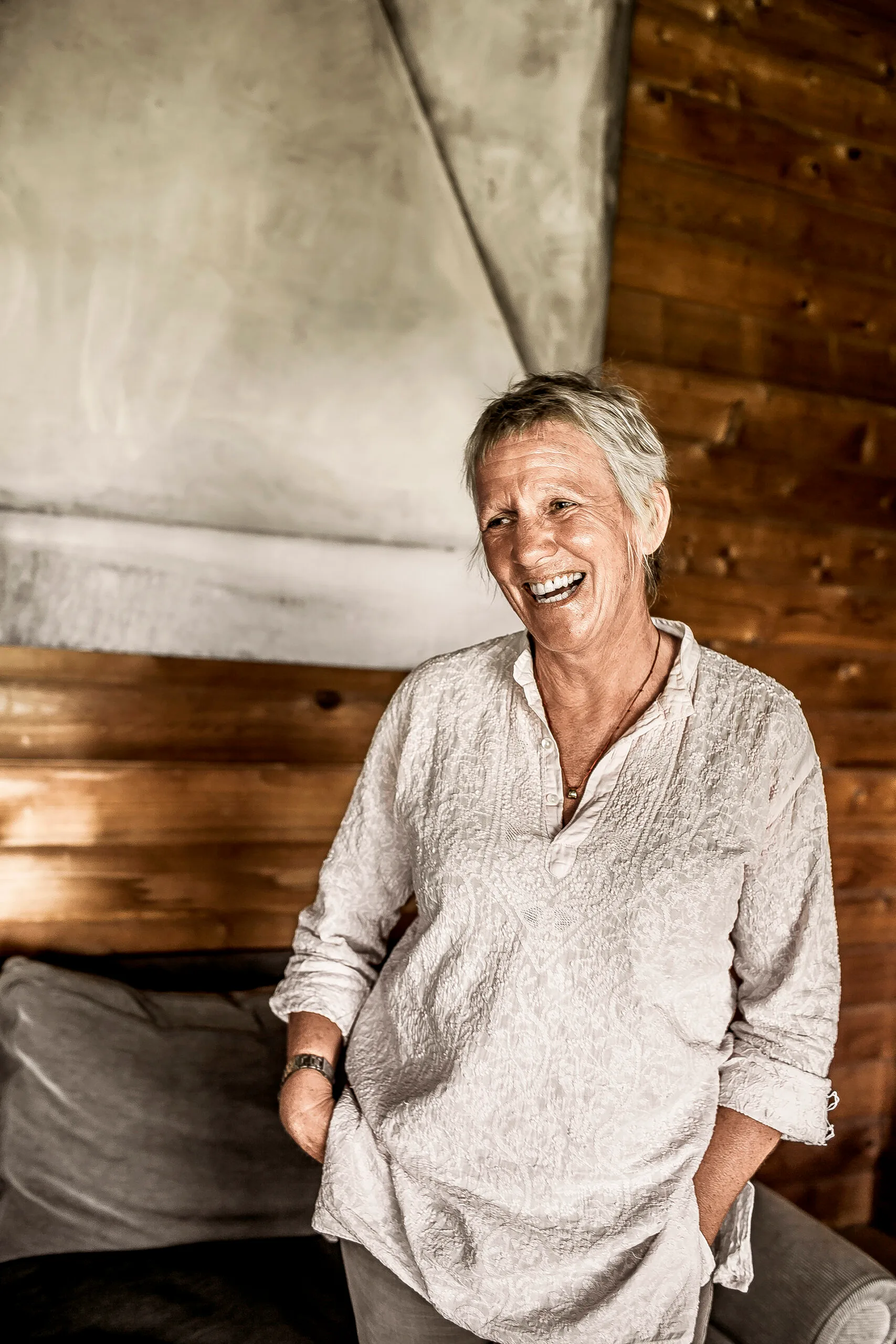
She has also had mentors who have helped her refine her skills. One is Zenith Virago, 60, regarded by many as a tribal elder of the Death Doula community. Versed in the rites of Indigenous cultures around the world, Zenith cheerfully describes herself as a hippie lesbian. It’s no surprise she lives at the epicentre of alternative culture in Byron Bay, NSW, where she has taught and practised a holistic awareness of death for 20 years. Like Victoria, she has a gift for being utterly present, as if she has time only for you.
Zenith’s business card, if she had one, would describe her as a deathwalker, accompanying the dying on their journey. It’s a practice she teaches through the Natural Death Care Centre, which runs public workshops across Australia and New Zealand.
Death has been a part of Zenith’s life since childhood. She played among the headstones in the south London cemetery where her grandfather was the chief gravedigger.
“Then, in my 20s, I saw AIDS, a plague that came from sex and love, decimate many of the young gay men I was living with,” she says. “I studied Buddhism, which has a lot to teach us about dying and also about being present. I was 36 the first time I went to identify a friend’s body and saw her life leave her physical being like a vapour. So, I volunteered to conduct the funeral for her husband. Afterwards, I experienced a kind of euphoria and realised that this was my calling.”
Despite all the New Age woo-woo that inevitably finds its way into conversations about alternative ways of facing death, Zenith is refreshingly direct.
“I’m not a carer, I don’t do the daily hands-on stuff,” she says. “My practice is to help transform fear into acceptance. Sometimes that means dealing with anger. I try not to feed negative emotions. Instead, I act as a circuit-breaker if there is conflict.”
Her forthright opinions help to confront the reality of just how far contemporary society has drifted in its denial of death. “Our culture kids us we’re forever young,” Zenith explains. “We need to own our age to own our death. We talk about the loss of dignity when our body lets us down, but dignity isn’t a physical condition.”
And don’t get her started on the way grief is exploited as a source of profitable enterprise. “It’s become an industry, as if knowing that someone is suffering and is worse off than ourselves makes us feel more alive.”
Most of Zenith’s clients are women, who seem to have a greater openness to the mystery of death, perhaps because of their experience as lifegivers. Many have lost children. Many want to participate actively in dying.
“They’d like the choice to be conscious and refuse morphine,” Zenith says, “but that’s just another form of pressure, like the expectation all mothers should choose a natural birth and refuse epidurals. If I were in severe pain, I’d take anything that helped. There’s no right or wrong way.”
While Victoria and Zenith are experts, Imogen Bailey is a novice Death Doula. She started her training at the Australian Doula College.
Like Victoria, she has a background in performance as an actor – she starred on Neighbours – and model. She also has a fearless curiosity about human nature. As she demonstrated in the second series of the controversial SBS reality show Go Back Where You Came From. It prompted her to become involved in refugee advocacy and embark on a program of personal development that explored everything from hardcore Vipassana meditation to ecstatic dance and drumming.
“Being sent to the most dangerous place on earth in Mogadishu [Somalia, for the SBS show] was a real wake-up call,” says Imogen, 40. “It confronted me with death face-to-face.” Shortly after her return, Imogen met Renee Adair, the founder of the Australian Doula College. She then began to study how to assist at births and deaths. Today, through her Honouring Heart website, she offers a range of workshops, with an emphasis on the quest for meaning.
There was an element of personal healing to her mission. “When my grandmother died, she was specific about what she wanted,” says Imogen. “Even though I was only 11, I was struck by how much easier that made it for the family to cope.
“My uncle took his own life in 2014 after a battle with cancer and depression. It made me realise how much we still keep death hidden.”
Imogen has now assisted at three deaths under the supervision of a senior doula. “It starts with listening,” she says. “I might also massage the hands, which can be relaxing and make a person feel comforted.
“Sometimes all they want is help with choosing the music they want at their funeral or the freedom to go in a different direction spiritually than their family. We’re not there to provide medical advice or intervene in treatment, but we can help clarify choices and options. It’s different every time, there’s no formula.”
While Imogen is less experienced than Victoria or Zenith, she shares their ability to project empathy and concern. Even over coffee in a busy inner-city shopping mall, she seems able to ignore the bustle of shoppers. Plus the insistent beeps of her mobile phone. There is something comforting and reassuring about her presence. She is an old soul in a young body.
For Georgia Zweep, having a Death Doula assist in her moment of greatest sorrow was a decision that has helped her to accept her daughter’s death more easily. “It allowed me to reframe the loss and gave me a solid foundation on which to build memories, rather than being left carrying around a deep wound. With the right help, you can come back from mourning.”
This feature originally appeared in the October 2017 issue of The Australian Women’s Weekly. Subscribe so you never miss an issue.


