



Australian fuel prices are rapidly rising as the conflict continues to escalate in the Middle East.
Over the past couple of weeks, you would have no doubt noticed the jump in prices when you’ve gone to fill up at the bowser.
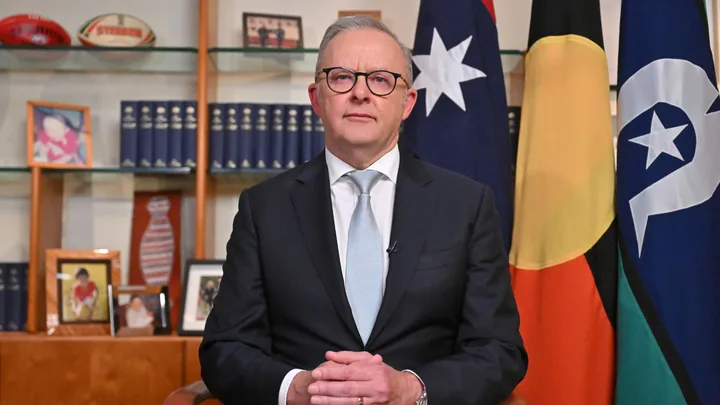
This sharp increase in the price of fuel is a direct result of an international fuel shortage, caused by the conflict that’s raging in the Middle East at the moment. A month ago, Prime Minister Anthony Albanese made a rare live address to the nation to discuss the fuel crisis and ask Australians to help out.
Qantas and Jetstar set a press release on 1 May, announcing that they would extend their domestic flight cuts and reduce more flights amid the fuel crisis.
“Given fuel prices remain significantly elevated, the Group has extended previously announced schedule changes across its international and domestic network between July and September.”
People who have booked passage on any of the impacted flights will be contacted directly and offered either a refund or an alternative flight.
Last month, Qantas cut its domestic flights by five per cent from May to June; this is now being extended to September. Furthermore, its international routes will also be reduced. Jetstar is also reducing its flights to New Zealand.
Scroll on to find out everything you need to know about the ongoing fuel crisis.
Why does Australia have a fuel shortage?
Australia, like most countries around the world, is dealing with a fuel shortage and a spike in the price of fuel, which is further exacerbating the cost-of-living crisis.
Fuel prices began to rise at the start of March, after US President Donald Trump, along with Israel, launched coordinated military strikes on Iran on February 28.
According to the US President, the strikes resulted in the death of Iranian Supreme Leader Ali Khamenei.
Iran then retaliated, launching strikes at Israel and at US military bases in Bahrain, Jordan, Kuwait, Qatar, Saudi Arabia, and the United Arab Emirates. A drone has also struck Britain’s Akrotiri military base in Cyprus, and missiles have been shot down over Turkey.
How much fuel does Australia have left?
At the time of publishing, Australia has roughly a month left of fuel supply, including 39 days of petrol and 30 days of diesel.
“Diesel and jet fuel [are] both at 30 days, which is pretty flat, and that indicates that while we’ve released more from the strategic reserve, the ships continue to arrive in good numbers,” Energy Minister Chris Bowen said on ABC’s Insiders recently.
Where does Australia get its fuel from?
About 10 per cent of Australia’s fuel supply comes from our own oil industry, and the rest is sourced from overseas.
At the moment, most of Australia’s oil comes from South Korea and Singapore. Malaysia, China, India and Taiwan are also suppliers to Australia.
While none of those countries is in the Middle East, they get most of their oil from the Persian Gulf region, which includes Saudi Arabia, Iraq, the UAE, Qatar and Oman.
These countries have been impacted by Iran’s retaliatory strikes, and they also can’t get their ships through the Strait of Hormuz, as Iran is blocking it.
The rest of Australia’s fuel supply comes from our two domestic refineries, which are located in Brisbane and Geelong.
In April 2026, the government announced it had received a massive shipment of 100 million litres of jet fuel and 50 million litres of diesel from Asia.
What is the Australian Government doing about the fuel crisis?
In his address to the nation, Prime Minister Albanese said National Cabinet had adopted the National Fuel Security Plan earlier this week, with leaders from both sides of politics working together “to keep Australia moving, making sure that we are prepared … So that if the global situation gets worse, and our pure supplies are seriously disrupted over the long term, we can coordinate the next steps together.”
“Today, we cut the fuel excise in half, cutting the tax on every litre of petrol by 26 cents,” he said on Wednesday evening.
“Those savings have started showing up at your petrol station. For our truckies, we have cut a heavy vehicle road user charge to zero. Both these measures will be in place for the next three months. We are working to bring the price of fuel down. To make more fuel here, and to keep it on shore, and get more fuel here. Using our strong trading relationships with our region, to bring more petrol, diesel, and fertiliser to Australia.”
The International Energy Agency (IEA) has advised the Australian Government to take drastic measures to reduce the demand on oil. The IEA’s 10 recommendations include promoting working from home and car-pooling, lowering highway speed limits, reducing air travel, and increasing public transport.
The government has already released up to 20 per cent of Australia’s diesel and fuel reserve supplies to help ease the crisis.
The Minister for Agriculture, Fisheries and Forestry, Julie Collins, announced she was commissioning a National Food Supply Chain Assessment, which will advise the government on preparing for disruptions in food production and supply chains.
“Our farmers and producers feed millions of people both here and abroad, but events like the conflict in the Middle East reaffirm why we cannot be complacent,” she said.
“While Australia is food secure, we recognise the importance of supply chain resilience, including the supply of fuel and fertiliser, which is why we have commissioned this assessment.
“We continue to progress our National Food Security Strategy, which is about keeping food production and supply chains moving, and ensuring Australia continues to remain competitive on the global stage.”
What did the Prime Minister say in his announcement?
The Prime Minister made an unprecedented address to the nation this evening, highlighting that the fuel crisis is likely to continue “for months”, and reassuring that the Government “will do everything we can to protect Australia from the worst of it”.
Prime Minister Albanese used his address to ask Australians to consider “what all of us can do to help our country and help each other in the period ahead” by helping preserve our fuel reserves for critical industries such as agriculture and transport, as well as small businesses and families.
“The war in the Middle East has caused the biggest spike in petrol and diesel prices in history. Australia is not an active participant in this war, but all Australians are paying higher prices because of it,” Mr Albanese said. “I know that you’re seeing this, at the servo and at the supermarket. And I understand farmers and truckies, small businesses, and families are doing it tough. And the reality is, the economic shocks caused by this war will be with us for months.
“Now, it’s the Australian way that people want to do their bit. And there are simple ways that you can. You should go about your business and your life as normal. Enjoy your Easter. And if you’re hitting the road, don’t take more fuel than you need. Just fill up like you normally would. Think of others in your community, in the bush, and in critical industries.
“And now, becoming weeks, if you can switch to catching the train, or bus, or tram to work, do so. That builds our reserves, and it saves fuel for people who have no choice but to drive. Farmers are miners and trainees who need diesel every single day. And all those ship workers and nurses who do so much for our country.
“The months ahead may not be easy. I want to be up front about that. No government can promise to eliminate the pressures that this war is causing. I can promise, we will do everything we can to protect Australia from the worst of it. These are uncertain times, but I’m absolutely certain of this. We will deal with these global challenges, the Australian way, working together, and looking after each other, as we always have.”
Will Australia begin fuel rationing?
At the moment, Australia is not rationing fuel, but the Government is asking residents to be conservative with their fuel consumption. Some experts believe fuel rationing could be the best solution to the fuel crisis.
“It is better to act sooner rather than later, given our limited reserves and the spectre of early fuel price buying, queuing and hoarding,” said former head of the ACCC Allan Fels.
“There’s already discussion of some relatively soft steps which could include rationing of access to petrol based on odd/even number plates; driving every second day; working from home, and speed limits.
“One problem with soft approaches (often proclaimed by governments with much fanfare) is that rather than reducing demand, they induce a rush to the bowsers by a public troubled by the adoption of rationing.”
Fuel rationing was last used during the 1970s fuel crisis.
What happens if Australia runs out of fuel?
In the unlikely event that Australia runs out of fuel completely, it would trigger an economic and social crisis.
“It’ll be a dire situation,” Dr Lurion De Mello, Senior Lecturer of Applied Finance at Macquarie Business School, told 7NEWS.com.au.
“When we talk about fuel, you know, we’ve got to think: Are we going to run out of gasoline for cars, are we going to run out of diesel, or are we going to be running out of jet fuel?”
If Australia runs out of fuel, the government could enact the Liquid Fuel Emergency Act 1984, which would give it the authority to direct the nation’s fuel to the sectors which need it the most to keep basic services running.
“I wouldn’t exercise those quite remarkable powers unless I had pretty strong advice that it was necessary in the circumstances,” Energy Minister Chris Bowen said. “I would need advice… from our National Oil Supply Emergency Committee.”
“There’s the national liquid emergency fuel policy response agreed some 20 years ago,” he continued. “It runs through the different powers that the states and territories have, the Commonwealth Minister has, what you would do before you get there – voluntary measures, encouragement, et cetera.”
What can you do to help?
Prime Minister Albanese appealed to Australians “to do their bit” by:
- Don’t take more fuel than you need; just fill up like you normally would.
- If you can switch to catching the train, bus, or tram to work or other forms of public transport.

Related stories

Native ad body.

Native ad body.




Native ad body.