



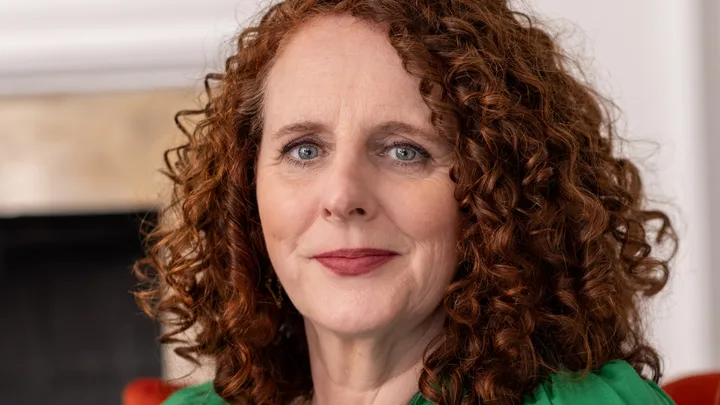
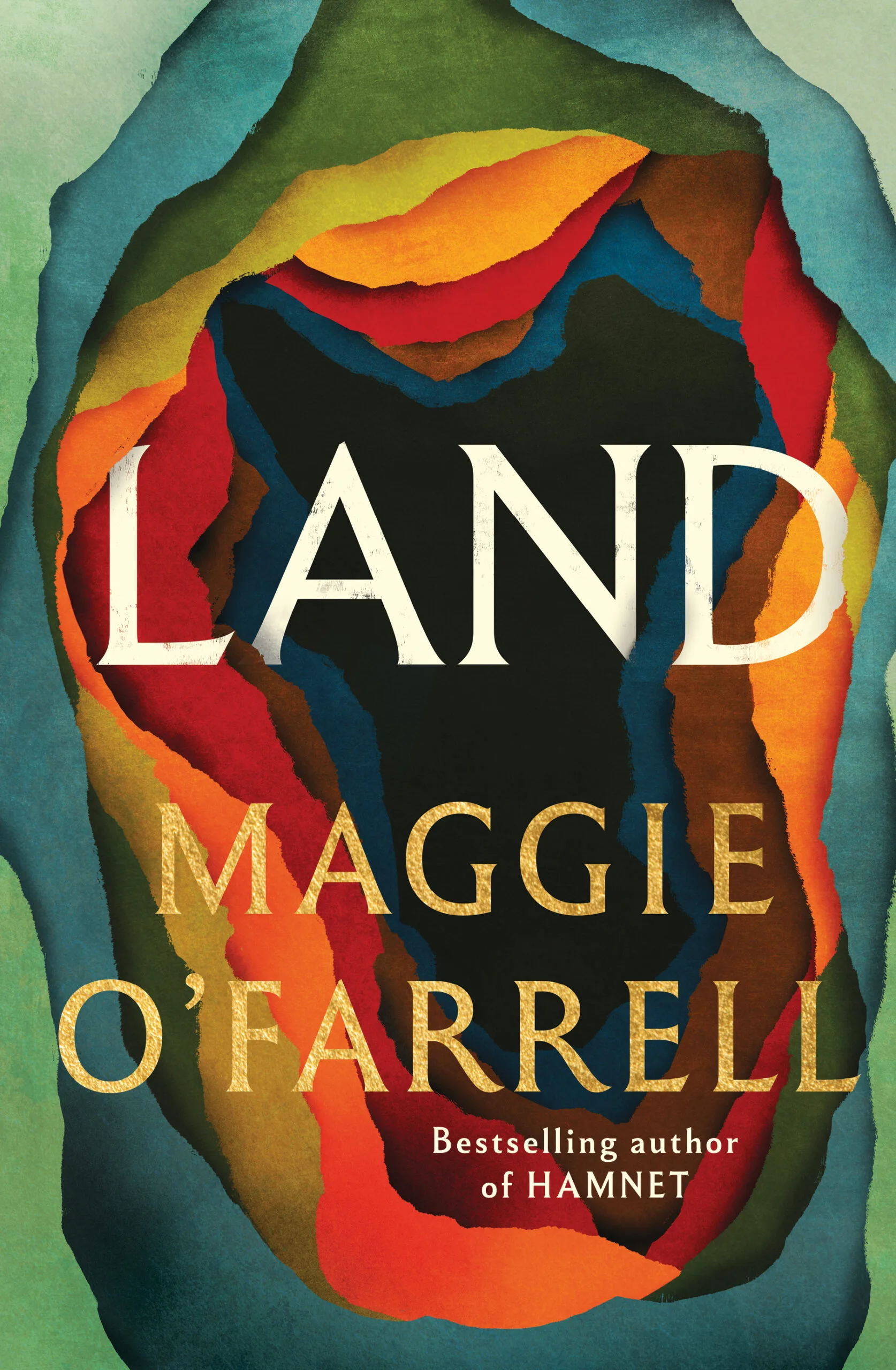
I understand that you were inspired to write this novel after learning one of your relatives helped create early maps of Ireland. How did you build that piece of information into this rich sprawling story?
There’s always been a myth in our family that one of our antecedents worked on the first maps of Ireland. We were told that as children, and when I used to go to Ireland during the summer, I used to look out the window of our car and imagine him, even as a child. It seemed such an extraordinary undertaking to me then. I was picturing him doing it on his own, which, of course, was very far from the truth. I used to wonder how on earth would you go about it? How would you start the task of mapping a whole country?
More recently I decided to go and find out how much truth was in this myth. He was very hard to find, partly because if you were Irish and you worked for the British Ordnance Survey in the mid-19th century, you were not allowed to sign your own work. The work had to be signed by a British army officer.
There’s huge amounts of documents and information you can find in the National Archives in Dublin, and I could see his name in ledgers for payment records and certain memorandum. I didn’t know which of the notes and the maps and the draft maps and the field notes were his. But even just finding his name in the records was astonishing.
The thing that stopped me in my tracks was the realisation that he didn’t work on the first versions. The Ordnance Survey mapped Ireland between 1822 and the mid-1840s. But not long after that, of course, came the Great Famine in 1846 and so it was necessary for them to make map revisions. In the disaster of the Great Famine, a million people died, a further million people were forced to emigrate. The country looked different afterwards, not so much the human population, but the actual physical geography as well. And I could see from the records that he had started working for the Ordnance Survey. I could not imagine what it was like to undertake that task, to undertake the revisions necessary, because of that cataclysm, in order to re-draw the maps, to revise the maps.
I did have a question about the research that went into the Great Famine. Those passages so moving and I felt quite haunted by them myself for days after reading them. When you embarked on that research and immersed yourself in the famine, how did you protect yourself from the horror of it?
I did have lot of vertigo at the prospect of writing about the Great Famine, because it’s something that’s enormous and so complicated. You have to go back hundreds and hundreds of years to really understand the reasons why it happened, you know, there are so many, they’re sort of multifaceted.
Obviously there’s the kind of natural world element of the blight that affected the potatoes, but also there’s an incredibly complicated socio-political, economic, colonialist background to the famine and why it was so enormous, why so many people were allowed to die and why such a disaster of this magnitude was permitted to happen so close to the heart of one of the richest empires in the world at the time. So, I was very nervous. I was nervous because it’s so awful and so devastating that it almost renders us through inarticulacy.
But I knew that if I was going to write a novel set in 19th century Ireland, I couldn’t not face it. I had to face it. In a way, I didn’t want to protect myself from it. That would be the wrong reaction, I think, to it. I felt that the only right thing to do was to really face it and read as much as I possibly could and put into the novel, the closest versions to a fictionalised version of the truth as much as I could.
The things that happen in the book are all based on real things. They’re not things that I unfortunately have had to make up. They are all very close to accounts that I have read. So, I suppose protection for myself wasn’t something I wanted. I wanted to actually be as honest and close to the truth as I could. I think that’s the only right thing to do if you’re going to choose to write about it.
Did it did it affect you? Did you find yourself needing to take a break?
Yes, I mean there are certain history books that are very, very difficult and painful to read, but it feels like the correct response not to turn away from it. I think there were too many people turning away from it at the time, which partly was the reason why it was so cataclysmic. The British Irish famine relief officer was a man called Charles Trevelyan. He described the Great Famine as an act of God, a punishment for an ungrateful, unself-reliant, idle people. A year after he wrote that he was given a knighthood.
I read you don’t like starting at the beginning when you’re writing a novel and that you just plunge in. Land is so epic in its scope. So much happens. How did you begin? What was your entry point into this story?
You’re quite right, I don’t really like starting at the beginning. Usually, I just launch in wherever it feels right or wherever I want to. But this novel I think is the exception to the rule. I had been thinking about the idea for a really long time, probably 10 or 15 years, and I just couldn’t see a way forward. I couldn’t find the entry point. I couldn’t feel the fiction of it. I could feel the facts of it, but I couldn’t feel the fiction.
Then I was on a delayed train from Belfast to Dublin one day and the first sentence just appeared in my head. “His father was ever a man of few words.” And, I don’t know why, it was like a key turning in a lock and I could see the whole plot unfolding before me. I could suddenly envision how it was possible and how I could do it, how I could fictionalise this story and how the novel would work. I wish that happened more often, but it doesn’t unfortunately. But this novel I very much started at the beginning and it’s pretty much written as I planned it on that train journey.
The west coast of Ireland is depicted so vividly and so wonderfully. Did you spend much time out there during the writing process and what kind of inspiration did you draw from the landscape?
It’s somewhere I know really well. We used to go there a lot as children. I did go again when I was researching the novel. I took my son on a trip. I said to him ‘I’m going on a trip to look for Sacred Wells, do you want to come?’ Amazingly he said yes. I think he was horrified by the very early flight, but he was very game.
[In] early pre-Christian Ireland, they used to believe in hydromancy and … the wells were a special place where you could get cures or ask for wishes or help or aid and they are still even now, really amazing, strange places. Some of them have been co-opted into Christianity and are literally inside a churchyard and you will see people even to this day making devotions. You approach and you walk around it seven times and then at the end you can ask for your aid or cure or a solution for some problem. I love seeing people doing it.
Some of them are well-capped and they’re in church houses and some of them are still by roadsides or in fields and some of them are completely overgrown and almost forgotten about. But if you go to any town in Ireland, you just have to find someone who’s probably over 70 or someone who runs a book shop, or someone in the pub and say, ‘I’m looking for this holy well.’ They can always tell you where it is.
I’m interested that you mentioned your son. How much does your own family feed into this novel?
An awful lot. Because it’s based on the life of my great-great-grandfather, I had a lot of questions for my family and my cousins. And also, I did want to ask them if they felt okay about it, because I’m very far from their only descendant. I wanted to run it past them all just to say, I’m writing this novel, is it okay with you? I was very conscious that you have a huge responsibility to get it right and also not to trespass too much on other people’s memories and relationships with the past.
I love all the characters in the book for different reasons. How much of that is fiction and how much is it drawing on your own family history, or true stories you’d heard?
I decided that I wasn’t going to point out the gaps between fact and fiction. It is a novel and they are based on real people, but I feel I should leave them in peace, if you know what I mean. They didn’t ask to be written about.
There’s a scene where a bone is set by village sisters and later there is an operation in a more formalised medical setting. How did you go about researching the technology and knowledge that was available in that particular period in rural island?
There is quite a lot written about the different healers in Ireland in 19th century and before, particularly women who were known to be bonesetters or healers. There was usually one in every community, and they could treat a variety of ailments.
As for the more formal scene, not to give too much away, that really came from the archives in Dublin. The correspondence of the Ordnance Survey was absolutely fascinating. There was quite a lot of correspondence from a landlady complaining that some of the army had broken her beds. There were a lot of accidents recorded and descriptions of treatment that was given, you know, lot of broken bones, obviously for people working in all sorts of weather on all sorts of terrain with very heavy instruments. So I suppose that that was my inspiration for that particular chapter, not to give too many spoilers.
You have written other renowned historical novels in the past. As you were excavating this particular story, was there anything that you came across that surprised and delighted you?
My goodness, so many things. I love doing research because I learn so much. There were just such interesting and joyous things. When the Ordnance Survey arrived in Ireland in the 1820s, one of the commanding people said they wanted the divisions to write very, very detailed stories and memoirs of the counties or the townlands … some which still survive, mainly from counties in Ulster. Those are just incredible because they describe what the town’s like and what the people are like, what they do for work, what they do for leisure and it’s such an incredible window into Ireland of the early 19th century, pre-famine Ireland.
There’s one where they describe a man of kind of gigantic proportions who can pick up a donkey under each arm. I love that. Reading that was bittersweet, because it was so delightful to feel these people come to life on the page, and then also know that these communities were often decimated 40 years later, 30 years later.
The character of the widow is present throughout the entire book and she was someone who I really adored but she’s never given a name. Why is that?
I feel like we’ve been talking about the book and it sounds really heavy and really grim, but I did want the book to be about survival and recovery. In one way, it’s a story about a family who are surviving and endeavouring to come out from the long shadow of the great famine. But also, I wanted to write a history of the whole of Ireland right from the start, right from the very first people that ever lived there. And in the widow is kind of a representative of that survival instinct, you know, the urge to keep on living and to keep going in the face of much adversity.
I wanted people always to remember what it is she’s lost. She lost everybody in the famine. But she still lives in the house. She still farms her land. She still milks her cows. She keeps on going and of course she really helps Tomás and his family. She becomes central to them, partly because I think of what she’s lost.
I wanted the widow to represent one of the things I love most about the Irish character, somebody who is endlessly resourceful and cheerful and will do anything for anybody. In Ireland people are always happy to put themselves out for you.
Are you a purist when it comes to depicting a particular era? If you want to write a certain scene and you can’t get a hold on what that would have been like in the era, how do you navigate that?
If you’re going to choose to write about the past, I think it has to be approached carefully. I love reading history books and accounts. I will do that no matter what I’m writing. But I think also you have to be very careful not to put too much of it into your narrative. You don’t want to shovel it all in so your novel reads like a thesis basically. Those are the kind of novels about history or set in the past that I always put down, ones that wear the history very heavily. They want you to know that they’ve done their research.
I find the narrative is constantly slowed down if you’re given too much detail about how old telephones used to work or road systems. In order to kind of create a scene in a cottage in the mid-19th century Ireland, you need to know exactly what the floor looks like. You need to know what utensils they’re handling, the smell of the fire, what animals might be around, what the roof looks like. But you need to make sure that maybe only two per cent of that knowledge is literally there on the page. Because otherwise the scene doesn’t progress, the characters don’t interact, you’re just describing the smell of thatch. It’s a complicated thing. In order to have the confidence to write it, to create it, you need to know all that, but actually you need to make sure that most of it doesn’t appear.
When you announced Land on Facebook you said that you were pleased and more than a little bit nervous. What makes you nervous before your book comes out?
I think you’re always nervous because you spend two or three years with these people and with the setting and with the themes of the novel and it’s just you and the page and then you need to send it out into the world and other people read it and it is nerve wracking. I think it always will be. You have real mixed feelings. You feel quite excited and also quite nervous. But it’s so lovely. I’ve got the prospect of going to literary festivals and bookshops and just talking about books with people. So what could be better really?
Often, as readers, when we finish a great novel, we feel that loss of the characters. That was certainly my experience with Land. As an author who’s lived with them for two years, when you finally press send, do you have a similar experience of missing the characters and feeling that you wish you could be with them again?
Very much so. It’s very strange finishing a book because you feel a huge relief because this big project that you’ve been working on for so long has come to an end, but also you get a real sense of grief because you love [the characters] and you’ve spent so much time with them and they’ve been in your head for much longer than you’ve been writing the book and then you have to say goodbye. I find it really hard letting them go.
Read the book review here.

We seek out the best stories. We nurture them. Then we share them. Hachette Australia is a team of expert publishers and passionate readers dedicated to discovering and supporting talented writers and working with them to craft exceptional stories.

Related stories
Book Review: Tell Me Something True by Michael Robotham
Native ad body.
Book Club: Tell Me Something True by Michael Robotham
Native ad body.
Book Review: The Burn by Jessica Mansour-Nahra
Book Club: The Burn by Jessica Mansour-Nahra
Native ad body.
Book Club: Sophie Green, author of The Frock Shop
Book Review: The Frock Shop by Sophie Green