




This article originally appeared in the December 2024 issue of The Australian Women’s Weekly. Sadly, David Polson AM has since passed away. He was given a State Memorial Service in March 2025. Our sympathies are with his family and loved ones.
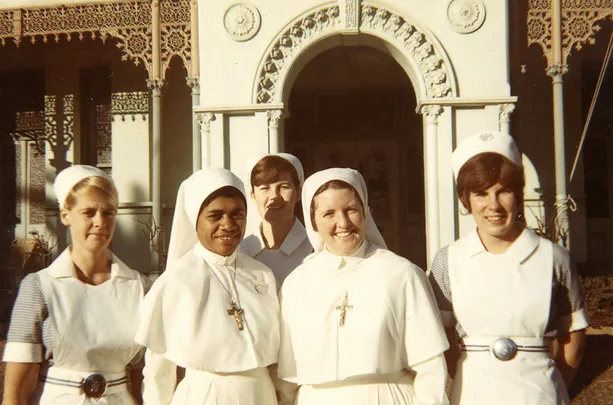
So many of them were so young. Young men, brothers, sons, lovers, friends; full of promise with whole lives ahead of them. “They were lawyers,” says Sister Clare Nolan, one of the women who helped open Australia’s first HIV/AIDS ward. “They were doctors, accountants – they would have done so much.” Instead, they were handed a death sentence, condemned and ostracised. “They just wasted away in front of your very eyes.”
Sister Clare first heard about HIV/AIDS in 1982 when immunologist Dr Ron Penny returned from a conference in Haiti. “As soon as he landed,” she says, “he came to the hospital and said, ‘There is this disease, it’s affecting the gay community and we must get ready for it’.” Three days later, “this beautiful man arrived with HIV/AIDS. Never have I seen such a sick man, and our journey began.”
1984 was a phenomenal year for the Sisters of Charity. That year, St Vincent’s Hospital performed Australia’s first heart transplant and opened the country’s first methadone clinic to treat heroin addiction, which was a cruel killer in their local community of Darlinghurst, Sydney. But most visionary and courageous of all, the sisters opened Ward 17 South, the first and only dedicated HIV/AIDS ward in the country.
Opening the first HIV/AIDS ward
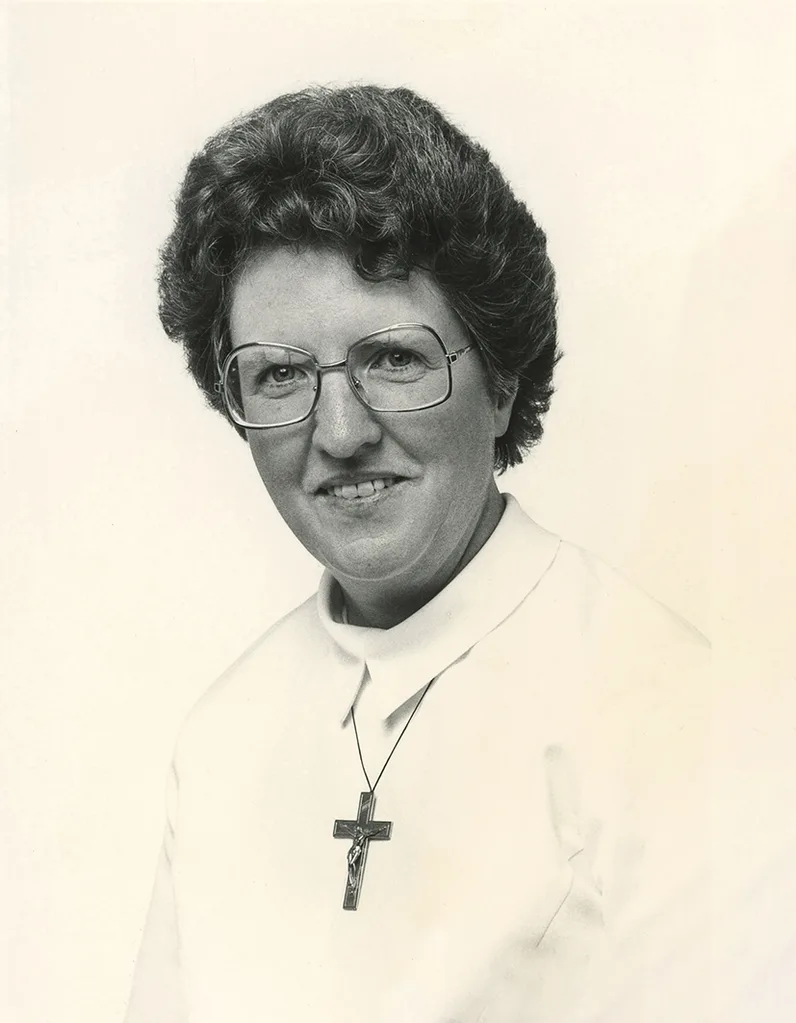
As Director of Nursing, Sister Clare and the St Vincent’s board did not hesitate. Years before, she had taken a vow of service to the poor and marginalised and nothing was going to stand in her way.
“It’s about respect and dignity for the individual and giving the best care you can.”
Today, over a lunch of sandwiches and fruit on an embroidered tablecloth, wearing a brightly coloured dress, Sr Clare is a forceful (in a good way) and vibrant personality. After a lifetime of leadership and service, she now lives at St Vincent’s hospital in Brisbane. Having taken a vow of poverty, she has never been paid a salary. “We are on a mission until the day we die,” she explains.
Ward 17 South was part of that mission. It was set up at a time of hysteria, vilification of gay people, hostility and condemnation, both from within the church and without. But built on compassion, it would become a refuge and a sanctuary.
St Vincent’s was in the epicentre of an epidemic. This was happening in the community of people who lived around the hospital – “our community,” she explains. Of course, the nuns were going to respond. And their response sent a message of tolerance and understanding across the country.
“The Sisters of Charity were very brave to insist that patients should be cared for here,” said Professor David Cooper, former director of the Kirby Institute. But the sisters firmly believed in “the provision of health care to people no matter how they became ill”.
“We’re here to do the hard stuff”
Without their courage and compassion, thousands of men would have died alone, uncared for, suffering terribly. They were the lepers of their time. In some hospitals, their meals were left on trays outside the door. Not at St Vincent’s.
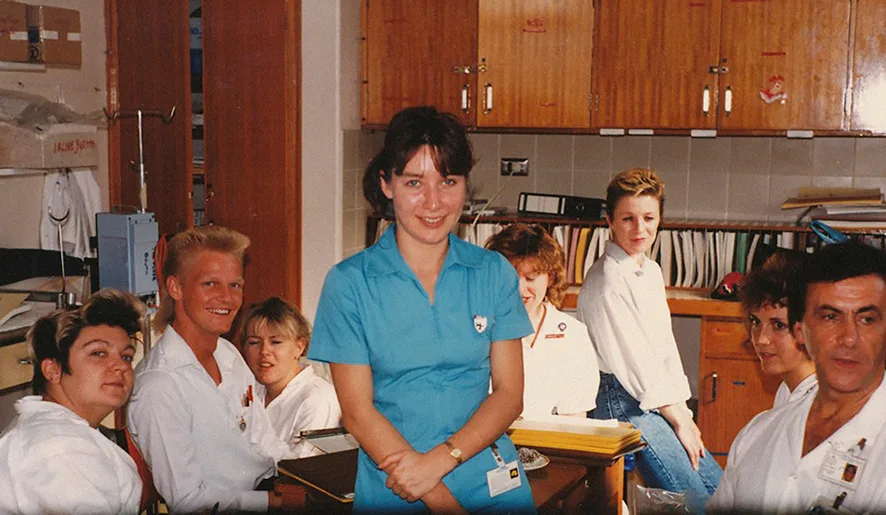
Within weeks they were overwhelmed with patients. At full capacity, Ward 17 South was admitting 50 patients a week.
It was like battlefield nursing, a war zone. “We had to get out of our comfort zone,” Sister Clare explains. People were dying as soon as they were admitted. “It was a really tough time. Tough for the darlings who had HIV/AIDS – no one knew the treatment, no one knew how it was spread.”
And that lack of understanding spread fear. “Our staff, our kitchen staff, our laundry staff, the nurses – their families would say, ‘Don’t come home during the week, or Lysol [disinfect] yourself before you do’. It affected every single person in the hospital. It turned the hospital around because we didn’t know what it was or how to fix it.”
Former CEO of St Vincent’s, Professor Anthony Schembr,i was a young social worker at the time. “Somebody had died,” Sister Clare recalls. “Anthony was very upset, he was crying. He said, ‘I can’t do this anymore. Why are we doing this?’ Sister Margaret Mines, the pastoral care worker, told him,
‘We’re here to do the hard stuff. That is what St Vincent’s is all about. We’re not here to judge, we’re here to make this as comfortable a journey as possible for these men.’
“Our attitude was one of loving the person with no condemnation. It was as simple as that.”
The history of the Sisters of Charity
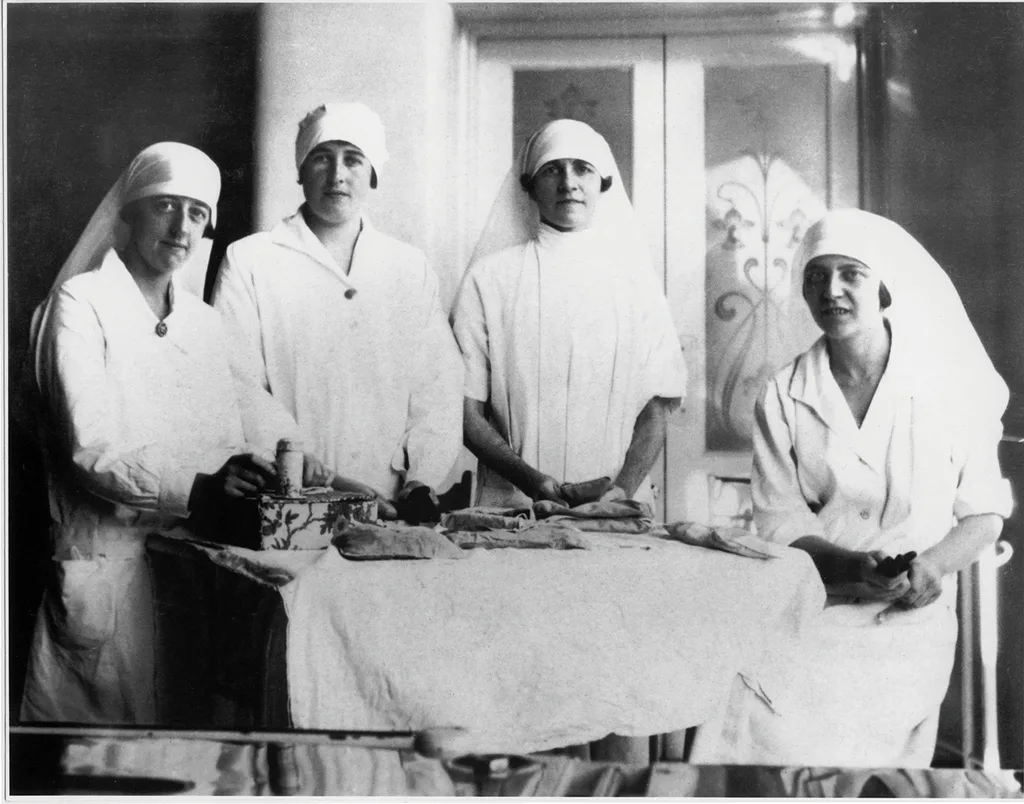
The Sisters of Charity have been doing the hard stuff here since 1838. The order was founded in Ireland by Mary Aikenhead, who opened an orphanage in Dublin in 1815, then extended her ministry to visiting women in Kilmainham prison and starting a school. Needing to use a wheelchair because of a spinal disease, Mary opened a convent and cared for the ill and dying during the cholera epidemic of 1832. In 1834, she established St Vincent’s Hospital in Dublin, naming it after St Vincent de Paul, who three centuries earlier had dedicated his life to the poor.
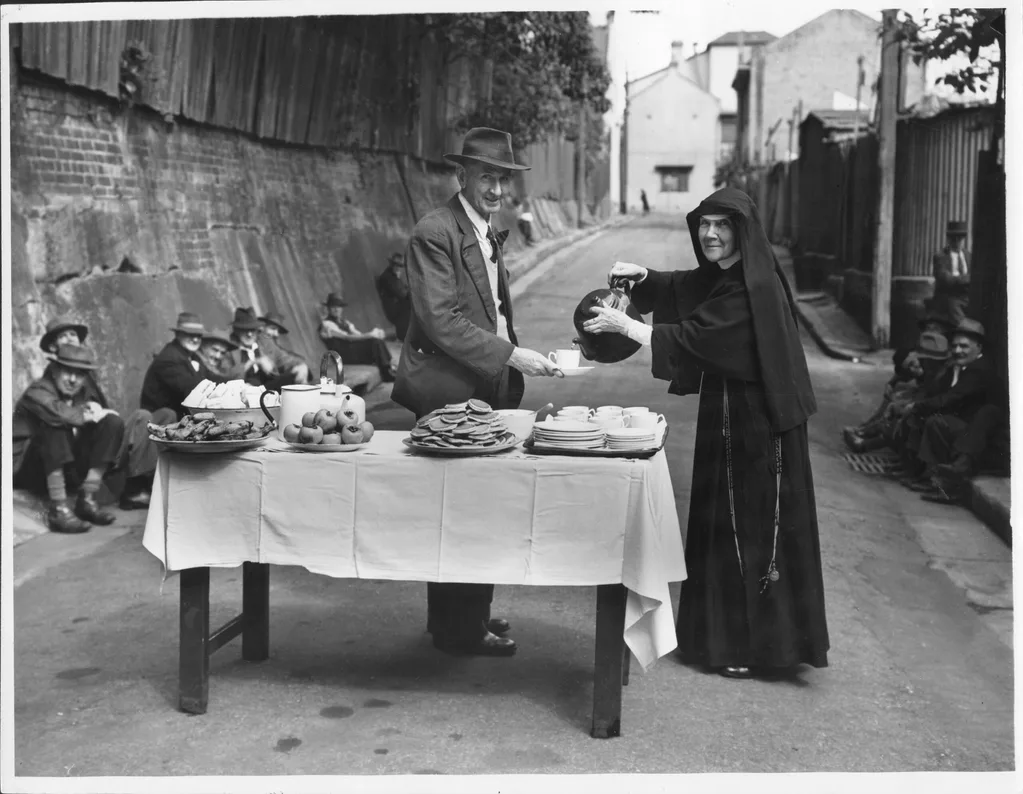
In 1838 five Sisters of Charity volunteered to travel to the penal colony in New South Wales. Wearing their long black habits, they arrived at Sydney Cove in the stifling summer heat on December 31, and immediately established their first ministry, in the female prison at Parramatta.
“They were in prison for silly things,” says Sister Clare, “and treated abominably. They were dressed in grey clothes. So the first thing these nuns did was sew nice colourful clothes for them.”
Life at Australia’s first HIV/AIDS ward
In 1857, the nuns moved to Potts Point and established St Vincent’s Hospital. Almost a century later, as word spread about their compassion and care for men with HIV/AIDS, very ill patients began arriving at Ward 17 South from all over the world. There were drag queens, leather men, dance boys, and party boys. Ward 17 South never minded when visitors dropped by at midnight and had a party.
Yet there were never enough beds. And often the patients had been shunned by family and friends.
“Usually the dads found it harder than the mums,” Sister Clare says. Some men had never told their parents they were gay, or had never told their wives that they were having relationships with men.
The nuns prayed and prayed for one young man who was dying. All he wanted was for his father to meet his partner, but his dad just couldn’t do it. Then, one day, the roster got “mucked up” and the dad and partner accidentally met over the bed.
“This fellow who could hardly lift his hands, he was so sick, put his arm around his partner and his arm around his dad, and he died two hours later,” Sister Clare explains.
She also remembers “this beautiful man” from New Zealand, whom she met in the early days of the epidemic, when no one knew what was safe. No airline would take him back to New Zealand. It was Christmas Day and he was alone. Sister Clare took him a bottle of champagne and shared a polystyrene cup with him. “He said, ‘I hope it’s safe, Sister.’ And I said, ‘Who cares?’ He was more worried about me. Back then, everyone thought you could get AIDS by touching someone.”
Treating patients at the first HIV/AIDS ward
The hospital’s specialists were working around the clock to understand the disease and find a cure. “The doctors would set up clinical trials. You had these young men apologising to the doctors because it hadn’t worked and they were dying,” Sister Clare remembers.
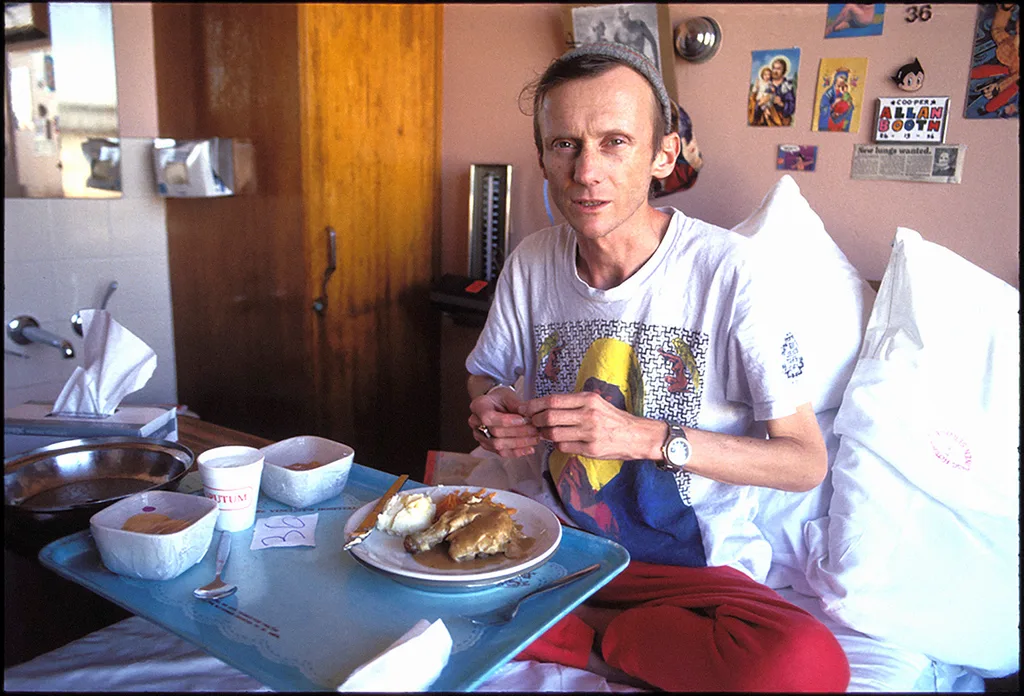
David Polson is a medical miracle. He was one of the first 400 diagnosed with HIV in Australia. He was admitted to Ward 17 South in 1992.
“From then on, it was almost my permanent home,” he tells The Weekly. “I was in and out all the time. The next 23 years were pure hell. I lived with nausea for all those years.”
When he was told he had HIV/AIDS, “I felt as if I was falling down a big, black, bottomless pit,” he recalls. “These dreadful thoughts were going through my head. Disbelief, suffocating terror. It was just dropping down this big, black hole. And, in the next breath, it was ‘don’t tell anyone’. They did that for our own safety because, at that time, the hatred and fear were so intense.”
David Polson’s courage
David decided to fight for his life. He volunteered for every trial going.
“There was this thought at the back of my mind that just said, ‘No, you are not going to die. This is not going to kill you’.”
He undertook 28 drug trials in all. Some of them failed spectacularly and the drugs were riddled with side effects. “They were awful, just dreadful,” he explains.
He so desperately wanted the drugs to work. “Of course I did. But I also said to David [pioneering researcher and inaugural Director of the National Health and Medical Research Council’s Special Unit in AIDS Epidemiology, Professor David Cooper], ‘If these drugs don’t work for me and you’ve got data there that can help someone else … ’ We knew it was a 50/50 thing.”
David never gave up. “A lot of those poor boys were told they had AIDS and just went out and died. They accepted it. I never accepted it, I refused to. I was always optimistic.”
He remembers going to visit his best friend, Dr Brett Tindall, who was Professor Cooper’s colleague in Ward 17 South. “They put him in a private room at the end. That meant I had to walk all the way down the ward. And as I walked down the corridor past those rooms, in every bed there was someone I knew – either a friend or a colleague I’d worked with who was sick and dying. That was one of the blackest days because, for the first time, I didn’t know how to cope.”
The legacy of Ward 17 South
Dr Tindall died of AIDS in 1994. “He used to keep me updated on the research and what was happening. In the early days, there was nothing happening, so he couldn’t tell me anything.”
But slowly, that changed. Treatments were developed in Australia and around the world, many of them as a result of the research undertaken at St Vincent’s and the courage of volunteers like David.
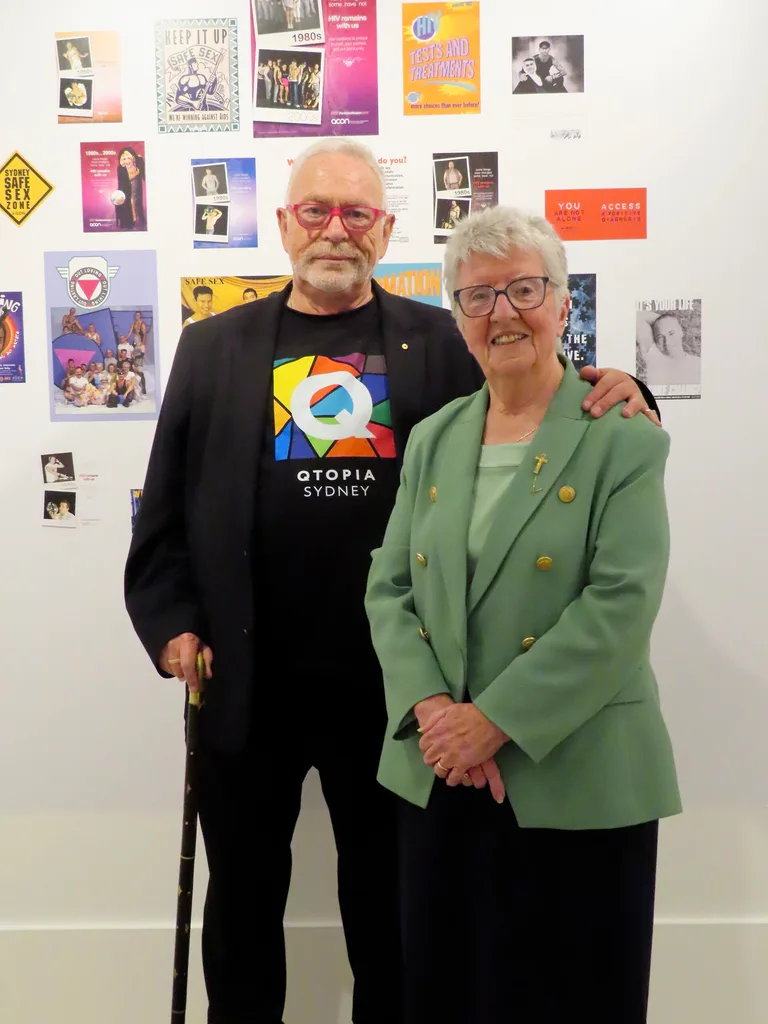
In the intervening years, David has been an outspoken advocate for people with HIV/AIDS and for the LGBTQI+ community generally. He is the founding chair of Qtopia, a museum charting the history of the queer community in Australia, which includes a very special tribute to Ward 17 South.
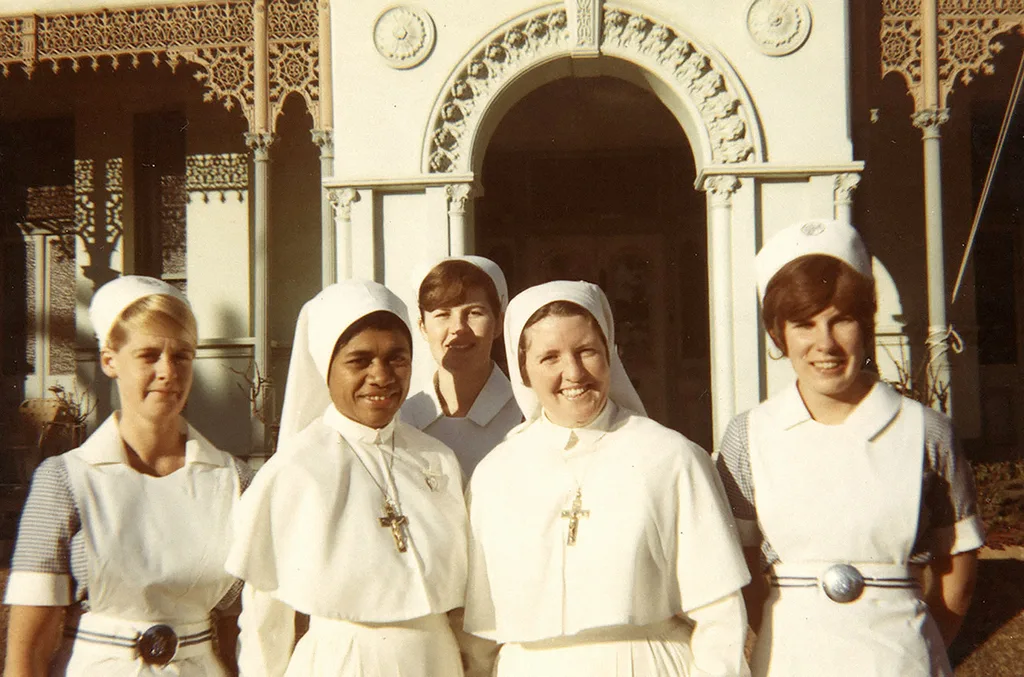
Meanwhile, David and Sister Clare have become lifelong friends, and he is still grateful for the care he received at St Vincent’s.
Ward 17 South, he says, was “a haven. We were obviously very, very sick. But I called it a haven because you’d go in there and you’d feel the love. I know that sounds wanky but it’s not.
“It was pure love in that place. From the sisters, from the nurses, from the cleaning staff, the doctors, the administrators. It was love and caring. And it was such a safe place to be. I didn’t like being there, but I loved them.”
David was 29 years old when he was diagnosed. He celebrated his 70th birthday in 2024. “I really am happy to be here,” he says. “I am truly blessed.”
This article originally appeared in the December 2024 issue of The Australian Women’s Weekly. Subscribe so you never miss an issue.

