



At a glance…
- The United Nations has named 2026 the Year of the Woman Farmer. Thirty years ago, women rarely described themselves as farmers. Much has changed.
- The July 2026 issue of The Australian Women’s Weekly was our Rural Special, guest-edited by Edwina Bartholomew. In that issue, photojournalist Jessica Howard journeyed around the country to five farms to speak with the women farmers changing the face of farming in Australia.
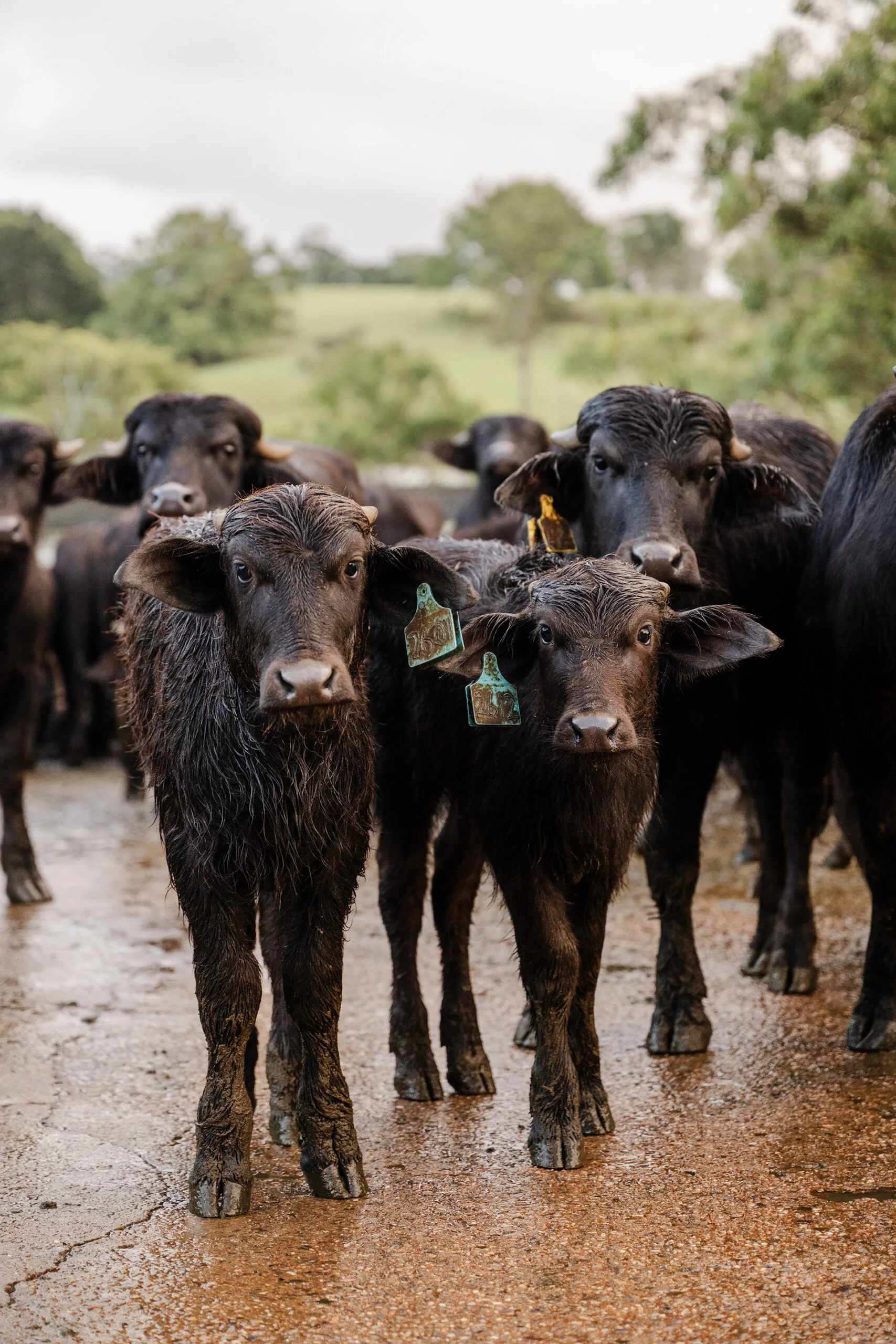
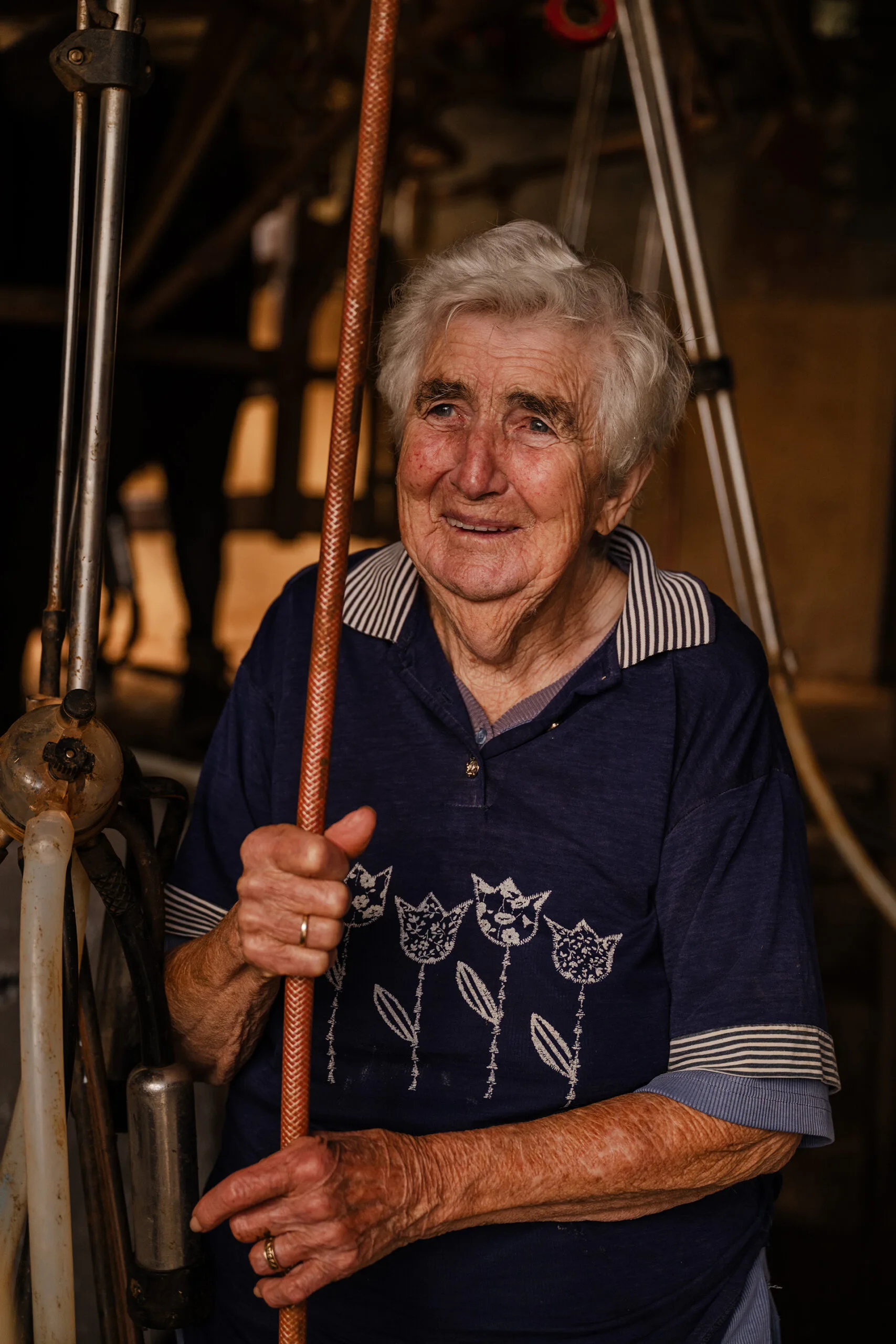
Margaret Thompson’s dairy in the Sunshine Coast Hinterland has all the hallmarks of a regular dairy: A deep concrete pit with seeping walls and bouquets of suction cups dangling from the ceiling. She’s moving along the stalls tethering legs to a bar so no one cops a kick to the face, and washing teats ready for milking to begin. “The girls don’t really like strangers,” she warns. Which might be easier to hear if her “girls” didn’t weigh half a tonne with crowns of horns curled over their heads – except for Missy, whose horns drape around her face like curtains. They’re Riverine buffalo, and in Australia that makes Margaret’s dairy very rare.
The 87-year-old farmer milked cows with her husband, Mal, for decades until the industry deregulated and they decided it wasn’t worth staying in it. They were in their 70s by then, but pivoted anyway. “It’s hard being in front,” she says, “but I’d rather be in front than hanging along behind.”
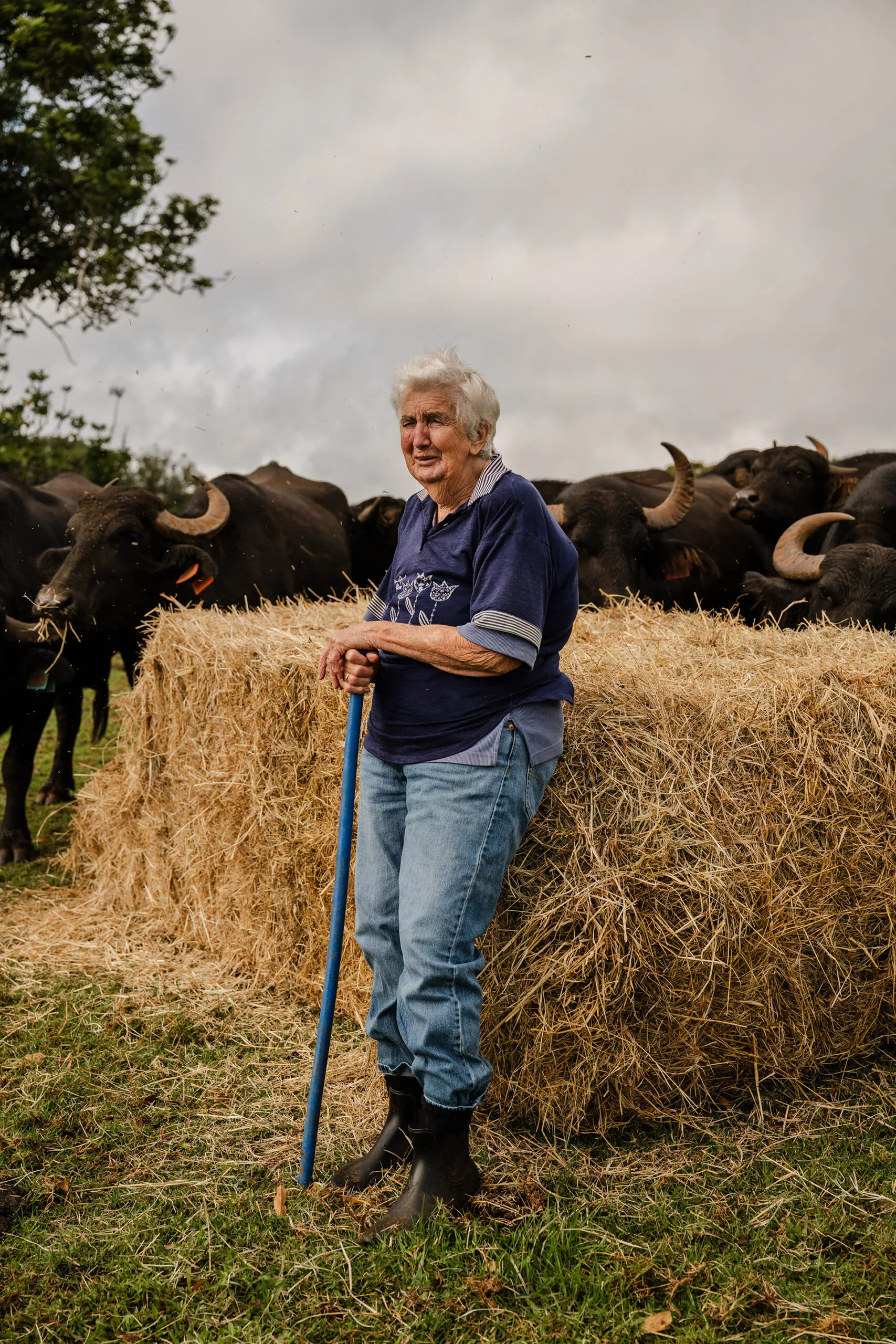
A Churchill Fellowship took Margaret across six countries in six weeks to study buffalo. “I’m eternally grateful they took a chance on an oldie,” she says. What she found surprised her: She and Mal were doing better than they knew. “If something’s worth doing, just do it,” she says. “If not, get out of the way and let someone else.”
Today, Maleny Buffalo is one of only a handful of commercial buffalo dairies in Australia, supplying cheesemakers with milk and a growing number of restaurants with buffalo meat. Since Mal died, Margaret shares the work with her son, but she’s still out every day in the paddocks she grew up in – now hemmed in by urban sprawl. “A petunia in the onion patch,” she quips.
For most of the time they ran this property, Mal was the farmer and Margaret was officially listed as his “non-productive partner” – as was the case for most women farmers in Australia until the 1990s. It didn’t bother Margaret, she says, though she was always aware of the limits placed around her. When she was a teenager, agricultural colleges didn’t accept girls.
“We had a glass ceiling and it was very, very difficult,” she tells The Weekly. “We need to acknowledge the ones who went before and gave us the courage to stand up.”
During much of Australia’s agricultural history, the work of women on farms was legally invisible – but in 1994, after years of grassroots lobbying, they won the right to be counted. Women could officially call themselves farmers, doing the work they’d always done.
More than 30 years on, not all barriers have fallen, but the women pushing back against them have never been more visible, or more determined to succeed. And in recognition of that work, here and abroad, the United Nations has named 2026 the Year of the Woman Farmer.
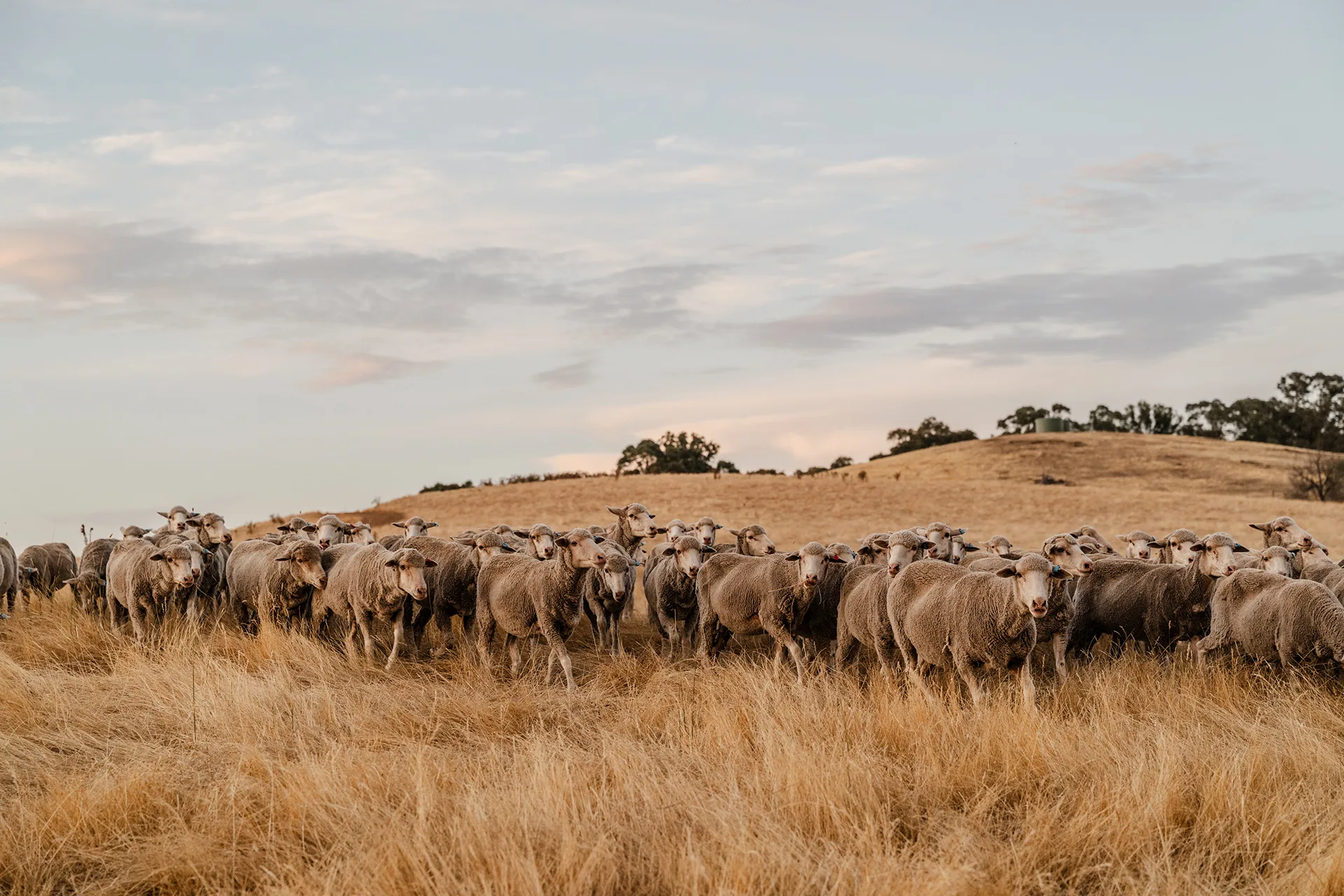
The pace is already set by the time Clare Cannon steps into her woolshed at Woomargama Station in the foothills of the Great Dividing Range near Holbrook, NSW. Handpieces hum, fleeces are scooped and thrown, wool is classed and pressed into bales.
“Shearing is a very busy time,” she says. “It’s exciting, but also stressful. When you send your wool down, you think, ‘Are we going to have the right length? Are we going to have the right micron?’”
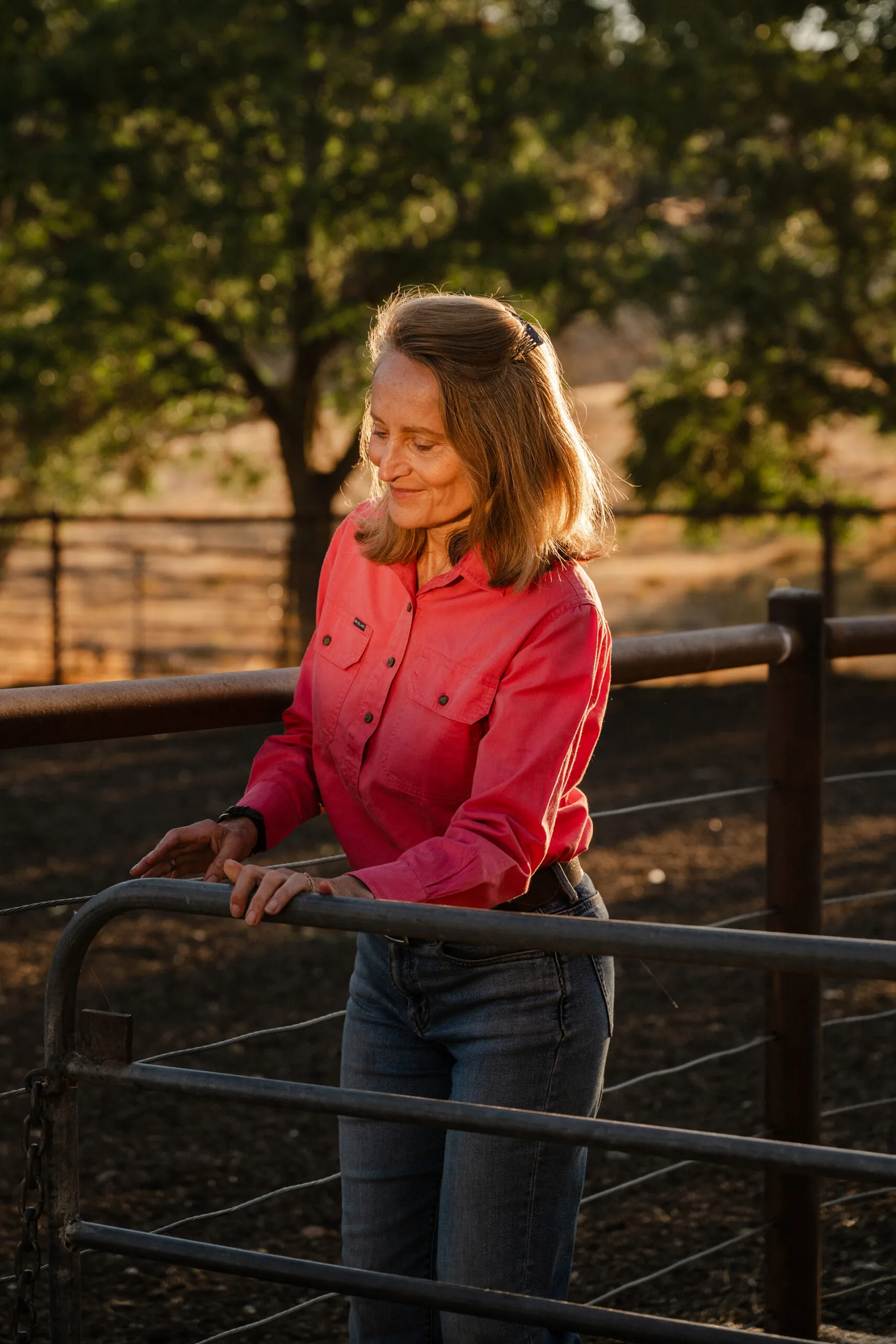
Years ago, she worked as a rouseabout during her university holidays. She was invited back the following year – as the nanny. “No thanks,” she told them. These days, she owns the place, and no one dares try that on her anymore. “We did have this one stock and station agent, an older guy. He was very patronising.” But she doesn’t keep those sorts around for long.
Less than 10 per cent of family farms are inherited by women, and Clare wasn’t first in line to take over hers, 14 years ago, when her mother died. But her brother didn’t want it, so she jumped at the chance and she’s been methodically remaking it since.
“I wanted high conservation values and high animal welfare values,” she says, “and a real purpose in many ways.”
The wool she produces targets 18.5 micron – fine enough to sit next to skin – and is certified through Zentera, an ethical program that traces the supply chain from paddock to garment. Her cattle go into Greenham’s Never Ever Beef program: No grains, hormones or antibiotics. “You’re no longer an invisible partner in the supply chain,” she says.
Shortly after taking over the property, Clare put a third of it under covenant – limiting grazing so the critically-endangered box woodland and its wildlife could thrive. Her husband told her she was giving the land away. “But for me it’s the jewel in the crown,” she says. “It’s in perpetuity. That’s my legacy piece.”
Now, when she looks around the shed, she sees what once felt unlikely: Women everywhere! Her wool broker is a young woman, as is her wool rep. “The boys might be running the farms,” she says, “but all their advisers are young women.”
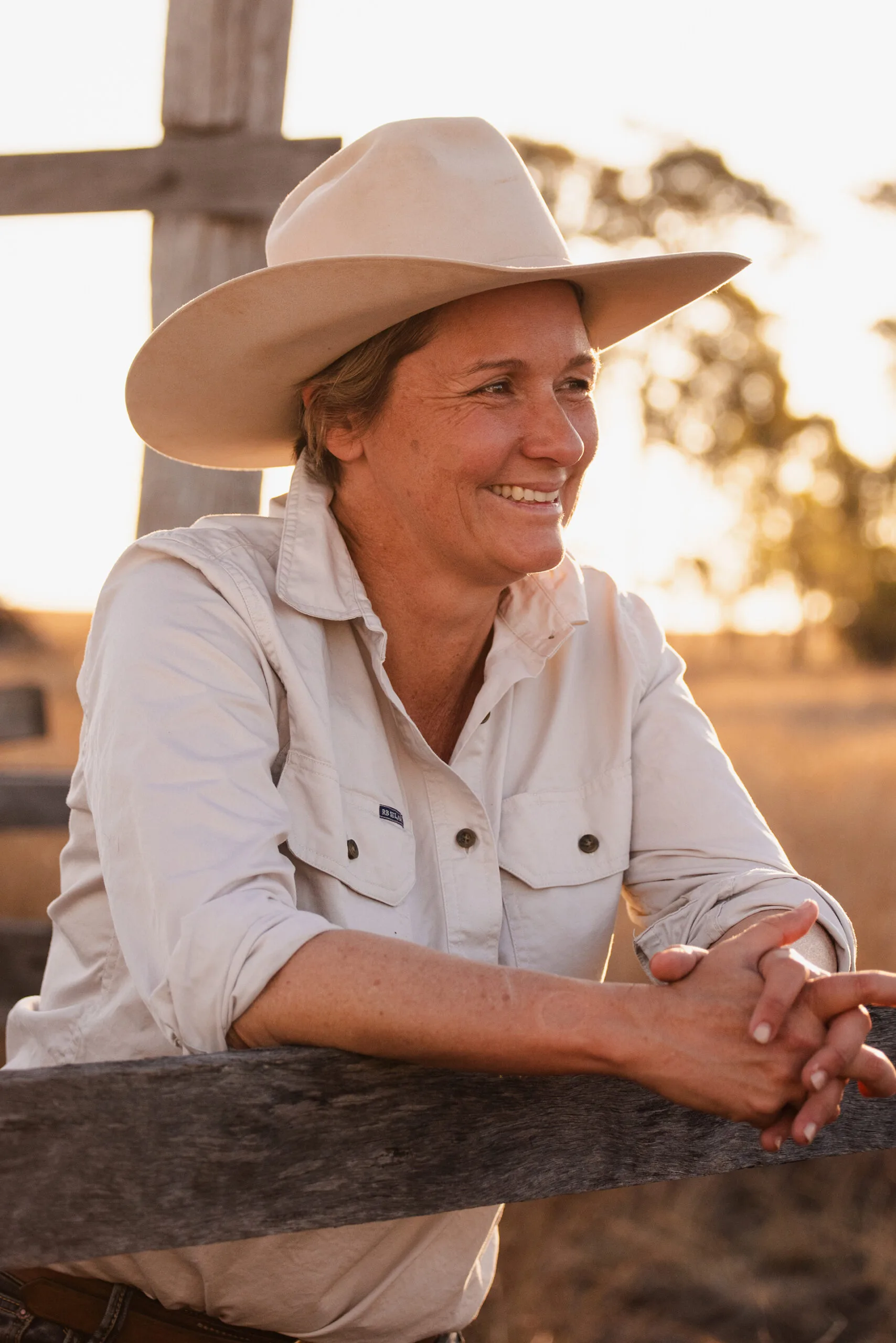
Further north, near Bundaberg in Queensland’s North Burnett region, Kara Knudsen and her family are tailing weaner heifers and the occasional “whoop” drifts across the flat. She sits easy in the saddle as they walk the young cattle, teaching them how to behave in a muster – work she’s done since childhood.
“We had responsibilities from an early age,” she says. “We were expected to be part of the team, not just plod along at the back.”
Years later, with young sons of her own, Kara went looking for opportunities off-farm – roles she knew she could do – but she kept hitting a wall. “I was seen as a farmer’s wife with two kids,” she says. “How was I possibly going to manage anything else?”
It was the nudge she needed. She applied for, and won, a Nuffield scholarship, joining a global program that sends farmers abroad to return with fresh ideas. Over four months, she travelled through nine countries, researching genetics technology in the cattle industry. “I felt like I needed to do something to give myself credibility,” she says.
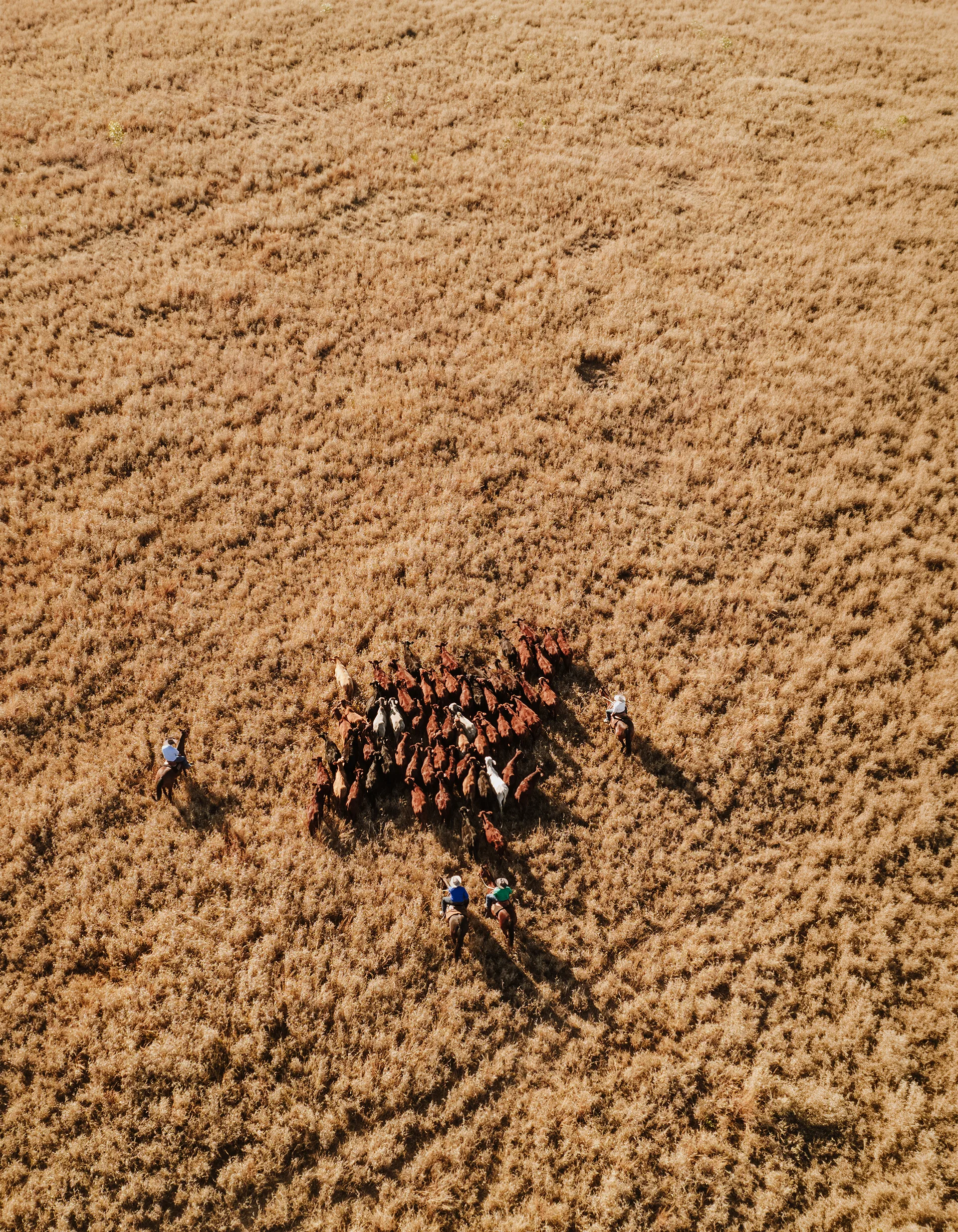
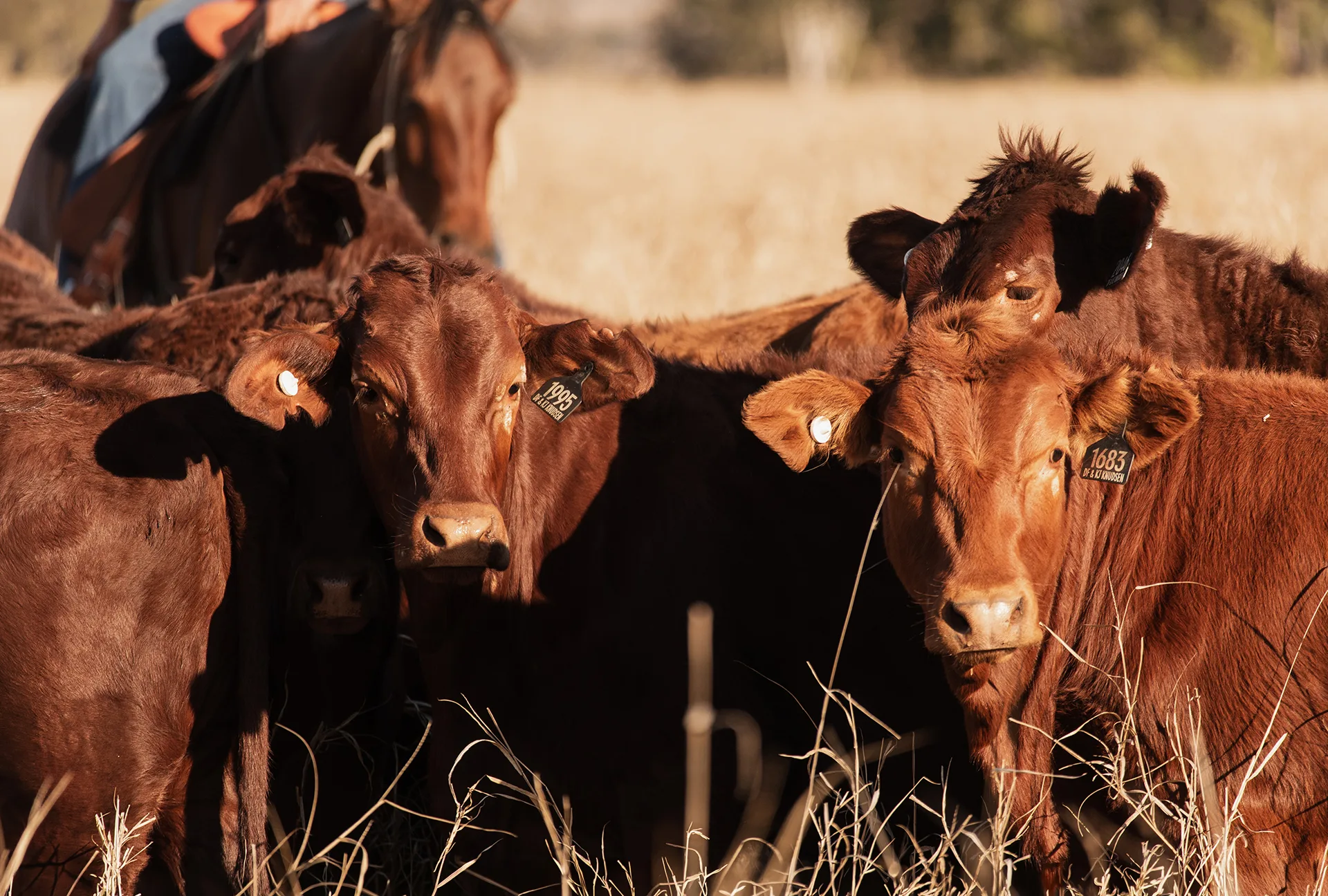
These days, she’s chief executive of Knudsen Cattle, managing 150,000 acres (more than 600,000 hectares) across Queensland and close to 10,000 head of mostly Santa Gertrudis cattle. It’s a highly-structured business focused on sustainable beef production and nurturing its young workforce. “We push our staff into leadership roles early,” she says. “They all help each other out and work as a team.”
Women make up around a third of Australia’s agricultural workforce, but their representation on agricultural boards remains disproportionately low. Kara crossed the divide but says it wasn’t easy.
“I don’t like hearing people say the door was shut,” she says. “When it came to me, I knew the door was shut, but I found a way to open it.”
She now sits on the board of Nuffield Australia, helping shape the experience for future generations of scholars. “I think we’ve come a long way,” she says, “but we have a long way to go to break down the stereotypes of male and female roles.”
That shift from invisible to visible is what AgriFutures has been showcasing for 25 years through its Rural Women’s Awards. The research and development organisation funds agricultural innovation and leadership programs, and Managing Director Brianna Casey hears the same refrain from finalists: I saw a problem and I got on and fixed it.
“They’ll say, ‘I’m not doing anything special,’” she says. “But what they’re doing is quietly getting on with changing the landscape, not just in their business, on their farm, but in their community and indeed for the economy.”
For all the progress, the experience on the ground hasn’t shifted evenly. Succession still usually favours sons, while much of the work women do – managing finances, compliance and the day-to-day running of a business – sits outside formal recognition. They also take on most of the domestic responsibilities including childcare, often in communities where support is thin on the ground.
Women contribute a third of on-farm income and an estimated 84 per cent of off-farm earnings, wages that keep operations viable when times get tough. And times are tough – from mouse plagues in Western Australia and drought in New South Wales, to fuel and fertiliser shortages across the board.
“In those instances, we often look to off-farm income,” Brianna says, “and that is where we are seeing some great innovation and great stories of success.”
The challenges have become a catalyst. “It’s really lit a spark for a lot of women to go, ‘How are we going to ensure that this business, this family, this industry, is going to not only survive, but thrive?’”
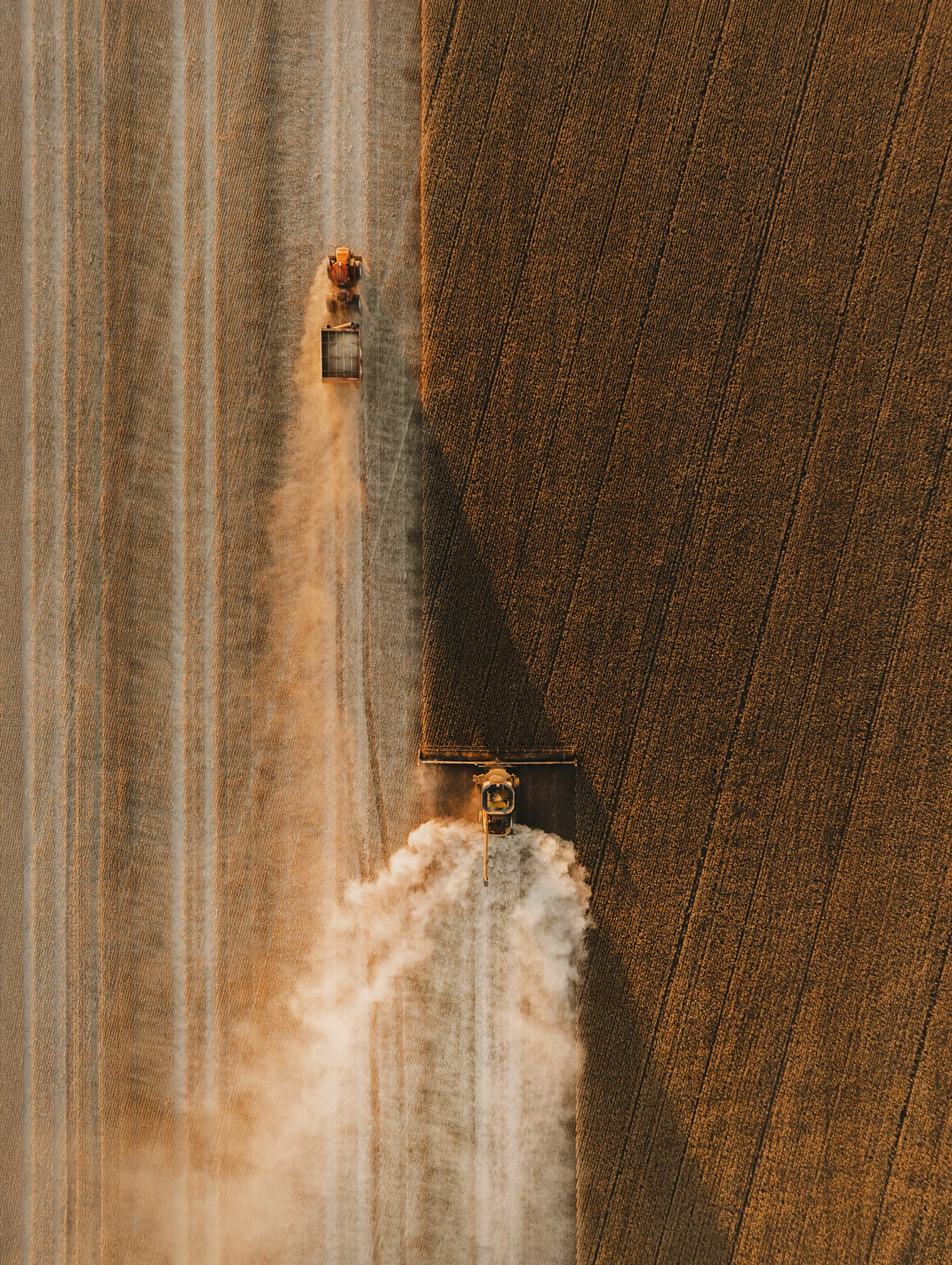
In Perenjori in Western Australia’s wheatbelt, Ellie Morris is proving that pathways into agriculture exist for women who aren’t born into it. When The Weekly catches up with her, she’s in a tractor cab and is occasionally interrupted by beeps from the dashboard.
“We’re seeding wheat at the moment. When we really get going, it’s 24/7, 12-hour shifts,” she says. “The tractor never stops!”
Her Jack Russell, Marley, sleeps beside her, lulled by the engine, same as always.
Ellie is 25 and has been working on farms since she was 16, when she started looking for an after-school job. The shifts run long but she doesn’t mind.
“I especially love being on here at sunrise or sunset,” she says. “I can get my drone up and do my photos.”
Photography has become her parallel life, a way of showing people what farming looks like from the inside.
When she started out, she was almost always the only woman on the team, but that never worried her. “I’ve always gotten along well with guys,” she says. What took longer was being taken seriously, but eventually her competence did the talking. “Once I work out my own technique, the one that works for me, I’m able to do most things.” Except the heavy lifting. That she’ll concede.
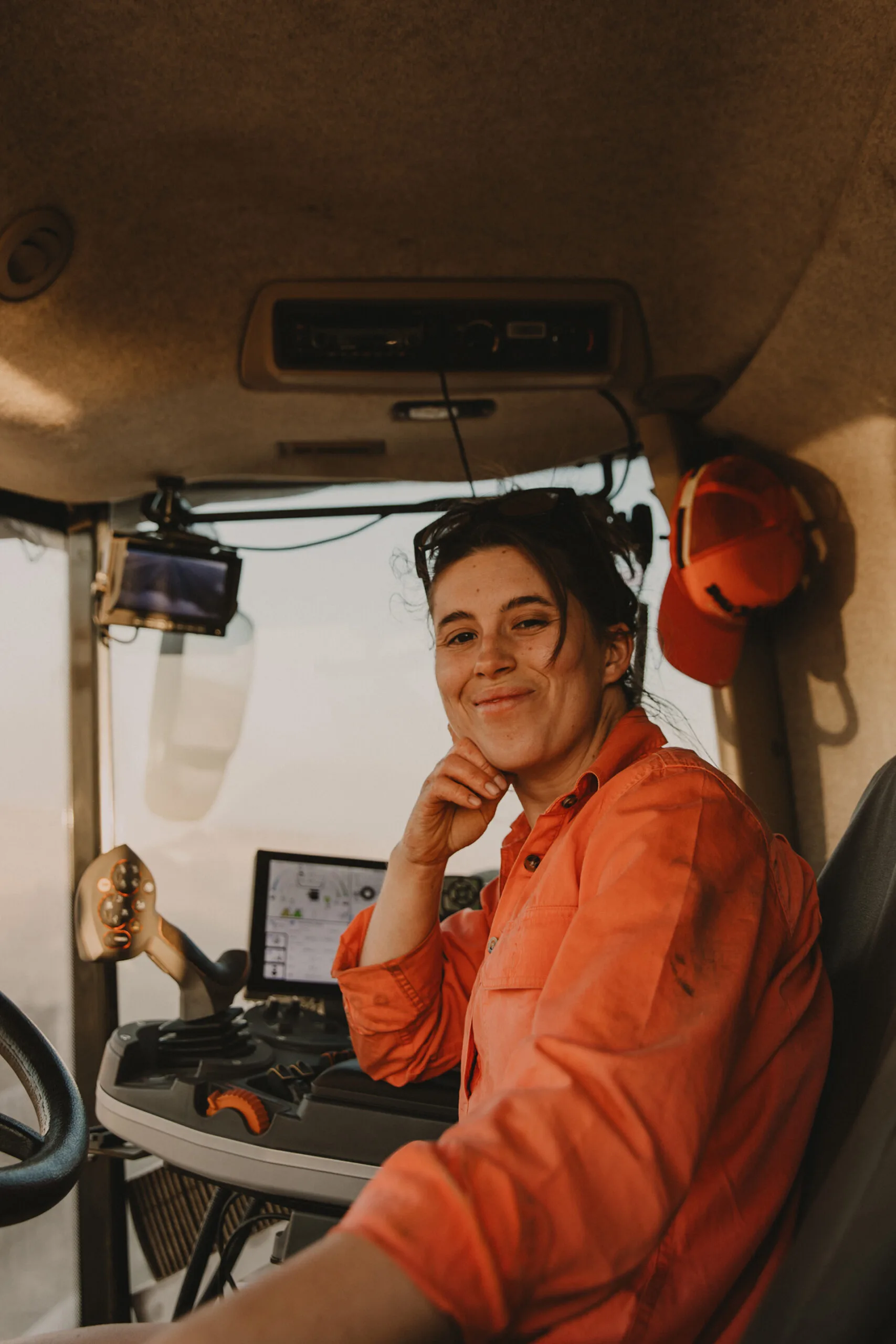
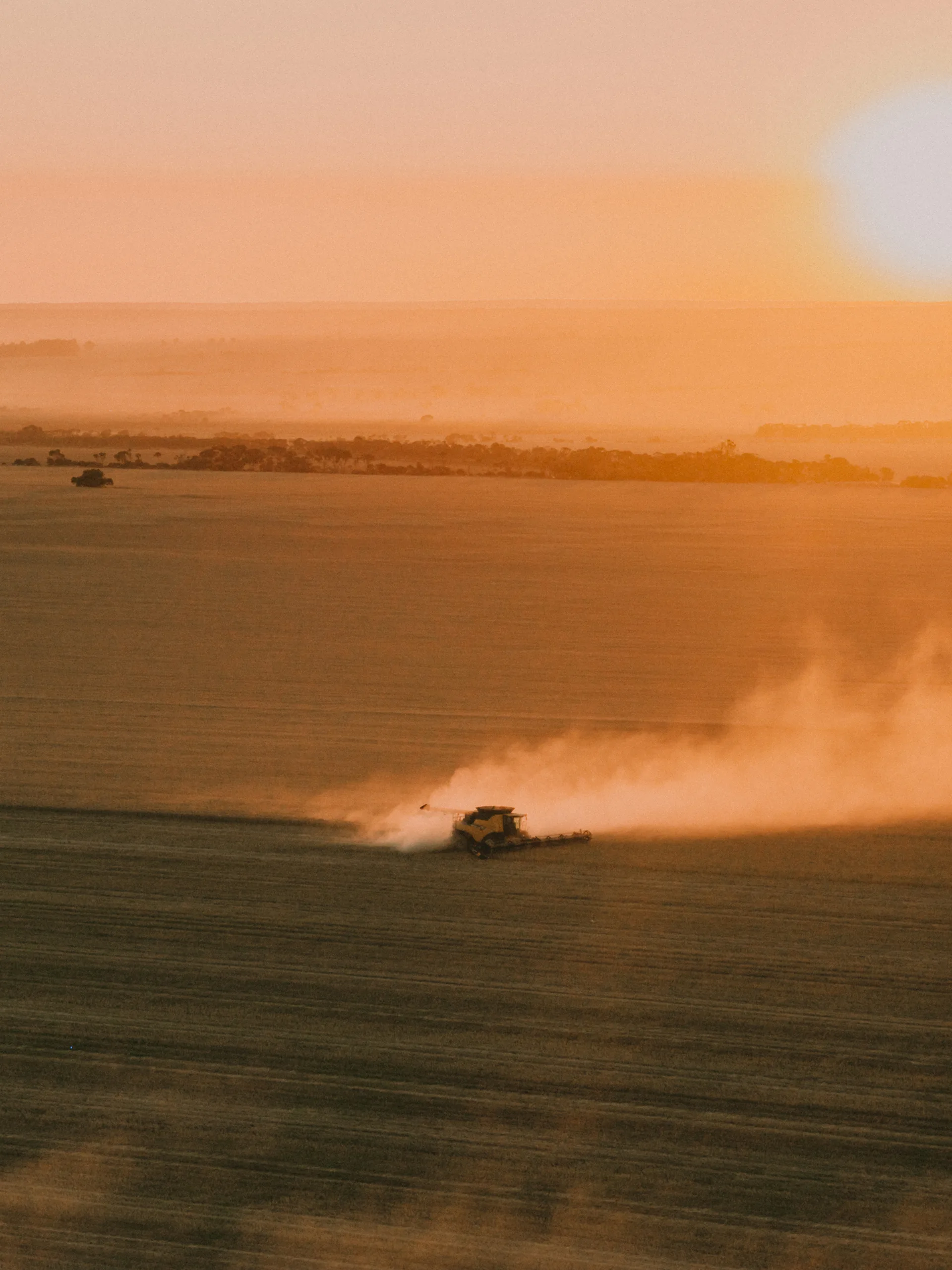
During seeding this year she’s sharing tractor shifts with another female driver. “So it’s kind of like us girls running the seeder,” she smiles.
Meanwhile, her photography has become a kind of recruitment tool. She posts it to social media, and young women message her all the time asking how to find work on farms. She gets a kick out of it.
“Girls in ag have such a bigger presence online now,” she says, “so there are more of them seeing that and thinking, ‘Oh, I can do it too’.”
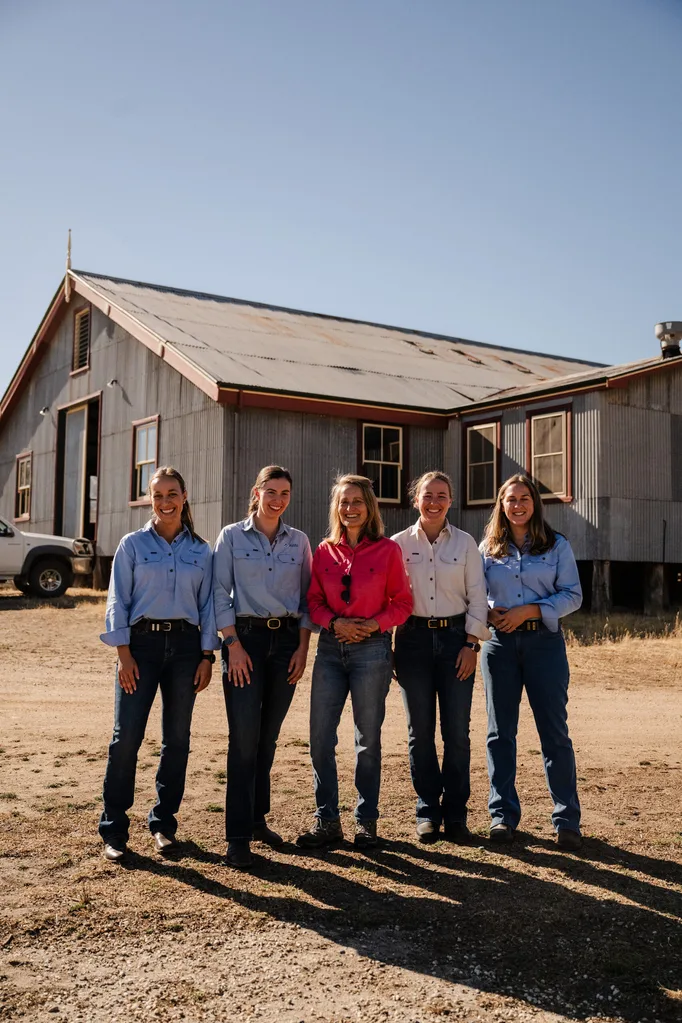
On Queensland’s Central Highlands, near the tiny town of Comet, water snakes down endless rows of cotton. It’s slow at first, then gathers pace as the Morawitz sisters spread out along the bank, bending and kicking siphons into place. Everyone knows what to do and where they need to be.
“It’s not a race,” Clementine calls. They laugh because they know it is.
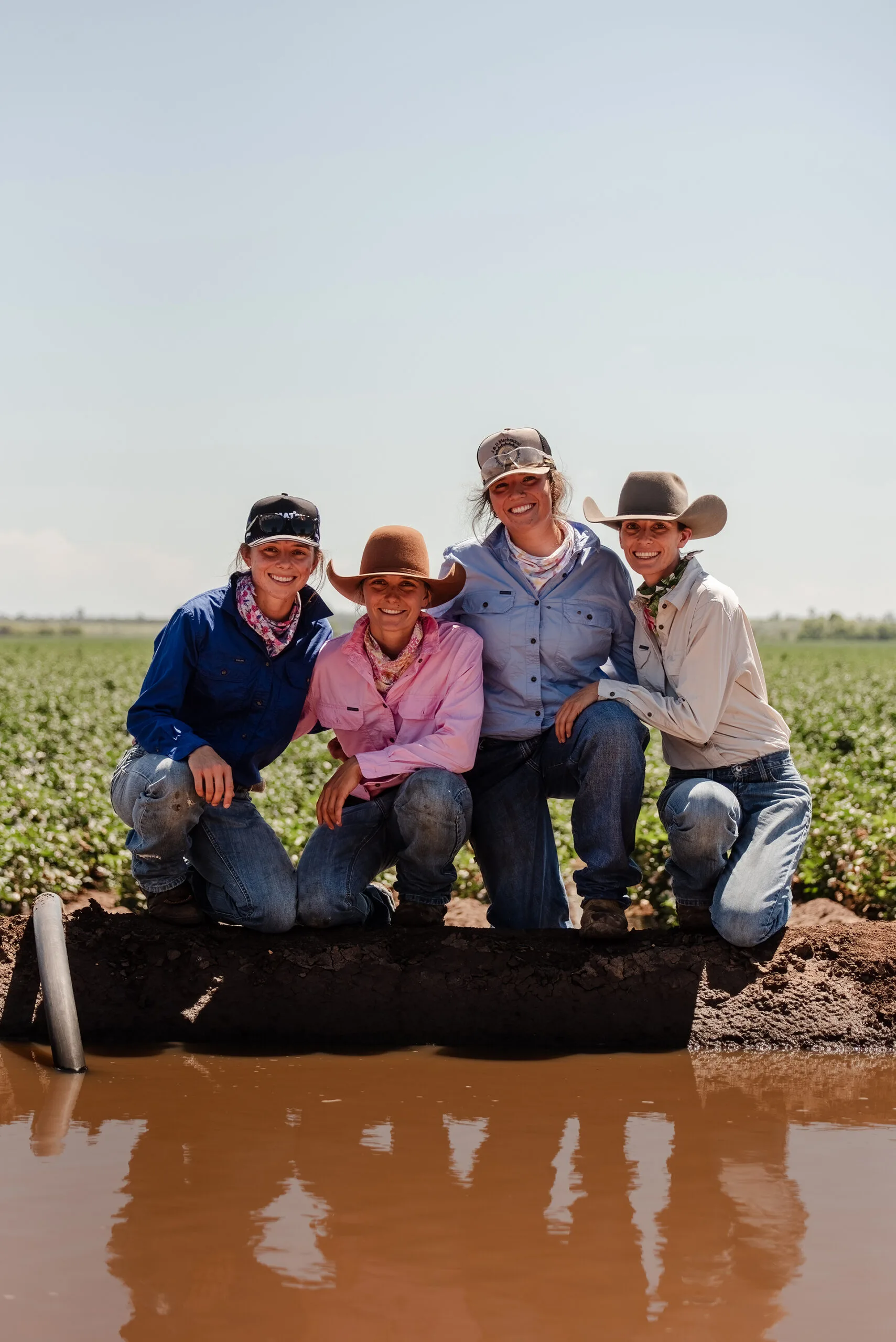
Haddie, Tabitha, Avanell and Clementine range in age from 31 down to 25. They manage the family’s mixed enterprise near Emerald – cotton, cattle and grain – running machinery, working cattle and fixing whatever needs fixing.
“Everyone’s kind of the boss, but everyone’s not boss at the same time,” Haddie says. They operate as a hive mind. “We just know each other inside out, which means we’re able to do things seamlessly.”
While their father is still in charge, many of the decisions have shifted to them – what to plant, when to get it in and how far to push a season. “We’ve stepped into the business at the same time as it’s grown exponentially,” Haddie says. “There’s a lot of everything happening all at once.”
Without a son in the family, there’s never been the question of a pecking order. The sisters didn’t have to argue for their place on the farm or in the wider industry. “We’ve always been surrounded by proud and accommodating parents and grandparents,” Haddie says. “And our confidence stems right from that.”
In an isolated community of just a few hundred people, keeping Comet viable means more than just farming. The Morawitz women make up two-thirds of the Comet River Social Association Inc., the local group behind a biannual ball that rivals anything in the city. One year it was French themed: Chandeliers rigged from scrap metal, bougainvillea at the entrance, a cattle trough turned fountain. This year, they’re planning the district’s first ladies’ day in their childhood garden.
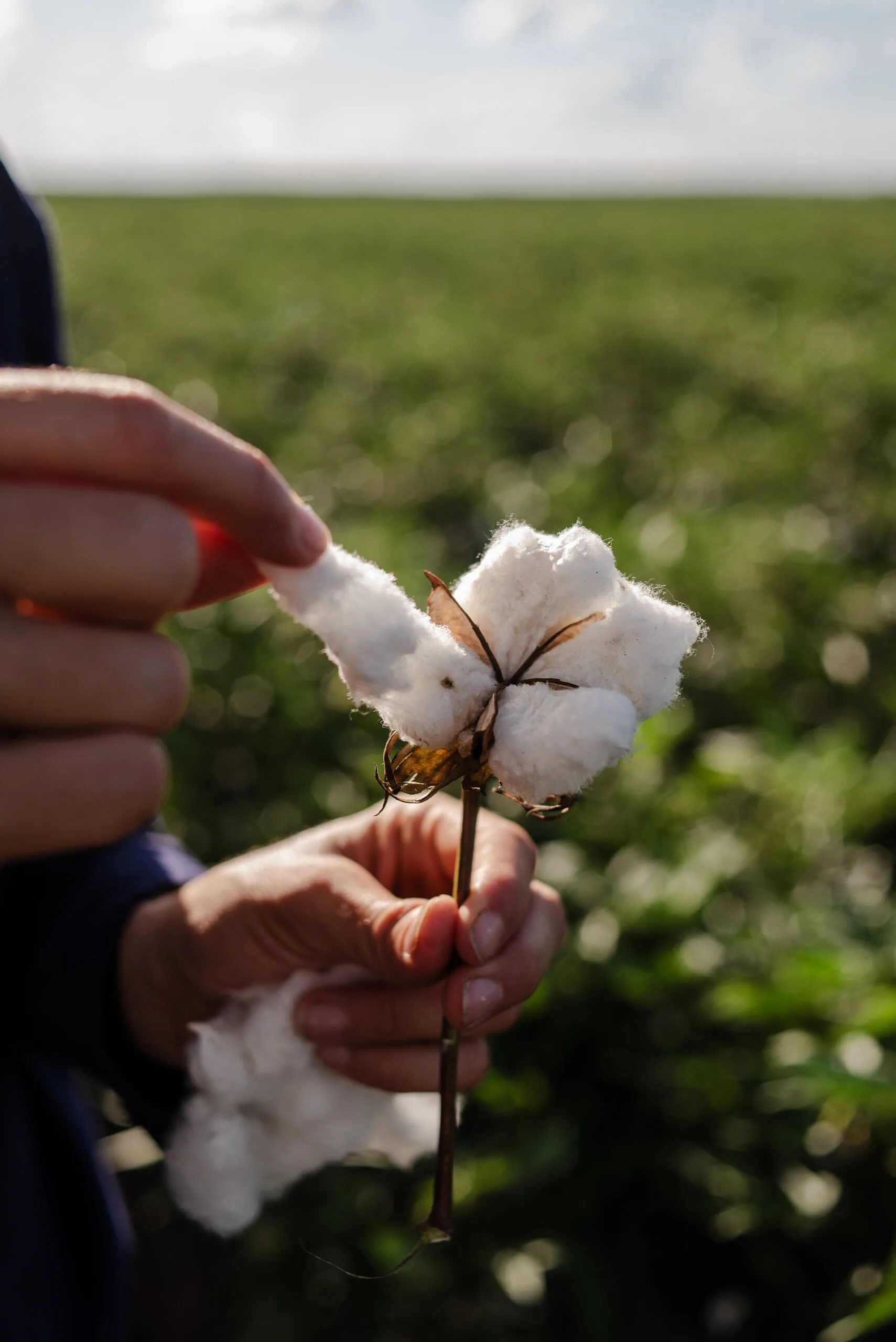
“It’s so fun for us to put these events on to give Comet a name,” Haddie says. “We want people to feel that passion when they walk into something that we’ve created, and we love giving back to the community that we’re so proud of.”
Back in Maleny, Margaret’s granddaughters have arrived at the dairy to help milk, but first they detour via her house to raid her biscuit tin. Amid mouthfuls, they descend into the pit and start slipping suction cups onto waiting buffalo.
“They’ve got more personality than other animals,” says 16-year-old Keelee, who can’t remember the first time she milked because it was so long ago. “They really do,” 19-year-old Kael agrees before swiping her sister’s neck with muddied fingers for a laugh. The pair have grown up leading cattle at shows, learning how animals move and how to read them.
They’re the fifth generation of their family to work here, but nothing about it feels too formal or stuffy. “I’m just so proud that they want to be part of it,” Margaret says. “As long as they don’t keep making things too hard for farmers, I think we have a glorious future.”
This feature originally appeared in the July 2026 issue of The Australian Women’s Weekly. Subscribe so you never miss an issue.

Related stories
Native ad body.
Native ad body.


Native ad body.