




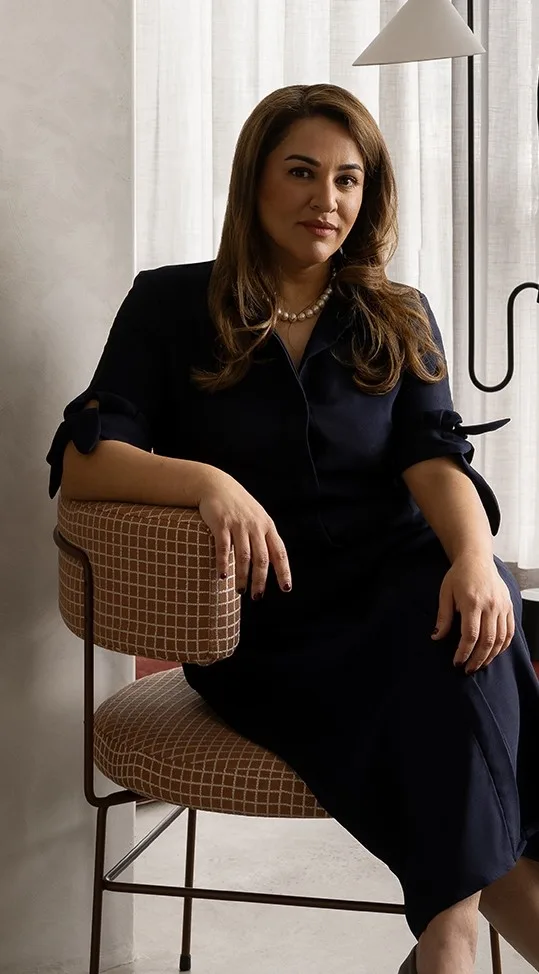
Dr Fatima Khan was sitting in her consulting room when something suddenly felt wrong.
“It’s not really a pain. It’s just a tightness. You can’t take a full breath,” she recalls. “And then your heart starts racing fast, and you kind of just think, ‘What’s going on?’”
She went to the emergency department, where doctors ran blood tests, an ECG and a chest X-ray, but everything came back normal.
Then it happened again.
Dr Khan was 36 at the time. She had never experienced anxiety before but had started having episodes that felt like panic attacks. “I did go and see a psychologist,” she says. “She couldn’t put together anything because it didn’t fit your classic major depressive disorder or generalised anxiety disorder.”
Dr Khan is also a doctor with years of experience in women’s health. “I’ve trained in menopause. I have a certificate in menopause medicine. This is what I do for a living.” Yet even she didn’t realise that she was experiencing early perimenopause.
“We don’t really get taught about the mental health symptoms,” she tells The Weekly. “The only thing you get is hot flushes, night sweats, sleep disturbance, dry skin, obviously vaginal dryness, urinary symptoms, painful sexual intercourse, and the mood might just be like, ‘Oh, you might just feel a bit grumpy or irritable.’”
Her experience changed the direction of her work, leading her to establish a specialist menopause clinic in Melbourne and write her new book, Hormone Health is Mental Health.
It doesn’t always start with hot flushes
We’re talking about menopause and perimenopause more than ever. Which of course is a good thing. But when most of us think of perimenopause, we picture a woman fanning herself through a hot flush or waking up in the middle of the night in a sweat. For some women though, the first signs are mental and emotional.
“It typically presents with these classic symptoms of new onset anxiety, feeling overwhelmed, brain fog, sleep disturbance,” Dr Khan explains.


Many women just don’t know those changes could be linked to perimenopause. “Women have excellent intuition. They know something’s changing,” Dr Khan adds. But the symptoms are easy to explain away. “There’s always something to blame,” she says. You’re tired because life is busy. You can’t concentrate because you have too much on. You’re anxious because you’re stressed.



All of this is happening just as many women are approaching the peak of their careers, raising children, supporting ageing parents and carrying much of the mental load at home. “It’s just that perfect storm,” she says.
When your mood feels unpredictable
Anxiety and brain fog aren’t the only symptoms women describe. “It’s this fluctuating volatility in mood, from irritability to rage to then the other extreme, which is teariness,” Dr Khan says.
Then there’s what Dr Khan calls ‘volcanic rage’. “Rage you can control. Volcanic, you can’t,” she explains. “It just keeps erupting, and you don’t even know where it’s coming from, and you can’t stop it because it takes its time to dissolve.”
There’s also the rollercoaster of not knowing how you might feel from one day to the next. “One day you might have rage and irritability, and literally three days later you’re smiling and everything is fine.”

Dr Khan’s concern is that these mood changes are often put down to depression or anxiety without hormones being considered.
She is not blaming doctors, pointing instead to gaps in research and training. “When you don’t study something, you don’t know what it is,” she says.
It doesn’t mean women can’t experience mental health issues during perimenopause. “I don’t have a problem with prescribing antidepressants if there is true anxiety and depression,” she adds.
‘Something is wrong with me’
Because we hear so little about the mental and emotional side of perimenopause, many women end up blaming themselves.
“That’s the worst thing, because then women feel they’re failing,” Dr Khan says. “They’re broken. Something’s wrong with them.”
Brain fog can make someone who has always felt capable begin second-guessing herself. Dr Khan sees women struggle to make decisions and even “say no to the promotion”. At home, they may feel guilty about “the way they’re treating their partners and their children”. Some women withdraw socially or wonder why they no longer enjoy the things they once did.
“There’s a loss of self, loss of identity, loss of confidence,” she explains.


Women often can’t understand why they feel so different when their lives haven’t changed. “It’s the same partner, the same kids, the same job, the same pressures,” Dr Khan notes. But suddenly, it all feels harder. “They’re like, ‘Hang on, but I’ve raised the kids. I’ve been doing amazing for 20 years.’”
Dr Khan compares the pressure to a spring that has been loaded over time by work, children, relationships, caring responsibilities and running a household. “If you keep loading it, it will lose its elasticity,” she explains.
“I want you to stop comparing yourself to what you did five years ago,” she tells her patients.
Feeling like yourself again
Dr Khan hopes that talking more openly about perimenopause and mental health will mean fewer women spend years believing something is wrong with them.
In March, the UK’s Royal College of Psychiatrists released its first official statement on menopause and mental health, calling for better training for health professionals, more coordinated care and for menopause to be considered during mental health assessments.

The physical symptoms of perimenopause are challenging enough. Add changes to your mental health, and it can be frightening. Dr Khan knows that firsthand, both from her own experience and from the women she treats. But she wants women to know it won’t always feel this way.
“I see women thrive all the time,” she says. “I think it’s just knowing that it’s not forever.”
With the right support, Dr Khan sees women regain their confidence and rediscover the person they feared they had lost.
“I hear it all the time: ‘I’m feeling more like myself,’” she says. “It’s this intangible sense of, ‘I’m back.’”

