




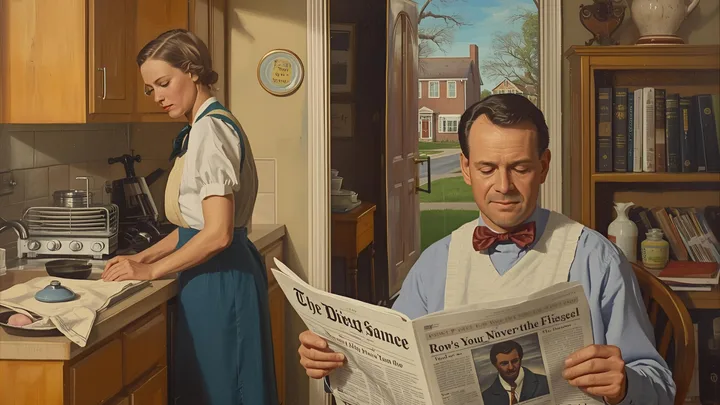
We were three episodes into Big Brother Australia 2025, when the sickly discussion of traditional gender roles began.
Sitting comfortably in the Big Brother house, two men discussed a woman’s role in the family. Then, they disparaged the gender pay gap.
Did we mention DNA also wormed its way into the conversation?
It’s a narrative as old as time. But history loves to repeat itself. So alas, we must address the statements from Bruce, a 25-year-old tradie, and Michael, a 49-year-old publisher.
The conversation began with Bruce stating that one parent should stay-at-home, because “kids need a stable parental figure they can rely on.” Which is true!
UNICEF noted early childhood, which is from birth to 8 years old, is a crucial time for the child’s cognitive, social, emotional and physical development. But, Bruce has no intention of being the stay-at-home parent.
To which Mia, a 23-year-old Bunnings Shop Assistant, noted his expectations would restrict his future partner.
“If we go back to caveman days, women stay and protect the kids, the guys go out and hunt animals,” he responded. “It’s still in the DNA.”
Yes, let’s go back to those… “caveman days.”
Even those not well-versed in anthropology know about Man the Hunter theory. It focused on a division of labour where men would hunt while women gathered.
It gained popularity in the 1960s, and a few studies have worked to debunk this theory since.
Some anthropologists have studied fossils from one of the earliest human species. They ultimately noted these people were fruit and nut eaters who weren’t dentally adapted to eat met.
“It didn’t have the sharp shearing blades necessary to retain and cut such foods. These early humans simply couldn’t eat meat. If they couldn’t eat meat, why would they hunt?” Robert W. Sussman, a professor of anthropology in Arts and Sciences.
But evidence we’re particularly interested in is the 2018 discovery of a woman, laid to rest in the Andes Mountains of Peru 9,000 years ago.
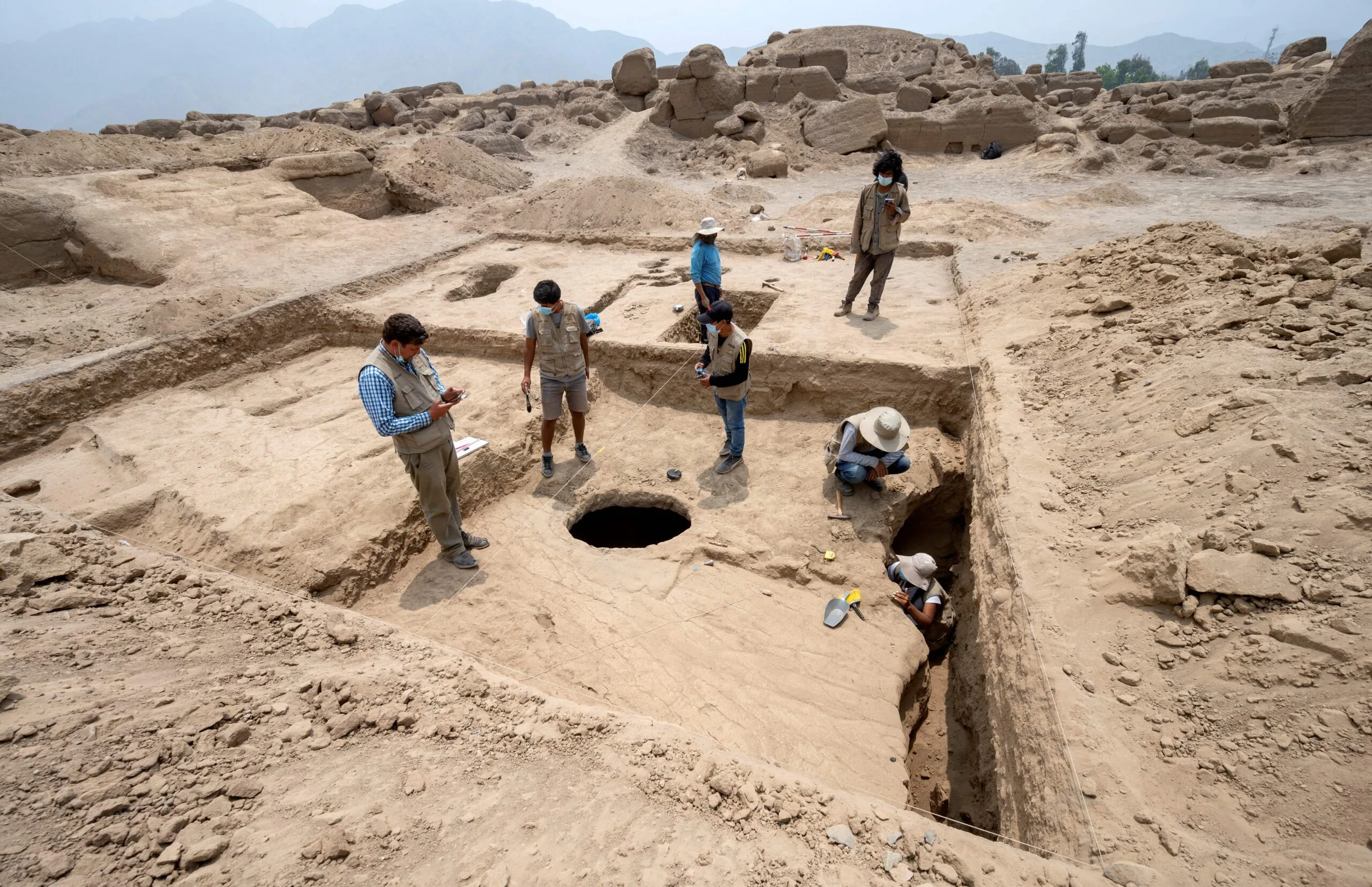
Archaeologist Randall Haas and his team discovered the burial site included tools for hunting and preparing the hide. Originally, the researchers believed they’d unearthed a males grave given the tolls.
Further analysis showed a woman aged between 17 and 19 years old. And she isn’t the only hunter.
After the discovery, a review of 429 burial sites across the Americas was undertaken. Of these sites, 27 individuals were buried with big-game hunting tools, 11 were female and 15 were male. A Science Advances study noted between 30 and 50 percent of big game hunters in America may have been women.
Gender roles have, however, infiltrated modern day hunter-gatherer communities, like the Hadza of Tanzania. However, the women of Agta in the Philippines are skilled hunters, using the same weapons their male counterparts use.
“Labor practices among recent hunter-gatherer societies are highly gendered, which might lead some to believe that sexist inequalities in things like pay or rank are somehow ‘natural.’ But it’s now clear that sexual division of labor was fundamentally different — likely more equitable — in our species’ deep hunter-gatherer past,” Randall said in a statement.
But the caveman era ended 11,700 years ago, so let’s bring this gender role discussion back to the present.

Mia then pointed out the pay disparities between the male and female gender.
“Even without kids, there’s discrepancies between how much they make versus a man,” she said. To which Bruce labeled the “biggest load of bull****.”
“You go get a job, you’re starting at the same, if you work hard and bump up, you’re going to get paid more, it’s got nothing to do with gender,” he argued.
We’re not sure where Bruce is gathering his information from. But in 2024, the Workplace Gender Equality Agency (WGEA) revealed Australia’s total remuneration gender pay gap is 21.7 percent. This essentially means every $1 on average a man makes, women earn 78c.
This equals to a yearly difference of $28,425 between men and women’s average remuneration.
And if a woman fulfills Bruce’s ideal family roles by staying at home with the children, it then significantly reduces her superannuation funds.

The WGEA further reported superannuation gender pay gaps between 19 and 47 percent at various ages, with the biggest gaps for women over 50.
Does DNA play a role in this disparity? Well, Michael noted: “Men are more aggressive, so we do tend to get into managerial roles, just because we’re more competitive by nature.”
Ah, aggressive… An emotion often perceived as a nightmare label for women in the workplace. Women are frequently called too emotional in both personal lives and at work, but it seems to be working well for men!
According to a Forbes 2022 article, the Harvard Business Review looked at 200 performance reviews within one company. It then tallied the number of references to being “too aggressive”, and 76 percent of these results were attributed to women. Being labelled as aggressive can have major implications on a woman’s career, meaning poor performance reviews which then impacts any future promotions.
A report by Gallup in 2014 discovered that more employees who work for female managers in the U.S. are more engaged than those who work for male managers. Furthermore, it found 41 percent of female managers are engaged at work and invested in their teams development – no matter their age or family status – compared with 35 percent of male managers.
Yet, these senior roles aren’t frequently held by women. In 2023-24, the Australian Government’s WGEA Gender Equality Scorecard found that only 21.9 percent of CEOs are women. In male-dominated industries, this number drops significantly to 9 percent.

Related stories
Native ad body.
Native ad body.




Native ad body.