


At a glance…
- One Nation has faced widespread backlash after mocking Senator Jacqui Lambie’s deeply personal experience of vaginal prolapse in a satirical video.
- Jacqui has condemned the cartoon, saying she spoke publicly about her condition to raise awareness and challenge the stigma surrounding women’s health.
- In an exclusive 2024 interview with The Weekly, Jacqui revealed how her own health struggles shaped her determination to advocate for others.
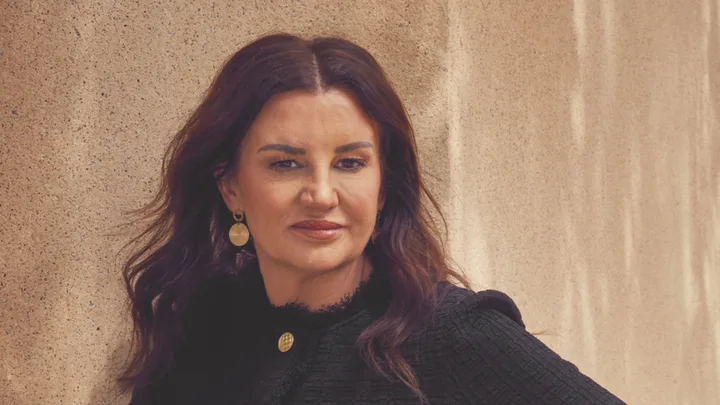
In an impassioned speech to Parliament in August 2026, independent Senator Jacqui Lambie shared her painful and deeply personal experience of vaginal prolapse and the complications affecting her bladder. She spoke candidly about the condition, which she linked to injuries sustained during her military service, in the hope of raising awareness and improving support for other women.
Now, less than two months later, Pauline Hanson’s One Nation has turned that deeply personal disclosure into fodder for a satirical video.
The video, part of One Nation’s Please Explain cartoon series, takes aim at the Albanese government’s proposed Digital Duty of Care legislation. But amid its political commentary, the cartoon depicts Jacqui making a crude remark about her vaginal prolapse, accompanied by an equally crude sound effect.
Political satire has its place. Our elected representatives should expect their policies, decisions and public statements to be scrutinised, challenged and, yes, occasionally ridiculed. But there is a difference between making fun of a politician’s policies and mocking a woman for a debilitating medical condition.
And that distinction matters well beyond the walls of Parliament House.
Why speaking up about women’s health matters
When it comes to women’s health, we’ve come a long way simply in our ability to discuss previously taboo subjects in an open forum.
At The Australian Women’s Weekly Health Summit Series in 2025, so many of our speakers and attendees spoke about how much it meant to have a platform to discuss health issues like menopause and perimenopause in a space without judgement.
These conversations matter. They help women recognise symptoms, understand their bodies and feel more comfortable seeking medical advice. But what happens when a woman who speaks openly about an intimate health condition becomes the subject of public ridicule?
“By making this cartoon, One Nation didn’t just make light of my own medical struggles, but those of so many other women who have experienced reproductive health issues,” Jacqui wrote in a statement. “I spoke about my own battle in Parliament, not to get sympathy as One Nation may suggest, but to let other women know they are not alone. It is common, and nobody should be embarrassed to talk about it.”
“Pelvic organ prolapse (POP) is a hidden condition, yet 1 in 4 Australian women will suffer from a prolapse,” according to the Hudson Institute. “While the injury happens mostly during childbirth, the patient may not know about the damage until many years later, often during menopause”
According to the Hudson Institute, one in four women globally are affected by “Pelvic organ prolapse (POP)”.
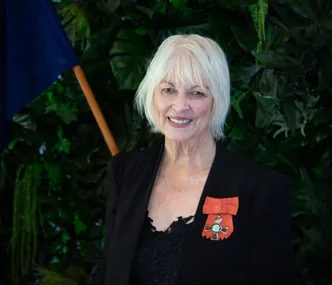
“It is a hidden condition. While the injury happens mostly during childbirth, the patient may not know about the damage until many years later, often during menopause”
Sadly, as Jacqui points out, women’s health and even the word “vagina” still have a stigma attached.
“Speaking openly is not an invitation to be mocked or degraded,” she continued. “We should be encouraging these conversations so people feel comfortable seeking help.”
It’s an important distinction. When women are encouraged to share their experiences, only to be humiliated for doing so, what message does that send to everyone else who might be suffering in silence?
Jacqui Lambie’s long battle to be heard
For those familiar with Jacqui’s story, her willingness to speak publicly about difficult and deeply personal experiences is nothing new.
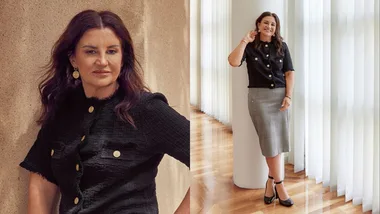
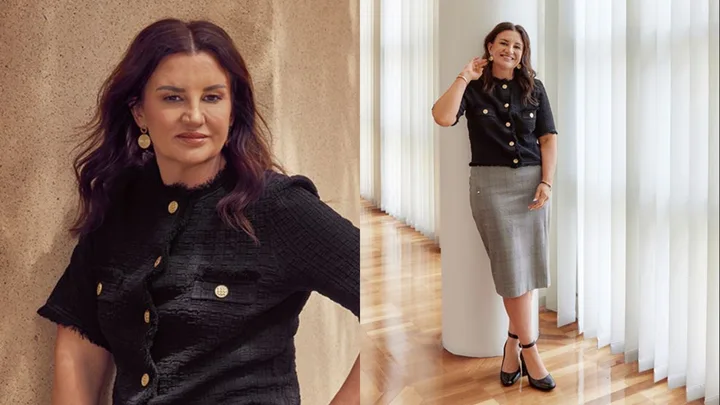
In an exclusive interview with The Australian Women’s Weekly in 2024, the Tasmanian senator reflected on her 11 years in the Australian Army and the profound impact her military service had on her life.
“Looking back,” she told The Weekly, “I think the Army gave me the opportunity to believe in myself, and a lot of self-esteem.”
But her military career also came at a high personal cost. After suffering a back injury in 1997, Jacqui endured years of debilitating chronic pain, developed a dependence on prescription painkillers and became embroiled in a lengthy battle for compensation with the Department of Veterans’ Affairs.
The experience took an enormous toll. She lost her home and struggled to raise her children as a single mother while fighting to access the support she needed.
“It was a really dark, lonely, cold place,” she told us. “You had no purpose. No job. You couldn’t get the medical attention you needed. You’re no use to your kids. And you’re fighting a department at the same time.”
Those experiences would shape her political career.
“I wanted to take my life experience, whether that was serving in the military or pulling a beer in a pub or having those 11 years when I was out [of the army], and I wanted to use that to help others,” she explained.
“I think those 11 years on the sidelines gave me a lot more compassion and understanding.”
In her speech in August, Jacqui wasn’t simply revealing intimate details about her health. She was drawing on her own experience to advocate for veterans, particularly women whose health needs can be overlooked. Her disclosure was an act of advocacy, not an invitation for ridicule. And she has since transformed it into a mission with the Vagina Collection, proceeds of which go towards raising funds for women’s health research at the Hudson Institute.
Politicians and advocates rally around Jacqui
The response to One Nation’s video has been swift, with politicians from across the political spectrum and prominent women’s health advocates speaking out in support of Jacqui.
“Thanks for your leadership – sharing your personal story, challenging the stigma and pushing for us to do better. Your courage deserves respect, not ridicule,” wrote Senator David Pocock.
Prime Minister Anthony Albanese also offered his support, thanking Jacqui for her “courage which will help others”.
Independent MP Allegra Spender was equally forthright:
“Jacqui spoke up on her experience with vaginal prolapse – a painful condition that affects many women. Politics needs more people like Jacqui who make lives better. And less of the divisive and contemptible politics of One Nation.”
Former Australian of the Year and sexual assault advocate Grace Tame highlighted another important dimension of the conversation.
“Many survivors of sexual trauma experience vaginal prolapse, which compounds already deep-seated shame,” she wrote. “Anything we can do to normalise this conversation is huge.”
Author and women’s health advocate Shelly Horton also shared a video condemning the cartoon.
“Women’s health issues should not be the butt of jokes,” she said. In her accompanying caption, Shelly made a point worth considering: “If women sharing health issues opens the door for politicians and others to mock them – no one will speak up.”
Pauline Hanson defends the cartoon
Despite the widespread criticism, One Nation leader Pauline Hanson has defended the cartoon as satire. Speaking on Monday, she told Jacqui to “get over it” and suggested the video had helped raise awareness of women’s health issues.
“Have a bit of a laugh, Jacqui, and lighten up,” she said. But Jacqui has made it clear she sees little humour in the situation.
Speaking to ABC Radio National Breakfast, she questioned why anyone would consider women’s reproductive health problems a laughing matter. She also called on the people surrounding Pauline Hanson, particularly the men in her party, to challenge the decision to publish the video.
“If you think it’s a laughable matter about women having problems with their reproductive system, then you be my guest, and you stand by her,” she said. “But seriously, enough is enough.”
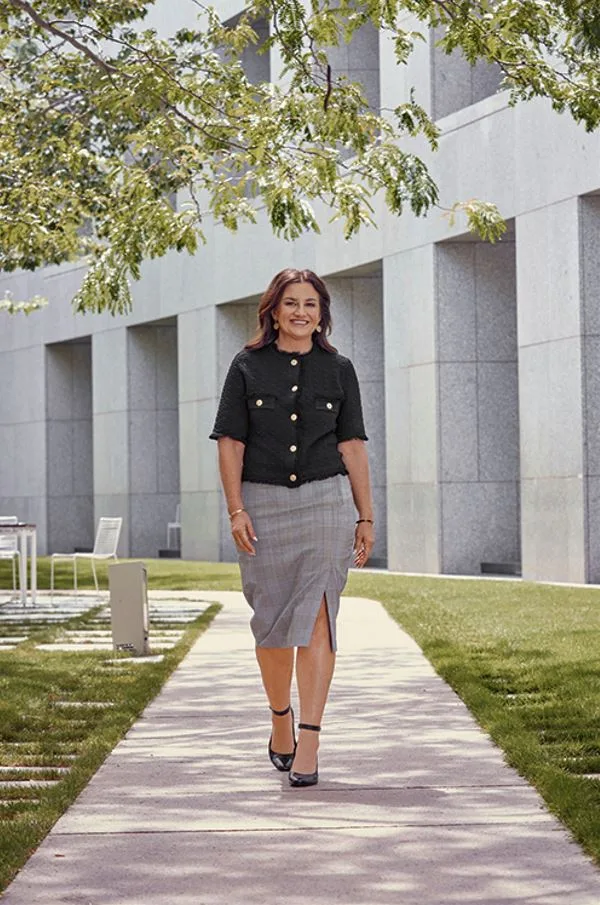
Women’s health should never be the punchline
Pelvic organ prolapse is not a rare or insignificant condition. It occurs when the muscles and connective tissues supporting the pelvic organs weaken, allowing organs such as the bladder, uterus or bowel to descend into the vagina.
It can affect a woman’s physical comfort, bladder and bowel function, sexual health and quality of life. Yet embarrassment and stigma can make an already difficult experience even harder to discuss.
“Prolapse and pelvic floor disorders are a public health and gender equity issue globally affecting 1 in 4 women, usually as a consequence of childbirth,” wrote Professor Anna Rosamilia, a urogynaecologist and head of the Pelvic Floor Unit at Monash Health. “We are very grateful to Jacqui for sharing her personal story as it reduces stigma and may lead to others seeking help. It’s common; it’s not normal.”
And that is why Jacqui’s decision to speak publicly about her experience was so important.
Disagreeing with someone’s politics is one thing. Mocking their medical condition is quite another. In our 2024 interview, Jacqui told The Weekly that fairness was at the heart of her political philosophy. Her own experiences of hardship had taught her to consider how decisions made in Canberra affected those with the least power to influence them.
Whatever your political persuasion, there is something to be said for a woman willing to use her own painful experiences to make life easier for someone else. We should be making it easier for women to talk about their health, not giving them another reason to remain silent.
Because when one woman is mocked for speaking up, it’s not only her voice that risks being silenced.

