



At a glance
- The Rocky Horror Show first opened in June, 1973 in London. Since then it has inspired a hit film and is still running across the globe today.
- Stars of the original, and its director, Aussie wunderkind Jim Sharman, reflect on what made this a lasting phenomenon.
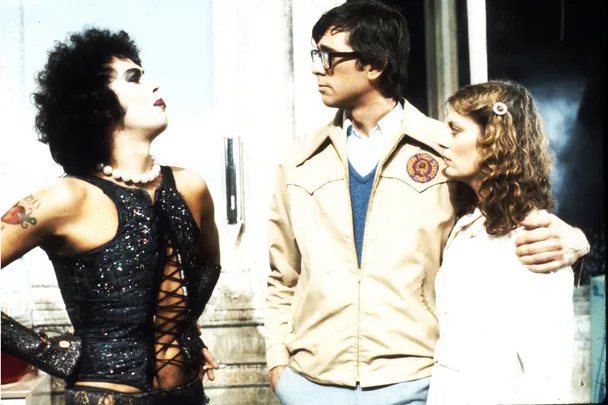
- The film, inspired by the stage musical, featured stars including Tim Curry and Nell Campbell.
Artists, rock stars, critics, even Mother Nature herself applauded The Rocky Horror Show when it opened in a tiny attic theatre in London over 50 years ago, in June 1973.
“Opening night was very The Tempest,” its then wunderkind Aussie director Jim Sharman recalls. “A massive storm broke over London. In a pause in the thunder came the downbeat.”
A flash of lightning illuminated the gaunt features of Hollywood horror movie icon Vincent Price making his way to a seat in the audience. “And we were up and away,” Jim adds. “You rarely know whether the opening night is going to fly. We knew that one would, but we didn’t realise how high.”
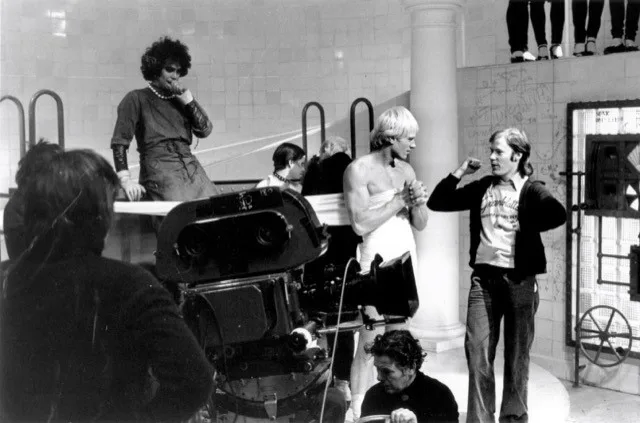
Jim had arrived in London just months earlier, following a giddy ascent that had begun when promoter Harry M. Miller called upon him to direct the Australian production of rock musical Hair. The 23-year-old had grown up on his father’s tent boxing circuit, surrounded by carnivals and country vaudeville, then studied at the National Institute of Dramatic Art (NIDA).
Delighted by the success of Hair, Harry snapped up the Australian rights to Jesus Christ Superstar. Again he enlisted the young director and his friend, stage designer Brian Thomson, who created the mechanical dodecahedron, elevated stages and a minimalist take on Judea which were utterly trailblazing.
When the American version floundered, Jim and Brian were flown to London to stage Superstar there, and the English were enraptured. The Sunday Times gushed: “The kingdom of heaven will open to receive this production.”
“After Superstar, whatever Jim wanted to do, he could do,” says his friend, actor Kate Fitzpatrick, who had just landed in London and was staying with him in a flat in Pimlico. “I don’t think there was ever any pushback.
He directed Superstar, then The Rocky Horror Show in London, and within months, he was opening the Sydney Opera House with The Threepenny Opera. It was staggering.”
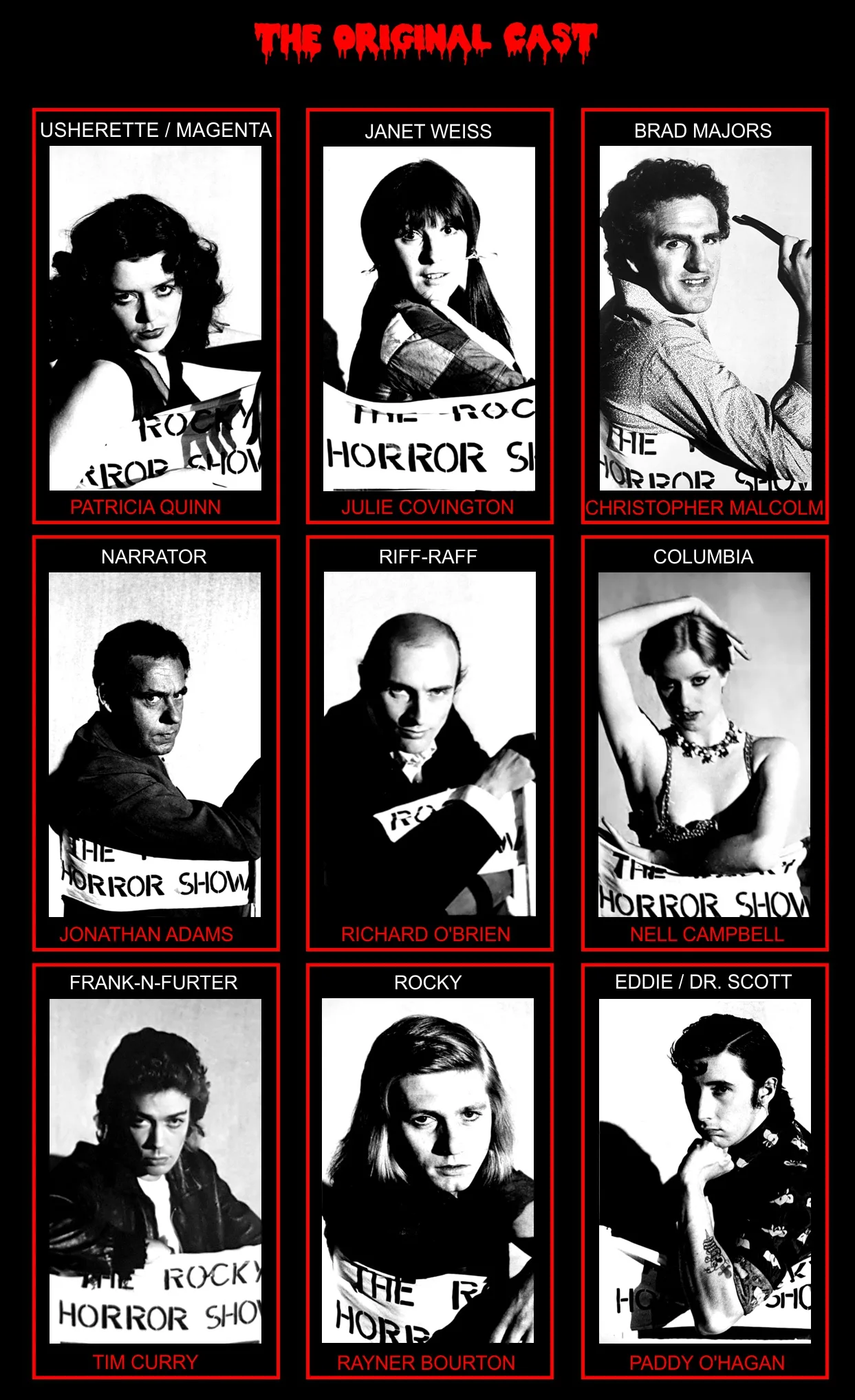
The Rocky Horror Show was born of a series of very fortunate events.
One day, Jim was strolling by the Royal Court Theatre on Sloane Square in London. Superstar was running like clockwork, and he was looking for a new challenge. He wandered in and asked to meet the manager. The woman at the front desk asked, “When?” Jim said, “How about now?”
Jim’s reputation was such, at that moment, that the very influential Oscar Lewenstein took a meeting with him on the spot. He suggested Jim put on three plays in a tiny second theatre they had upstairs. “It was really the attic,” Jim chuckles, “where they sent the children to play.”
The first artist Jim invited into the playroom was Sam Shepard, who would go on to become a Pulitzer Prize-winning playwright, author and actor. The play they produced was The Unseen Hand and in the role of ‘Willie the Spaceman’ Jim cast an English/Kiwi actor, Richard O’Brien.
Richard was a still-waters-run-deep kind of guy. Out of the blue one day, he wandered into rehearsal with a song he’d written, called Science Fiction Double Feature, and a 12-page, unfinished script for a musical called They Came From Denton High.
“I read it,” Jim remembers, “and I said, ‘There could be something in this.’ Everybody else said, ‘You’re out of your mind!’”
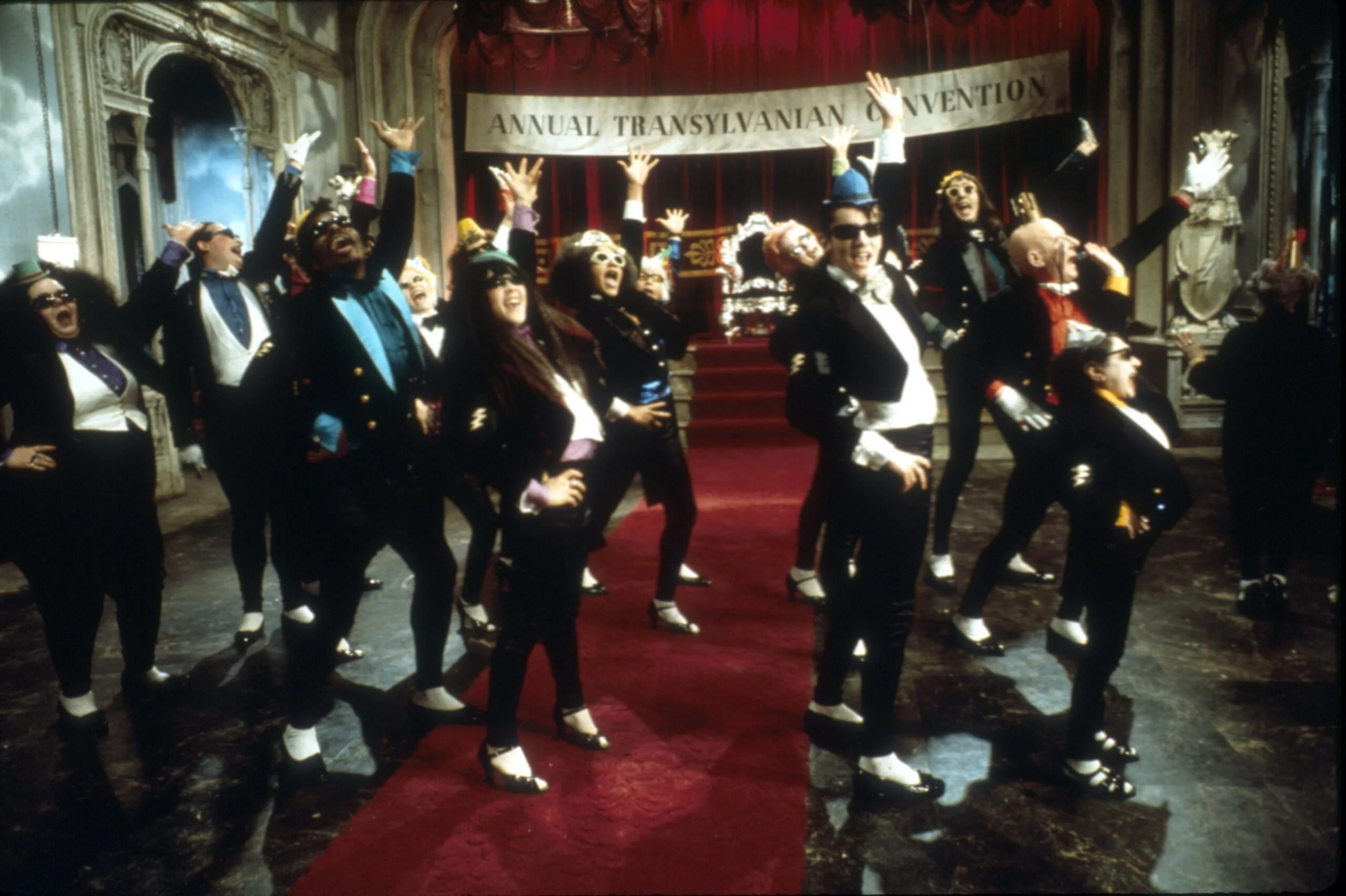
Jim adored the song, and needed a second play to follow The Unseen Hand. This seemed as good a gamble as any. He called in Brian and English composer and musical director Richard Hartley, introduced them to Richard O’Brien and in three weeks of imagination, collaboration and mayhem they created The Rocky Horror Show.
“There are moments when everybody’s history combusts and lightning strikes,” Jim explains, “and that was one of them. It was a group of inventive people being inventive.
“We began with those 12 pages, and I developed some of those ideas in conjunction with Richard. Brian came up with the idea of setting it in a haunted cinema, and I kind of made it a playroom for wildness.
“I cast people with strong, feisty personalities and created a space where their imaginations could play. I don’t think it would be going too far to say I encouraged a degree of megalomania, and that produced the end result.”
Tim Curry’s casting as Frank-N-Furter, the transsexual Transylvanian, was key. “He put it into the stratosphere,” says Nell Campbell, another Aussie in London, who played Columbia. “Men and women fancied Tim. Everyone adored him.”
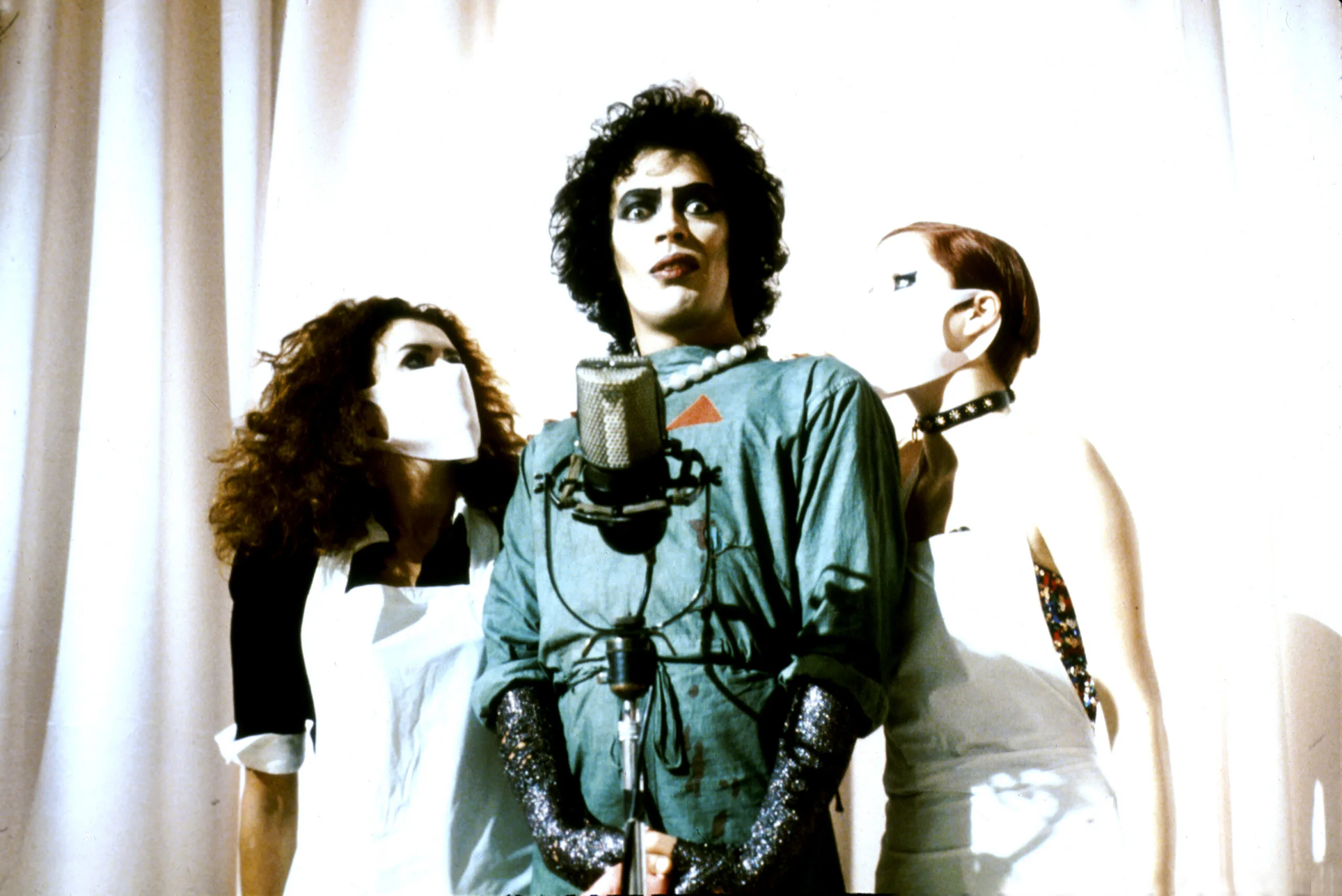
Tim also understood that this was more than a bawdy, sexually subversive musical romp.
The show’s creators drew on influences from their own lives and those that were bubbling in the London air: Punk and glam rock, vaudeville, Japanese Kabuki and Noh theatre, Weimar Republic theatre, Shakespeare, the English comedy of manners, late-night B-movies and their natural Antipodean irreverence.
In the initial script, Frank-N-Furter had just one servant, Riff-Raff, but Jim could see right away that more were required to give the plot extra scope and to allow for three-part harmonies.
“Richard came up with Magenta,” Jim explains, “the second servant, who was cast a little bit in the Weimar mode and was Riff-Raff’s twin. Then we found Nell, and we had Columbia, our groupie.”
“I was 20 at the time,” the still gloriously effervescent Nell tells The Weekly. “I was living in London, busking and waitressing in a cafe that was diagonally opposite Harrods. When I waitressed, I’d dress in 1930s clothes and tap shoes, put on my favourite old songs and tap dance around the cafe.
“One day Jim, Richard O’Brien and Richard Hartley came in. I was tap dancing on a table, and Jim looked at Richard and said, ‘There’s your third servant.’
“I got a lot more than an order for a banana split that day; I threw my [apron down] and handed in my resignation on the spot.”
There was a three-week rehearsal, and the atmosphere was electric. “There was a magic to it,” says Nell. “I haven’t been involved in anything like that before or since.”
The budget was microscopic.
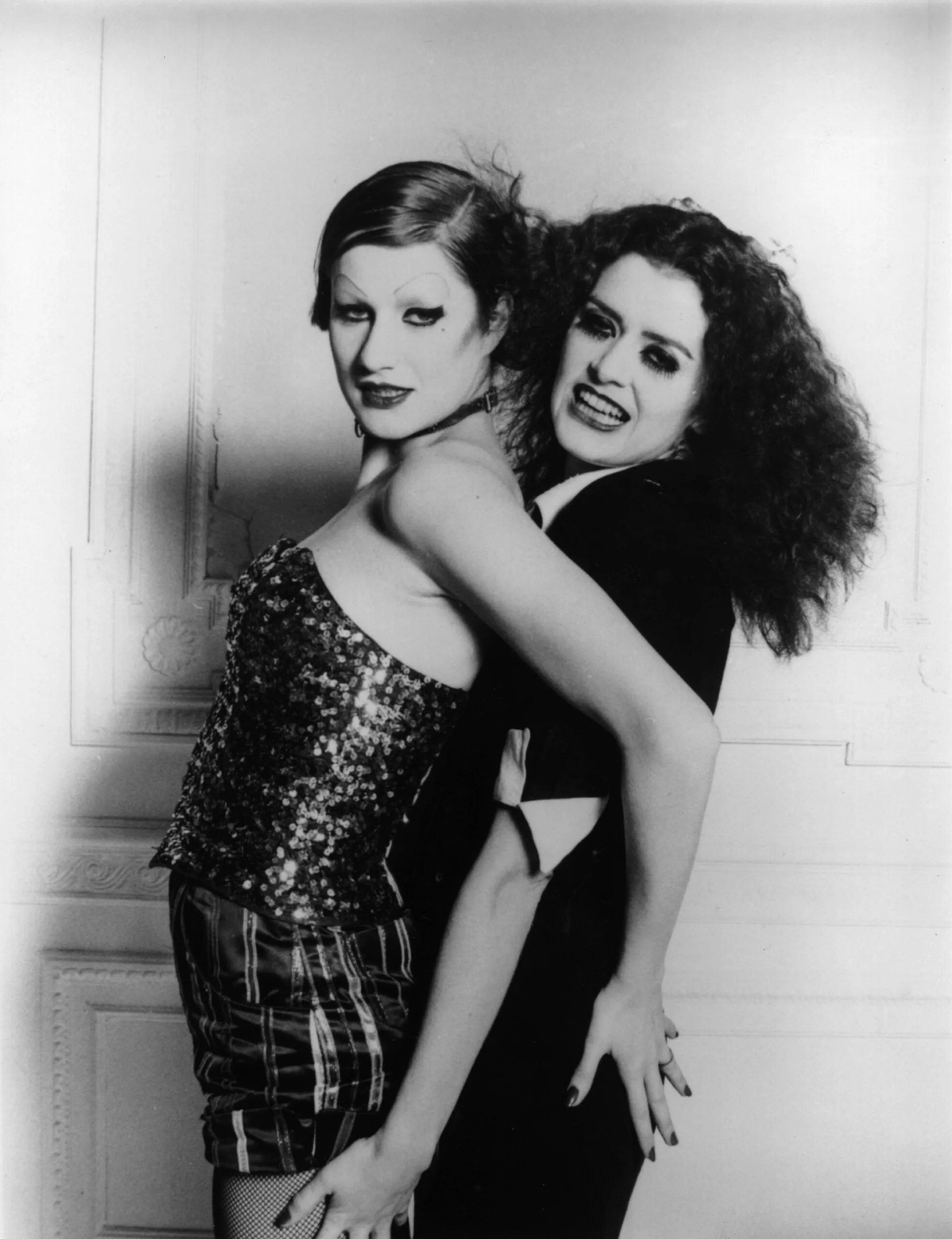
Costume designer Sue Blane had £200 in total, so she borrowed most of the outfits. The rest came from sex shops. The attic had no seating, so Brian bagged 62 old seats from a theatre that was about to be refurbished in Glasgow. He built ramps through the audience at just the right height, Jim says, “to instil the fear that if Frank-N-Furter misstepped, you might lose an eye to a stiletto.”
“Brian didn’t just create a set,” Nell adds. “His whole creative wit and taste was projected onto the production.”
One day, Jim decided the show needed a dance routine.
“I wasn’t thinking of Gene Kelly,” he says. “I was thinking of that scene in Jean-Luc Godard’s film, Bande à part – in the cafe, late at night, when Anna Karina and the two gangsters dance the Madison. That’s where the line – ‘Do any of you know how to Madison?’ – comes from.”
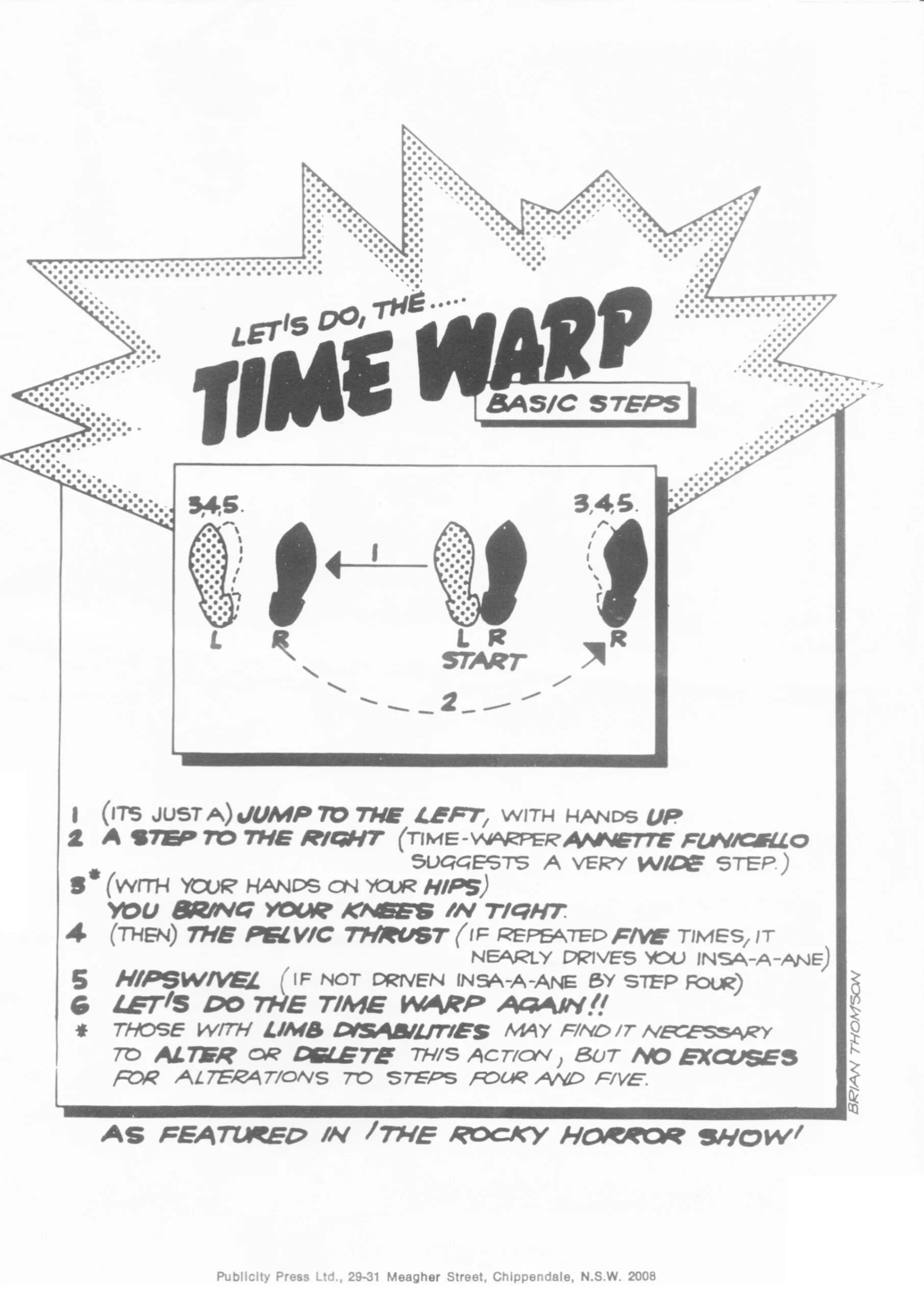
Richard O’Brien went home that night and, with his wife, wrote The Time Warp. He stopped by Richard Hartley’s place in the morning to fine-tune it. “They came into rehearsal at 10 am,” Jim says. “And there it was: ‘Just a jump to the left and a step to the right.’”
Rocky Horror was an instant hit.
The who’s who of London queued for tickets. “I saw it a few times up there, in that tiny space,” Kate recalls. “It was so intimate, they were sometimes literally on your lap. It was kind of shocking, outrageous, confronting, almost too much for your brain.”
After its three-week run in the attic, the show moved down the King’s Road to The Chelsea. The day after the curtain rose there, Jim, Brian, Richard Hartley and Kate flew home to begin rehearsals for the opening of Sydney’s new Opera House. And after that production ended, they went straight into rehearsals for Rocky at the New Art Cinema in Glebe.
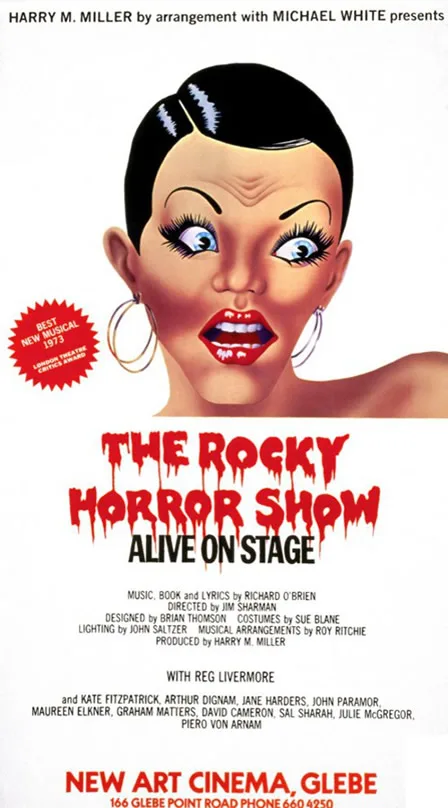
This time, Kate had a role, as Australia’s Magenta. And, for a former Catholic convent girl, the costumes, particularly, were a leap of faith.
“There was a sex shop in Kings Cross,” she remembers. “I was taken in there by Jim and Sue Blane. It had that spongy carpet that’s made of nylon, and all these polaroids on the walls. I tried on a tiny suspender and stockings and this little bit of lace that was supposed to be a bra. I tottered out of that dressing room thinking, ‘I can’t believe they want me to wear this.’ It was almost worse than having no clothes on. We added a little bit of chiffon – that was the concession. But all I needed to do was ‘a jump to the left’ and my tits would be out. And you’re in character, so you can’t tuck them back in. Magenta doesn’t care, Magenta doesn’t give a monkey’s.”
Even so, Kate had the time of her life. “I’ve never had so much fun,” she admits, “Reg [Livermore, Australia’s Frank-N-Furter] was outrageously wonderful and there was such camaraderie. I think now how lucky I was. And I felt safe. Jim knows exactly what he wants and you knew you could trust him. You knew you were never going to make a fool of yourself. You felt confident. If he asked you to do something, you would just do it, because you knew it would be the right thing.”
Meanwhile, Brian went to town with his haunted theatre theme.
“The band was up on scaffolding,” Kate recalls, “so it looked as if the whole joint was being pulled down. There was rubble in the aisles. There was a tatty red velvet curtain. They had ushers who wore masks with melted faces, and they’d shine a torch at you, rip your program in half and steal your box of chocolates.”
“We were just operating on instinct and having a lot of fun,” Jim adds, “serious fun, but fun. The notion that we would be sitting here talking about it 50 years later was not on the agenda.”
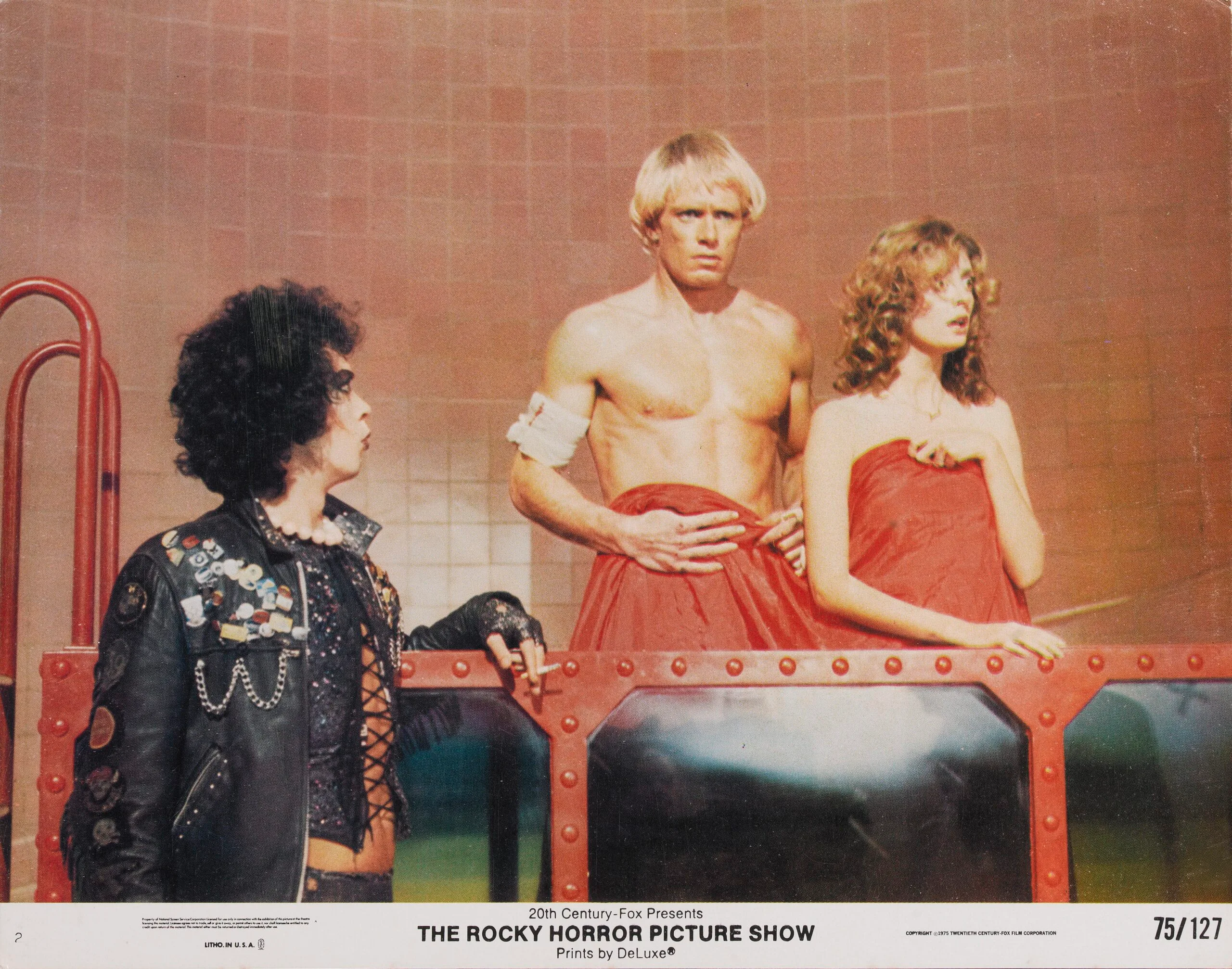
It was only in the wake of the film that the cult of Rocky Horror emerged. The Rocky Horror Picture Show was released in 1975 to tepid reviews and box office takings. But the following year it began to attract crowds to midnight screenings in New York. Within months, audiences had begun to dress in character, sing along, recite dialogue and invent lines of their own. Before long, “shadow casts” of fans were performing in front of the screen, and the phenomenon spread around the world. Still screening in cinemas today, it is the longest-running theatrical release in film history.
Among those queueing in fishnets for tickets to midnight screenings were young members of the LGBTQI+ community, who felt affirmed by the film’s queer sensibility and humour, and found camaraderie amongst fellow fans.
“It was certainly unapologetically gay, and that was a first, I think,” says Jim. “Most theatre works about gay characters had been about troubled souls, whereas this was a raucous celebration … I do think a lot of people – not just gay people, but a lot of people who felt themselves to be on the outside – got a bit of affirmation from The Rocky Horror Show. And that probably did have some sort of social impact.”
The affection of the fans also fuels an apparently endless stream of theatrical revivals, none of which involve the original cast and crew aside from Richard O’Brien. Jim is politely, gently dismissive.
“I’m interested in how quickly something that was once seen to be radical becomes dinner music,” he says. “I don’t think you could ever quite recapture that aspect of Rocky Horror. Because when it was first performed, it was a rock ‘n’ roll horror show and it was frightening. These days, it’s pretty much a camp panto. It’s something else now.”
In his memoir, Blood & Tinsel, Jim writes about what first attracted him to the theatre. “From the outset I saw theatre as a vocation and a place of revelation.” And perhaps The Rocky Horror Show came closer to achieving that than any of his serious, award-winning theatre.
“When Richard said, all those years ago, ‘I’ve written a musical’,” he remarks with a tiny, wry smile, “I made a joke, and because I’d just done Superstar, I said, ‘Oh, I hope it isn’t religious.’ But of course it’s the only thing I’ve ever done that’s become a cult, so perhaps it was.”
This feature originally appeared in the March 2023 issue of The Australian Women’s Weekly. Subscribe so you never miss an issue.

Related stories
Native ad body.
Native ad body.

Native ad body.