



From the age of three, acclaimed Australian author Jackie French was a voracious reader. At seven, she was asked to list her three favourite books.
“One was Aldous Huxley’s Brave New World,” she tells The Weekly. “The other one was James A. Michener’s Hawaii. And the third was The Famous Five.
“I was reading Enid Blyton at the same time that I was reading all of these very sophisticated and challenging and beautiful adult books. On my bedside table would be Dostoevsky and War and Peace along with The Famous Five series. And that says a lot about the craft and the characters of Enid Blyton.”
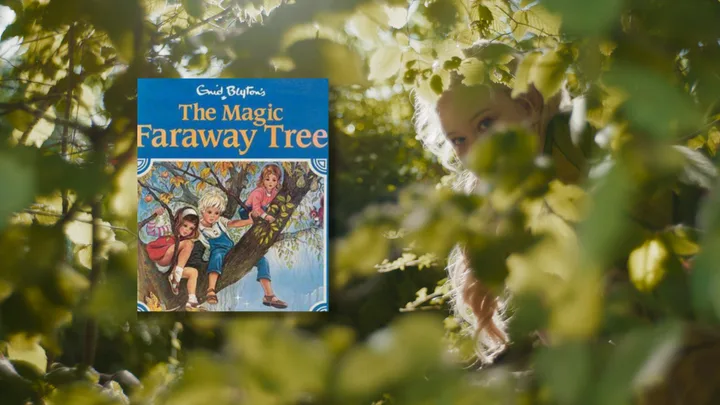
Since the 1930s, Enid’s books have sold over 600 million copies, been translated into 90 languages, inspired merchandise as early as the 1940s and have spawned films – including new release The Magic Faraway Tree – TV shows and much more. She is one of the world’s biggest-selling authors of children’s books.
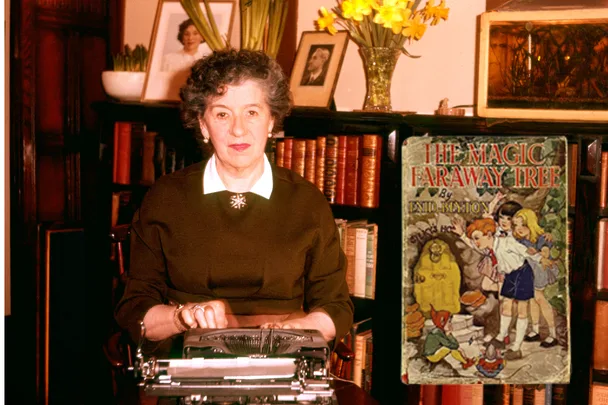
And she was prolific. In 45 years she published 753 books. Enid would boast of being able to write a book a week, jumping on her typewriter on a Monday once an idea came to her and then typing and typing until the Sunday, until she could simply type no more.
The original book influencer
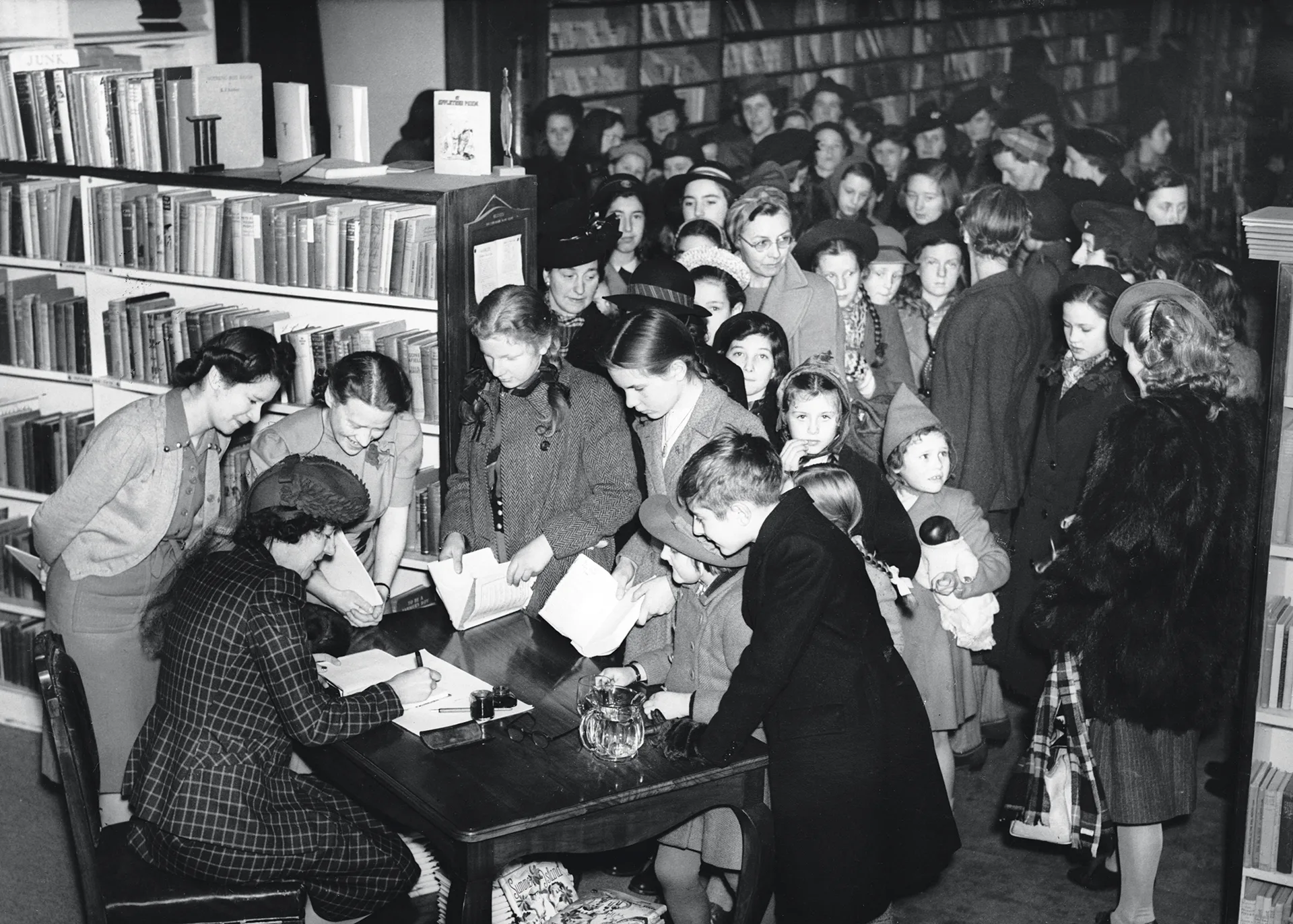
Plus, in a world decades before BookTok, she was the original influencer. When it came to her own work, she was a master publicist – making public appearances, holding events for her young readers (or “friends” as she would call them), running her own magazine, and writing an advice column for children. She was also a genius when it came to tapping into what children wanted and then serialising it to give them more at a cracking pace.
She removed the idea of parental control, with her characters going off on adventures that were as thrilling as they were occasionally dangerous. They would escape from mad aunts and uncles, hunt spies, disappear into strange worlds for whole weekends and outsmart smugglers, criminals and dastardly kidnappers. Afterwards they’d celebrate with sandwiches, cake and ginger beer.
While not all her books have stood up to the test of time – which we will get to shortly – the children had agency. This is why they resonated with young readers both then and now. Jackie recalls forming a Secret Seven-inspired club with her childhood friends, the gang going yabbie hunting and on adventures through the bush to secretly observe the adults.
“In retrospect,” muses Jackie, “I don’t think her characters were children. I think they were adults that she gave children’s ages to. And that’s something I’ve followed. It’s so easy to talk down to kids. Enid did things that would be pretty much impossible to do today.”
Why was Enid Blyton controversial?
Dr Emily Baulch is a McKenzie Fellow at the University of Melbourne and is currently researching children’s literacy. Unlike Jackie, she struggled with remedial reading as a child – but Enid Blyton played an equally pivotal part in her fascination with books.
“I wasn’t a good reader until I came across her books. Six Cousins at Mistletoe Farm was my favourite,” she says. “They came to me from this huge pile I got from my mum’s books, which is why I loved them more than anything. Many of them have outdated themes, which I knew at the time, and I know even more now. But having those books was so important.”
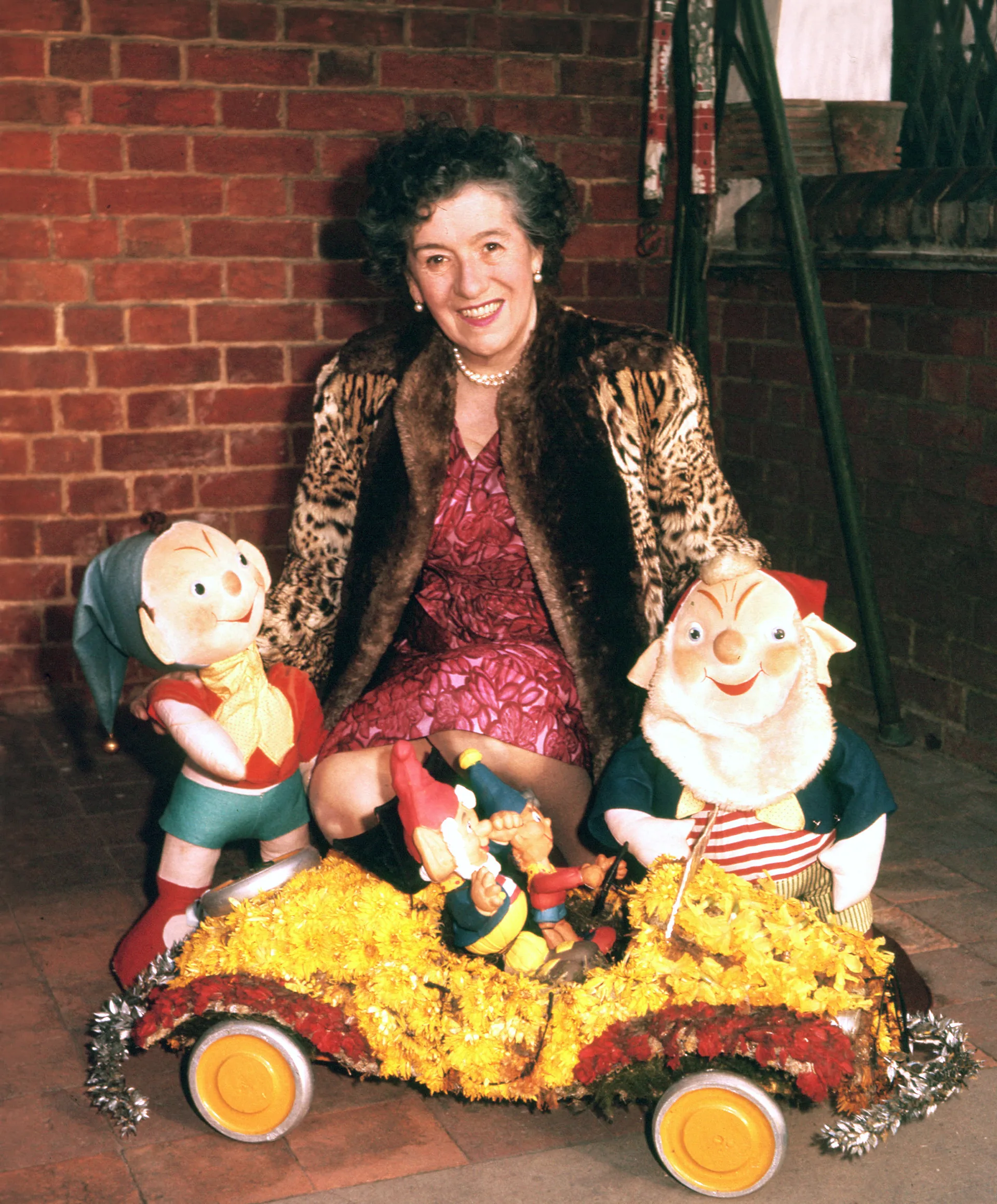
As early as the 1960s, Enid was faced with accusations of racism, sexism and xenophobia in her books.
Several have since been removed from publication; others have had character’s names changed. Famously The Faraway Tree’s Fanny and Dick have been renamed Frannie and Rick in modern editions. Some have been revised to remove offensive language.
“Reviewing and editing the text of Enid Blyton’s books has been an ongoing process, beginning in her own lifetime and continuing now and, we anticipate, into the future,” says a spokesperson for Hachette, her Australian publisher.
“The intention is to keep Enid’s books and stories at the heart of every childhood, as they have been for generations. To do so, we work to ensure that there are no offensive terms in the books – changing words where the definition is unclear in context and therefore the usage is confusing, and where words have been used in an inappropriate or offensive sense – while retaining the original language as far as is possible. This enables a wide audience of children to enjoy the books, while also understanding they were written and set in the past.”
Who was Enid Blyton?
Enid Blyton was born on August 11, 1897, in South London, the eldest child and only daughter of cutlery salesman Thomas Carey Blyton and his wife Theresa Mary. She was a daddy’s girl. Thomas – an intellectual with an interest in art, theatre and literature – encouraged in his daughter a love of nature. “He knew more about flowers, birds and wild animals than anyone I ever met,” she would write of the nature walks they embarked upon together. “These were the happiest times, when looking back it seems the days were always warm and sunny and the skies were deeply blue.”
Enid was devastated when, not long after she turned 13, her father left the family for another woman. It was then that she began writing. After leaving home at 19 to study as a teacher, she had her first poems published in Nash’s Magazine.
In 1920, she became a governess and, due to a shortage of local schools, soon neighbouring children joined her charge. Continuing to write in her spare time, her poetry began to be published in book form along with magazines.
After marrying soldier-turned-publisher Hugh Pollock in 1924, Enid abandoned teaching to become a full-time writer. She began editing Sunny Stories in 1926 (renamed Enid Blyton’s Sunny Stories a decade later), a magazine aimed at retelling stories for children and she was given her own column in Teacher’s World. She and Hugh welcomed two children – Gillian, in 1931, and Imogen, in 1935. Her first full-length book, The Adventures of the Wishing-Chair, debuted in 1937.
How did Enid Blyton treat her children?
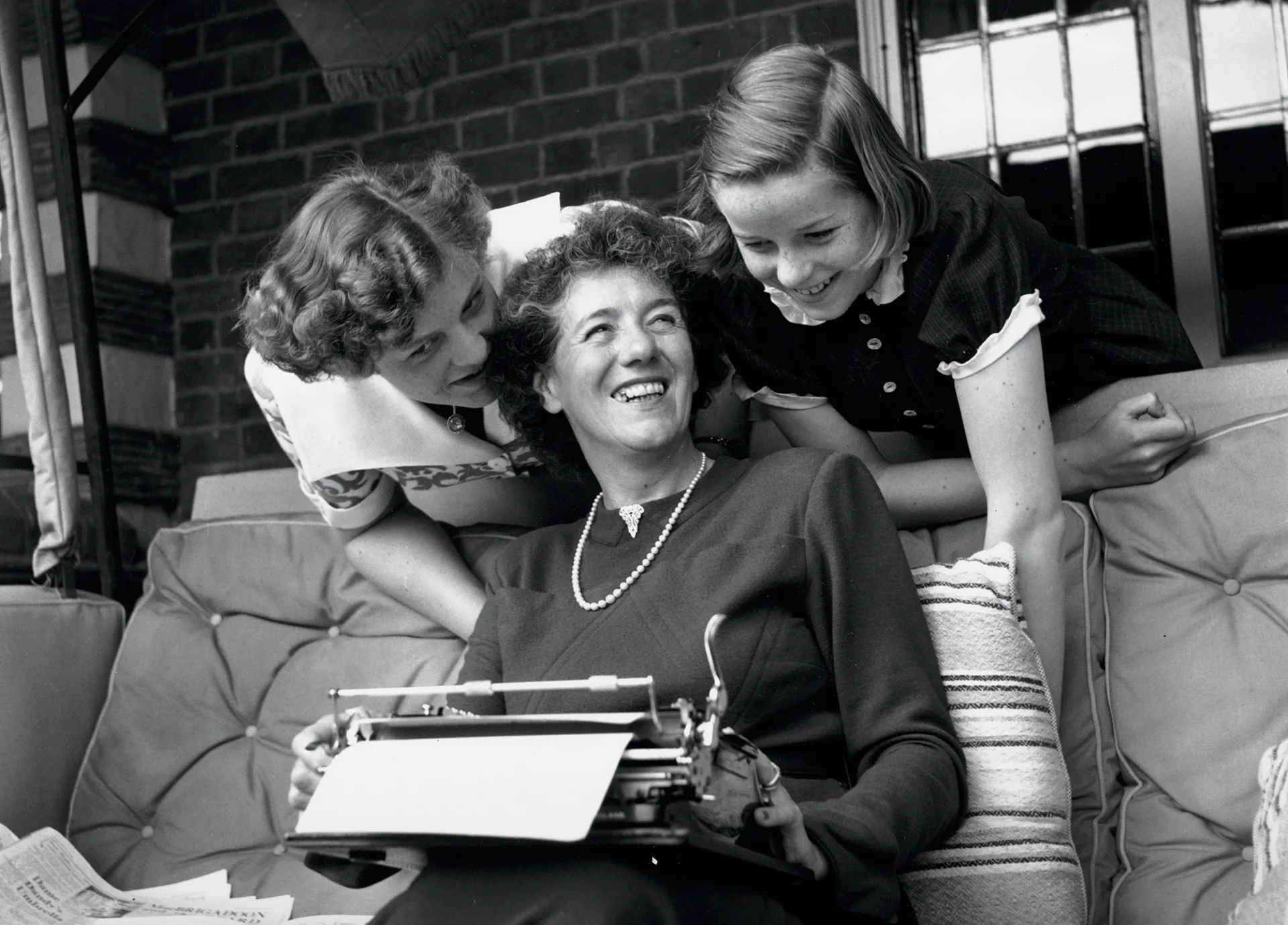
“I was a 1930s child, of course, I had a nanny,” Gillian would later say of her upbringing. “You went down to see your parents at five o’clock, but my mother always seemed to have time for me. We would go to glorious buttercup meadows. We would go blackberrying. I would come and garden with her. I was always doing things with her … As Imogen was growing up, my mother’s career was taking off. We moved to a larger house, Green Hedges, at Beaconsfield, where there were more staff to maintain, the upkeep was greater, and my mother worked harder than ever.”
Imogen had less fond memories of those early years with her mother, going on to write a scathing autobiography, A Childhood at Green Hedges, in 1989.
“Most of my mother’s visits to the nursery were hasty, angry ones, rather than benevolent,” she would recount.
“The nursery was a lonely place. The nannies lingered in the warm kitchen, and I had no friends to come and play with me.”
“In Enid’s day, upper-class parents rarely had much to do with their children,” Jackie muses. “They were sent off with nannies into boarding school, and they only come together on their holidays. It was a very different time, and I think the books need to be read in that context.”
An unhappy union
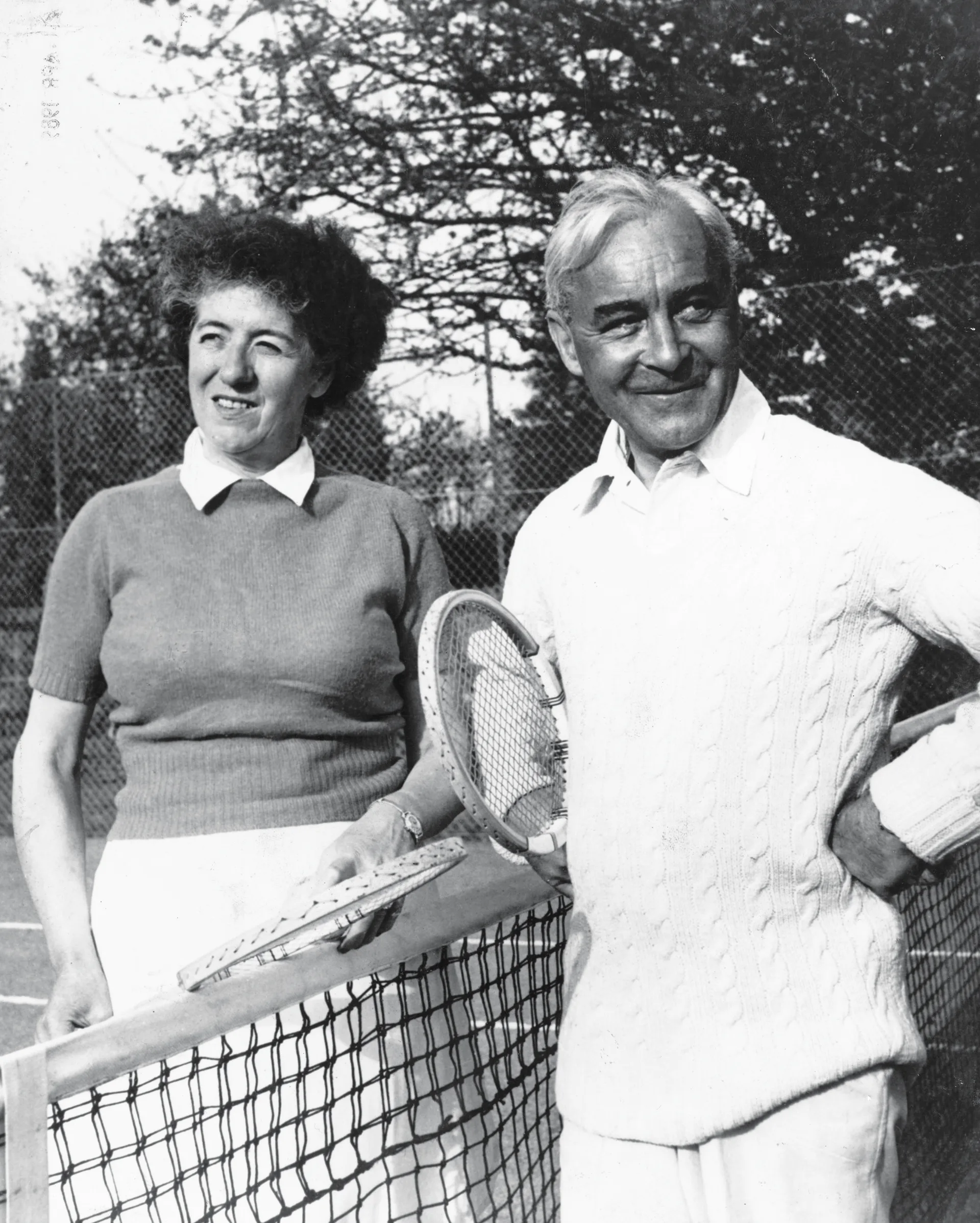
Behind the scenes, too, the home was far from happy when it came to Enid’s marriage. Hugh had a drinking problem, struggled with depression and was having affairs. Enid was also far from faithful. By 1941 their marriage was over, with Hugh confessing to adultery as grounds for divorce. Enid would go on to marry her lover, surgeon Kenneth Darrell Waters, in 1943.
But even with the tumult in the background, Enid’s career was soaring. She was a masterful publicist for her own work, overseeing design of all book covers, ensuring her distinctive signature was the hero, and enlisting her young readers to name her home.
“She understood brand and how to build an author brand,” says Dr Emily Baulch of how Enid would break new ground for others to follow. “That’s a huge part of her legacy, hers and Beatrix Potter’s.
“If you look at them, they were two women who really understood what children wanted from books in a very different way. Beatrix Potter had toys really early. They took that idea of fun and entertainment and immersion to the next level in a way we take for granted today but was so innovative at the time.”
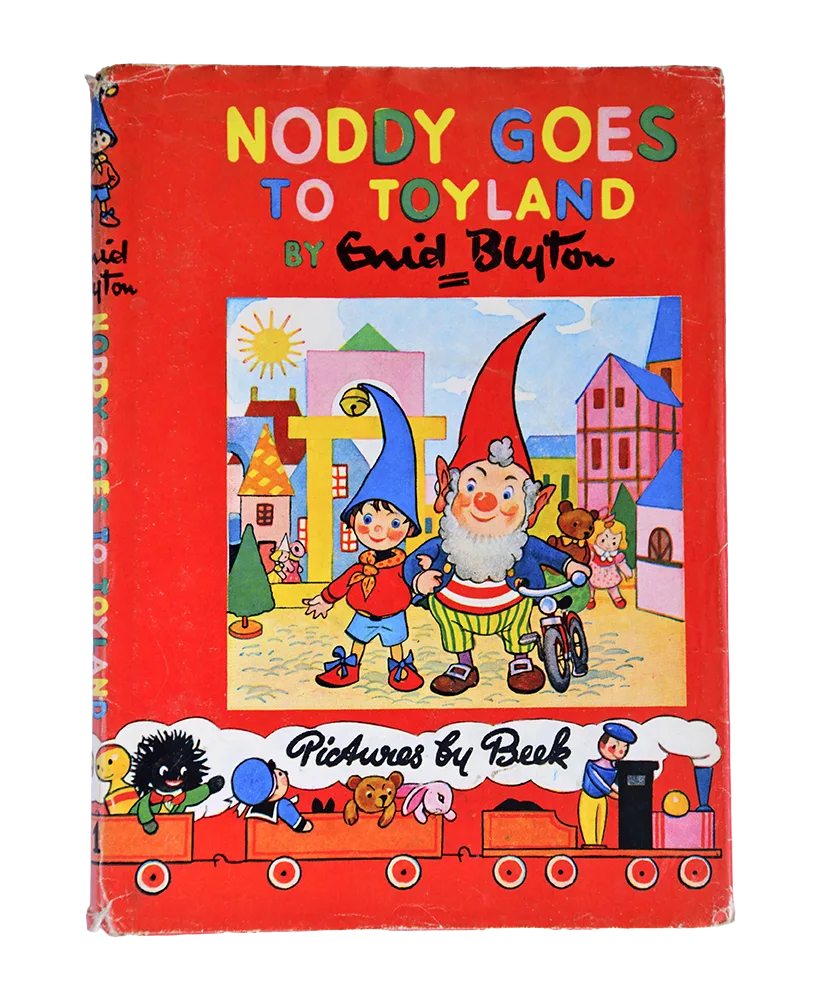
Enid continued writing prolifically throughout the ’40s and ’50s. She launched The Secret Seven novels and invented a little wooden boy from Toyland called Noddy.
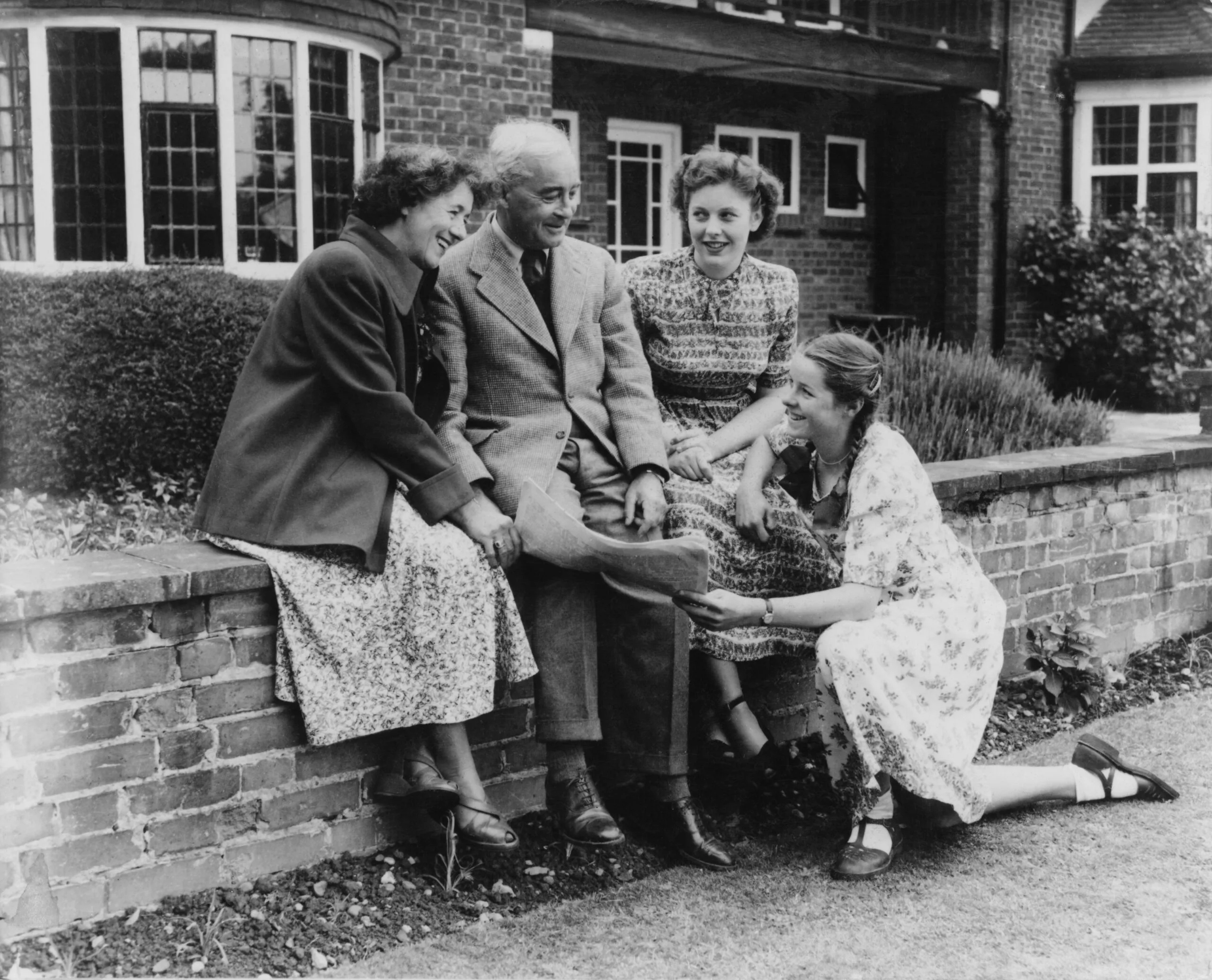
Yet while her books continued to be successful, her health began to fail. By 1960, she was displaying signs of Alzheimer’s disease. Kenneth, too, was unwell, passing away in 1967. After moving into a nursing home, Enid passed away on November 28, 1968. She was 71.
What happened to Enid Blyton?
Today, her childhood home has an English Heritage Blue plaque displayed outside. Acknowledging the problematic nature of some of Enid’s writing, it argues “her work still played a vital role in encouraging a generation of children to read”.
“The stories are timeless,” agrees Jackie. “The values in it are not. But we accept Jane Austen and [Charlotte Brontë’s] Jane Eyre. If you look at those too closely it doesn’t bear too much fruit. But we simply should not judge them by our terms. And I think it’s the same with Enid Blyton.”
“There’s so much that kids aren’t allowed to do,” adds Dr Emily of the enduring appeal of the existing Blyton back catalogue. “We’ve got a very risk-averse culture and quite lonely kids. These books offer a different kind of world that says, ‘Hey, you guys can be in control. You can make the rules’.”
And while she agrees that there needed to be changes made in books which denigrated people of colour, condescended against the working class and reinforced gender stereotypes, she adds that simply erasing these without context “doesn’t stop that history from existing”.
“If you change one character for another and take out the colour, it doesn’t stop racism existing in the books,” she explains. “So, I think there’s a place for publishers, schools and libraries to keep that context alive. If you’re going to take out names, you should be putting a note saying why so that people can understand.”
When Jackie’s son was young, she tried to introduce him to her children’s books, including the iconic Diary of a Wombat. “He didn’t like any of them,” she laughs. “But he adored Enid Blyton. Suddenly, he realised books could be fascinating and, like me, he read them over and over again.”
This article originally appeared in the April 2026 issue of The Australian Women’s Weekly. Subscribe so you never miss an issue.

Related stories
Native ad body.
Native ad body.



Native ad body.