



At a glance…
- CONTENT WARNING: This article discusses domestic and family violence and coercive control, which may be triggering for some readers. Help is available.
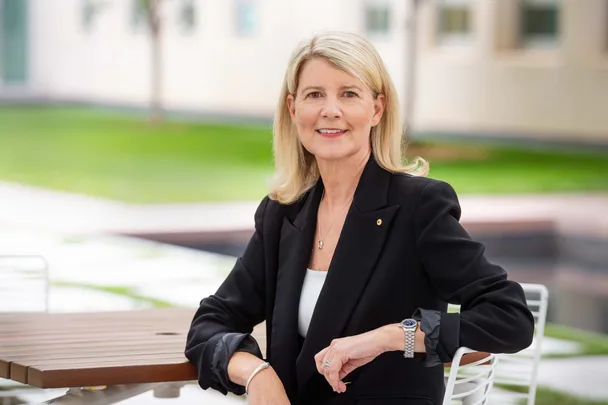
- Former Royal Commissioner, South Australian Royal Commission into Domestic, Family and Sexual Violence, and patron of Our Watch, Natasha Stott Despoja AC co-writes a letter to The Weekly’s readers with Chantelle Stratford PSM on the state of domestic and family violence in Australia and, most importantly, what we can do to help.
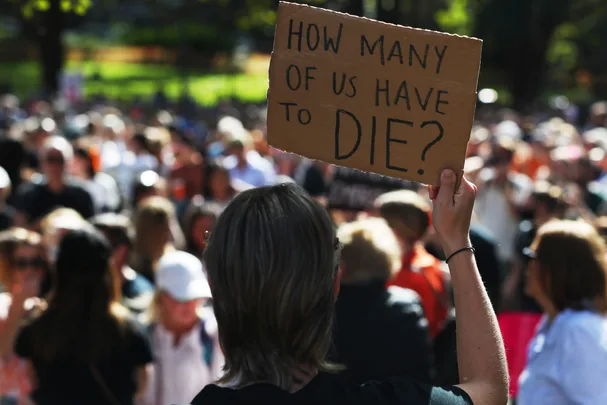
In the past few weeks, allegations of men’s violence against women have filled our news bulletins and social feeds again, and many of us have felt a mix of anger, grief and helplessness. We wonder: what can I do?
I am writing this letter to The Weekly’s readers to let you know that you can do something.
The evidence tells us where many of us will be standing when it matters. Not at a police station. Not in a courtroom. When a woman first reaches out for help or support around domestic or family violence, they are much more likely to be at a kitchen table, on the phone, in the car after school pick-up, or at the next desk. They are reaching out to family and friends.
The courage to speak
Violence by a partner remains, overwhelmingly, a hidden harm. According to the national Personal Safety Survey, 79 per cent of women who have experienced violence from a current partner have never told the police. For violence by a former partner, the figure is 68 per cent.
But that does not mean women tell no one. Most do. Sixty-eight per cent of women experiencing violence from a current partner have told someone, and 85 per cent of women who experienced violence from a former partner have also reached out. When women who experienced violence from a former partner sought advice or support, the most common place they turned was a friend or family member – more than twice as often as they turned to police.
For many women, Australia’s first response to domestic violence is not a hotline or a police counter. It is us. It is our front door.
For some women, it may be the only door. A woman who fears police, who has been let down by services before, or whose community, language or disability makes formal help harder to reach may never get past a trusted friend. And the way we respond matters.
‘Not around here’
Most of us are not expecting that knock on the door. In the 2021 national survey of community attitudes, 91 per cent of Australians agreed that violence against women is a problem in Australia. But only 47 per cent agreed it was a problem in the suburb or town where they lived.
That gap is important. It means we recognise this violence in the news, but fail to imagine it in our street, our family, our circle of friends. It is one reason so many people are caught unprepared when a sister, a neighbour or a colleague finally finds the words to tell us what they’re going through.
The first conversation matters
Women have many reasons for not seeking help. Among women experiencing violence from a current partner who had not sought advice or support, the most common reasons were feeling they could deal with it themselves (51 per cent) and believing it was not serious enough (43 per cent). Among women who had experienced violence from a former partner, 29 per cent cited shame or embarrassment.
A first conversation can confirm those beliefs or begin to undo them. It can give a woman strength and reassurance, or increase her self-doubt. International research found that when friends and family believe victim-survivors and validate their experiences, it is associated with better psychological health. Negative reactions, such as disbelief or blame, were associated with worse outcomes.

How can I help?
Being ready for that first conversation includes knowing where specialist support is available. 1800RESPECT is Australia’s national domestic, family and sexual violence counselling, information and support service. It is free, confidential and available around the clock.
Friends and family can also contact the service for advice on supporting someone. You do not need to be an expert, and you do not need perfect words to offer support when someone reaches out. There is guidance to help you.
When to step up
Do not wait for visible injuries. The signs can be more subtle. They can include someone becoming isolated from friends and family, seeming afraid of a partner, or having their behaviour controlled. Domestic violence is often about control.
The advice is clear:
- Believe her, and take her fears seriously.
- Listen, without interrupting or judging.
- Don’t blame her or make excuses for him.
- Respect her choices, and her pace.
- Tell her about confidential, professional support that’s available.
- Offer practical help – a lift, childcare, a spare room, company at an appointment.
That point about pace matters. It is natural to want to get her out now. But separation is a recognised time of heightened risk. A national analysis of intimate partner homicides between 2010 and 2018 found that actual or intended separation was a feature in more than half the cases in which a man killed his female partner. Decisions about whether to leave, and how, are hers to make, ideally with specialist support.
Be patient, too. She may not act on what she tells you. She may stay, or leave and return, or play it down the next time you see her. Keep the door open.

You can’t do this alone
This is not an argument that friends and families are responsible for keeping women safe. They are not. Responsibility for violence lies with the man who chooses to use it. Nothing about how a friend responds changes that.
Nor is your help ever going to be a substitute for properly funded, properly connected services. The South Australian Royal Commission into Domestic, Family and Sexual Violence, which I led, heard from more than 5,000 people. We found a system that was fragmented, crisis-driven and siloed. That must be fixed, and governments must be held accountable for fixing it.
And readiness is not only for women. Men have a role. If a mate talks about his partner in a way that worries you, that is a conversation worth being ready for too.
We can stop the violence
Obviously, one conversation does not end violence. Prevention – changing the attitudes and inequality that drive it – is the long work, and I remain convinced that violence is preventable.
That work happens in all the places where we live, love, learn, work and play, and the kitchen table is one of them. Every time a friend responds with belief, instead of doubt, they are not only helping one woman, but they are also showing everyone listening, including the children in the next room, what we expect of each other.
So, what can we do? My more specific answer is this:
This week, read the guidance on supporting someone. Save the number in your phone. If you are worried about someone, find a private moment, ask how she is, then listen, and believe her.
That is doing something. For the woman across the table, it may be the thing that matters most.
Written by Natasha Stott Despoja AC, co-authored with Chantelle Stratford PSM, former executive in the Office for Women.
If you or someone you know needs help, you can call 1800RESPECT on 1800 737 732; Lifeline on 131114; or 13YARN for Aboriginal and Torres Strait Islander people on 139276. More help services are outlined here.