



It was one of the hottest spring days on record in the UK when a small cluster of patients and hospital staff gathered at the gate of the Duke of Cornwall Spinal Treatment Centre in the ancient Wiltshire town of Salisbury. Flower and garden beds had been carefully weeded; tea and sponge cake set out in the shade in preparation for a much-anticipated royal visit. The car arrived bang on time but without security or entourage – and when its occupants emerged, both apologised profusely before running to find a loo.
Princess Eugenie, 35, accompanied by her private secretary, Libby Horsley, had no interest in formalities (or curtsies) on this sunny, late May day. Dressed simply in summer florals and wearing flat shoes, the princess appeared intent solely on paying an informal, fuss-free visit to talk to patients and staff about Horatio’s Garden, a charity that designs and builds outdoor spaces for patients confined to long hospital stays.
The cause is one close to Princess Eugenie’s heart. At the age of 12, she underwent serious and painful surgery for scoliosis, a curvature of the spine. As a bride, in 2018, she chose a gown with a bare back to declare pride in her scar. And as patron of this charity, she is committed to seeing Horatio’s Garden’s mission – to reach every spinal injury unit in the UK – to fruition.
“I’m happy to be on that journey with them. It needs to happen,” she says, before walking the garden with Dr Olivia Chapple. The GP founded and named the charity after her son, Horatio, who conceived the idea as a teenager, but was tragically killed by a polar bear on a school expedition, aged just 17.
It has been a punishing year for the senior royals, rocked by life-threatening health scares and the continuing estrangement with Prince Harry, but an equally tough – if bittersweet – time for the younger princesses, Beatrice and Eugenie.
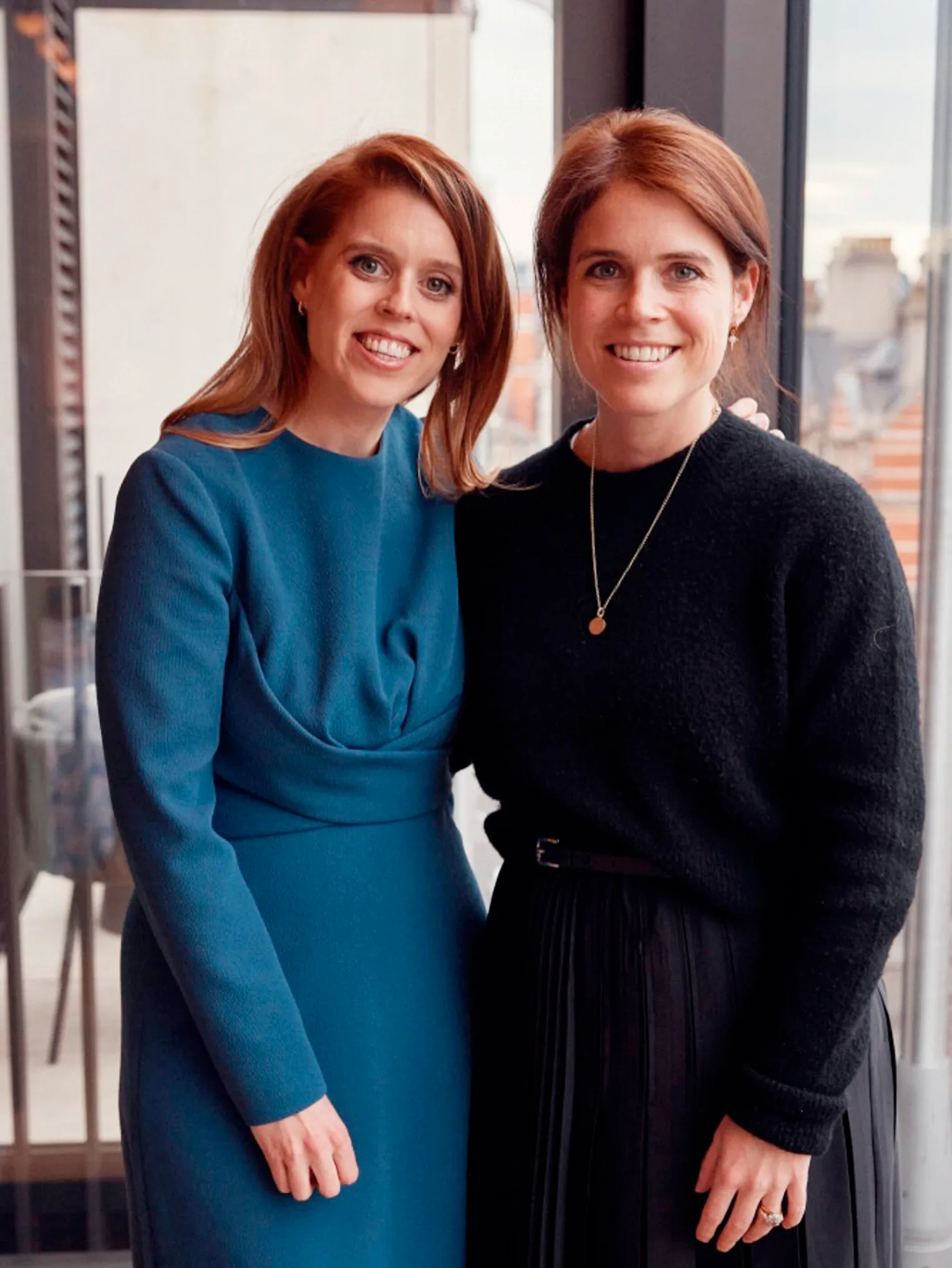
King Charles’ nieces, known for their friendly, chatty style, have quietly supported their beloved “mumma” – Sarah Ferguson, Duchess of York – through her own double diagnoses of breast and skin cancers. They also stood by loyally, if silently, as their scandal-plagued father, Prince Andrew, was forced out of public life.
Yet, the late Queen’s beloved granddaughters’ stars are on an upward trajectory. The British public is seeing more of the inseparable duo than ever before, and new polling shows they’ve eclipsed their cousin Prince Harry and his wife Meghan, Duchess of Sussex, in the popularity stakes.
Even Tatler magazine has labelled this the “year of the York sisters”.
“From taking centre stage in international diplomacy to the joyous news of a new baby, the York sisters have not only served the Firm with dignity this year, but acted as a light during some of the House of Windsor’s darkest days,” Britain’s unflinching high society bible reported.
The big question on the UK royal reporting circuit is: Will King Charles bring his nieces into the frontline of royal duties or will this chapter only open for them when William ascends the throne?
Certainly, they have the public support of their aunt, Princess Anne, 75, who in July gave her own imprimatur to the organisation closest to Eugenie’s heart when she opened another of Horatio’s Gardens at the Princess Royal Spinal Cord Injuries Centre in Sheffield.
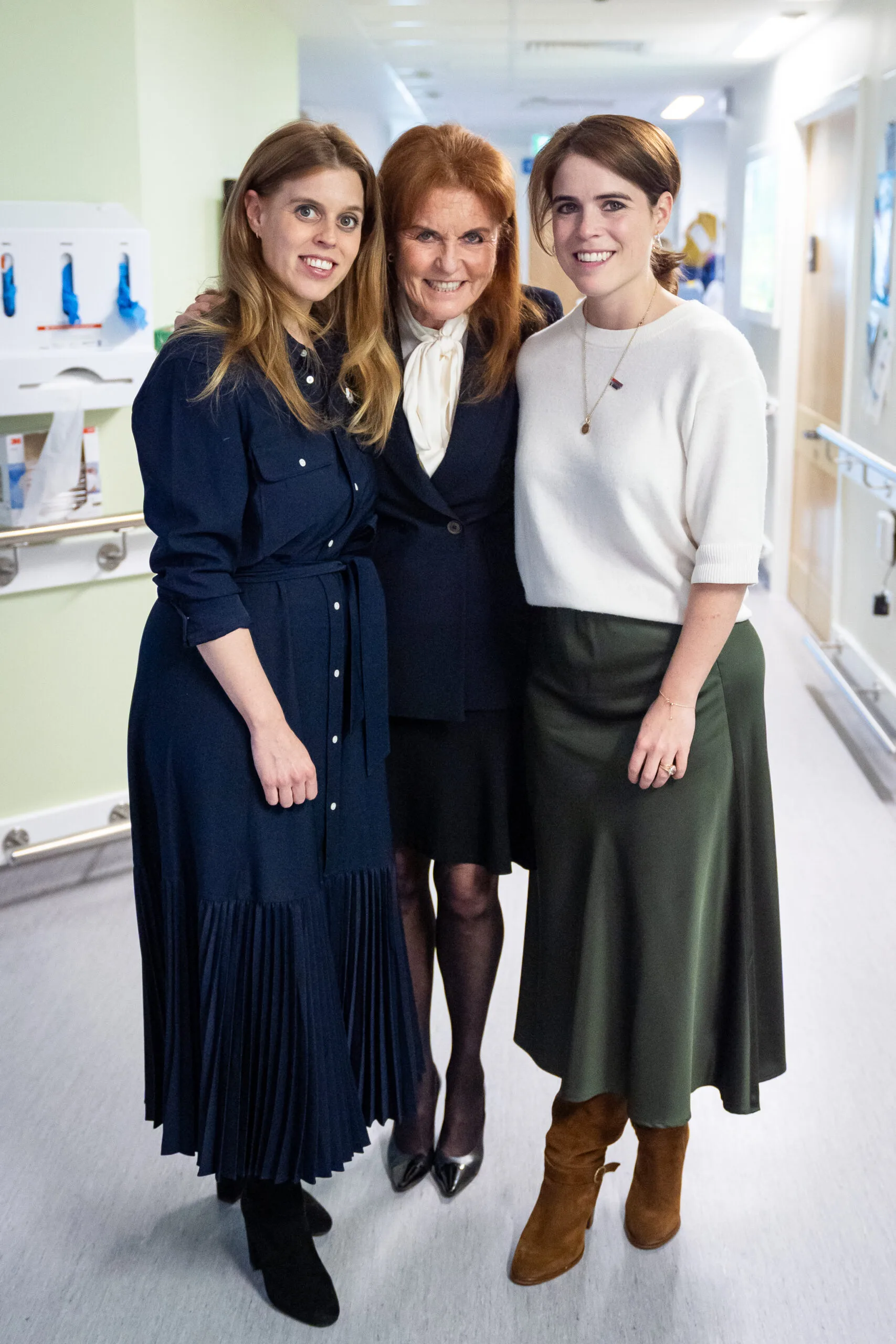
This year has also brought private happiness to the sisters. For Princess Beatrice, 37, there has been a second baby girl, Athena, born on January 22 – a sister for Sienna, three, and husband Edoardo Mapelli Mozzi’s son, Christopher Woolf, six. The couple share care of the boy – known as Woolfie – with Edoardo’s ex-partner, architect Dara Huang.
Beatrice’s little girls are close enough in age to be playmates for Eugenie and husband Jack Brooksbank’s two boys, August, four, and Ernest, two.
Unlike their father, who has resisted King Charles’ attempts to move him from the 30-room Royal Lodge into the more modest Frogmore Cottage (both on the Windsor estate), the York women have said little about their private homes.
Princess Eugenie splits her time between the UK and the coastal town of Comporta in Portugal. The move was prompted by Jack’s work with British property developer Michael Meldman and the Discovery Land Company. However, they maintain a residence, Ivy Cottage, on the Kensington Palace grounds. And while the couple are said to enjoy life in Portugal, there has been increasing talk that they’re considering a permanent return to the UK for the boys’ schooling.
Speaking about her life in Europe not long after the move in 2023, Eugenie told the Table Manners podcast that she loved the freedom of living under the radar: “This is why Portugal is the dream, because I can go to the supermarket in my exercise gear and my hair piled on my head and not mind. Not a care. No one cares.”
Princess Beatrice and Edoardo, who runs an interior design and property development company, Banda, call the Cotswolds home and live in a £3.5 million farmhouse, bought in 2021.

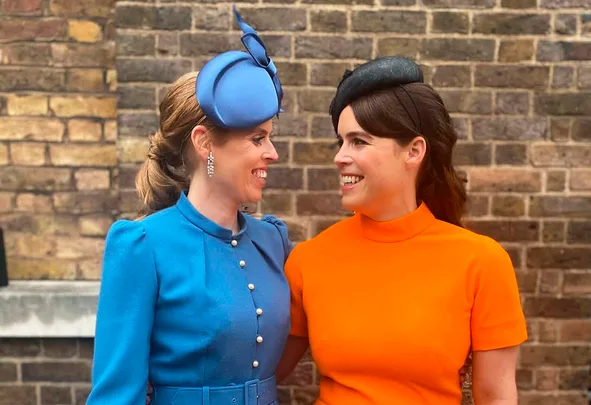
Speaking with The Weekly, seasoned royal observers are, unusually, unanimous in describing the York sisters as “absolutely lovely girls”, easy going and “very close”.
“Fergie brought them up beautifully: They are and have always been lovely, lovely girls,” says Ingrid Seward, author of My Mother and I: The Inside Story of the King and Our Late Queen, and editor in chief of Majesty magazine.
“They have been through some difficult times – you know, comments about their clothes, their weight … As a mother, Fergie has seen them come up trumps, although she too has been through a beastly time.”
Even Andrew Lownie, author of the explosive new joint biography of Prince Andrew and Sarah Ferguson, Entitled: The Rise and Fall of the House of York, says “the children are lovely and they’ve been badly served, I’m afraid, by their parents.”
The siblings have always been close and are often photographed together, attending functions and supporting each other in their respective charity work. Last year, for the first time, they joined their cousins – including Zara Tindall and her husband, Mike – helping Prince William and the Princess of Wales host the traditional Royal Spring Garden Party at Buckingham Palace. Their appearance fuelled conjecture about the possibility of a higher profile, perhaps even formal roles, for the York sisters with the Firm.
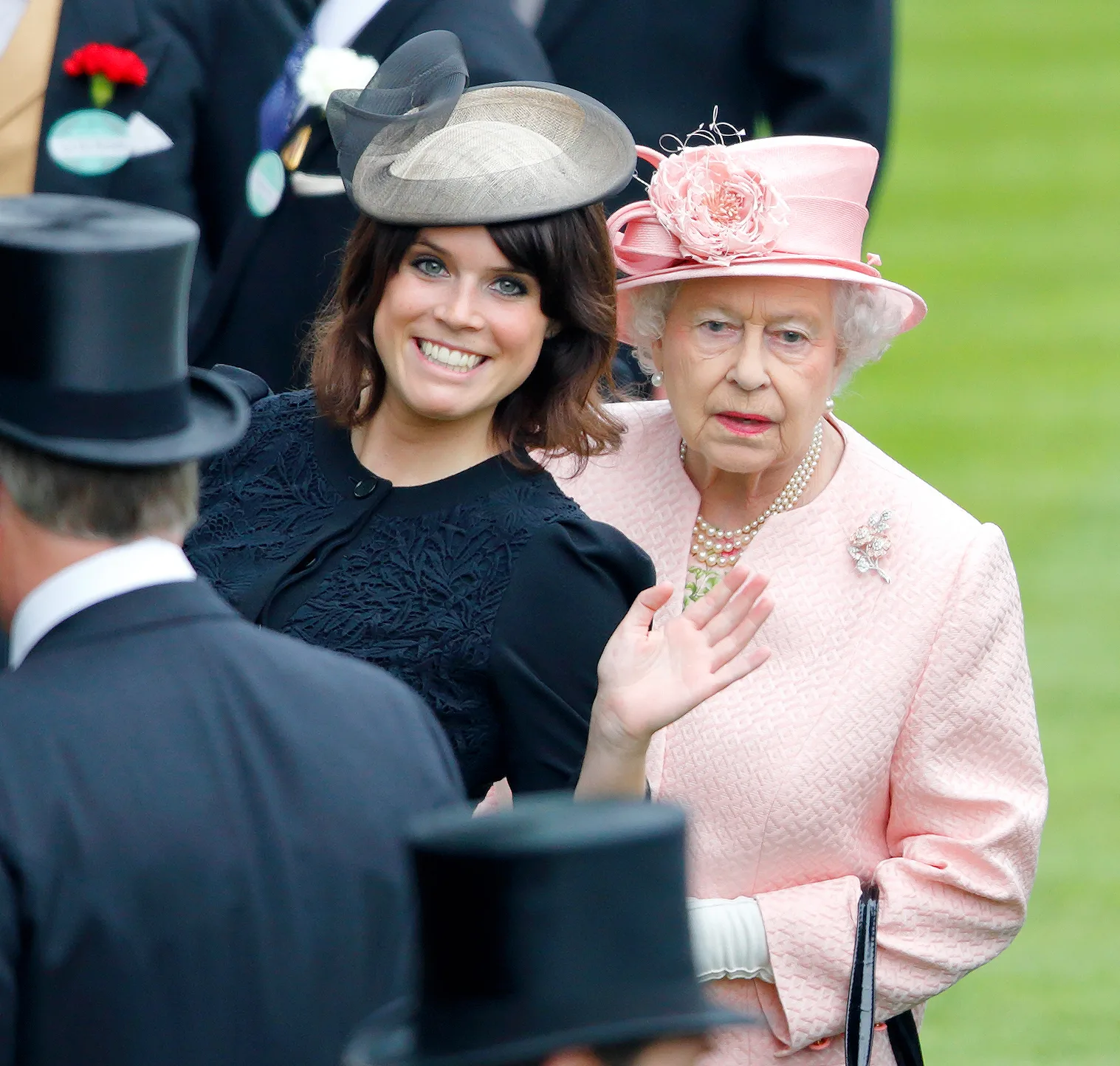
This year, the sisters have both enjoyed the Chelsea Flower Show (a favourite date on the late Queen’s calendar), met young cancer patients at the University College London Hospital, and Princess Eugenie attended the garden party at Buckingham Palace on May 20.
Hugo Vickers, biographer of the Queen Mother and the Duke and Duchess of Windsor, says the two princesses brought new energy to the events. “You know, what the King and Queen would say to you at these functions is quite predictable, but what these youngsters might say is not … It was hugely energetic, that first one Prince William did. It was great fun. That is what the royal family needs – energising.
“At one time, we had a four-generational royal family … Now you don’t have that. I’ve always thought they should use those girls more. They’re both fun, extremely well brought up … That might sound surprising and I don’t know if I can say this … but ropey parents do sometimes bring their children up very strictly.”
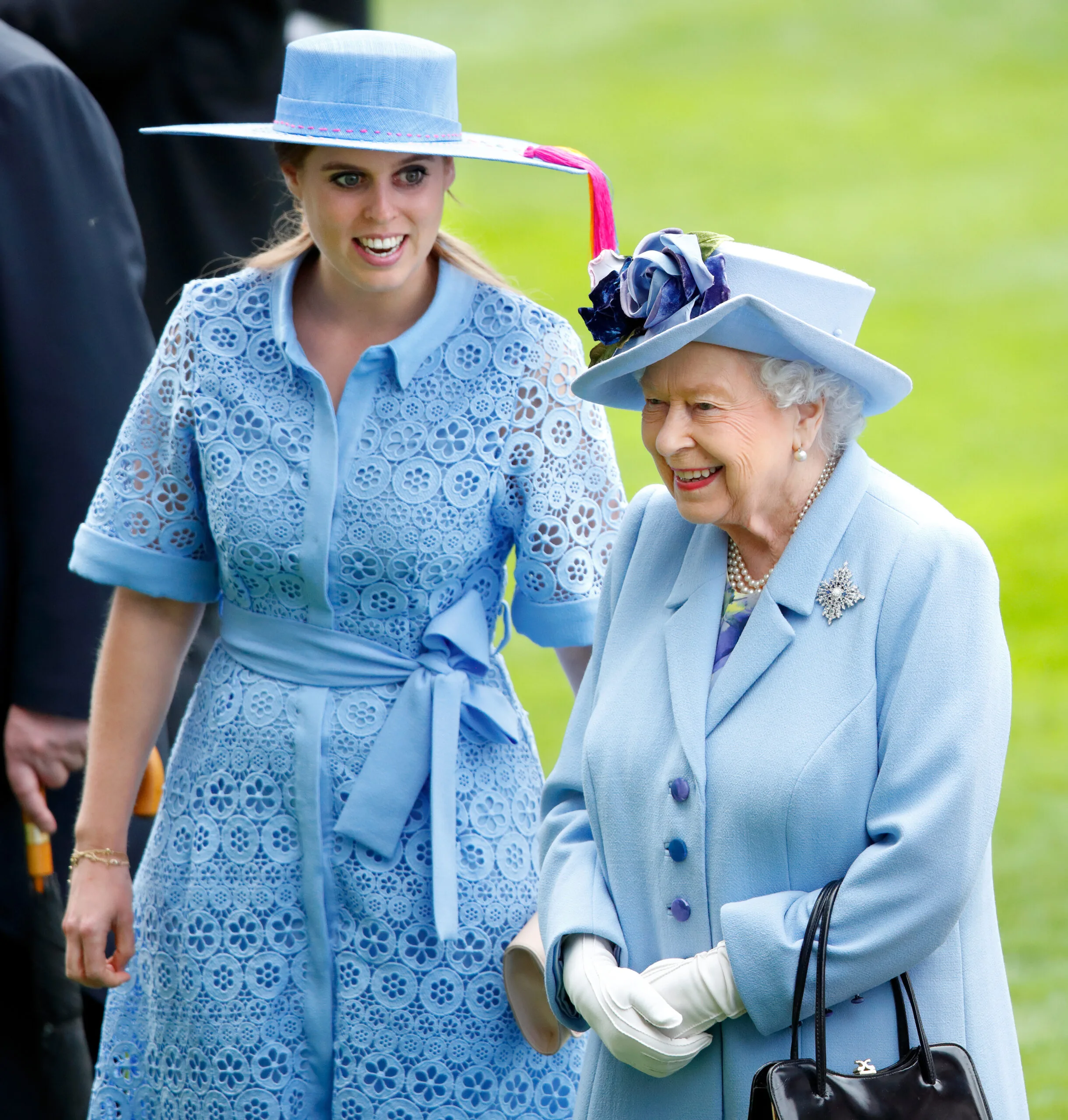
Hugo remembers being invited to tea with the Duchess of York and her girls when they were quite young, and if they stepped out line, they “got their heads bitten off … not in an aggressive way, not in a bad way, but in a firm way … They’re terribly polite, and very nice girls”.
Unlike Kate Middleton, who worked only very briefly before her marriage to Prince William, Beatrice and Eugenie also have professional careers. Beatrice studied history and the history of ideas at Goldsmiths, University of London, and is a vice-president responsible for partnerships with American tech firm Afiniti. Eugenie studied art history and English literature at Newcastle University and is a director of the Hauser & Wirth art gallery in London.
The sisters are also active philanthropists. Beatrice co-founded the charity Big Change with Holly and Sam Branson, after the London riots of 2012. The charity supports education, social and mental health programs for young people. In 2017, Eugenie launched The Anti-Slavery Collective.
In her first media interview, granted to the London Telegraph just before her 18th birthday, Eugenie candidly explained how different the sisters are in personality, while insisting this made them closer: “I am definitely not as polite as Beatrice, I have to say,” she confessed. “I tell it as it is. I am shyer at first. Like, at a party I will say to Beatrice as we go in, ‘Oh, you go first.’ But then, when we’re actually in, I am much louder and she is far more polite and solicitous.”
Eugenie has also admitted to having a quick temper: “I sort of inherited my dad’s short fuse.”
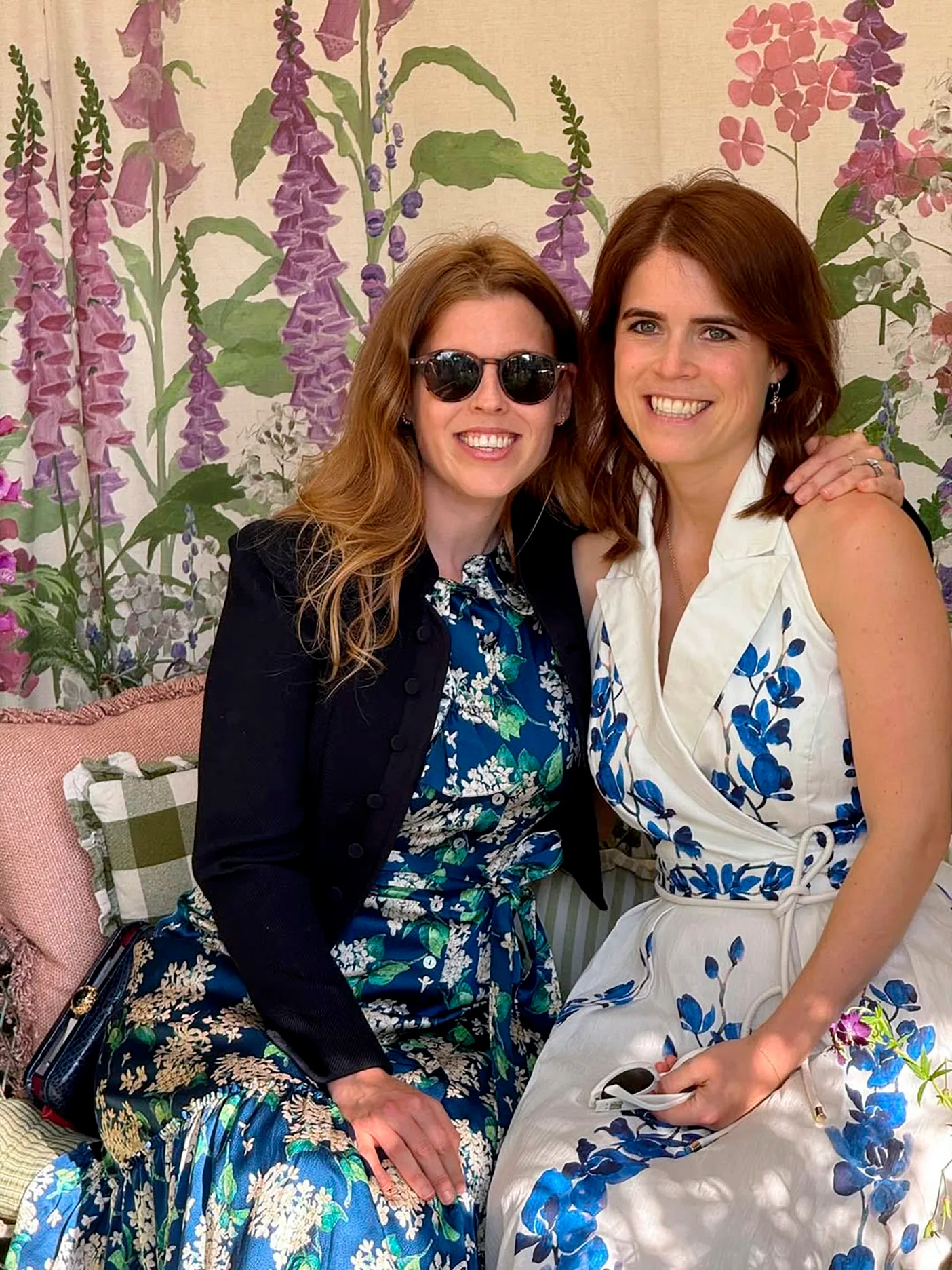
Ingrid Seward observes that Beatrice is the more ambitious of the sisters in terms of public life. Particularly since her marriage to Edoardo, she has been seen more often at high-profile social events and parties.
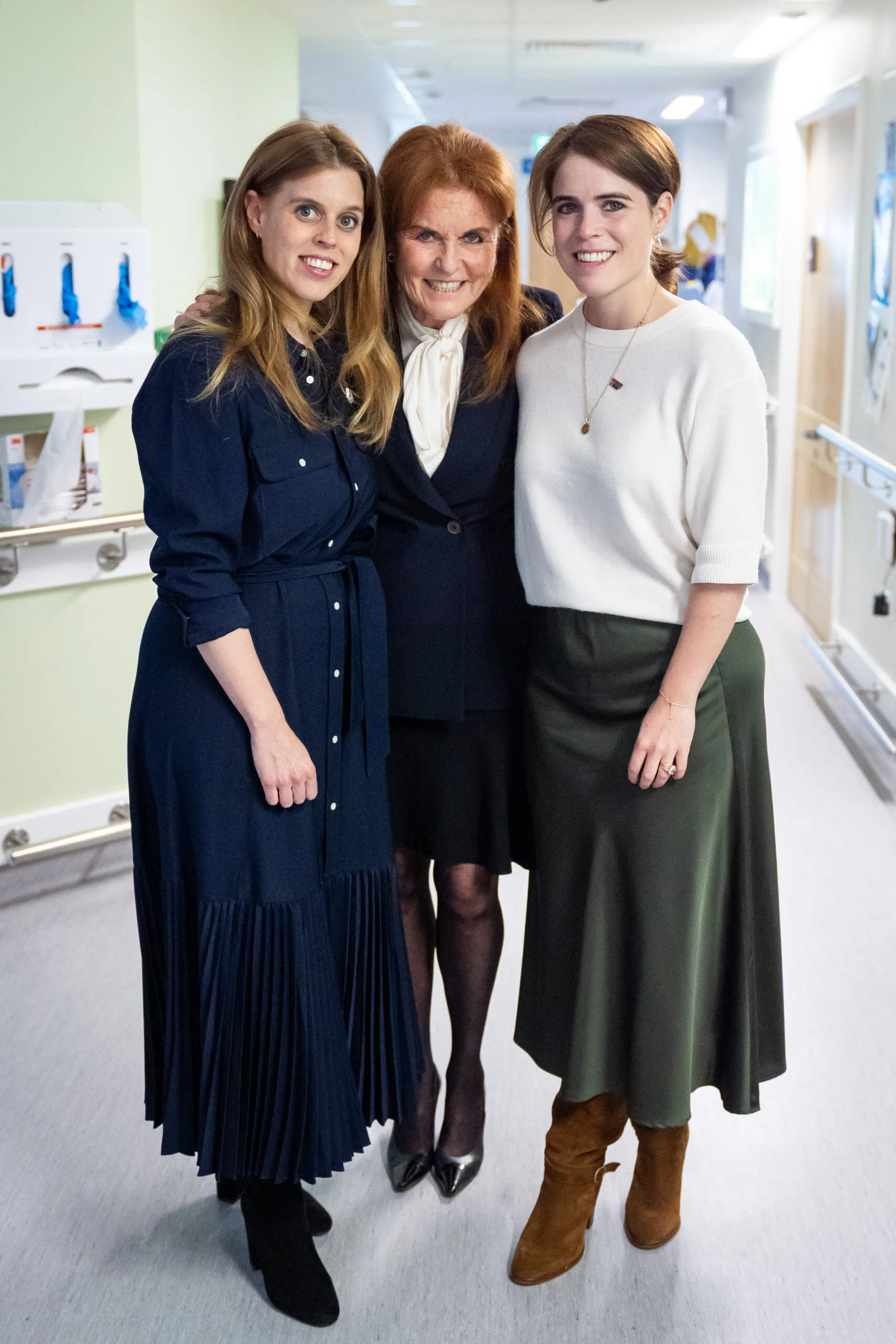
Chatting in May with their old friends Cressida Bonas (Prince Harry’s ex) and her sister Isabella Branson for their podcast Lessons From Our Mothers, Eugenie and Beatrice opened up about their mother’s continuing influence on their lives. They see themselves as a supportive family unit, which they affectionately refer to as “the tripod”.
Beatrice says her mother, at 65, is a “force to be reckoned with”, while Eugenie laughs that the Duchess of York is “spontaneous, the joy bubble in the room … I like to say mad as a box of frogs”.
“But now as mums … when we’re with her, we can be little again, those little people that need support from their mum,” Eugenie adds. “When I think about [her], it’s that strength, that person you can bounce off when you need to.”
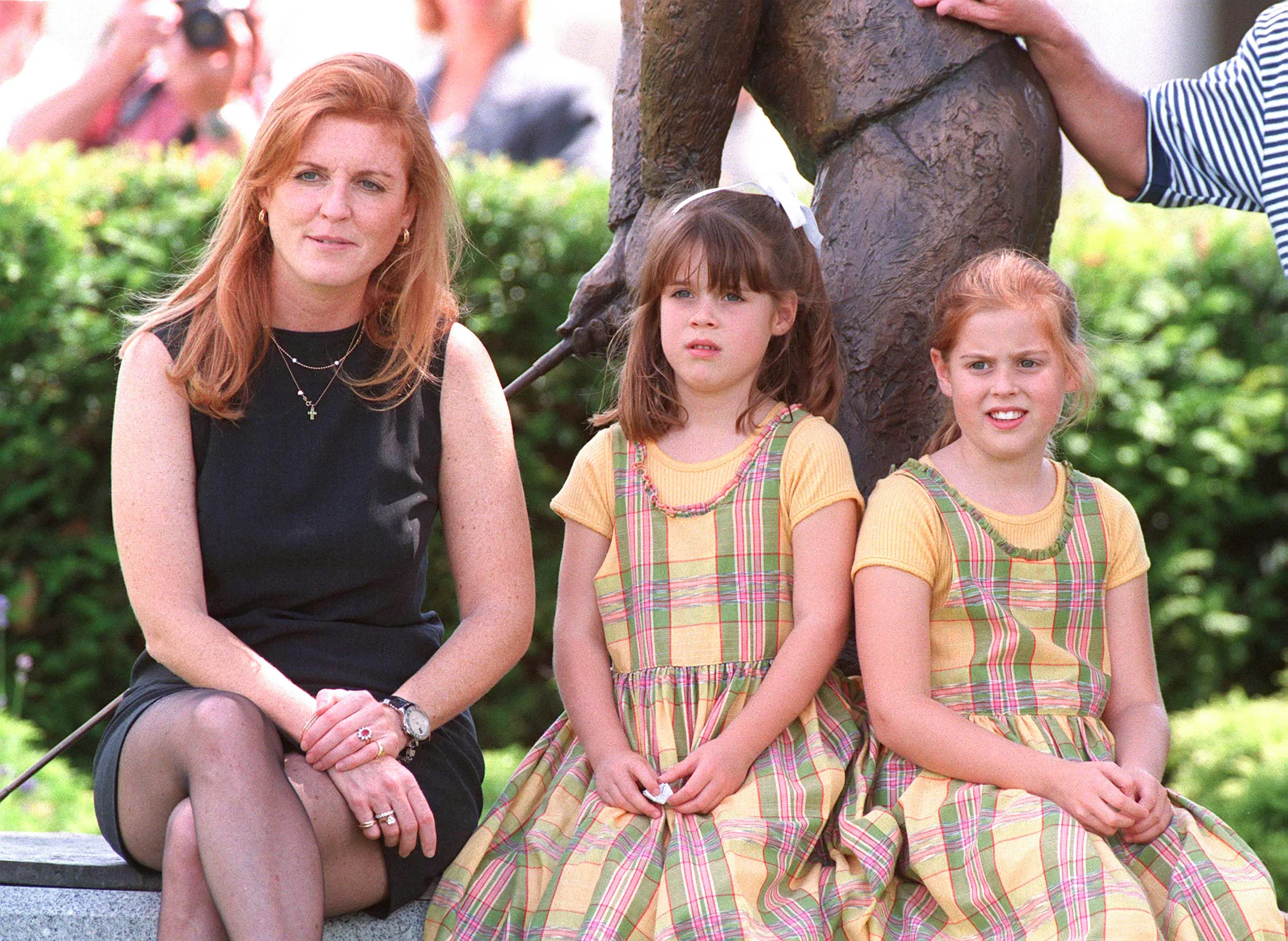
In the podcast the sisters describe relatively normal childhoods – watching TV in the mornings before school (they particularly loved the animated fantasy series The Snorks) and more often than not being late, with their mum mushing up toast and boiled egg in a cup which they ate with a spoon in the back of the car.
“Do you remember, Bea,” prods Eugenie. Eugenie calls her sister “Bea”, while Beatrice refers to her sibling as “Euge”. “Now I understand it was essentially a mum hack because we were running late … There was always an adventure to be had. Even in some of the harder times, through divorce and challenging moments … she had an ability to kind of jump into things with two feet. She brought joy to moments – even being late to school.”
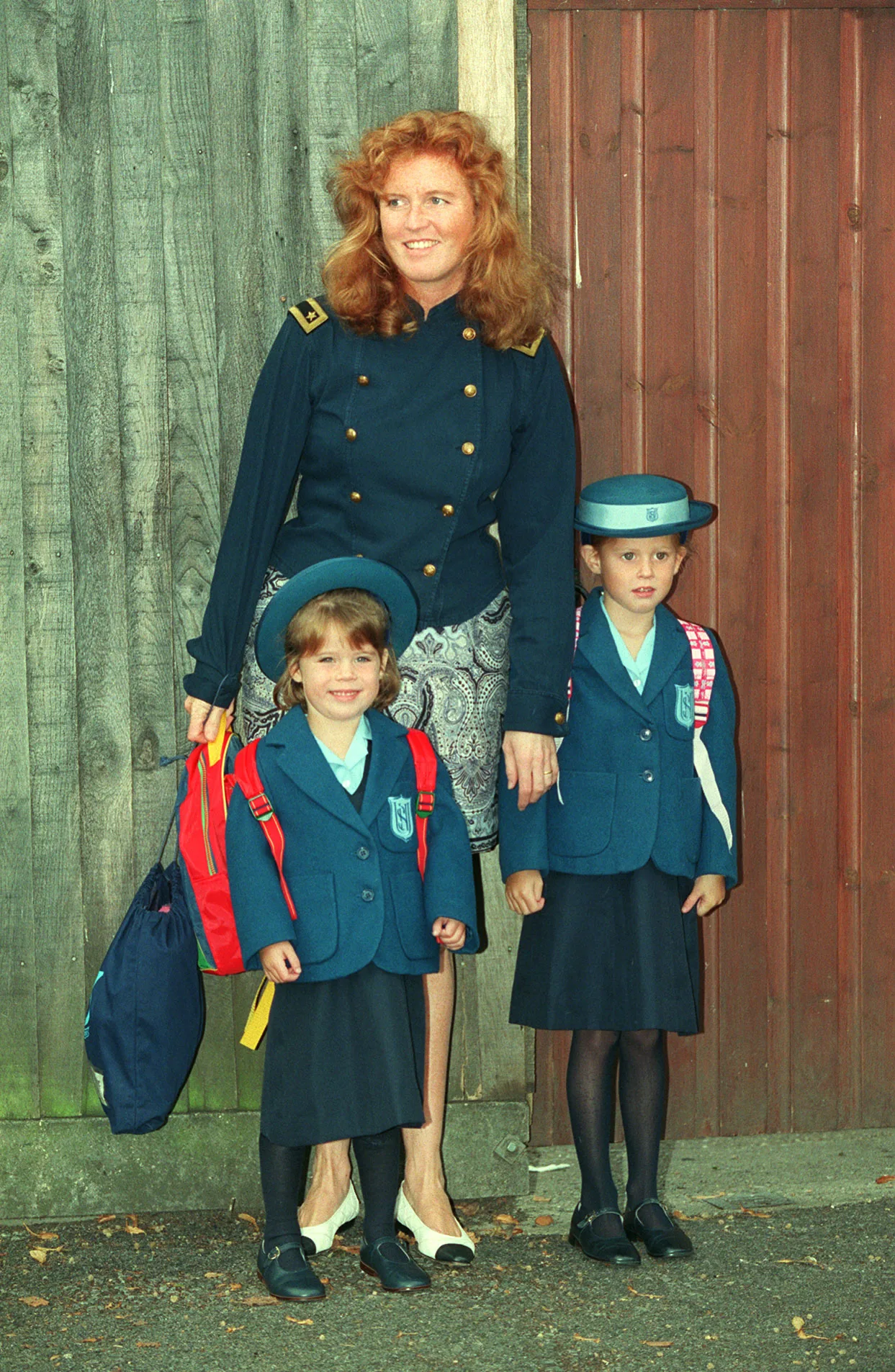
Growing up, the York girls were encouraged to express their feelings openly, to stand their ground and not apologise “for being in the room”.
Eugenie recalls her mother encouraging her to show off her scoliosis scar and be proud, not ashamed, of the corrective surgery. Beatrice recalls her mother’s own lifelong struggles to “fit into the room” but believes she’s now more comfortable in her own skin: “She’s learned the hard way but now, having the grace and beauty to be … no matter what she’s been through, she’s authentic,” she tells the podcast.
Sibling fights were not unheard of growing up, including a particularly memorable one over a pair of pink Converse trainers. Sarah encouraged them to resolve conflicts peacefully and reminded them that they would “always have each other” for support. Their mother’s close relationship with her sister, Jane, who lives in Australia, was important role modelling.
Equally, the sisters describe a carefully nuanced education in manners appropriate to their royal upbringing, which they now teach their own children. “We knew our boundaries,” says Eugenie.
Despite a growing public presence and affection, Beatrice (ninth in line to the throne) and Eugenie (twelfth) are not “working royals”. They’re not paid for their public-facing work through the Sovereign Grant, the pool of money set aside to cover official royal expenses, such as security and staff.
The King, Queen, Prince and Princess of Wales, Prince Edward, Sophie, Duchess of Edinburgh, Princess Anne, the Duke and Duchess of Gloucester, the Duke of Kent, and Princess Alexandra remain on the working royals list and carry out public duties. However, King Charles made clear, even before he took the throne, that he wanted a slimmed-down monarchy, apparently concerned by the public optics of spending too much money on too many minor royals during difficult economic times.
Ingrid Seward believes it’s unlikely the York sisters will be brought into the working royal fold during Charles’ reign. “If Beatrice and Eugenie became working royals, they’d have to be clothed, their security paid … I just don’t think he is of the mindset to do that when he is minimising everything … When Prince William takes the throne, it might well be different.”
Hugo Vickers believes the royal family needs an injection of younger royals being seen out and about, and that
the new generation are “great value”, not expecting to be paid for every community or hospital appearance.
“I don’t know what the King wants to do but I know what he should do,” he says. “He should gradually bring them into various things. They need more people for regiments, for charities. People want the royal family and they don’t have Prince Harry and they don’t have Prince Andrew, so what are they going to do? Perhaps if the King doesn’t do it, Prince William will later on.”

The Queen – the York sisters called her simply “Granny” – paved the way for any such eventuality. Eugenie says she taught them not just the importance of dedication and duty but also how she “could disarm a room with her smile or her wit and humour and kindness”. Her love of penning letters was another trait they absorbed, and they are both avowed writers of hand-written thank you notes.
They poignantly describe the Queen’s thoughtful nature. In her chat with Cressida and Isabella, Eugenie reminisces about flicking through a food magazine with the Queen, and pointing out a recipe for a trout and avocado salad that she liked. Her grandmother, who also enjoyed reading recipes in magazines, served the trout and avocado salad for lunch the following week. “She’d thought of that and remembered how nice that would be for me.”
Asked the most valuable lesson they learned from their grandmother, Eugenie laughs and says it was playing cards.
“One of my favourite things was playing patience with her, and I learned this really, really complicated game of patience, which I never won. I think maybe just once I cheated and won.”
“But that’s not really a proper lesson,” she adds quickly. “I think the most valuable lesson probably has to be how you just always show up. You know, how you show up for people, how you show up for your work, for your charities, for the people that really need to see you …
“She led by example. She showed what it is to do your duty and to really dedicate yourself to others.”

Related stories
Native ad body.
Native ad body.

Native ad body.