Sarah Starkey was 13 when inflammatory bowel disease took over her life.
She was going to the toilet up to 20 times a day, often with pain, blood and mucus.
“It was a lot to deal with,” the South Australian woman tells The Weekly. “I did things, but I probably didn’t do the same things that all of my friends did.”
She missed plenty of school and, as she got older, university and work too. During a bad flare, there were days she barely left her bed.
“You can be literally bedbound and just go from bed to toilet, bed to toilet,” she says. “You’re so weak and lethargic from using your bowel so much.”
She often didn’t feel like eating and struggled to stay hydrated because she was losing so much fluid. Even her sleep was affected, with trips to the bathroom throughout the night.
“Flares can be unpredictable. They can come at any time.”
What is inflammatory bowel disease (IBD)?
Sarah is one of almost 180,000 Australians living with inflammatory bowel disease (IBD), a group of chronic conditions that cause inflammation in the digestive tract. The two main types are Crohn’s disease and ulcerative colitis. Sarah had what doctors called “indeterminate Crohn’s and colitis”, meaning she had features of both.

Australia has one of the highest rates of IBD in the world, with Crohn’s & Colitis Australia estimating more than 200,000 Australians will be living with IBD by 2035.
“They’re both like an autoimmune attack on the bowel,” explains Associate Professor Reme Mountifield, a gastroenterologist specialising in IBD.
“With ulcerative colitis, we see inflammation in the large bowel only, and with Crohn’s disease, we see patchy inflammation anywhere from the mouth all the way through to the anus.”
And while IBD is sometimes confused with irritable bowel syndrome (IBS), they are actually different conditions. IBS doesn’t have the inflammation or damage to the bowel seen with IBD.
“With ulcerative colitis and Crohn’s disease, you can have the same symptoms [as IBS] but also bleeding from the bowel,” Dr Mountifield says. “IBD can also affect the joints and the eyes and the liver with that autoimmune attack as well.”
There is currently no cure for IBD so people live with periods of flares and remission. “We generally can’t cure it, so people have the disease for their whole life in most cases,” Dr Mountifield says. “The idea is that we get them into remission with medications so that they’re doing well and they’re stable, so they’re living with the disease, but they can get on with their life.”
What are the symptoms of IBD?
Diarrhoea, abdominal pain and blood in the stool are the most common symptoms of IBD. Other symptoms include fatigue, loss of appetite, weight loss, nausea and vomiting.
But some of the hardest parts of living with IBD aren’t always obvious to other people.
“People might be at school or at work or on a date, and they suddenly have to run to the toilet,” Dr Mountifield explains. “It can be really socially disabling for people.”
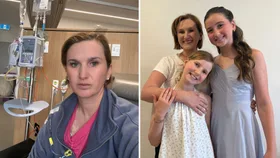


During a flare, that urgency can make even leaving the house difficult. “It can involve not being able to leave the house because they’re so terrified they’re going to suddenly need to go to the toilet,” she adds.
Because symptoms such as abdominal pain and diarrhoea are common and overlap with other conditions, it isn’t always clear that IBD is the cause.
“It can take years for patients’ symptoms to be recognised as being about inflammatory bowel disease,” Dr Mountifield says.
Diagnosis usually involves blood tests, stool tests and imaging, but a colonoscopy or endoscopy with biopsies is often needed to confirm IBD.
Getting an answer early is important. “The earlier we treat, the better the long-term outcome and the lower people’s risk of surgery and having a stoma,” Dr Mountifield adds.
‘That’s when I got my life back’
By the time Sarah was in her early 20s, she was seriously ill. “I had a lot of pain. I lost a lot of weight,” she recalls. “Anything that I was eating, my body was not absorbing. I was just really weak. I was fatigued.”
Scarring, adhesions and ulcers had narrowed her bowel so much that surgery became unavoidable.
“The decision, I didn’t really get to make it,” she says. “My bowel stopped working, and I had no other option.”
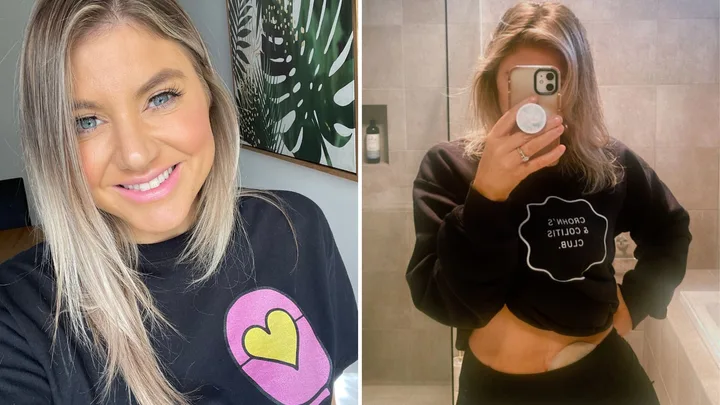
At 24, Sarah had her bowel removed, followed by surgery to remove her rectum the next year. The surgeries mean she now lives with a stoma and uses a bag full time.
“I was probably sad about my body changing at the start,” she reflects. “But I was really sick and had no real quality of life.”
Sarah affectionately named her stoma Suzie and says her “life completely changed” after the surgery.
“I was able to go out. I was able to eat things that I couldn’t before. I didn’t have the pain. I wasn’t rushing off to the toilet. I like to say I’ve got the life that I deserved, because I was able to just live properly.”
Seventeen years later, Suzie is simply a part of Sarah’s life. She even celebrates Suzie’s “birthday” every September.
“It’s just like celebrating being well,” she says.
IBD and fertility
“Give me bowel surgery any day over infertility,” Sarah says. “That was very emotionally challenging.”
She and her husband went through six egg retrievals and six embryo transfers, and she experienced three miscarriages before they eventually welcomed their daughter through surrogacy.
“I wasn’t fully made aware of that situation when I had my bowel surgery,” she says. “I wish that it had been explored more or explained to me.”
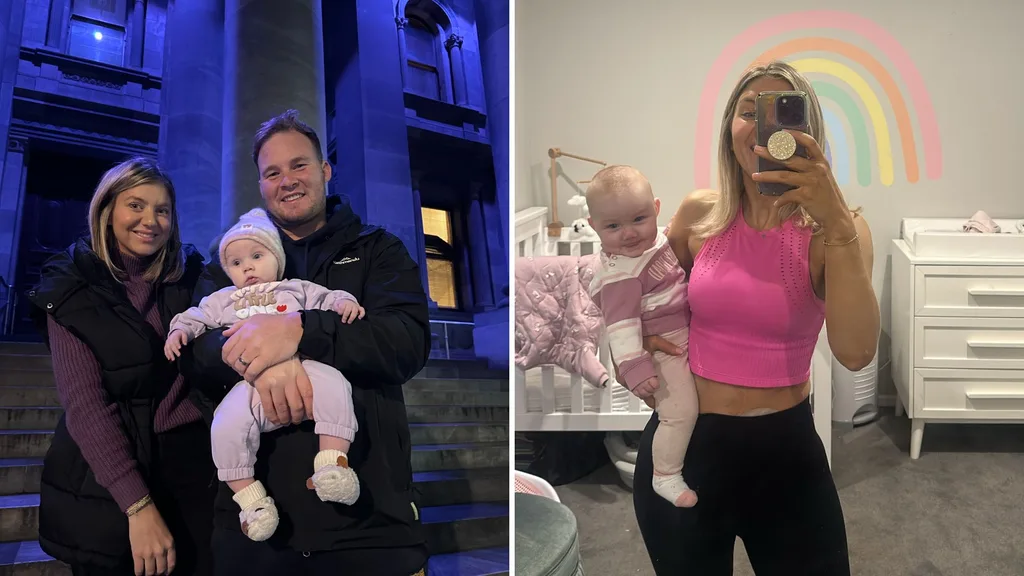
Sarah is clear she needed the surgery and “wouldn’t change that for the world”. But she now talks openly about her fertility experience in the hope other women with IBD know to ask questions before surgery where possible.
Dr Mountifield notes most people with IBD can have children and, when the condition is under control, fertility and pregnancy are usually normal. Surgery, however, can make it harder to conceive.
“You can still get pregnant and have children if you’ve had surgery, but the risks are higher and fertility rate is lower,” she says. “It’s harder to get pregnant, and this is a source of a lot of stress for people.”
Living fearlessly
Sarah is now 41, works as a nurse and has spent years sharing her experience of IBD, living with a stoma and infertility.
“I didn’t have someone to look up to or to help me with IBD and all the things,” she says. “So this is my way of giving back.”
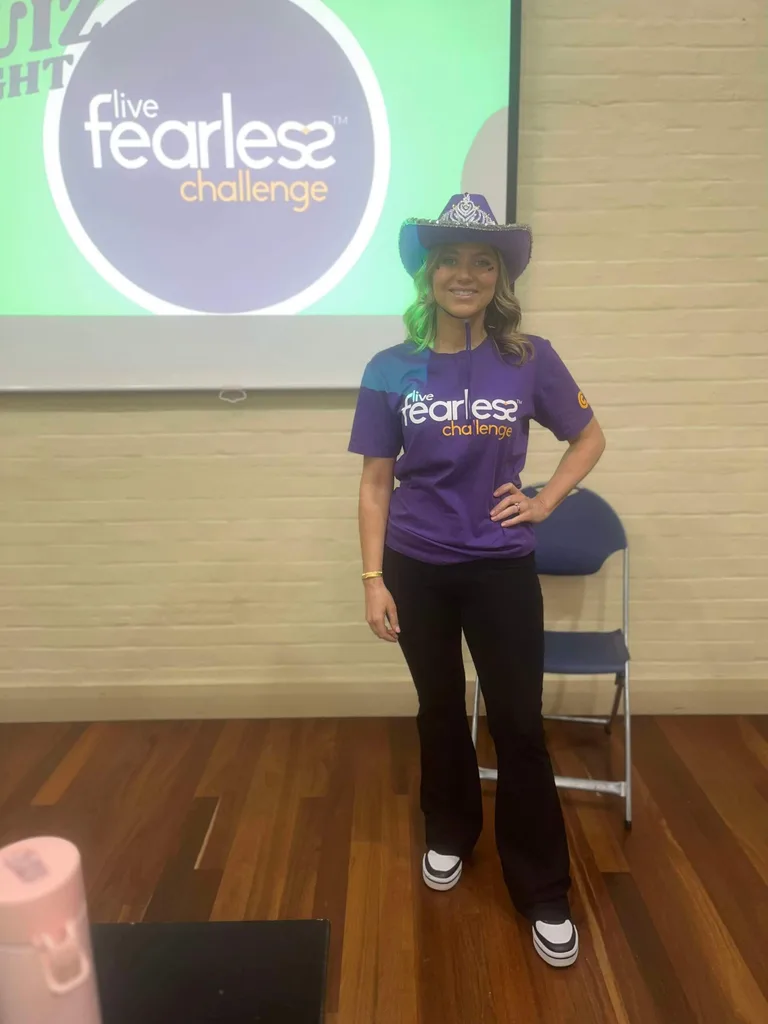
This September is her seventh year taking part in Crohn’s & Colitis Australia’s Live Fearless Challenge, which raises awareness and funds for people living with IBD.
Her advice to anyone who feels something isn’t right with their body is simple: “Listen to your body. If you think that something’s wrong or you’re not sure, seek help. No question is a silly question.”
And by sharing her own story, Sarah hopes she can make life with IBD a little easier for someone else.
“If I can help one person not go through what I went through, that’s a win.”

Related stories
Native ad body.

Native ad body.

Native ad body.