




At a glance…
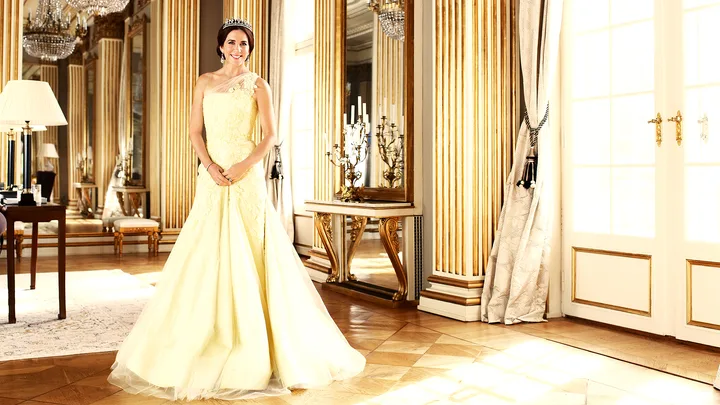
- In 2013, then-Crown Princess Mary invited The Australian Women’s Weekly to Amalienborg Palace in Denmark.
- In the global exclusive, Queen Mary celebrated The Weekly‘s 80th birthday and wore an array of Australian designer gowns.
- Ahead of her historic tour to Australia in 2026, we republished this feature from the 2013 issue.
- Over 10 years later, in September 2026, Mary rewore one of the designer gowns from our shoot, made by Melbourne-based designer Toni Matičevski.
The exterior is circa 1750s, all columns, colonnades and handsome symmetrical windows sparkling in the summer sun. Standing outside Frederik VIII’s Palace – one of four identical mansions that flank Amalienborg Square – it feels as if little has changed since the 18th century, when these Rococo beauties were constructed. Royal guards in unfeasibly tall bearskin hats and bright blue uniforms carry rifles with fearsome bayonets, protecting the Queen and her family. Yet step inside the ancient wooden gates and a very different story is unfolding.
Here in Copenhagen, Their Royal Highnesses, Crown Princess Mary, the girl from Tasmania, and Crown Prince Frederik, the sporty first-born of Queen Margrethe II, are refreshing the Danish monarchy with a glorious dash of modernity, and it’s ignited an excitement that’s apparent all over town. The Crown Prince Couple moved into the Palace in 2010 following an extensive six-year restoration that both the Crown Princess and the Crown Prince were intimately involved in. The results are stunning, giving the Palace a sophisticated, cutting-edge, but also a surprisingly homely feel.
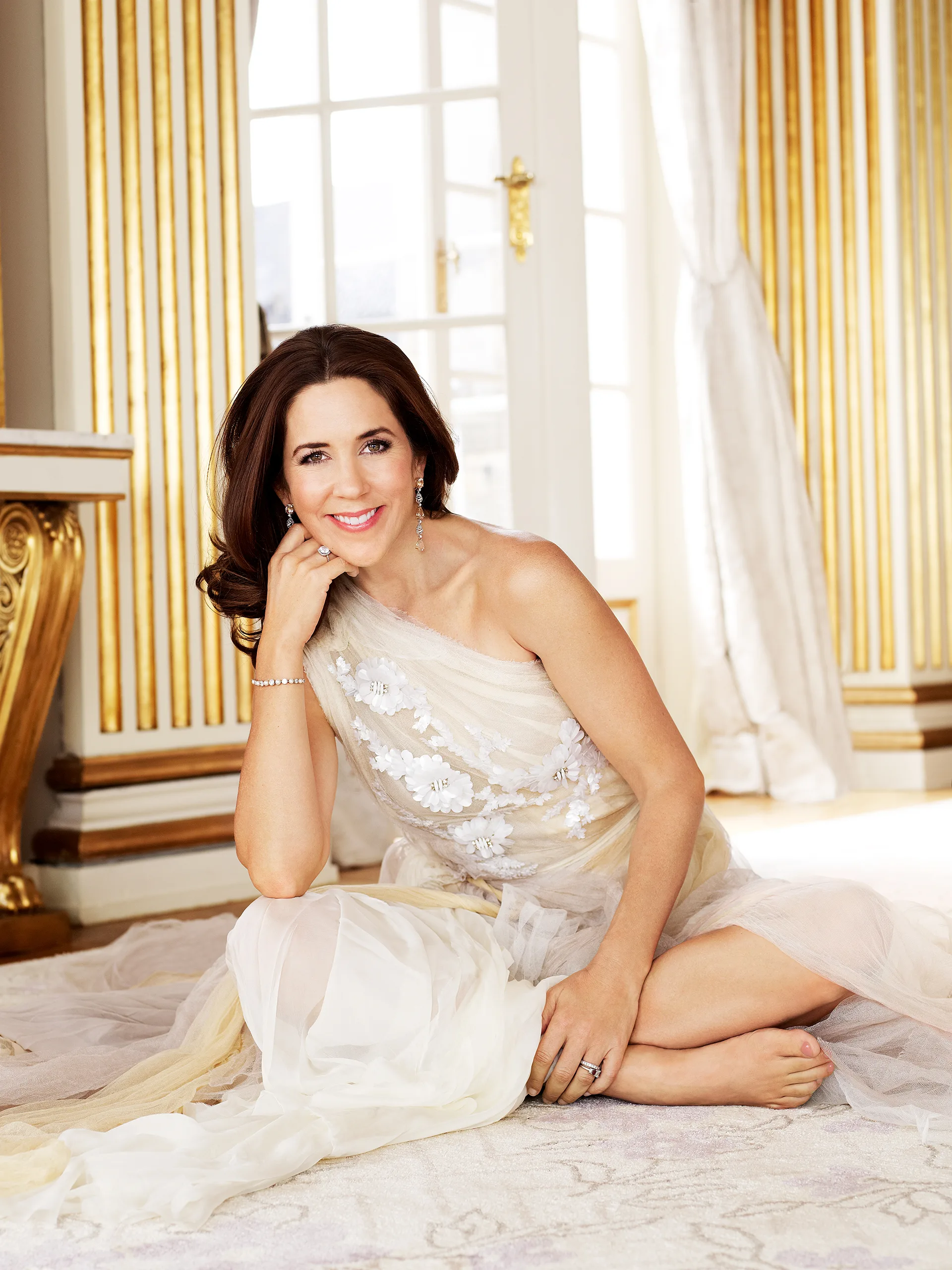
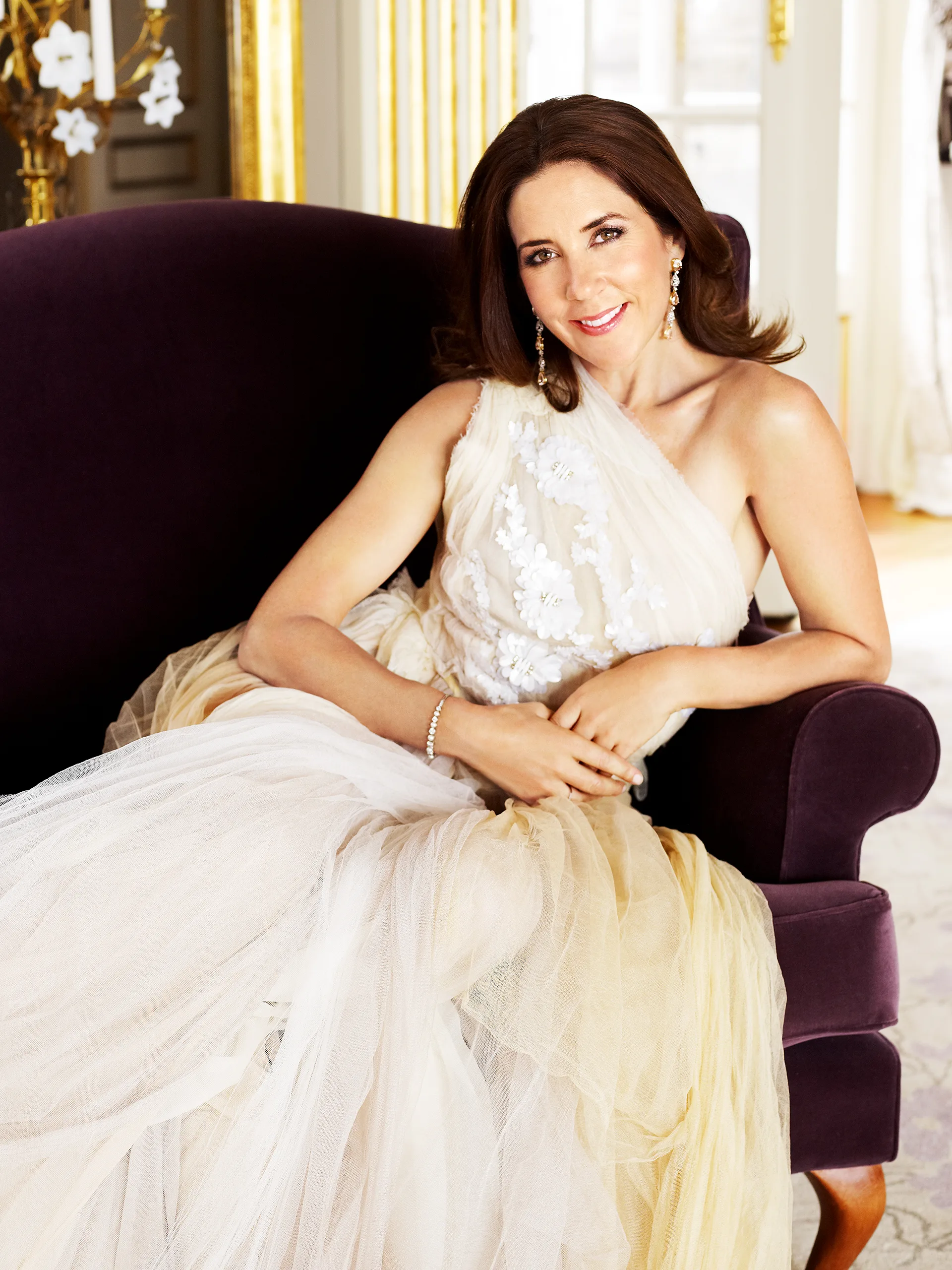
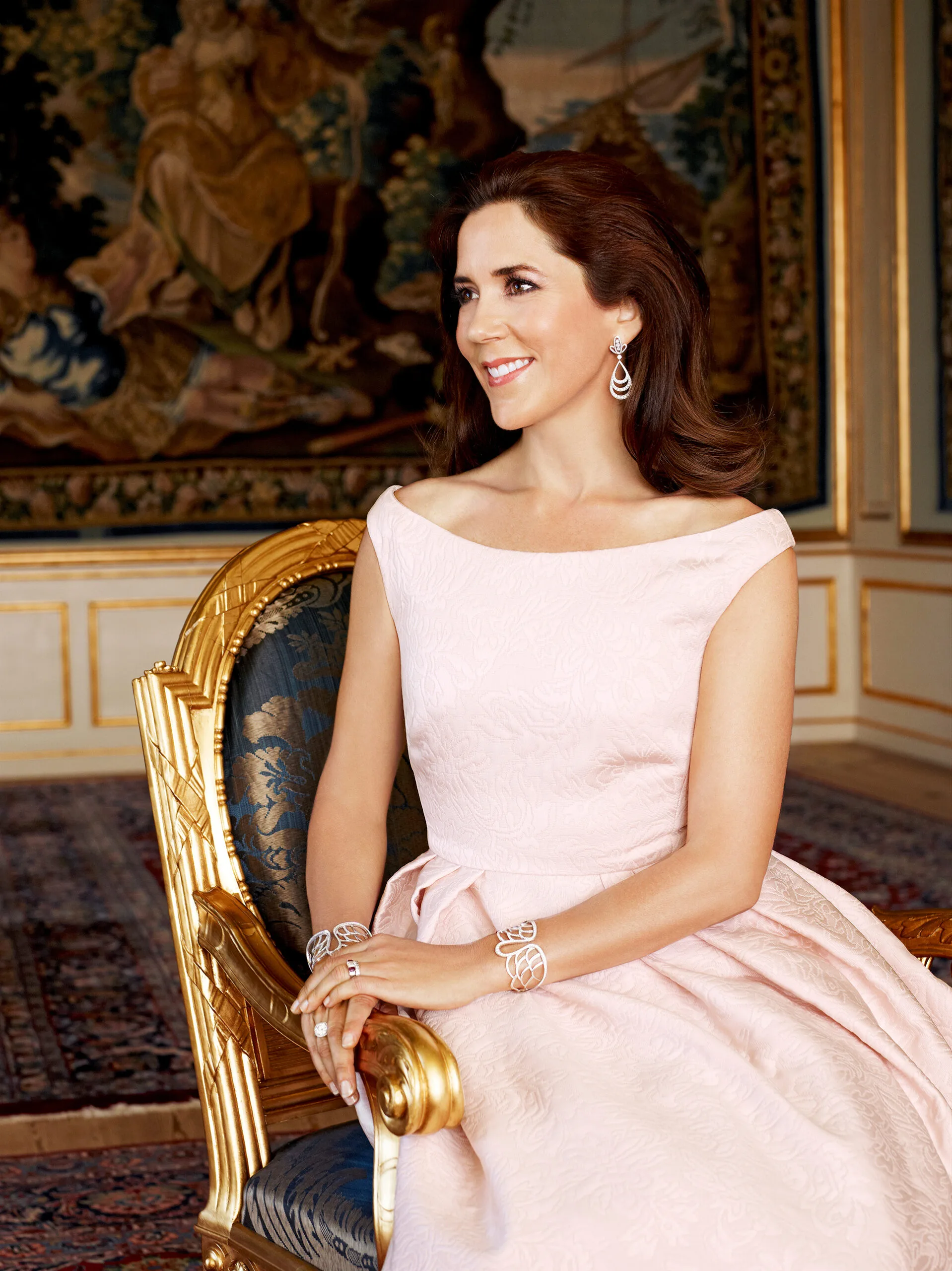
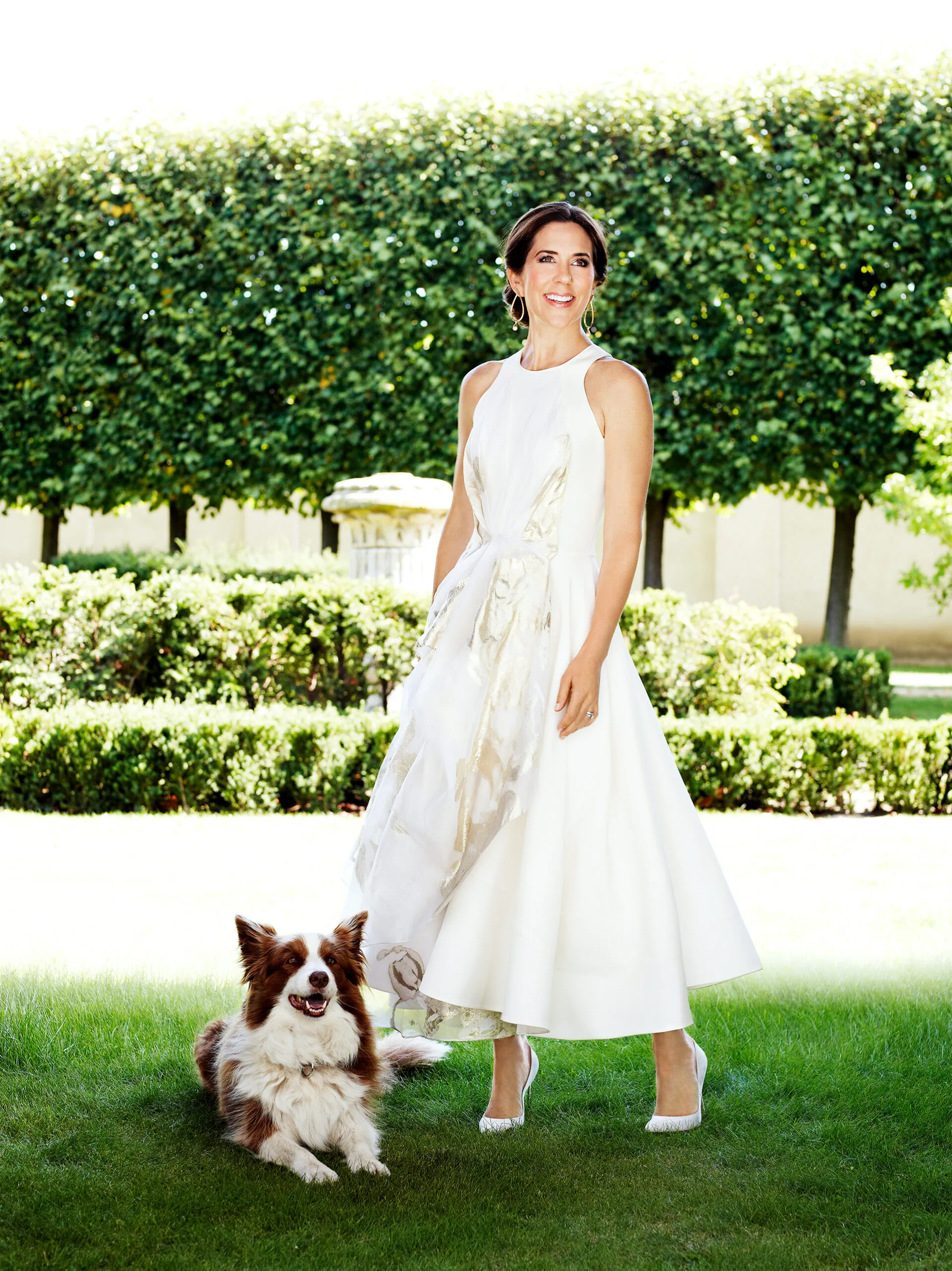
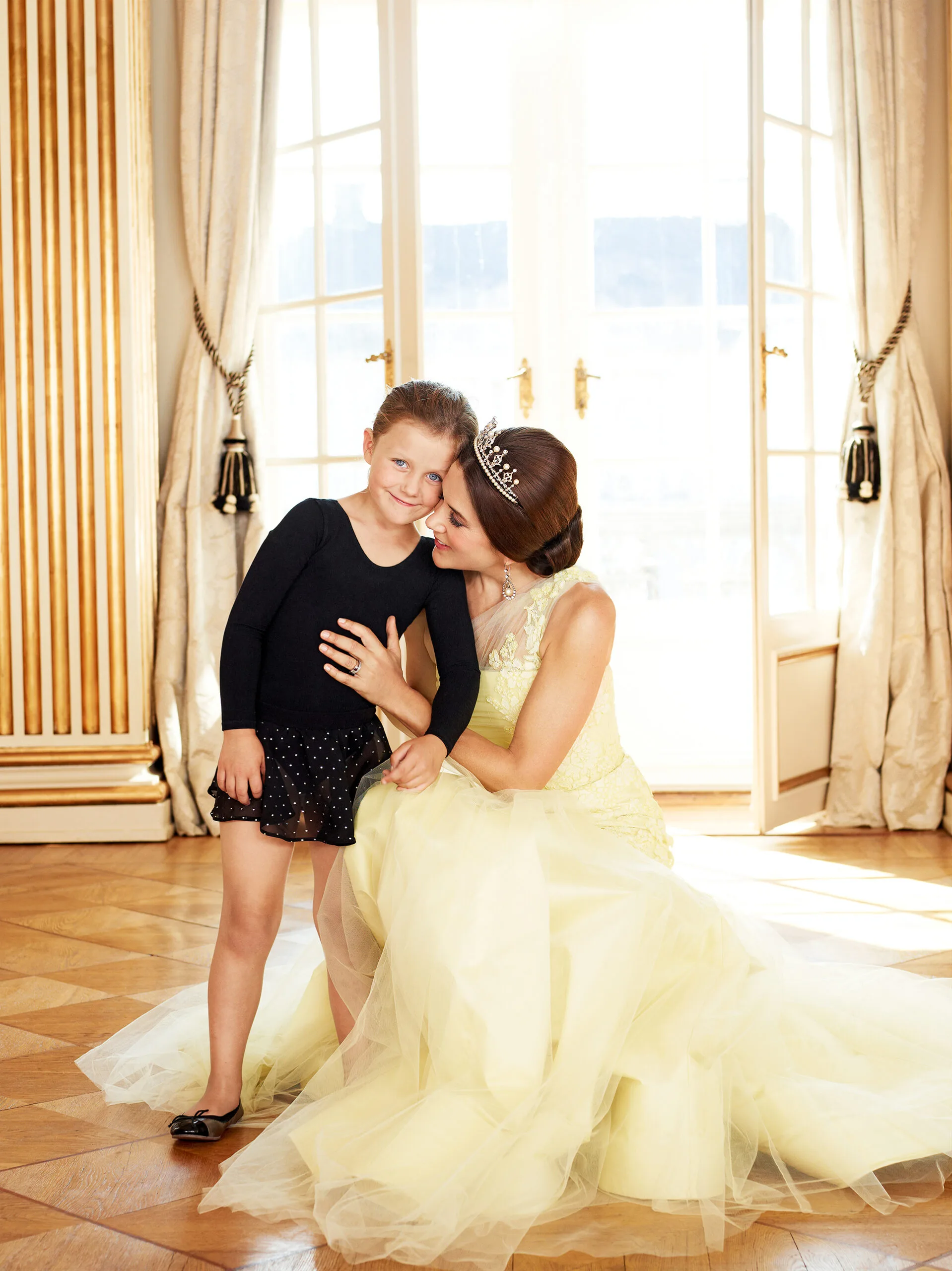
The most notable additions are the massive contemporary works of art by Danish artists – Crown Prince Frederik’s idea – which feature on many of the walls and even a single ceiling. Here, Crown Princess Mary has created her own oasis of family life, where their four children run around freely – Prince Christian playing a game of spies with a school friend, on one of the days I visit, and then taking his piano lesson in the Grand Hall while we photograph his mother in an Alex Perry gown. Ziggy the border collie, who Mary jokes was their first child when she joined the couple nine years ago, even leaves her chewed-up toys under gilt-edged tables. Mary is a very hands-on mum and, earlier that week, faced an emotional day when she waved off daughter Princess Isabella on her first day of school.
“She was really ready to start in school,” says the Crown Princess, her eyes lighting up as we talk about what is clearly one of her proudest achievements – her family. “She was very excited and very happy, and we were as well and also proud, but then a little bit nostalgic. You know, our first little girl, realising she’s starting in school today, that was very emotional.” As The Weekly crew arrived at the gates of the Palace to set up for the day of photographs, the Crown Princess was departing, driving Christian and Isabella to school. It’s a regular school run she shares with Crown Prince Frederik and just one of the many ways this new royal couple is bringing a more relaxed, modern approach to public life.
In a break with tradition, the school they go to is a public school where the royal offspring are known as plain Christian and Isabella, bring their friends home for playdates and join in school camps just like all the other pupils. As we sit down for lunch together on the couple’s terrace overlooking the new opera house, Mary tells me, “The children and teacher were talking about who in Christian’s class knew anyone who was famous and the only person they could think of was one of the boy’s fathers, who plays in a band. It’s such a normal part of who Christian is that the children don’t see it as something that separates him. Also, the parents do not treat Christian differently from other children.”
The Crown Princess says that while her husband and his brother Prince Joachim may not have gone to public school, their childhood was also free and relaxed, and that is down to their mother, Queen Margrethe II, who has also been crucial in Mary’s transition to Crown Princess.
“I think it’s just her nature that you should be able to work it out yourself,” Mary explains. “She trusts us to do what is right. She is amazing. She has been such an important support for me, so open and warm, and she has a very fine way of showing her support. She’d never want to intervene, but I ask her opinion. It’s done in a very subtle way.”
And now, the Crown Prince Couple are passing that mantle of reasoned self-determination to their own brood. “We try to give our children as normal an upbringing as we can, but also at the same time, making them aware of who they are and what they’ve been born into, the traditions and history. It’s very important that we’re open and honest about the situation and involve them. But we hope that they will grow up to be extremely proud of who they are and have that strong belief in themselves … like every other parent.” So far, it’s working. “It’s early days, but both Christian and Isabella are very adaptable and easy to get along with. They’ve got good values, so they fit in very well. They’re very sociable, so I think that school for them will be very much an enjoyable time of their life,” says Mary. “In Danish schools, parents are very involved. On Friday, I’ll be sleeping out in a hut somewhere, camping with all of Christian’s school class.”
The 41-year-old is a long way from her own school days at Tassie’s Sandy Bay Infant School, where the youngest of the Donaldson brood was known as a chatterbox with a naughty sense of humour. And while her university lecturer father, John, is incredibly proud of his daughter, it must be painful for Mary that Henrietta Donaldson, who was also a mum of four, isn’t here to share her daughter’s success. The executive assistant to the Vice-Chancellor of the University of Tasmania died suddenly, following a heart operation in 1997, before Mary had even met Crown Prince Frederik in a bar in Sydney and been whisked away to his castle in Denmark.
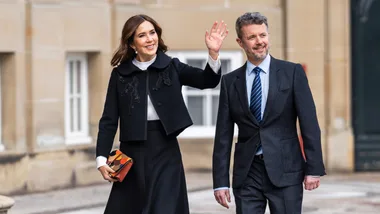
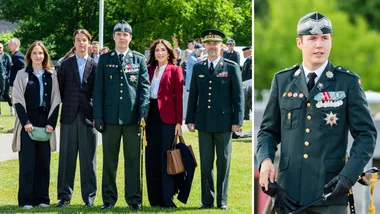
Growing up, Mary was fiercely close to her mother, whom she says is always with her and, in many ways, you can’t help feeling the driven, highly professional Crown Princess gets a lot of her courage and inspiration from memories of her mother. “I’m sure she would be very happy to see me where I am, not only happy in my family life and as a mother, but also to see that I’ve used my new situation and the resources and skills I have to form a platform to make a difference where I can … And I think she’s probably smiling,” the Crown Princess tells me.
“She definitely taught me to be independent and to trust in myself, and believe in myself. She made me think that whatever you set your mind to do, if you go after it, you can achieve it.” Mary is certainly achieving in a way her mother could never have foreseen. Indeed, it’s still slightly baffling to think that this Danish VIP was once an ad exec in Melbourne, a sales director and manager in Sydney, and even a backpacker looking to fix a dose of 20-something wanderlust with 10 months of global roaming. Here, now, she looks every inch the refined European princess, part of a new generation of young royals redefining the royal role for the modern world.
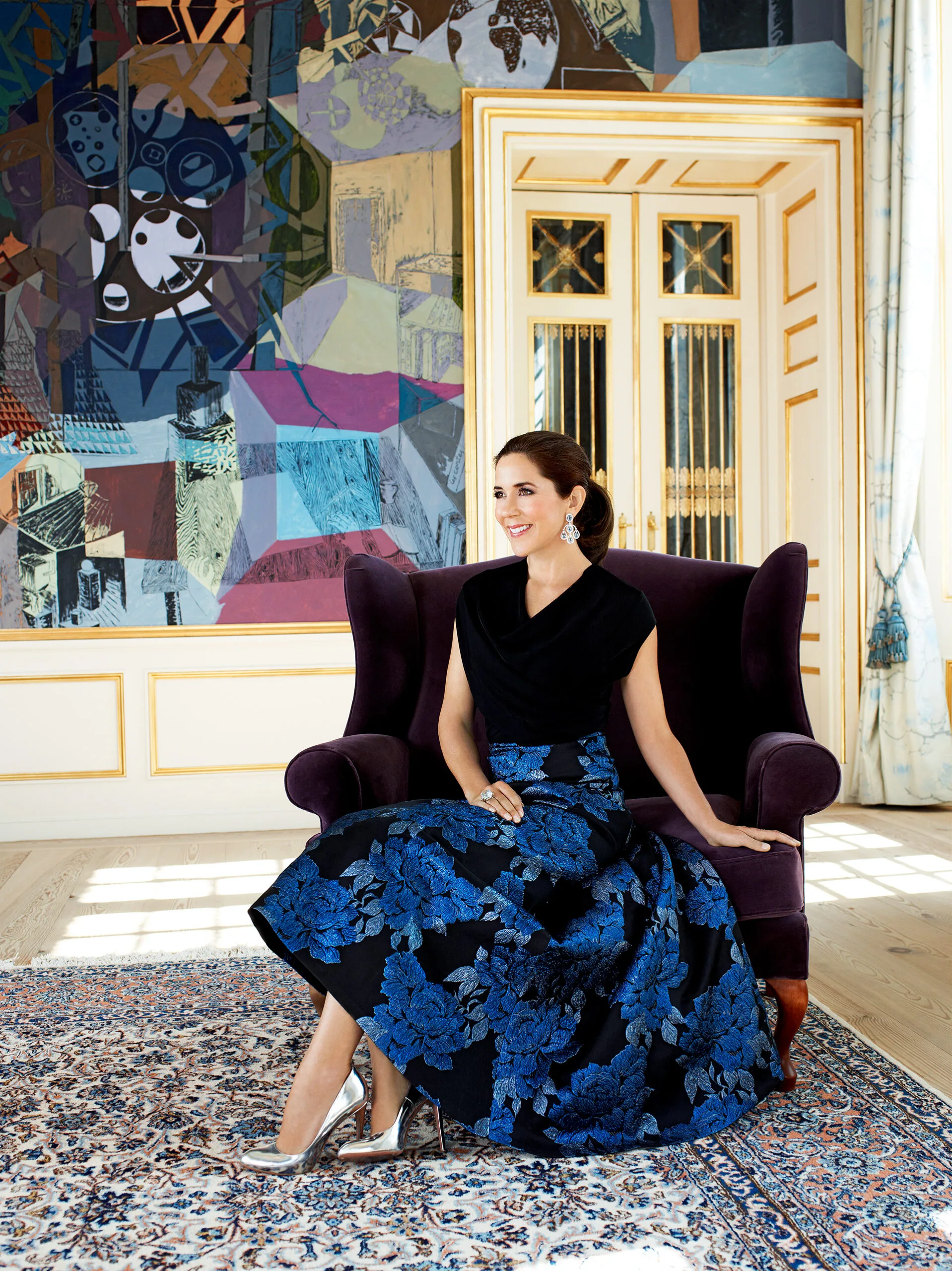
“Around 80 per cent of the Danish population support the monarchy and Princess Mary is one of the most popular in the royal family, according to recent opinion polls,” says Dr Hovbakke Sørensen, a historian at the University of Copenhagen. “She shows a large interest in ‘the ordinary Dane’. She is not the kind of princess who only thinks of herself or who lives her life separated from the ordinary population, behind the thick walls of the castles. No matter if she is visiting a refugee camp in Jordan or a school class of seven-year-old Danish pupils, she shows a warm interest for each individual she is meeting and talking to. And she is very informal when she talks to people, which the Danes like very much.”
To the Danes, Mary really is the consummate perfect Princess and it’s easy to see why. Part of that perfection is in the way Crown Princess Mary carries herself: her classy dress sense (on trend and designer, but not too showy and definitely not mumsy), her almost balletic poise and aura of calm confidence. Yet part is most certainly her four adorable royal offspring – first a boy and heir, Christian Valdemar Henri John in 2005, then Isabella Henrietta Ingrid Margrethe in 2007 and, finally, the pièce de résistance, twins in 2011, Vincent Frederik Minik Alexander and Josephine Sophia Ivalo Mathilda, making two boys and two girls in total. Perfect, indeed.
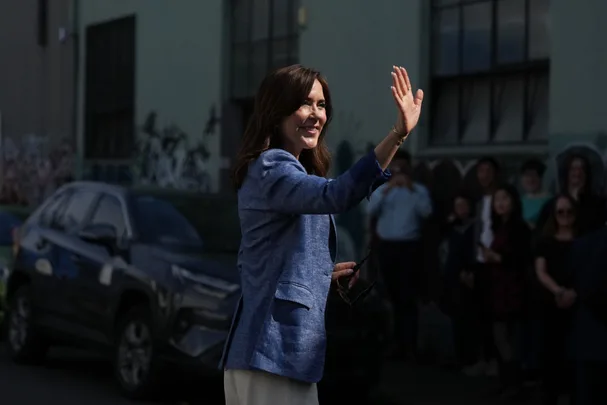
The other side of Mary’s popularity are her role model “good works”, which grow in reach each year and which the Danes thoroughly approve of. In Denmark, she set up The Mary Foundation to tackle bullying, loneliness and domestic violence in a small but focused, pragmatic way. “I’ve questioned my interest in these areas,” says Mary. “And if you talk about schoolyard bullying, I didn’t suffer directly, but I’ve probably been passive to it. And it’s also important to engage the passive people.” And with the twins now at two-and-a-half and Christian and Isabella at school, the Crown Princess has stepped up a gear, shifting her work onto the world stage. It was on that world stage that I first met the Crown Princess, a couple of months earlier, and it showed me a very different side to this truly impressive royal.
In Kuala Lumpur, a Muslim city in the midst of a building boom, with a melange of cultures, where you may think Crown Princess Mary wouldn’t garner a second glance, she was a figure of awe and wonder. She is one of several thousand women from all over the world taking part in the Women Deliver conference. This is not a royal duty for the Crown Princess, but part of her extensive work for the High-Level Task Force for the International Conference on Population and Development (ICPD), an independent body campaigning for global sexual and reproductive health, and rights for women and adolescents. I watch the Tasmanian-born mum-of four as she fulfils a gruelling round of photo ops and meetings in pertinently selected “needy” places – the maternity wing of a hospital for mothers with gestational diabetes, the UN High Commissioner for Refugees, a school for refugee kids on the first floor of a tumbledown building above a motorcycle repair shop – while her own little ones and husband are back in Denmark.
It’s a telling glimpse of her hectic schedule both as a jobbing princess and a human rights advocate, and an opportunity for me to see how the rest of the world reacts to this Aussie commoner who rose to the ranks of royalty and captivated her new nation. Mary’s focus is in social, health and humanitarian fields, and she’s a patron and major advocate for organisations, some of which include the United Nations Population Fund, the World Health Organization Regional Office for Europe, the Danish Refugee Council, Maternity Worldwide and the National Association of Women’s Shelters.
It’s an incredible resumé and the work she does goes far beyond just being a figurehead. The Crown Princess hangs out with former presidents and humanitarian movers and shakers. Crown Princess Mary visits developing countries, discussing issues such as maternal health, family planning, young brides and gender-based violence, intent on persuading governments to invest in girl (and woman) power. This isn’t just a round of meet and greets, shaking hands and raising awareness. This is affirmative action requiring serious hard yards with committees comprised of super-smart and powerful people.
The tiny nation of Denmark, with its 5.6 million inhabitants, is an important player on the world development stage and the feisty, beautiful blow-in from Tasmania is doing her bit to contribute. It’s Mary’s rational approach to what many see as heartrendingly difficult problems that make you feel this woman, this Crown Princess, could really affect change. “It started when I attended a Maternity Worldwide event six or seven years ago and there was an obstetrician from Chad there, and she said that, in her country, when a woman gets pregnant, she has one foot in the grave,” Crown Princess Mary tells me as we sit by the hotel pool, amid Kuala Lumpur’s skyscrapers. “Those words stuck and I automatically thought, ‘How is it in the world we are living in today, that a woman should risk life to give life?’”
What Mary brings to the table that feels new and vital in this rather earnest world of do-gooders is a sense of practical application. Her speech here in Malaysia on behalf of the High-Level Task Force, in front of a packed amphitheatre, is fuelled with fighting talk and receives impromptu applause, not because she is Crown Princess Mary, but because her powerful call for ensuring women’s health and rights hits a resonant chord in politicians, activists and nurses alike.
As a happy and privileged mother of four, maternal deaths trigger a knee-jerk reaction of shock and horror, but this mum also seems to be completely in her element talking humanitarian issues on the world stage. “I do feel honoured to be invited to speak here,” she tells me, quietly. “I have spoken at international conferences before, but this is my first time being part of a panel with such eminent and respected individuals, and I feel very nervous.” As we chat more, I realise that she sounds like a Dane speaking English, rather than an Aussie speaking her mother tongue. And while her relaxed congeniality and get-things-done approach remind you totally of the Aussie girl inside, her mannerisms, her intonation and her classic, elegant look feel very Scandinavian. Part of this transformation is obviously organic – Mary has been living in Denmark for more than 10 years now – but part is down to more of that hard work. Right from the get-go, Mary knew she had to knuckle down and learn Danish, and not just a few words – she needed to be fluent.
“The barrier of language, at times, was hard and, yes, I felt lonely,” she tells me. “I couldn’t express myself as I wanted to. I couldn’t jump in and come back with a quick remark. I couldn’t really understand what was being said. “You know, language is so intrinsic to being part of a society and a group, and particularly to knowing what it means to be a Dane, what the culture is, the traditions, their humour,” she explains.
Mastering Danish is far from easy and for Mary, who says she had never learned a second language, there was definitely a mountain to climb. “It took time,” she says, laughing. Mary’s instruction was rigorous, with two teachers and multiple sessions, and when she talks to her staff, I can’t tell the Dane from the Aussie. I ask how deep the language is with her now. “I think in Danish and ja, I dream in Danish,” she replies. And when I meet her a few months later in her Palace home, with her children and her aides, they all communicate in Danish – although Princess Isabella does also introduce herself to our crew in perfect English. Not speaking the language wasn’t the only thing that isolated Mary when she took the plunge and moved to Denmark back in 2003. She missed her family and friends acutely, and it wasn’t the first time this had happened to her.
When Mary first left Australia to live overseas, she was 26. She had been building an impressive career in advertising and living in Melbourne. “I saw myself as, one day, being the managing director of an international company,” she says. Yet when her mother died unexpectedly, it threw a curveball into Mary’s meticulously planned world.

“The loss of my mother was a complete shock. I don’t think anyone can prepare for that. And it certainly changes your perspective on life. I went back to work quite quickly, but things in my head had changed. I had a sense of ‘now is the most important time’ and that it was no longer appropriate for me to put off things that I’d always dreamt of doing. So, six months after my mother’s death, I resigned and travelled the world for 10 months. And not until I was on that plane with my backpack in the hold, sitting by myself, did I think, ‘What have I done? Where am I going?’”
Mary wound up in Scotland, seeking out relatives of her parents and, true to form, landed a good job there, but she couldn’t stay. “I suddenly realised I couldn’t be so far away from my family.” Five years later, when she first arrived in Denmark, Mary felt a tinge of that homesickness again. “Moving to a new country, a new language, not having support of family and friends … I mean, of course, I’ve always had the support of my husband – boyfriend then – but there have been times when I’ve felt a little bit like a fish out of water,” Mary reveals. Fortunately, love seems to have conquered and that sense of separateness is totally gone today and to the Danes, rather than being an outsider, Mary is seen as one of them.
“She’s very loved in Denmark,” says Helle Bill Madsen, a royal reporter with Her&Nu magazine. “Everybody says that she is what Frederik needed. When he gives speeches, Frederik says that she is really the missing part in his life.” The Crown Princess smiles when I ask her about this romantic declaration from her husband. “We’re good together,” she says. “We’re very different in some ways and then, in other ways, those differences complement each other. He was my missing piece, of course, but not the piece I thought that was missing, if that makes sense. You know, I never thought for a moment that I’d end up living in Denmark married to the Crown Prince. But he obviously was my missing piece. Otherwise, we wouldn’t be here today.”
“According to the recent opinion polls, they are both very popular,” says Dr Hovbakke Sørensen. “Many Danes expect them to be a modern King and Queen Consort, maybe more informal than Queen Margrethe II and Prince Henrik. And this fits very well with the population’s expectations of a step-by-step modernisation of the monarchy.”
The royal couple are also very visible in their home city. The family can frequently be seen riding their bikes in the parks or the Crown Princess also likes to go jogging. “A good weekend is when we don’t have any plans. We love a Saturday morning when you don’t have to rush, when we can play, read the papers and stay in our pyjamas until late,” says Mary. “And then we love being physically active. We go out, ride bikes, we go to the park, go walking in the forest and we all love swimming.”
And while they may speak Danish and live in a palace, Mary is making sure her children know about her homeland, too. “I love teaching them about Australia and the funny Australian animals, giving them an impression of where I grew up because that’s part of their heritage as well, part of who they are. I think I’ve got every fluffy Indigenous animal there is and Christian was given his own Tasmanian devils as a christening gift, to live in the zoo in Copenhagen. They died of old age, but the zoo received young new ones.”
The family loves to visit Australia and the next trip for the royal couple is at the end of this month, when they take on their new roles as patrons of the 40th anniversary of the Sydney Opera House and cement a permanent connection between Denmark and Australia. “In Denmark, I miss, of course, family and friends, but when I come back to Australia, I realise that I’ve also missed Australia,” admits the Crown Princess. “I see things that I haven’t seen for a long time, like the cliffs between Bondi and Tamarama. We love coming back to Australia. Some of our best memories together are from Australia and part of me will always be Australian. It’s who I am.”
As we pack up to leave, I am struck by how radiant Mary looks in our photos and how settled she seems in her home. “I think it’s an exciting chapter I’m embarking on,” she tells me. “I’m in a very happy place. My wonderful family life and what Frederik and I have together are all that I cherish most.”
The Mary Foundation
In 2007, Crown Princess Mary set up The Mary Foundation using a 1.1 million kroner national gift that was raised in Denmark and Greenland, and donated in honour of the Crown couple’s wedding in 2004. The foundation’s aim is to improve the lives of children, adults and families who – as a result of their environment, heredity, illness or other circumstances – find themselves socially isolated or excluded from society. “I have always found it difficult to see people standing alone,” Crown Princess Mary explains. “People who sit on the outside and look in, and cannot understand why they can’t be part of a group or part of society. Like a child in the playground who says, ‘Why can’t I play with them?’. The Mary Foundation strives to prevent and alleviate social isolation, and the three areas that we focus on are bullying and wellbeing, violence against women and loneliness.”
This global exclusive first appeared in the October 2013 issue of The Australian Women’s Weekly. Subscribe so you never miss an issue.

