



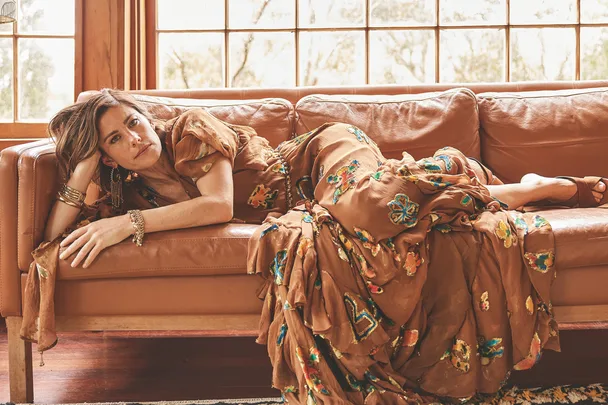
The day The Weekly crew piles into water taxis with Brooke Satchwell for a photo shoot in Sydney’s secluded Lovett Bay, the heavens betray us. It’s high spring, but the skies are grey and dreary. Worse, a sinister cold has infiltrated the team. Brooke is sympathetic and loaded with advice.
“Have you done your liquid echinacea?” she asks. It tastes terrible, she warns. The trick is to mix it with cranberry juice. She also swears by a tea called “throat coat”. She knows to come to set prepared.
“Often, I’ll be like, ‘Dr Quinn, medicine woman is in the house! What ails you? How can I help?’”
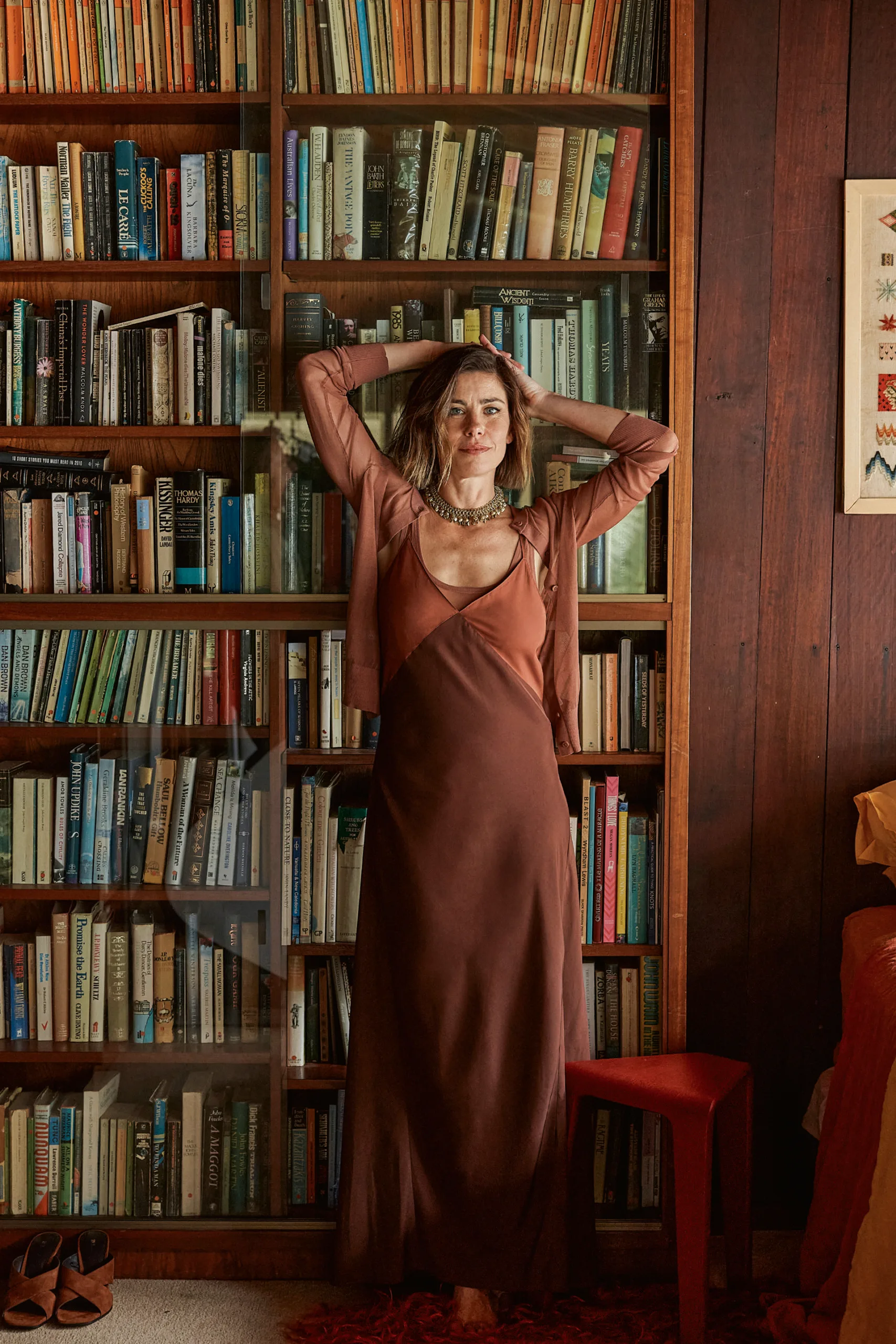
Two weeks after she joined the cast of Neighbours, at the age of 15, she contracted glandular fever. This was a problem for the writers who were cooking up a romance between her character, Anne Wilkinson, and Billy Kennedy (Jesse Spencer), and wanted the teens to kiss.
“There were all these discussions about whether we could use a plate of glass so we wouldn’t infect each other,” Brooke laughs.
The scene was rewritten. “That’s why it became the sleeping kiss on the cheek,” Brooke says. “You can see my eyes are slightly puffy.”
More stories bubble forth. She has been up since 4.30am but she’s used to greeting the dawn. For 20 years, Brooke has been eating egg and bacon rolls for breakfast at far-flung filming locations, dishing out echinacea and loving every second of it. She has ‘resided’ at some of Australia’s most recognisable addresses, appearing on Packed to the Rafters, SeaChange and, of course, Ramsay Street.
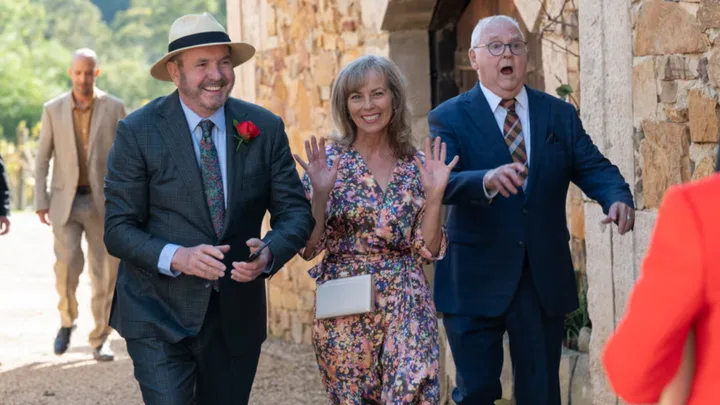
She’s pulled double shifts, filming Wonderland in Sydney before flying to Melbourne for Dirty Laundry Live as comedian Lawrence Mooney’s offsider. A few risks put paid to those who told her that, to be a serious actor, she had to focus on one thing. When she took on the role of Black Comedy’s culturally confused Tiffany, who acts Black, she feared her career would be over.
She read the script thinking, I can’t do this. I’m going to get deported. I’m never going to work in this country again. Oh my God. Oh my God! In fact, it showcased her range and opened doors.
At 45, Brooke is enjoying the fruits of years of hard work – professional and personal.
“I’m really thrilled at the stage that I’m at with my career, and that’s the amalgamation of personal development and professional development,” Brooke says. “I’m just hitting this lovely bit where my passions are starting to crystallise into something that feels like a really cool life that I want to live. Things are starting to hit their natural order. I’m in my mid-40s now and, as a woman, that’s what we hope this moment in time will be. It’s very real. It’s exciting.”
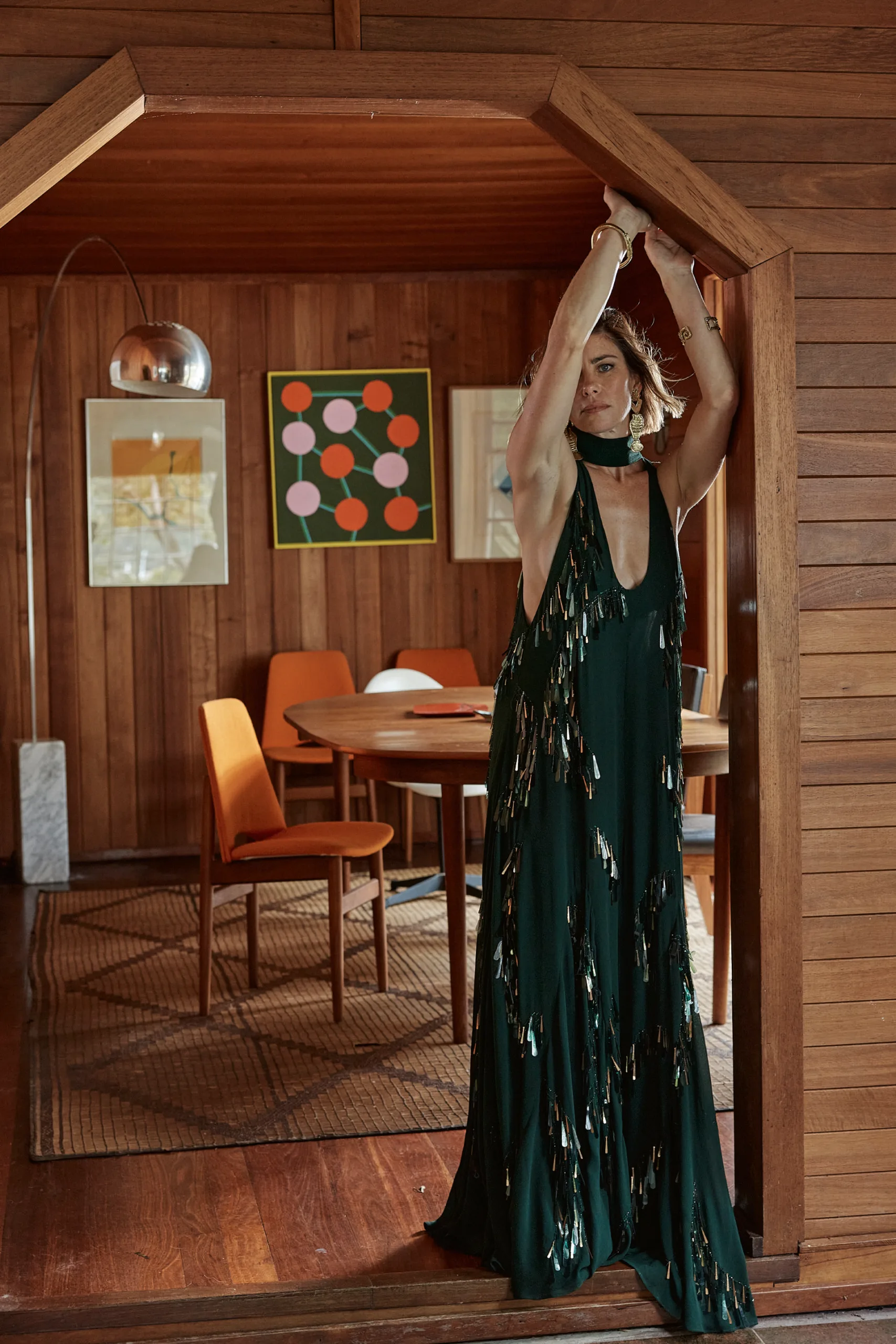
Brooke is speaking with The Weekly to promote the new Stan series Dear Life. She plays Lillian, who is working through her grief for her fiancé by tracking down all the people who received his donated organs. It’s a demanding role. We meet Lillian when she’s in the depths of despair.
“Like everyone, I’ve had my grief and trauma moments in life and walked through a lot of incredibly challenging times, and I recognise those depths,” says Brooke, who survived the 2008 Mumbai terror attack by hiding in a bathroom cupboard. “From my experiences, I’ve done my processing and healing – emotionally, mentally, spiritually – on all the levels I can, to the capacity I can.
“But we all know that experiences leave residue. The body keeps the score. I’m just lucky that I have chosen a path where my body is the very thing that I use to do my job, to express things. I’m able to have almost a bit of a purge and get rid of all that old stuff hanging out in the body, but tell it through the lens of a different story.”
When was Brooke Satchwell on Neighbours?
Brooke grew up on our screens. At 14, she was off sick from school when a casting agent strolled into her mother’s clothing business in Melbourne and gave Brooke her card. She did a little commercial work before auditioning for Neighbours. A few weeks later, she was offered a spot on Ramsay Street. She learnt quickly that the life of an actor was hard graft, but she fell in love with it.
“I was so lucky to come into Neighbours at a time when it really was a strong family environment,” she says. “They were tight. We did everything together – cooking, sport, camping trips – you name it. The team sport is the thing. That’s the jam. That’s the good oil.” And the camaraderie was formative.
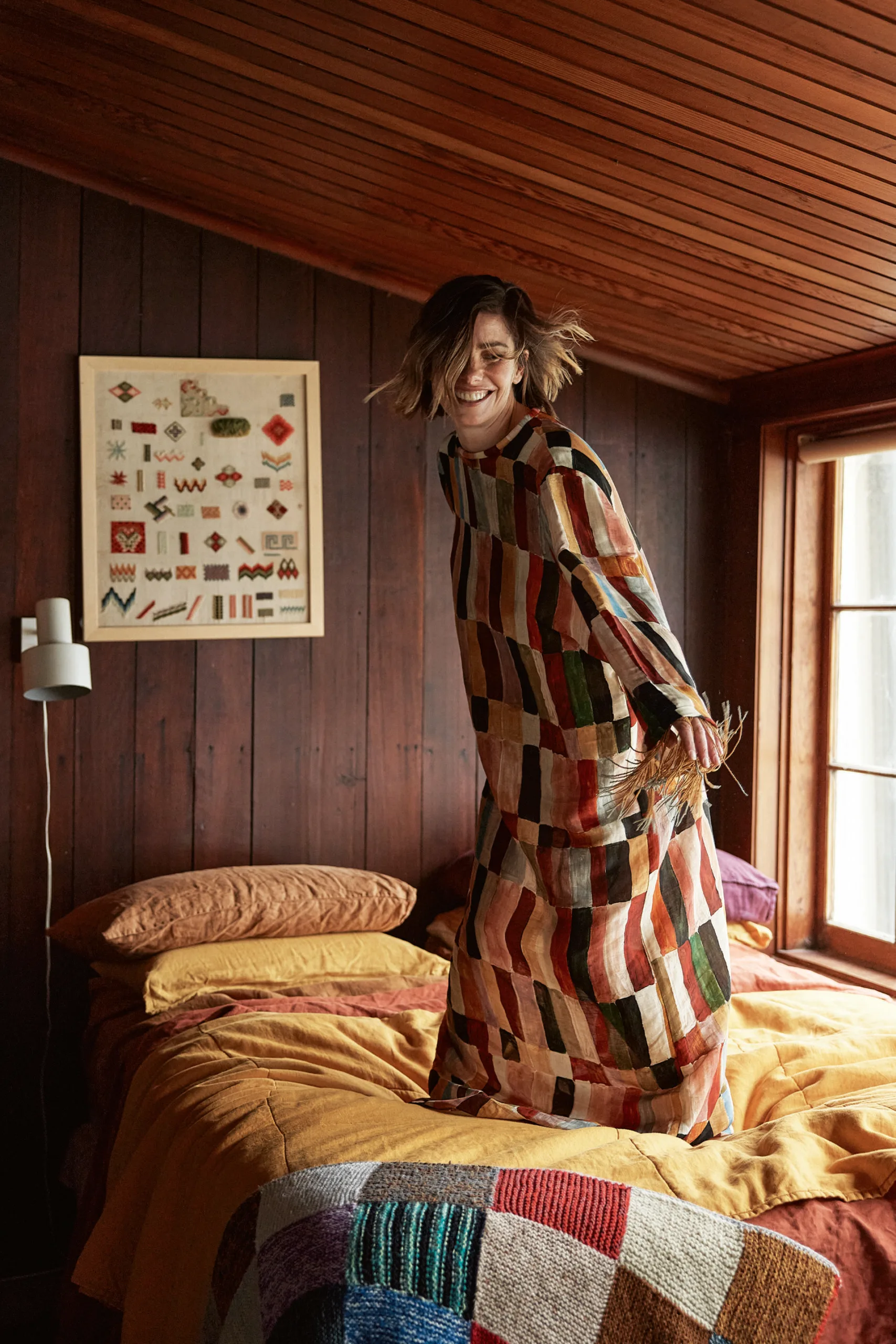
She won the 1998 Logie for Most Popular New Talent. The following year, she was invited back to present the award. At the rehearsal, she heard Andrew Denton’s scripted introduction.
“God bless him, Andrew Denton introduced me as ‘the upwardly nubile Brooke Satchwell’ and even at 19 I was like, ‘Huh? I don’t know how I feel … I get it’s a joke but something’s not quite sitting …’ We were in a slightly different era.”
In the limo en route to the ceremony with Ailsa Piper (her on-screen mother, Ruth Wilkinson), Alan Fletcher (Dr Karl Kennedy) and newsreader Jennifer Hansen, Brooke shared her concerns. “I was saying, I’ve been at rehearsals, and this isn’t feeling right.” The group workshopped a comeback for Brooke to say on stage.
“I was kind of terrified of walking out there and saying something off the cuff.,” Brooke says. “What if I messed up my autocue? I was 19. A baby. I remember Jen Hansen said to me, ‘What are you going to want to tell your kids?’” Brooke laughs. “To be fair, I have a 20-year-old diabetic cat, not children.”
Brooke walked onto the TV WEEK Logie Awards stage alone and, in front of her industry peers and a national audience, stood up for herself. With a lift of her distinctive brow, she said, ‘Being upwardly nubile is better than being downwardly puerile.’”
The response was a mixture of unsure laughter, a smattering of applause, and a shocked sort of silence.
“It was definitely more, ‘Don’t call Andrew Denton out, he’s a living legend,” she says of the audience reaction. “He absolutely is. He still is. I know what a good human he is, and I’ve grown up too. There are things I said in school that I would certainly not say now. We all grow and we all learn.”
Still, she muses, “Can you imagine what that would be now? It would be a very different thing. But it’s those little, tiny moments, all these little micro-moments that shift our lives profoundly.”
The story is an example of Brooke’s sense of fairness. She calls it campsite rules: “Leave the place better than you found it.”
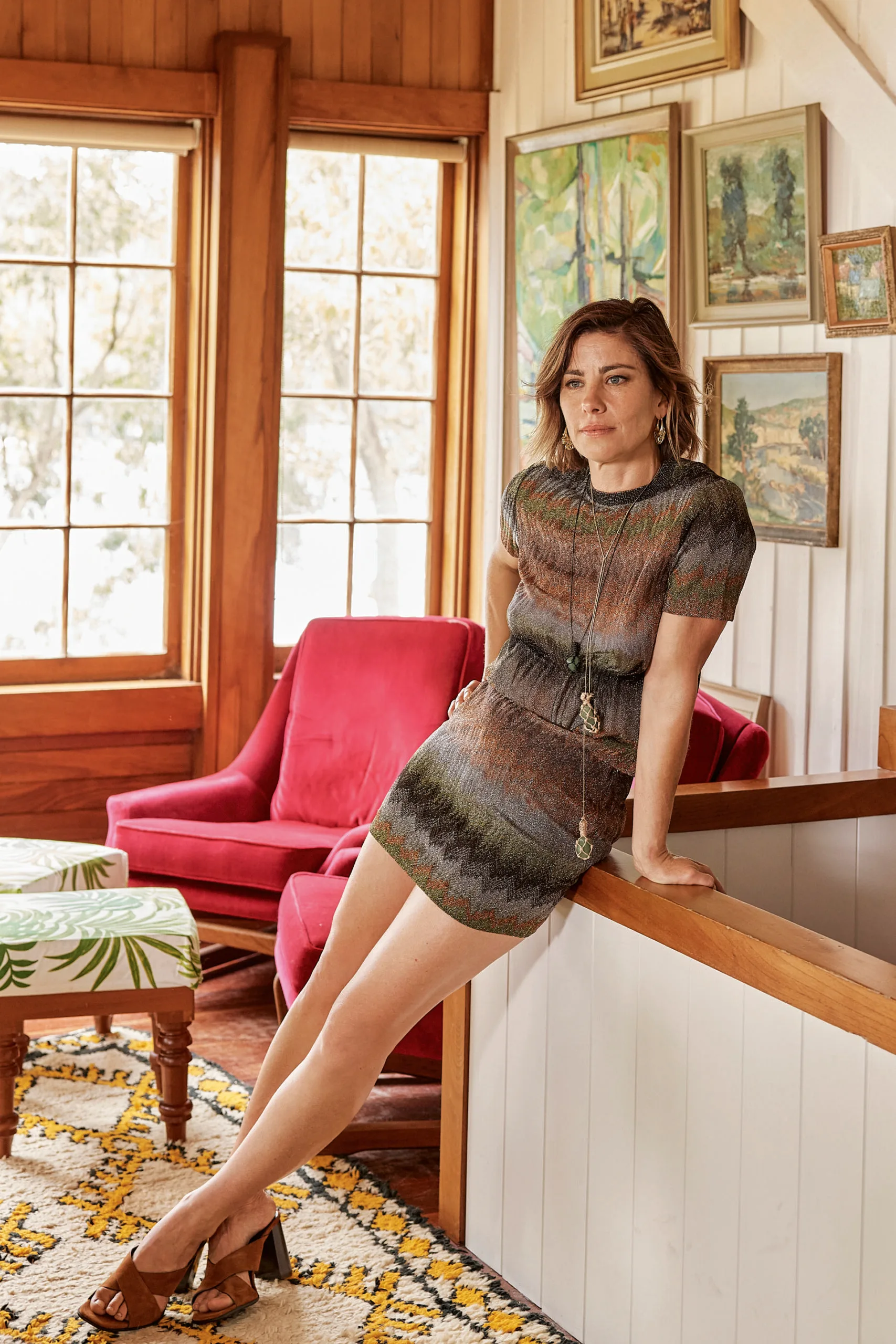
Paying it forward
Her innate sense of decency, and her love of a chat, has meant she has been able to impact lives without realising it. Brooke is a central figure in the 2020 memoir of journalist Shannon Molloy.
The book, Fourteen, details Shannon’s year of hell at an all-boys’ Catholic school in Yeppoon, north of Rockhampton. Shannon was a creative young soul whose preference for dancing to Video Smash Hits film clips over rodeos made him a target, and he was bullied mercilessly.
Brooke came to Yeppoon to judge the local Battle of the Bands competition, and budding reporter Shannon interviewed her. After witnessing bullies calling Shannon a “poofter” she promised him it wouldn’t always be that way. Her compassion was a turning point for Shannon.
“I actually do remember sitting out the back and smoking ciggies on the lighting grid,” Brooke says of the moment. “I honestly didn’t realise that I’d said those things. We were just kids having a conversation.”
How lucky, she reflects, that as a 16-year-old she was being immersed in the nurturing ecosystem of the Neighbours set. “There again is the power of people connecting and sharing their stories and sharing their experiences. That’s what I love about life.”
This was all a long time ago. Brooke left Ramsay Street to pursue other opportunities. She did time on Water Rats and White Collar Blue. She was never tempted to try her luck overseas.
“For a long time, I wondered if I was being a chicken because it seemed to be what everyone wanted,” she says. When she did eventually find herself at a Beverly Hills hotel representing Mr Inbetween at an industry event in 2018, she was underwhelmed.
“I remember getting there and it was just concrete. What are you talking about? Why is this place so exotic and glamorous,” she laughs again.
She echoes her one-time on-screen love rival Rebecca Gibney (as Frankie Calasso, Brooke scandalously kissed Dave Rafter, earning a public scalding in a supermarket from a Rafters superfan) who speaks about wanting to tell local stories.
“Home is home,” Brooke says. “I’m very connected to this country and this land. It’s my happy place. It’s the community and the culture that I want to contribute to.”
“This connection has deepened as she’s waded into projects like Black Snow, for which she had an “extraordinary” cultural induction from the Australian South Sea Islander aunties.
“They spoke to us of the issues relating to not being recognised as a people until 1994. Of course, as whities we didn’t understand, and they were very patient and kind and said, ‘Of course you don’t understand because it’s never related to you’.”
She was back on stage at the Logies in 2023, collecting an award for her gripping portrayal of Georgina Merrick, a mother trying to keep her family together while she is being dehumanised by her controlling husband in courtroom drama The Twelve.
It was a role that allowed her to communicate about an issue which she understood deeply. In 2007, her ex-boyfriend Matthew Newton was charged with domestic violence offences. He pleaded guilty to common assault but the conviction was later overturned.
She recounts how two retired police officers came up to her after watching her performance in The Twelve and said, “Thanks. Thank you for showing it how it is.”
There’s been immense healing for me through all of those jobs,” she adds. “As far as I understand, that’s what advocacy means. Can I make that personal and show you what it means in the real world?”
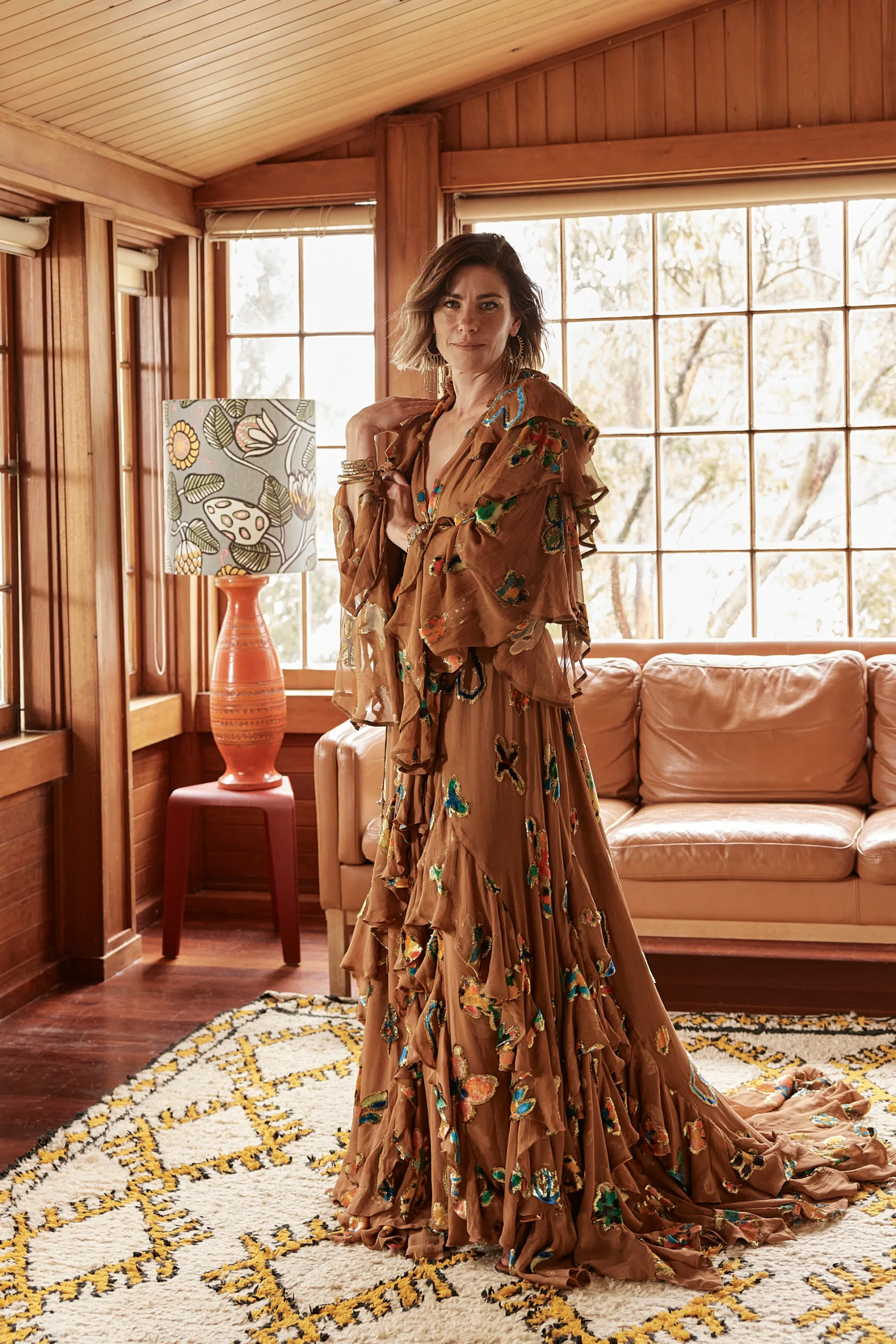
Is Brooke Satchwell on social media?
Brooke is sometimes described as private, even reclusive. In person, she is warm and open. Her 2022 AACTA acceptance speech revolved around a conversation she had shared that day, on the street, with a father who was worried about his daughter.
“I talk to a lot of strangers!” she laughs.
She is not on social media because she craves more of a connection than a screen can offer. Back when her friends started building Myspace pages, Brooke was disappearing into the world of television. She was conscious she was suddenly “not there” and so checking in with a friend had to be more than a digital message.
“For me to honour that connection was to be present – to connect with people. It was a cup of tea. It was a horse ride. It was a phone call,” she says. “Sometimes I feel like joining social media would be nice because you can’t sit on the phone all day everyday yarning. By that token … I’m still the person who will be annoying and call you, which I know terrifies people these days but I’m just ringing to say, ‘Hi, how are you?’
Connecting through stories is hugely important and something she’s prepared to fight for. Earlier this year, Brooke headed to Canberra with a cabal of Australian stars, including Bryan Brown and Rob Collins, to call for the government to force streaming platforms like Netflix and Disney+ to invest in local programs.
“We’re just the mirror that reflects society back … This is ultimately our cultural voice.”
The years-long campaign has had an impact. Legislation to compel streamers in Australia to spend at least 10 per cent of local expenditure on Australian content passed parliament as this story was being written.
The latest story Brooke is telling also has an important message at its heart. The creators of Dear Life (Robyn Butler and Wayne Hope) worked closely with the organ donation program, DonateLife.
“We all jumped on YouTube and started looking at videos of those incredibly profound moments of a donor’s relative walking a recipient down the aisle at their wedding,” she says.
Did it move Brooke to register as a donor?
“I already was,” she says. “In COVID … I had the conversation with my partner. I just fundamentally thought: Why wouldn’t I? It’s such an extraordinary thing that you can do for another human being, and it’s not just the person, it’s their family, it’s their community.”
In order to bring Lillian’s grief to the screen, she imagined her life if she lost her partner.
“I’m lucky enough to have found the Holy Grail of that person who sees all of you, and loves and holds space for all of you. So then, just to think of losing that … ”
Brooke and her partner have formed a production company, and for her next act, she’s hoping to move behind the camera as a writer and producer.
“We’ve been developing a slate for a few years,” she says. “Unfortunately, I’ve been fairly absent because I’ve been busy, but we’re working away.”
Her mother is always sending her novels she wants to see on screen. “My mum’s fabulous. She’s an avid reader.
“I haven’t done things the normal way,” Brooke adds. “Sure, there were definitely parts of my early career where I was putting those pressures on myself to do things a certain way, and I was probably putting pressure on myself about the US thing, but it wasn’t where my heart was at.
“I think I’ve matured enough and lived through enough things that I now know that’s the golden ticket. Follow your heart, and it all works out.”
All episodes of the Stan Original Dear Life are available on Stan.
This article originally appeared in the January 2026 issue of The Australian Women’s Weekly. Subscribe so you never miss an issue.

Related stories
Native ad body.
Native ad body.

Native ad body.